Love Song Waltzes Sheet Music Preview

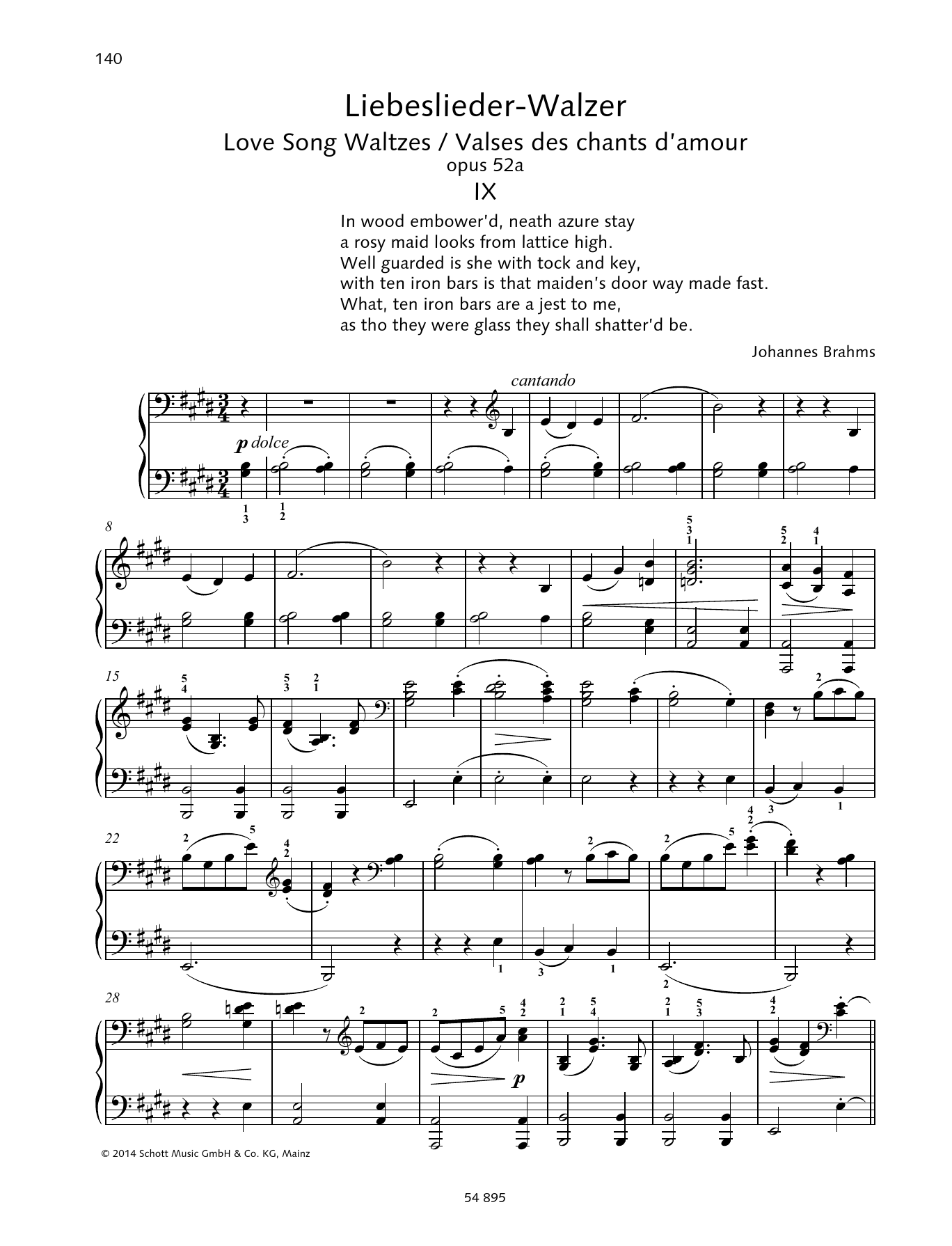
Love Song Waltzes: Piano Duet

By Johannes Brahms / Arranged by Monika Twelsiek

Item: 35-DS00370511

Digital Download
$4.99
Description

Discover MakeMusic Cloud: thousands of interactive titles your students can play along with today.

Sample Audio
No sample audio found.
Sample Video
Additional Details
Publisher: Hal Leonard
Page Count: 8
SKU: 35-DS00370511

More about this title

About the Composer: Johannes Brahms

Johannes Brahms (1833–1897) was a German composer whose mastery of form and orchestration made him one of the most influential classical composers of the 19th century. His waltzes occupy a distinctive place in his output, blending the dance tradition of Vienna with the harmonic sophistication and structural clarity that define his larger works. These pieces showcase his ability to write music that is both immediately appealing and harmonically rich, making them enduring teaching tools for pianists developing interpretive maturity.

Brahms composed his waltzes across several decades, often drawing inspiration from the waltz tradition he encountered in Vienna. Unlike many of his contemporaries who treated the waltz as light entertainment, Brahms elevated the form through inventive accompaniment patterns, unexpected key relationships, and subtle melodic development. His waltz arrangements remain valuable for intermediate to advanced pianists seeking to balance technical precision with lyrical expression.

Why we love this

Brahms' waltzes deliver genuine musical substance within a compact, elegant framework. This arrangement captures the warmth and harmonic color of the originals while making them accessible to pianists who benefit from a carefully considered transcription of his sophisticated voice writing.

What to expect

Intimate and nostalgic, with the gentle sway of a Vienna ballroom filtered through Brahms' introspective sensibility. The music unfolds with unhurried elegance, inviting the performer into a reflective conversation rather than demanding virtuosic display.

Who it's for

Intermediate to advanced pianists working toward mature interpretation of 19th century keyboard music. Teachers seeking engaging concert repertoire that deepens understanding of Brahms' compositional approach.

How to get the most out of it

  • Shape each phrase with a gentle contour rather than playing mechanically through the waltz rhythm; Brahms expects rubato and interpretive flexibility within the triple meter.
  • Balance the melody against accompaniment by bringing out the singing line while keeping the dance pulse felt in the background.
  • Pay attention to Twelsiek's pedaling indications and harmonic suggestions; they reveal the orchestral colors Brahms intended.
  • Allow breathing space at phrase endings rather than rushing into the next section; this respects the vocal quality of the melodic writing.

How to use it

These waltzes work beautifully as a suite within a romantic-era recital or as an interlude between weightier classical works. They also serve as an approachable entry point for students exploring Brahms before tackling his sonatas or concertos.

Skills your students will build

  • Rubato and flexible phrasing within a defined metric framework
  • Voicing and balance between melody and accompaniment
  • Pedal technique and sustaining harmonic color
  • Interpretation of 19th century dance forms with historical awareness

You May Also Like