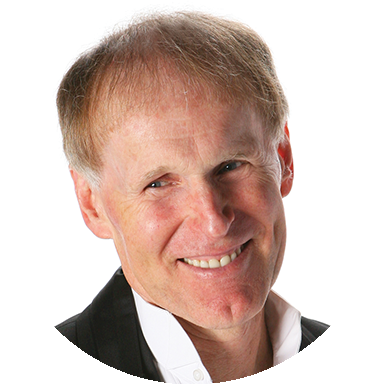
Kirby Shaw's career spans five decades of choral leadership across North America, Europe, and beyond. He holds degrees in Music Education and Choral Composition from San Jose State University, plus a DMA in Choral Conducting from the University of Washington. His teaching approach combines rigorous musicianship with infectious energy and humor that has shaped vocal programs from public schools to major universities including Colorado State and the University of Missouri at Kansas City.
As a prolific composer and arranger, Shaw has created over 2500 choral works that are performed worldwide and have sold nearly 20 million copies. His jazz credentials run deep: he has studied directly with Bobby McFerrin, Al Jarreau, and Jon Hendricks (who famously told Shaw, "Man, you don't make mistakes!"), and he currently performs with Just 4 Kicks, a jazz a cappella quartet. His work has earned numerous ASCAP awards, and his most recent major commission came from the Mormon Tabernacle Choir.
Why we love this
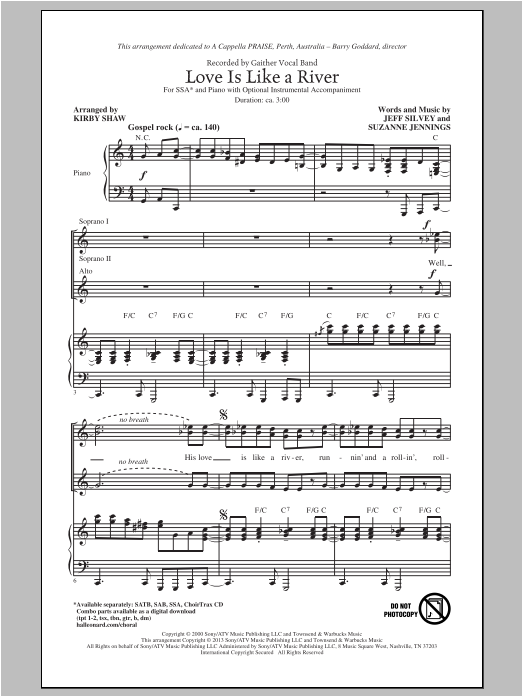
Shaw's gift for writing accessible, emotionally resonant arrangements shines here. The gospel idiom feels natural and singable across all three parts, and the SSA voicing opens this style to choirs who might otherwise shy away from it. This is the kind of piece that builds genuine joy in rehearsal while deepening singers' understanding of how to phrase and shape within a spiritual tradition.
What to expect
Warm and introspective, with the flowing inevitability suggested by the title. The arrangement carries a gentle spiritual gravity that invites singers and listeners into reflection without demanding virtuosity.
Who it's for
SSA and SSAA choirs looking to expand their repertoire into sacred and gospel styles. Directors seeking music that connects singers emotionally while remaining vocally manageable across a range of abilities.
How to get the most out of it
Let the melody breathe in the opening phrases. Kirby's voicings are clean and supportive, so resist the urge to push; the beauty lies in the simplicity of the lines as they enter.
Lock the rhythm section into a steady, unhurried pulse that gives the piece room to sway slightly. Gospel phrasing depends on ensemble confidence in the underlying beat.
Balance the soprano and alto parts so the narrative voice (typically the melody) stays clear without drowning out the harmonic support beneath it.
How to use it
Pair this with other sacred or gospel works to create a thematic concert set focused on faith and hope. The five pages make it ideal for a spring sacred concert or community service where accessibility and emotional authenticity matter as much as technical polish.
Skills your students will build
Gospel phrasing and rhythmic nuance within a steady meter
Blending soprano and alto lines to support a single melodic narrative
Interpreting harmonic color through dynamic shaping and breath placement
Reading and performing in a style rooted in African American musical traditions
You May Also Like
Scan to Complete Your Purchase
Use your phone's camera to scan the code below
You'll log in on your phone and the order will be added to your account