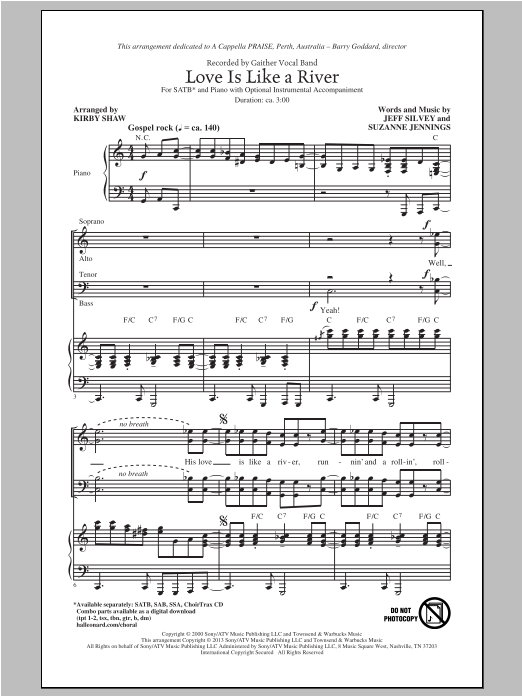
Kirby Shaw's arrangements appear in choirs across six continents, a testament to his gift for writing music that serves both singers and audiences. His formal training in choral composition and conducting (San Jose State University and University of Washington) combined with decades of classroom teaching has shaped an unmistakable compositional voice: accessible yet sophisticated, joyful yet musically substantial. Shaw founded and directed the celebrated vocal jazz ensemble at College of the Siskiyous and has held similar posts at Colorado State University, the University of Missouri at Kansas City, and now Southern Oregon University.
With over 2500 arrangements in print and nearly 20 million copies sold worldwide, Shaw has earned consistent ASCAP recognition and a commission from the Mormon Tabernacle Choir. His learning extends beyond composition into direct mentorship with jazz vocalists including Bobby McFerrin, Mark Murphy, and Al Jarreau. Shaw brings a performer's understanding to every score he writes, infusing his teaching and arranging with humor and infectious energy that translates directly onto the page.
Why we love this
Shaw captures the spiritual warmth of gospel without requiring your choir to abandon standard SATB writing or demand soloistic prowess from every section. The arrangement breathes naturally across all four voices, making it equally rewarding for choirs with strong singers and those still building confidence in mixed voicing.
What to expect
Warm and flowing, like water finding its path downhill. The piece carries an intimate quality despite being written for full four-part harmony, and there's something simultaneously gentle and powerful in how Shaw handles the text. Gospel inflections surface naturally throughout without ever feeling performative or forced.
Who it's for
This arrangement serves choirs preparing concert or worship programs that welcome both traditional and contemporary musical languages. It works for high school and college ensembles, church choirs seeking accessible sacred material, and festival or community choir settings where musical accessibility and emotional authenticity matter equally.
How to get the most out of it
Let the text guide your phrasing rather than fighting against it; Shaw's lyrical lines follow speech patterns that feel conversational in the mouth.
Balance the gospel-influenced harmonies by having sections listen inward to each other's parts during warm-ups, especially where the voicing shifts unexpectedly.
Consider doubling the soprano line with a soloist or small group for select phrases to create textural variety without rewriting the score.
Establish a steady, flowing tempo early in rehearsal; the river imagery works best when motion feels continuous rather than pushed.
How to use it
Pair this with other Shaw arrangements to showcase his distinctive voice across a concert, or use it as a closing piece that leaves singers and listeners in a reflective, uplifted space. The 10-page length makes it substantial enough to anchor a set without consuming a full rehearsal cycle, fitting neatly into concert planning when you need a spiritual centerpiece that doesn't require weeks of preparation.
Skills your students will build
Singing in sustained gospel harmonic idiom while maintaining diction clarity
Listening across four parts to balance warm, close-voiced chords
Phrasing lyrical lines that reflect text emphasis over metric regularity
Interpreting stylistic nuance from notation when swing or rhythmic flexibility is implied
You May Also Like
Scan to Complete Your Purchase
Use your phone's camera to scan the code below
You'll log in on your phone and the order will be added to your account