
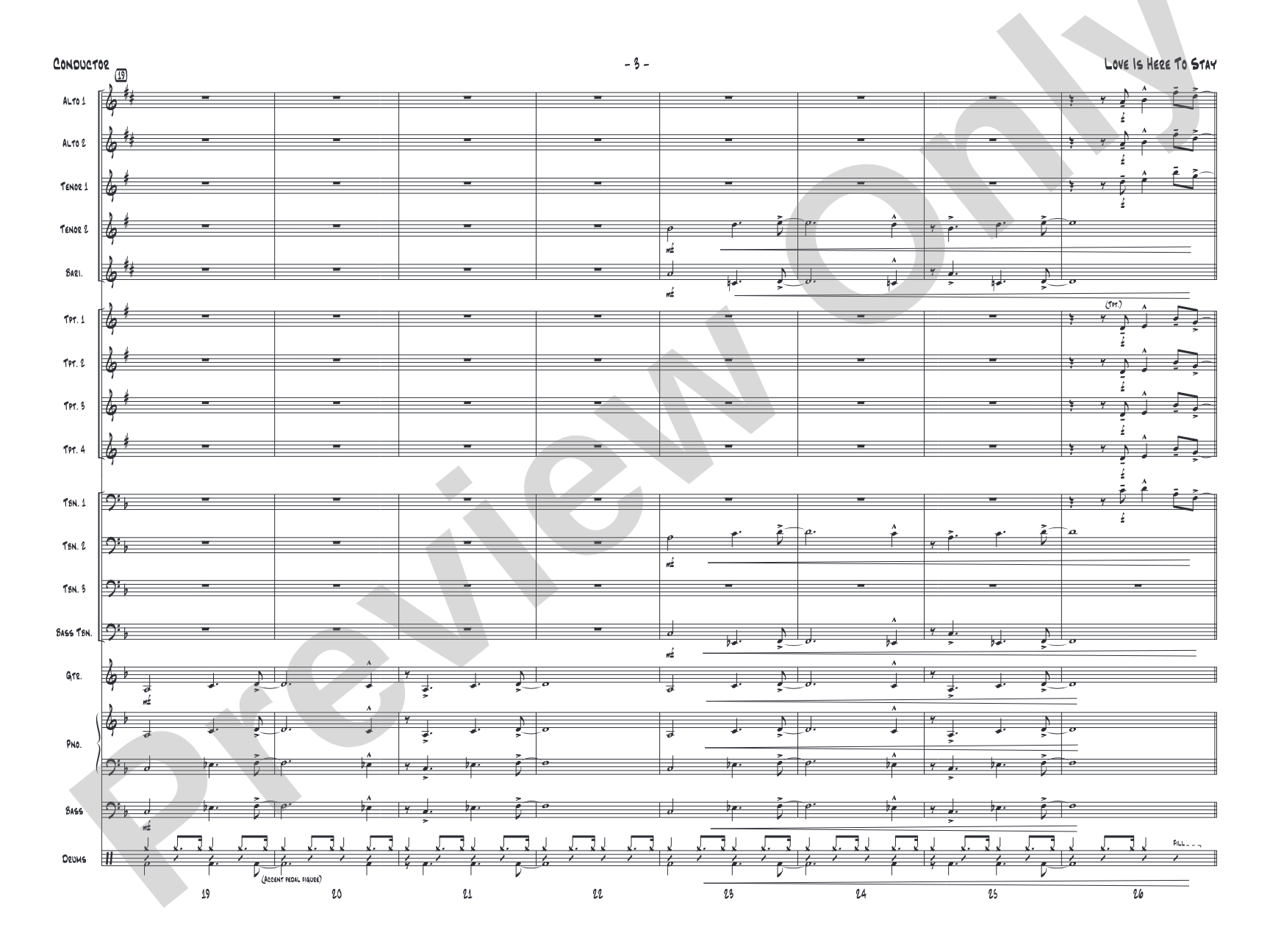
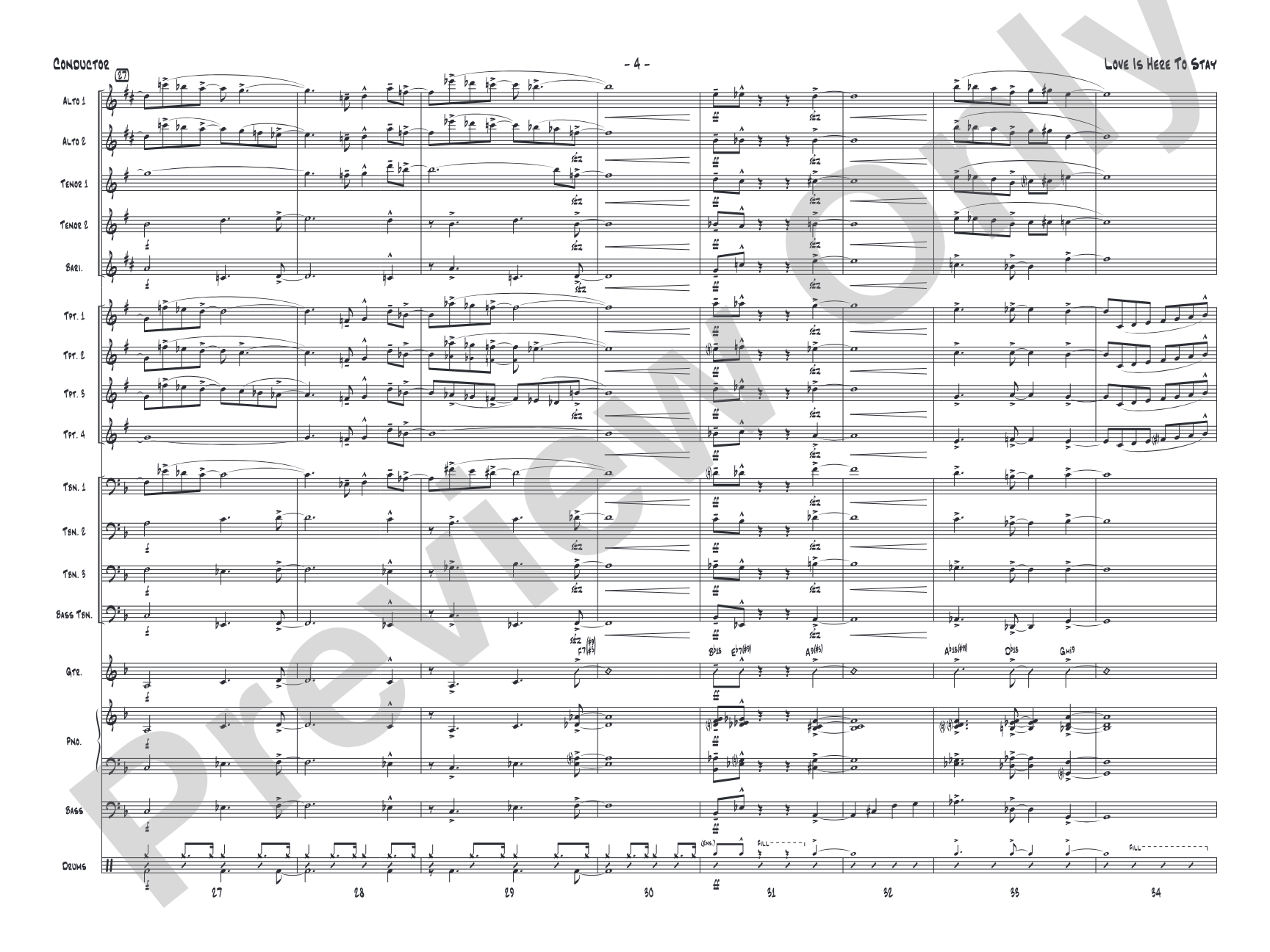
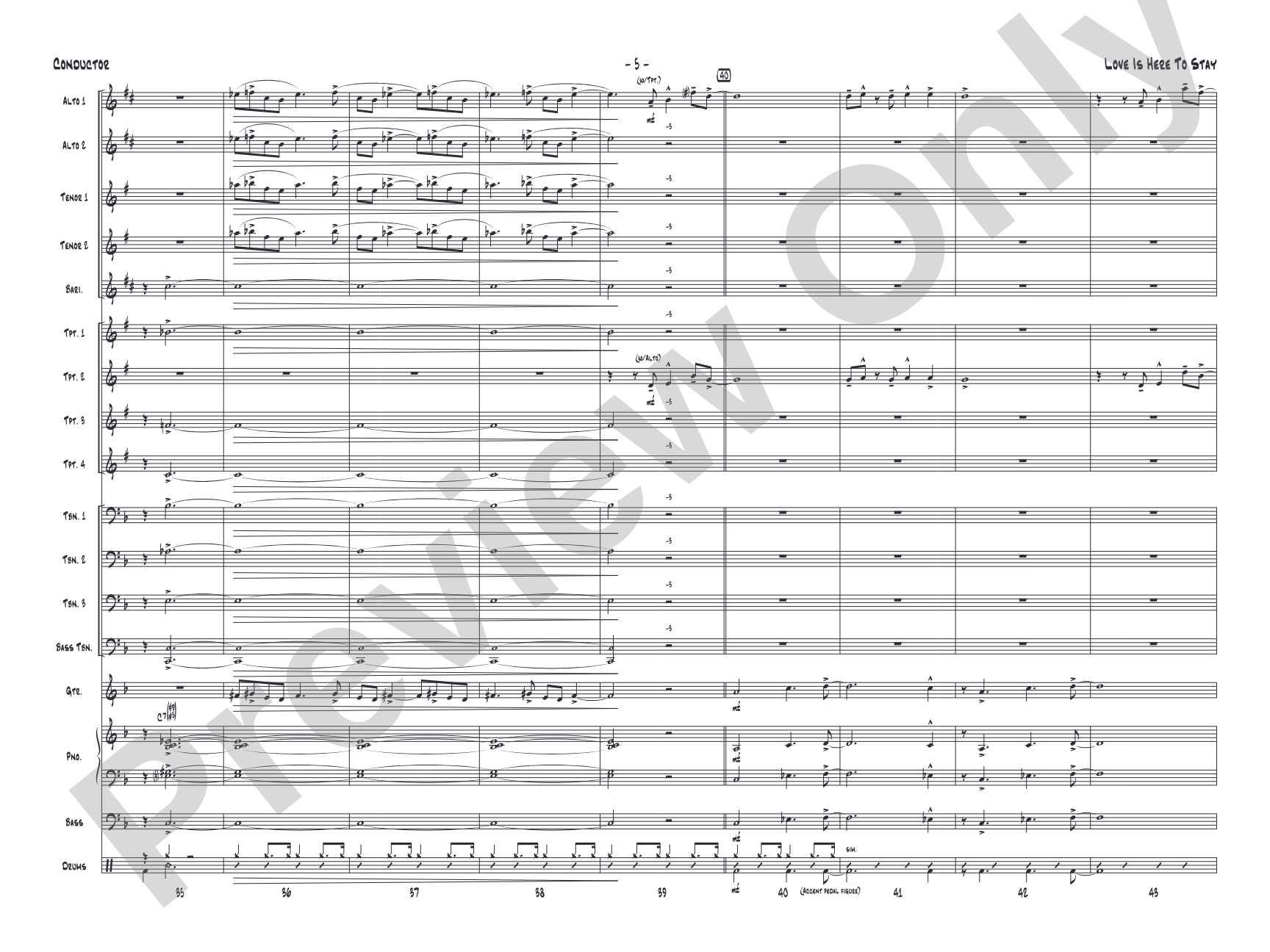
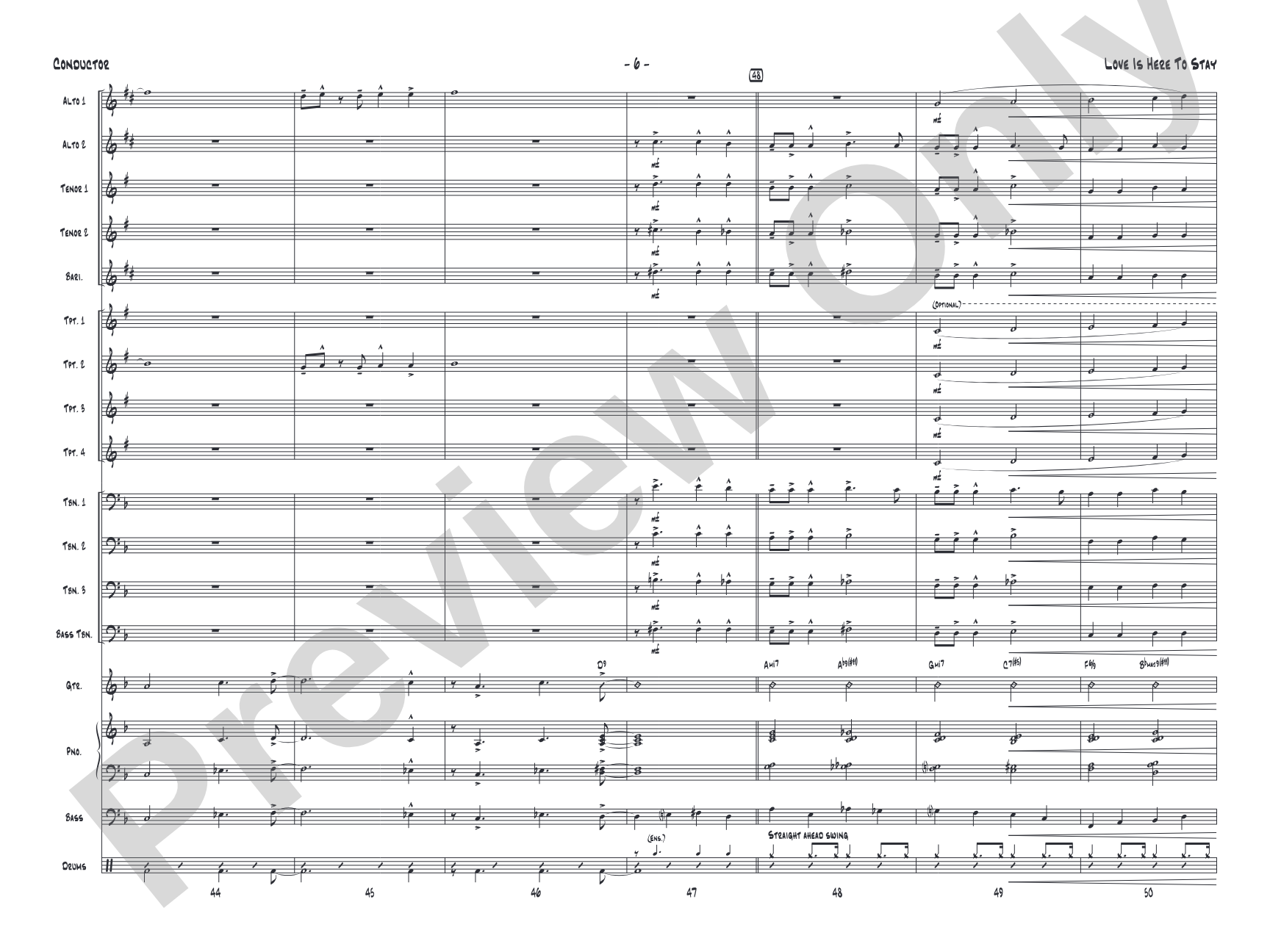
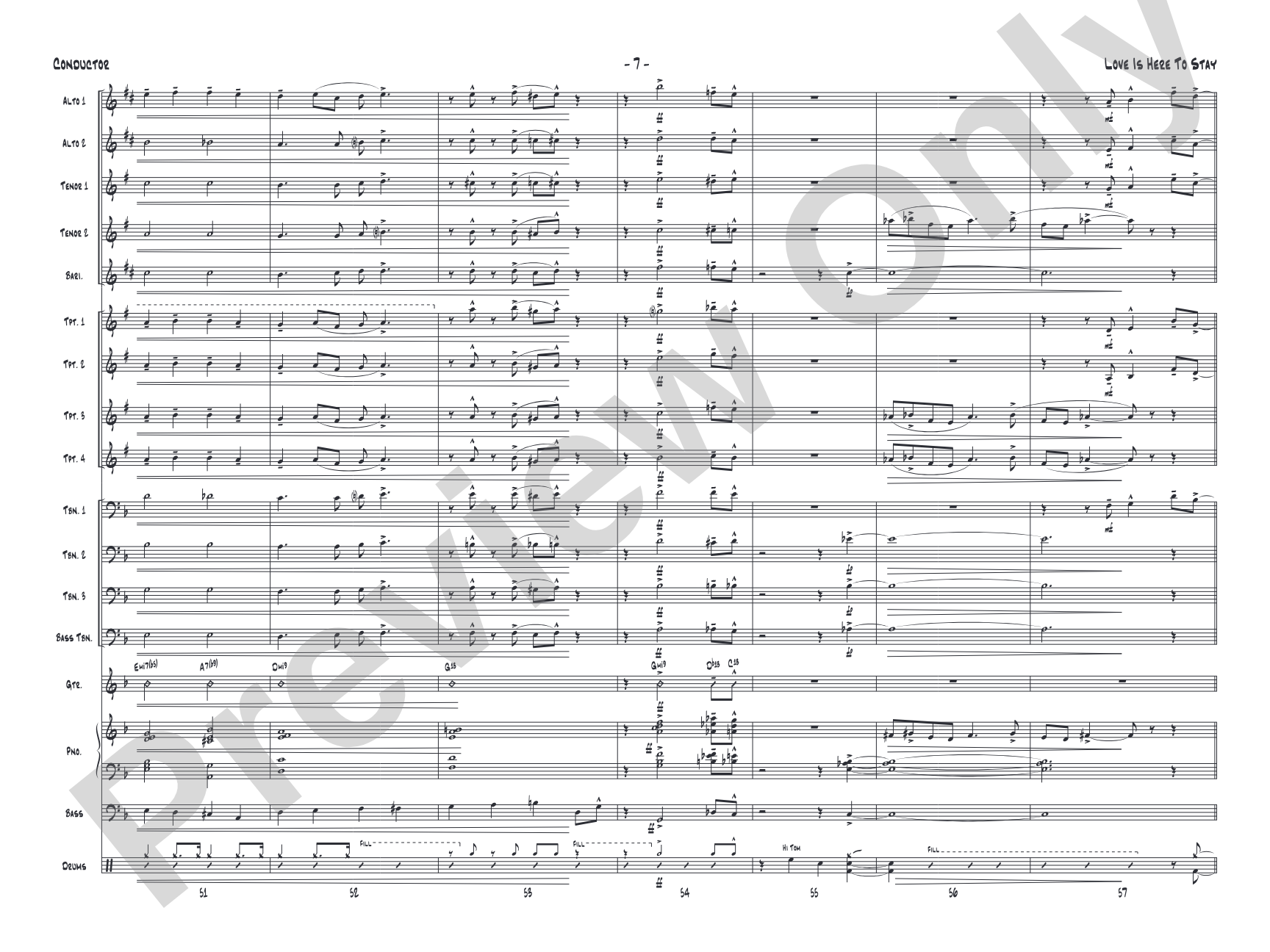
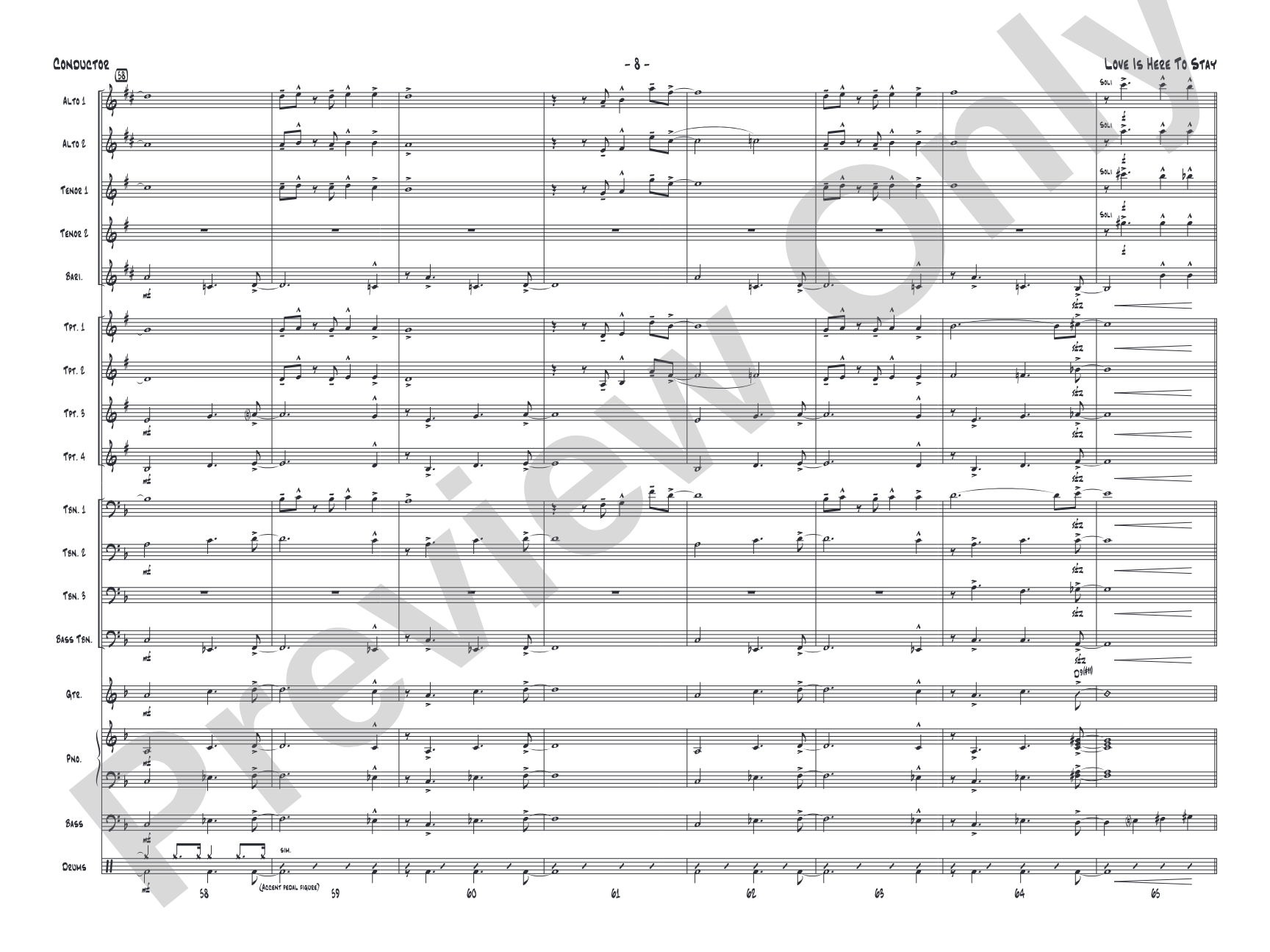
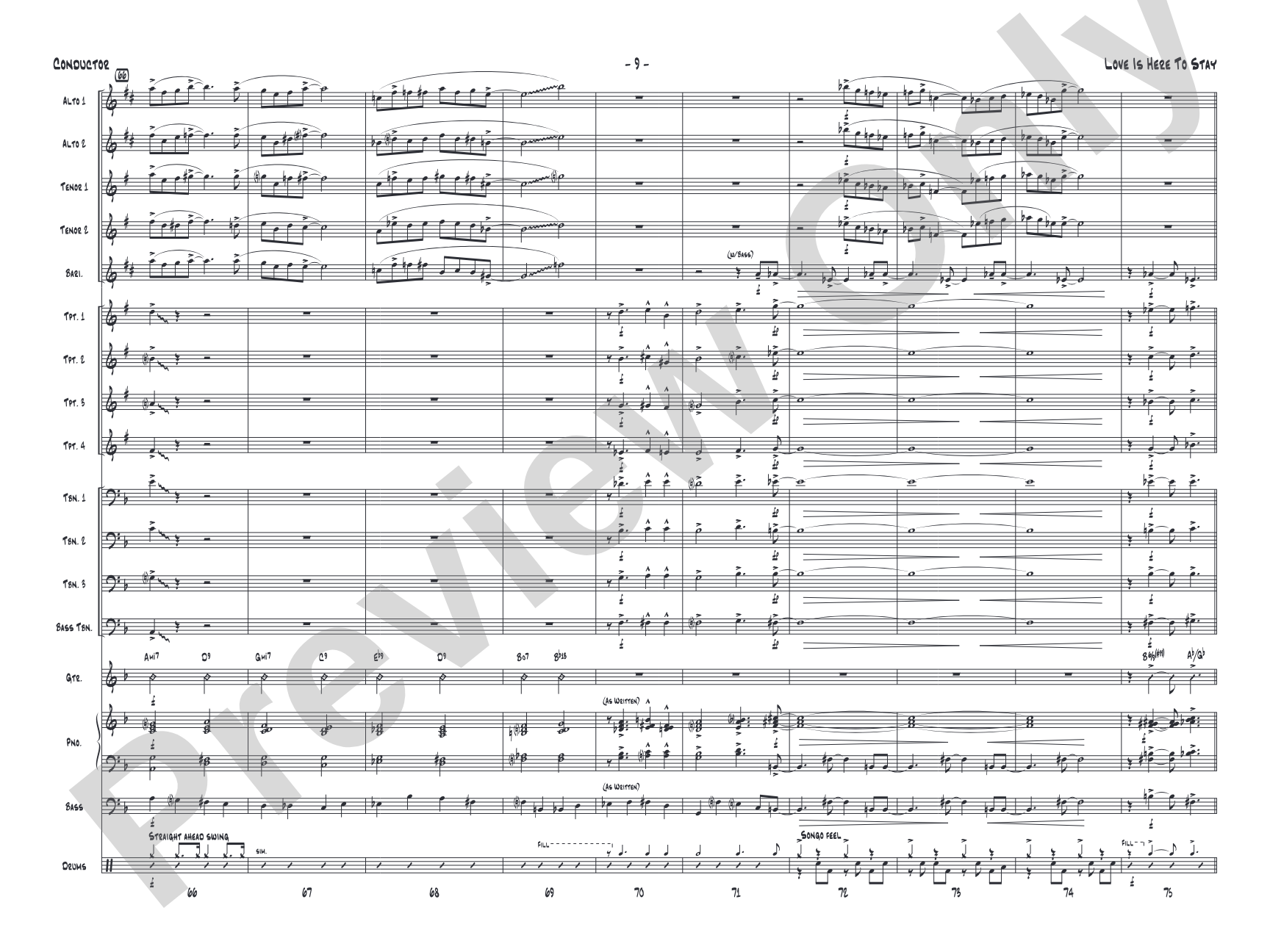
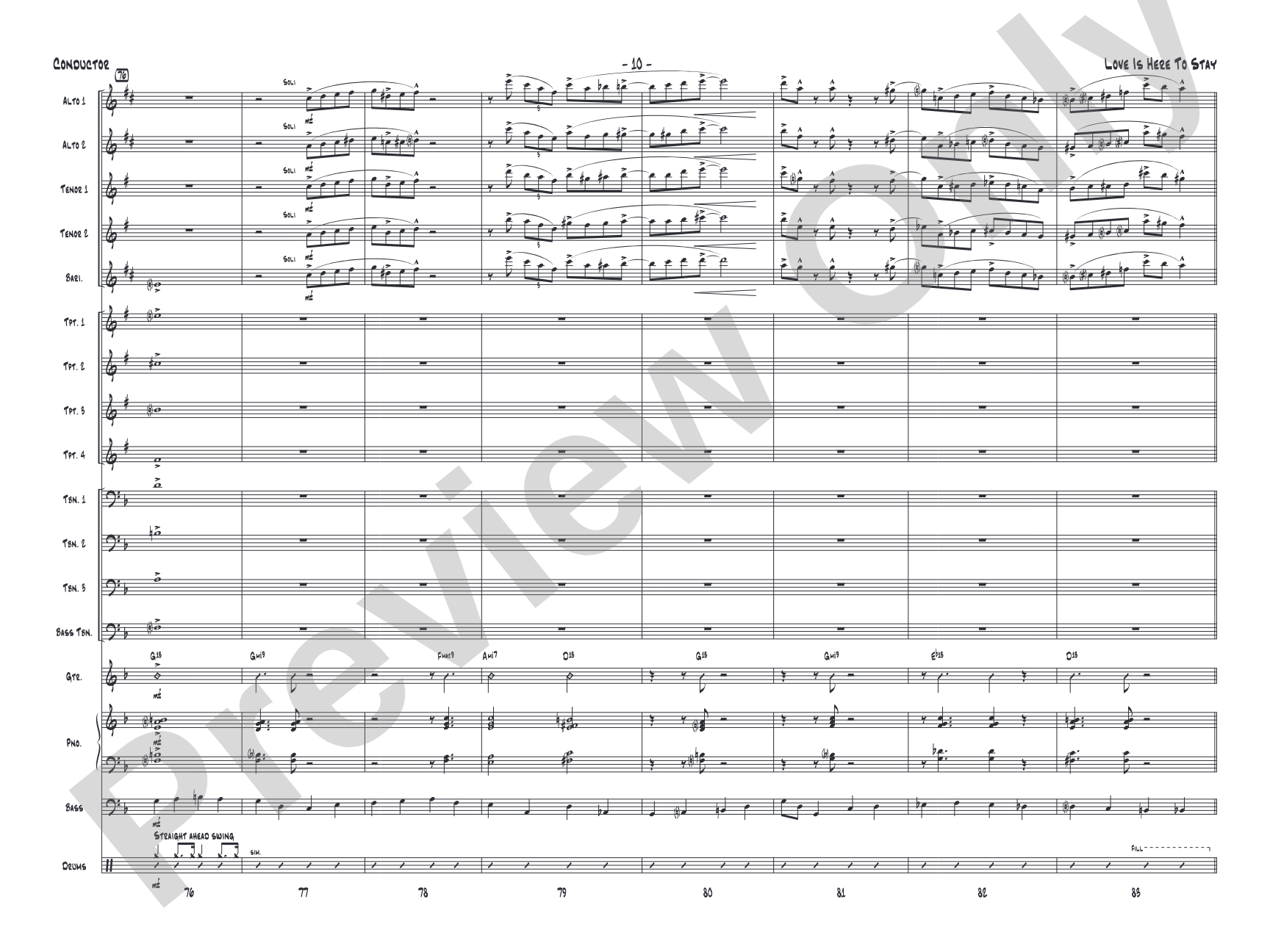
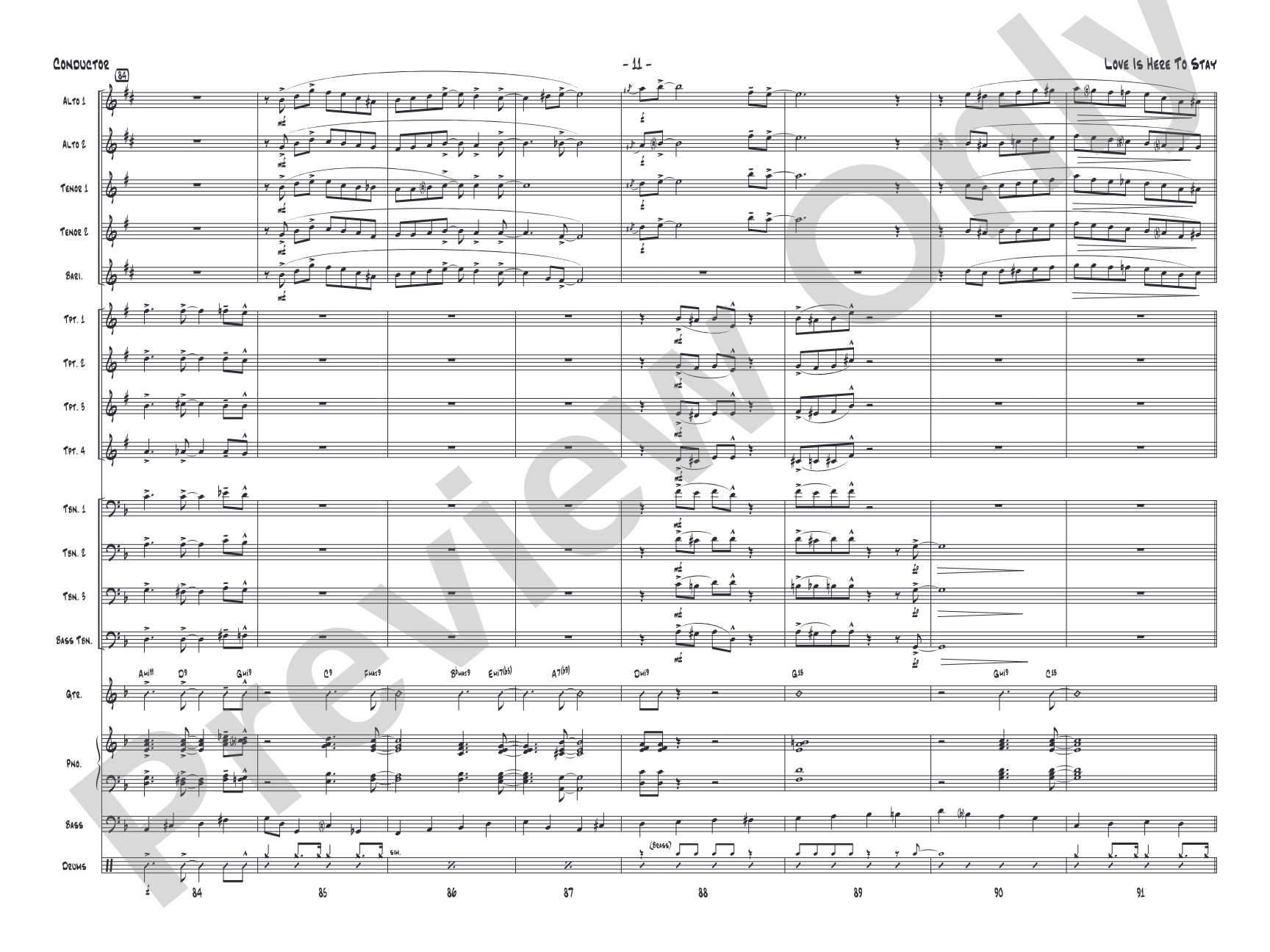
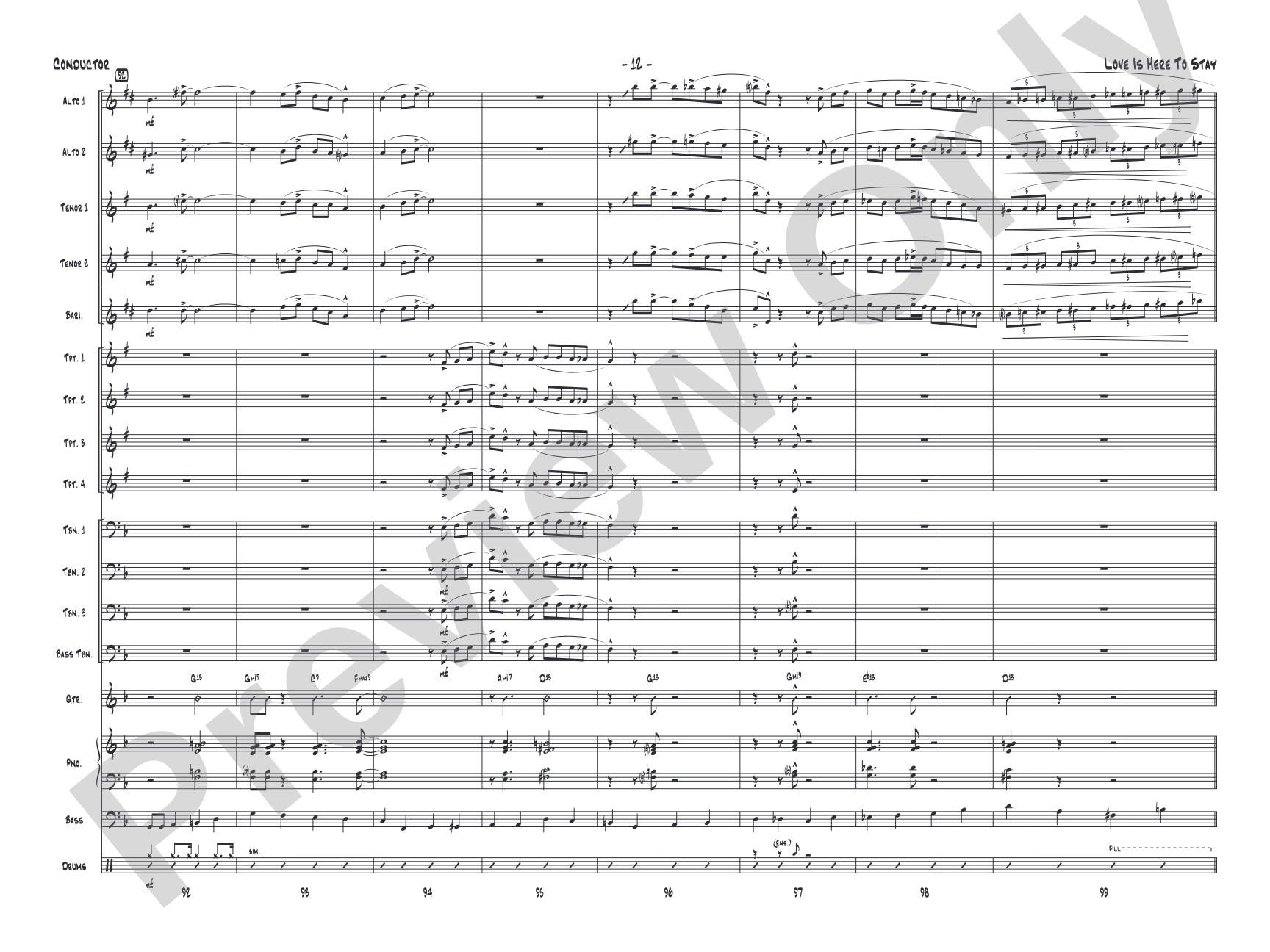
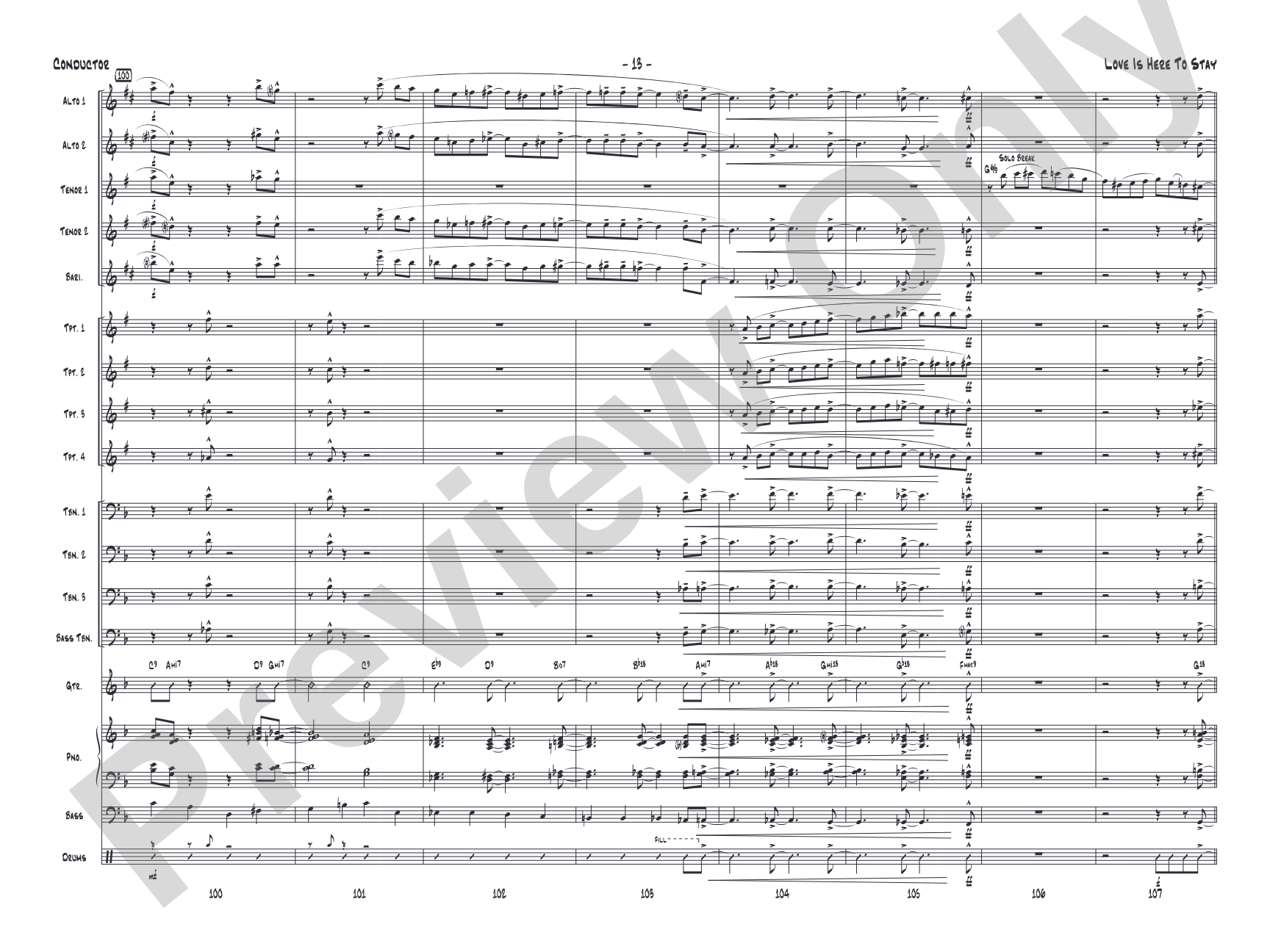
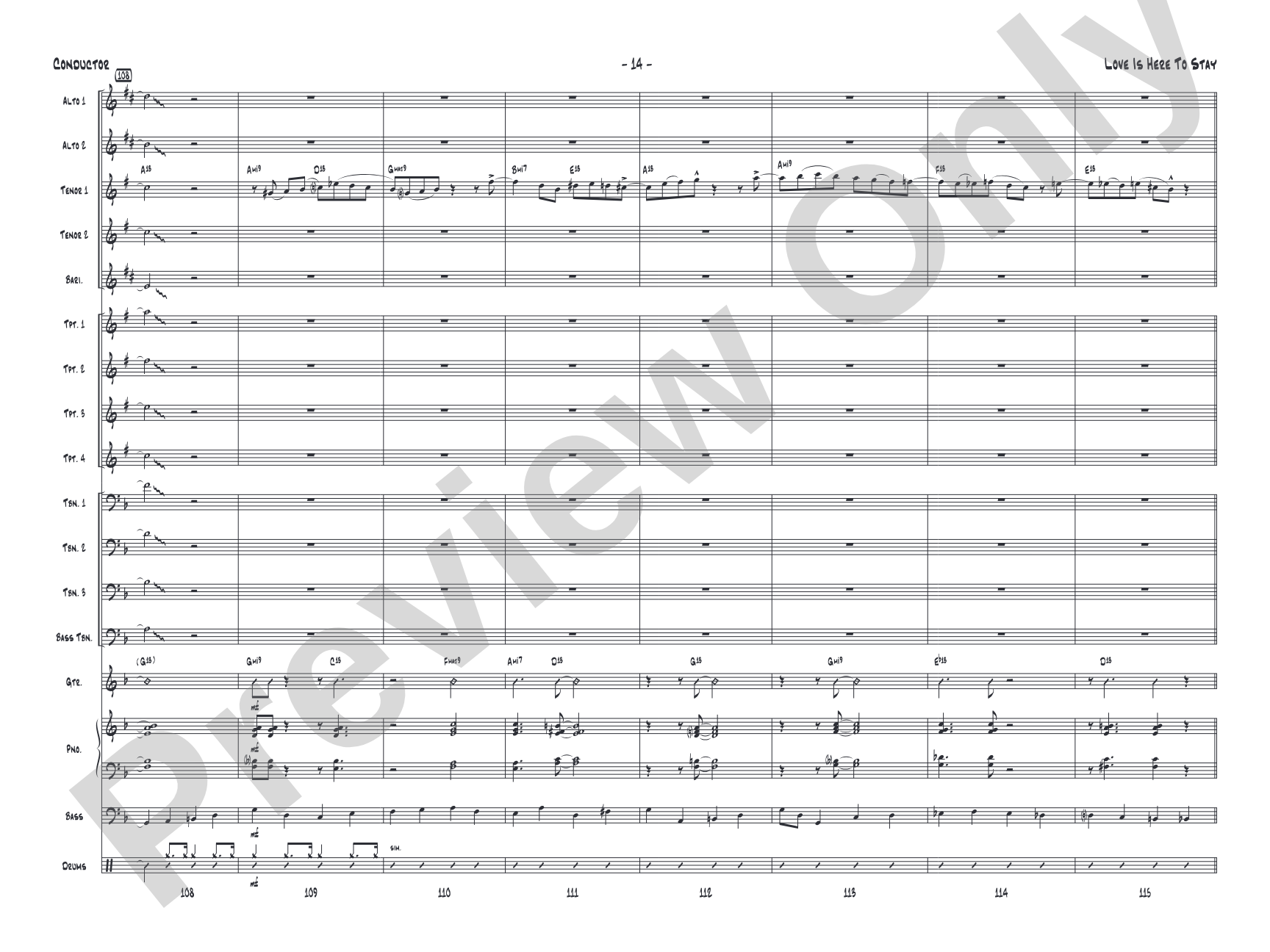
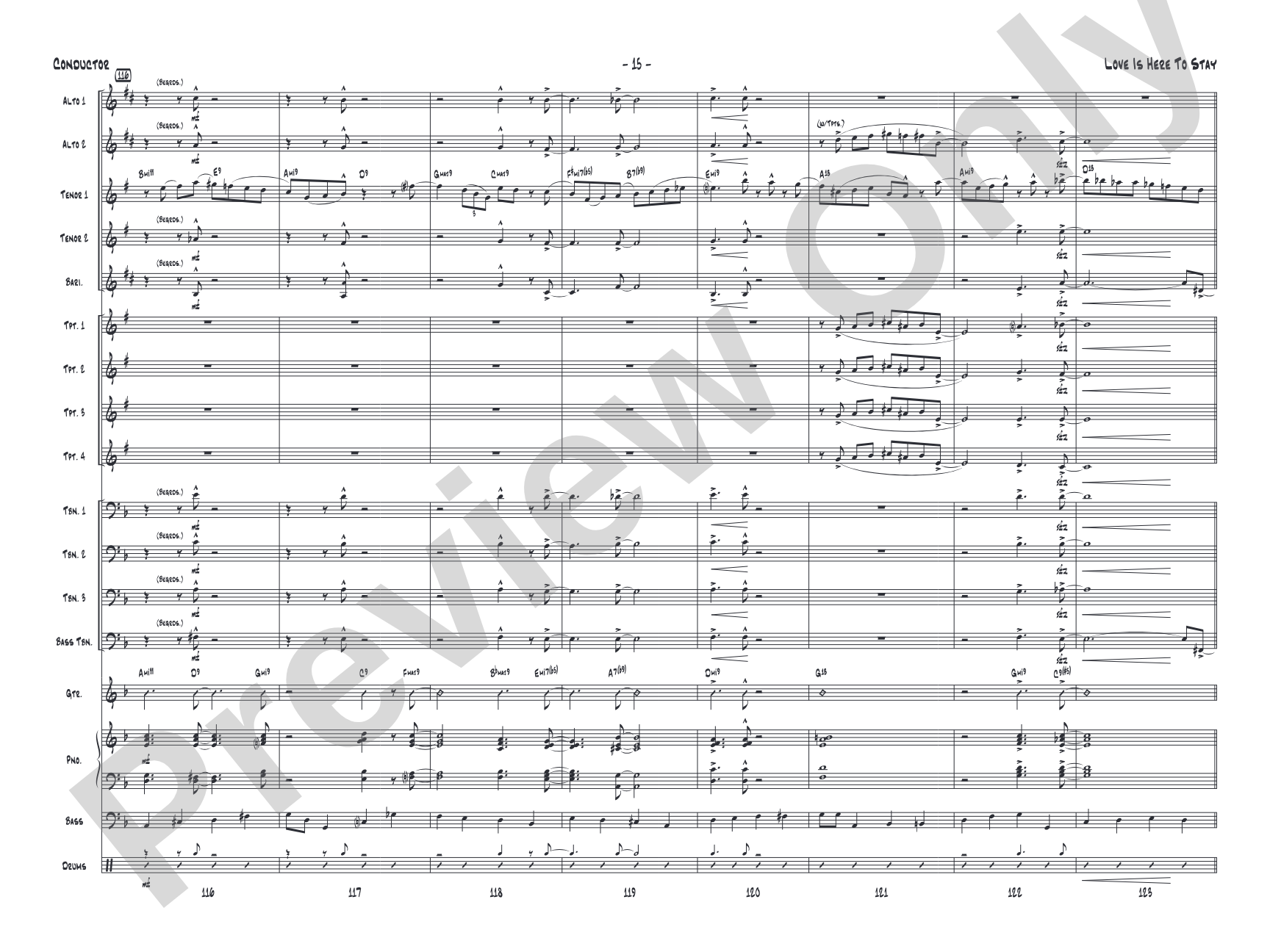
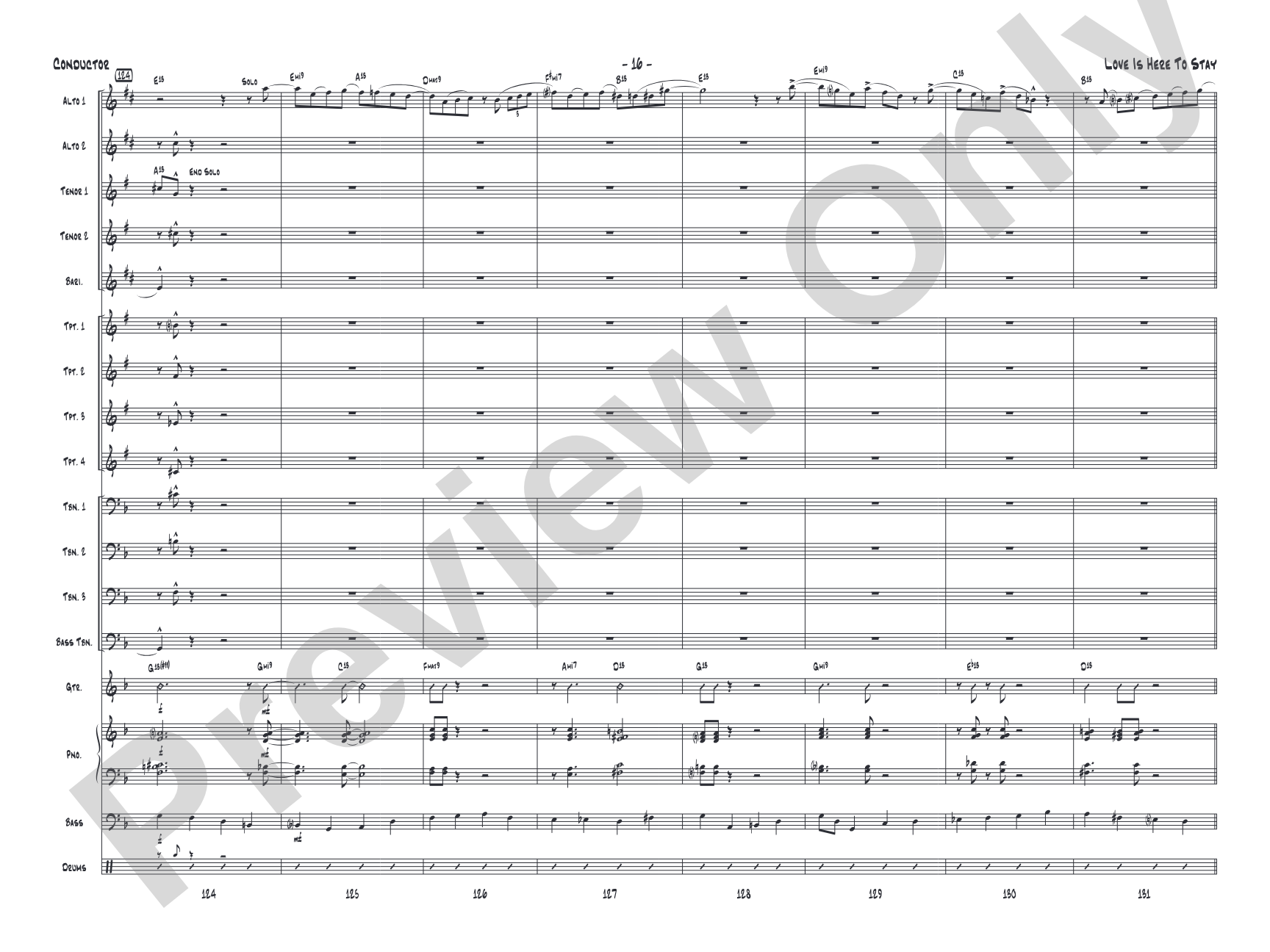
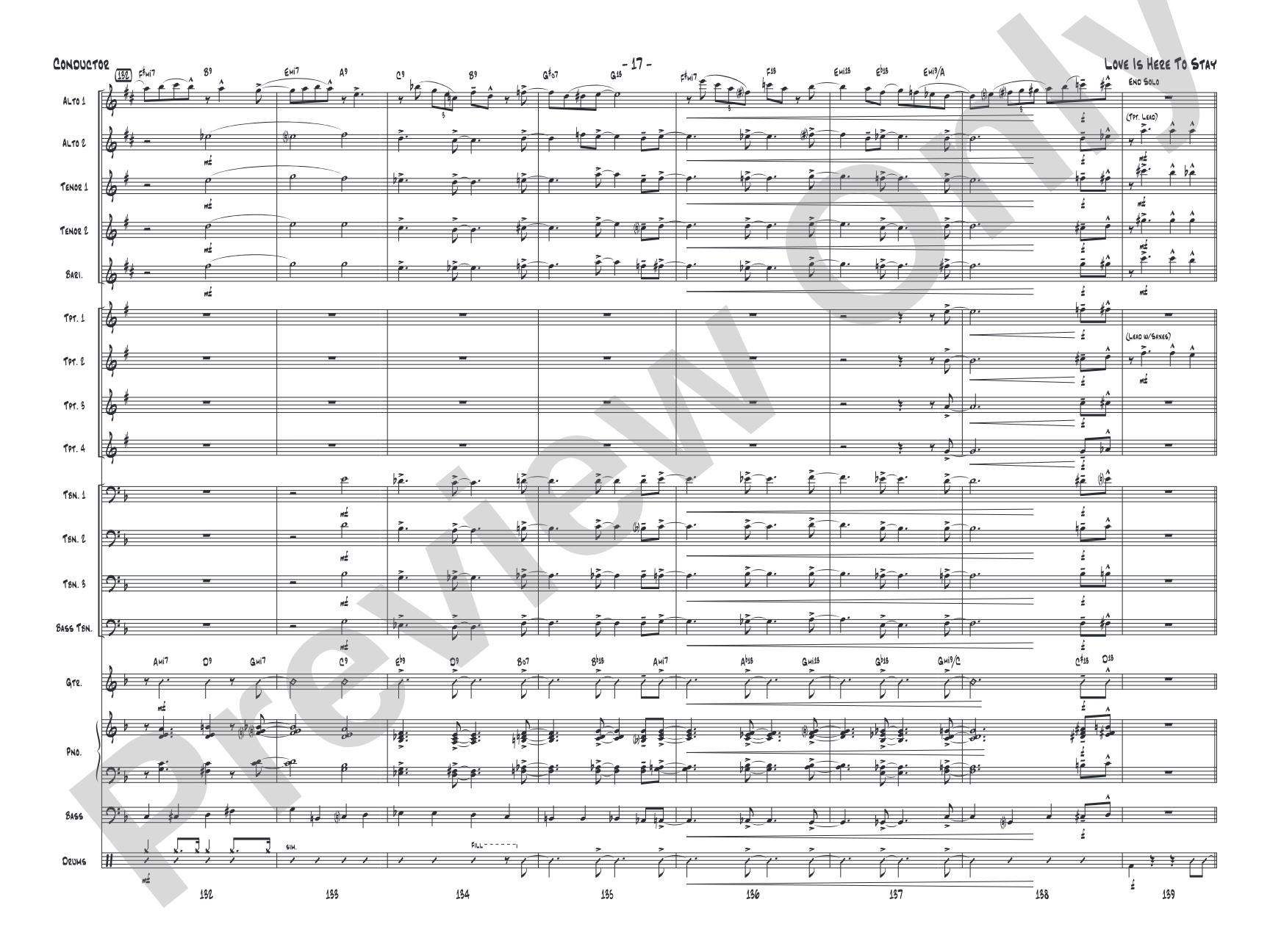
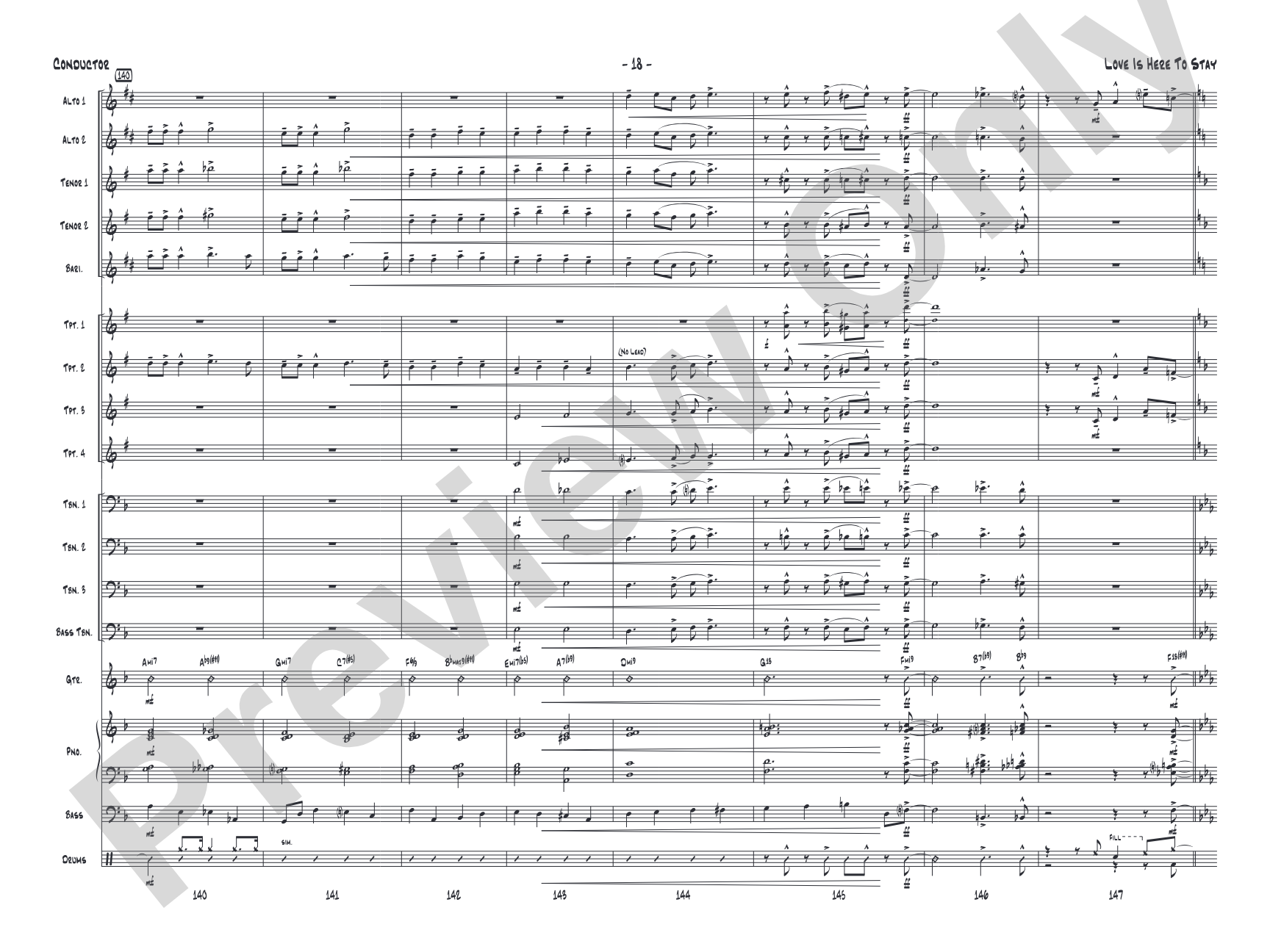
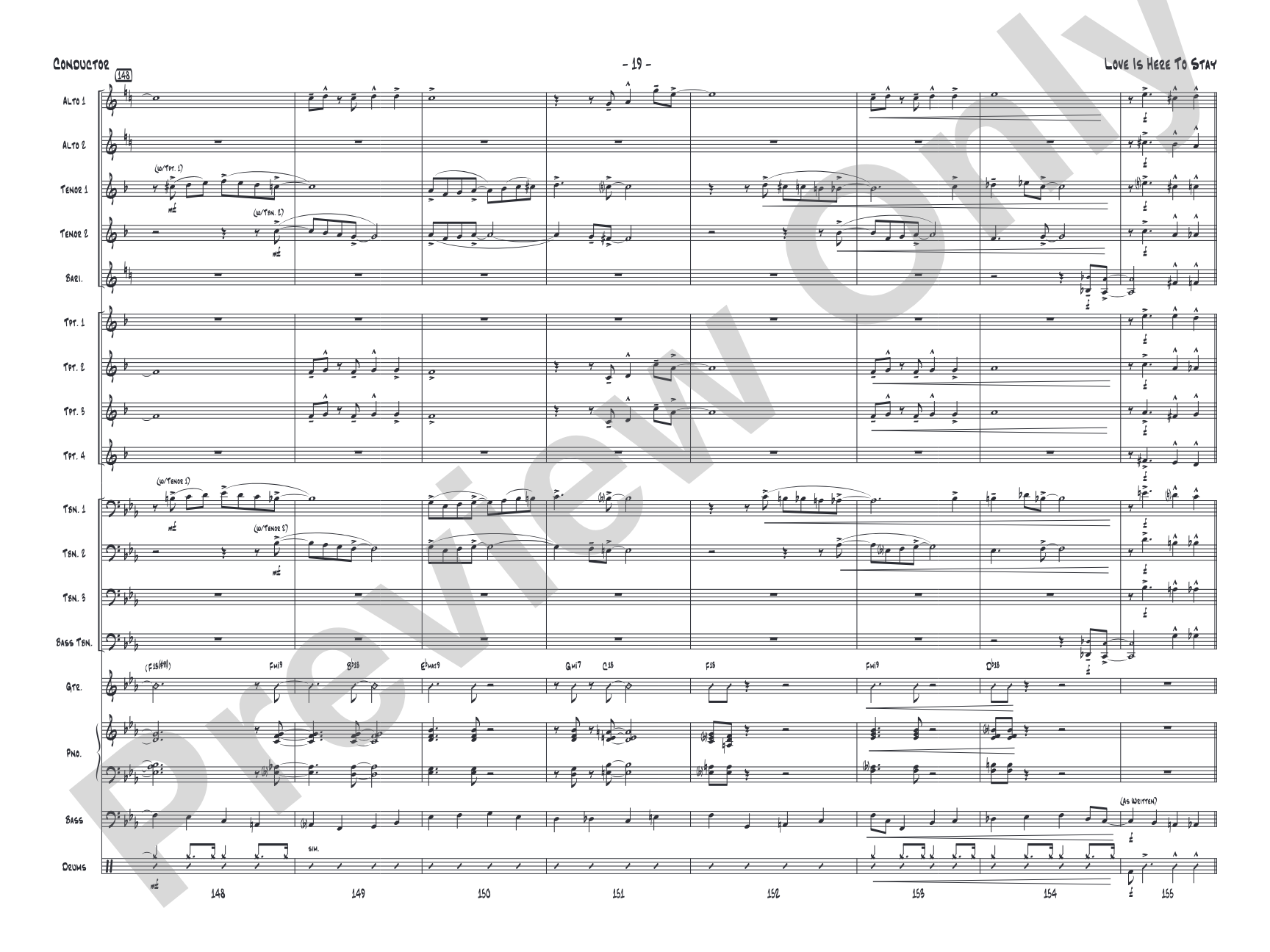
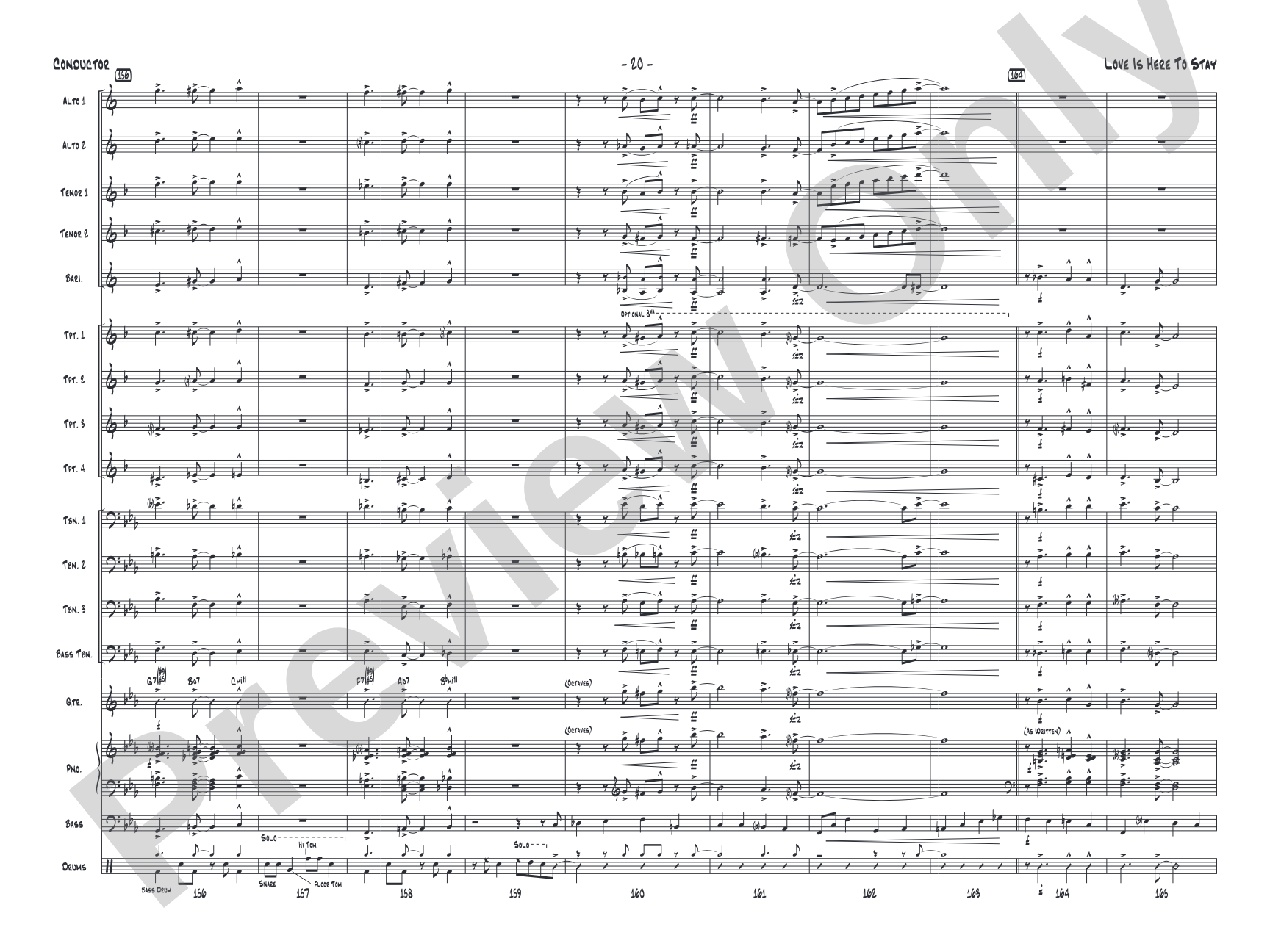
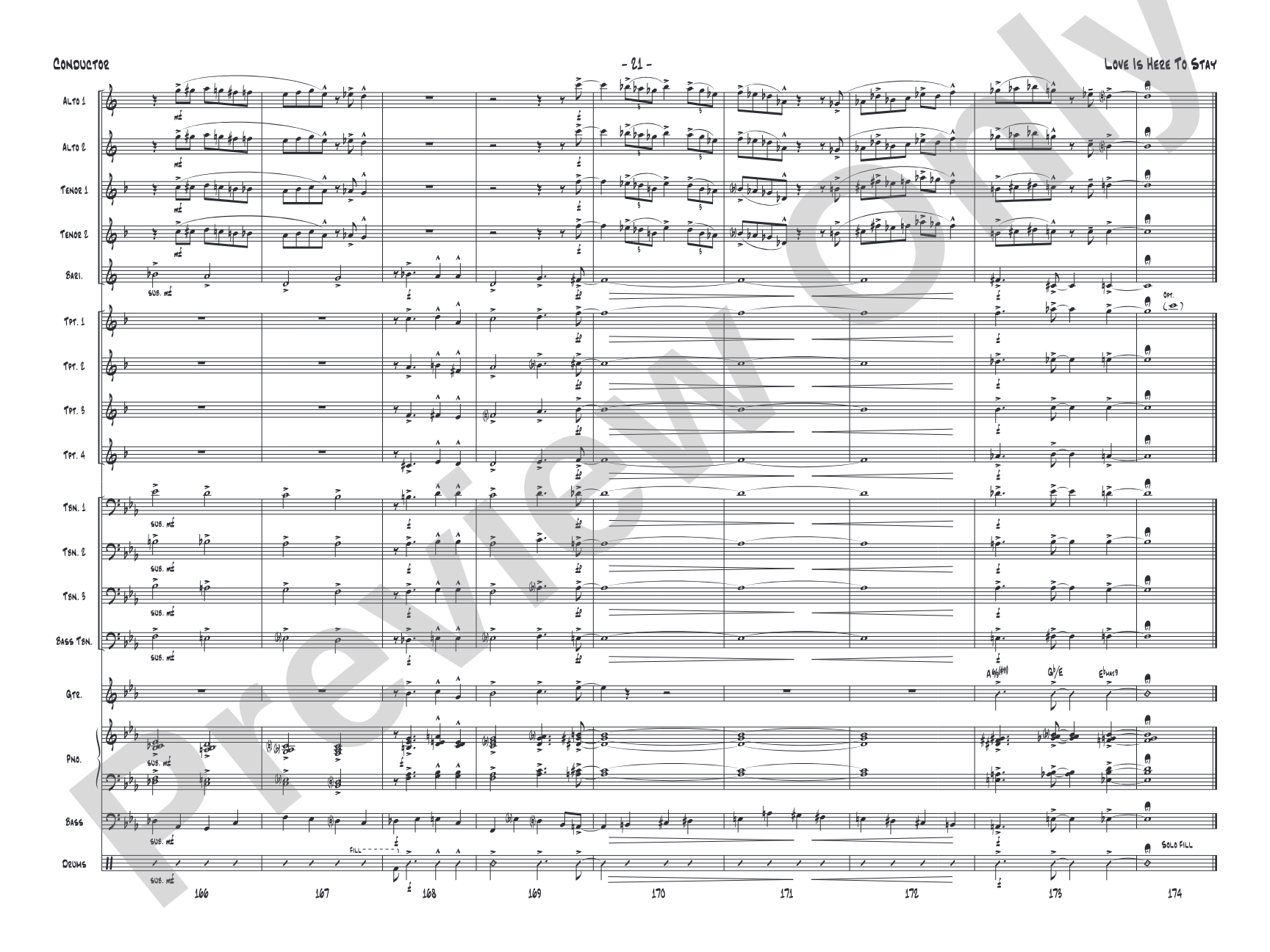

Love Is Here to Stay: Score
Music and lyrics by George Gershwin and Ira Gershwin / arr. Craig Skeffington
Grade: 3.5 (Medium)
Item: 00-PR-0005321
$11.00
Pickup currently not available
Description
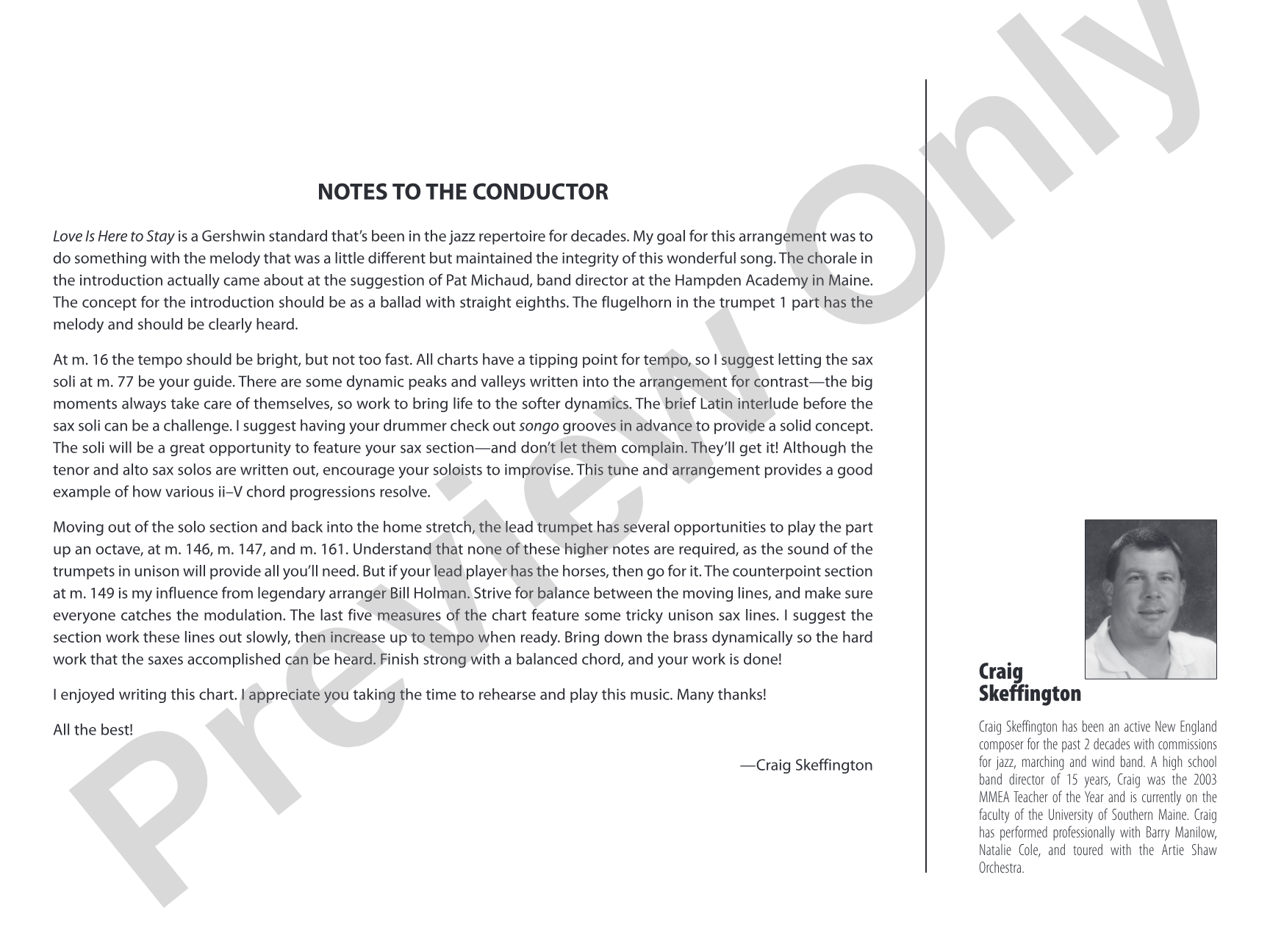
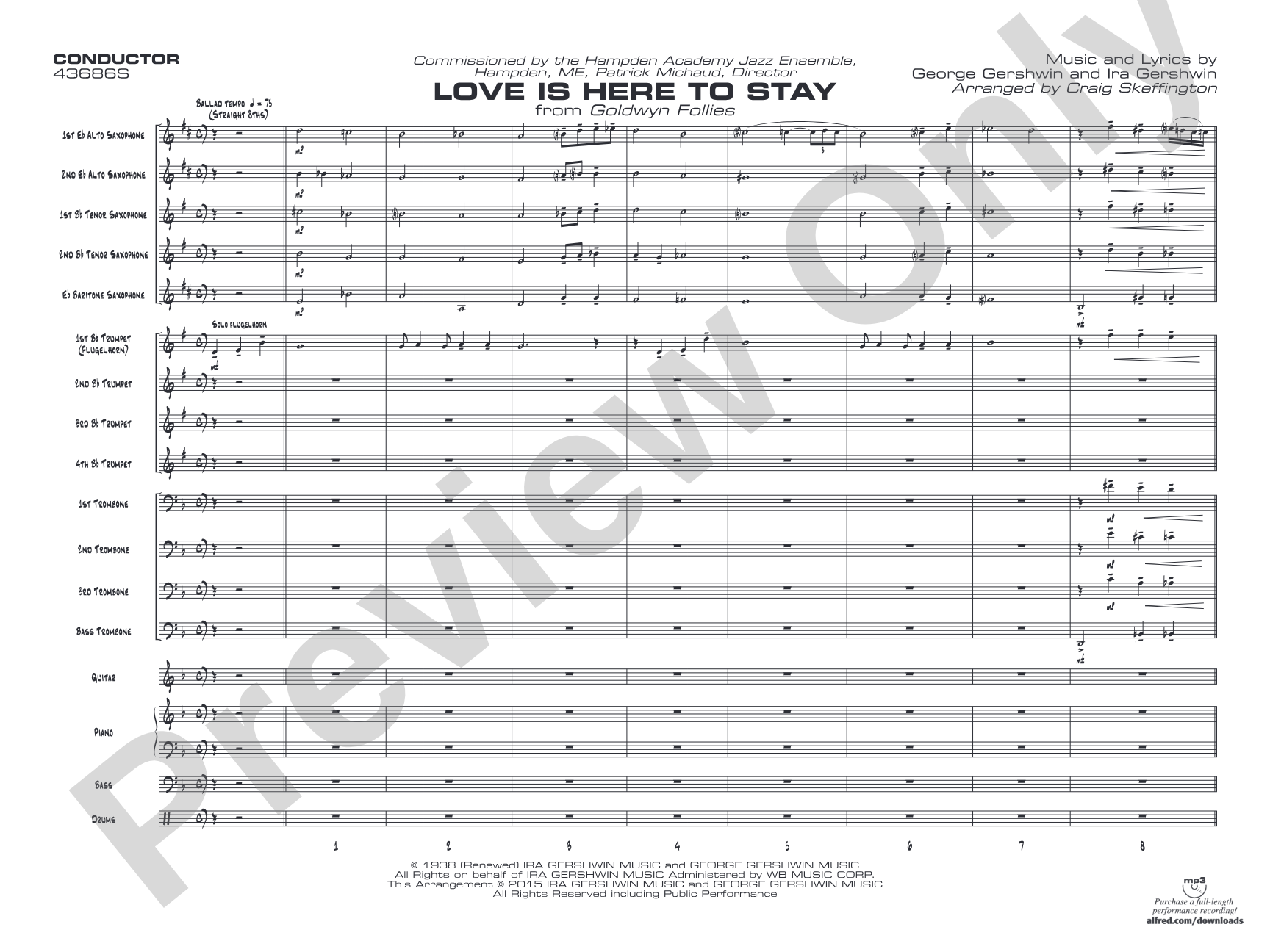
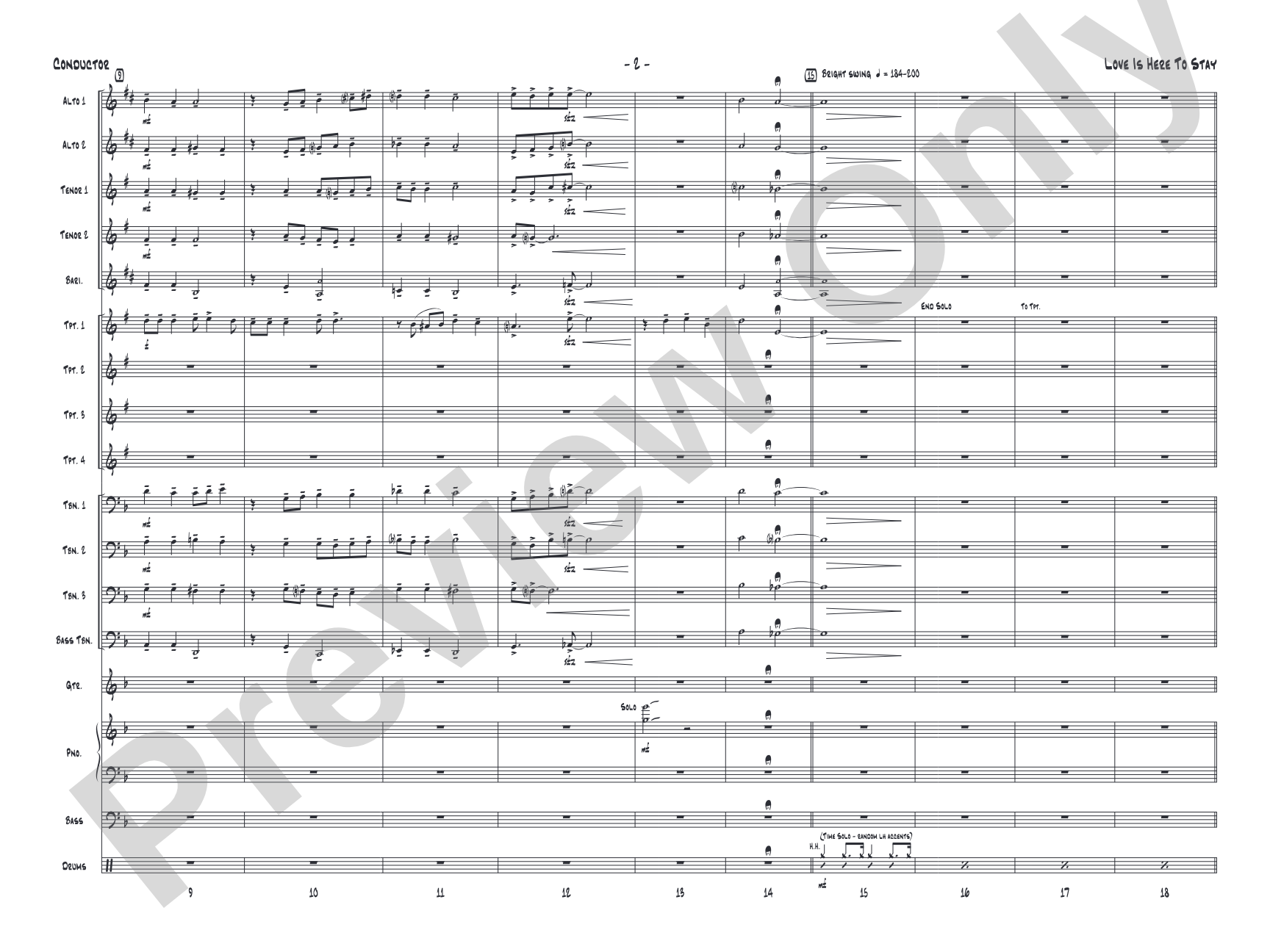
Featuring a chorale introduction with trumpet melody, "Love Is Here to Stay" leads into a bright swing around 184 BPM with suggested solos for tenor and alto. The lead trumpet range is up to written B above the staff. A hot festival chart! (4:23)


Don't just read it, hear it, play along with it, and watch your students grow with it. In MakeMusic Cloud, Love Is Here to Stay: Score comes alive with professional accompaniment, adjustable tempo, and built-in practice tools that turn solo practice into real progress.
Open in the Player
Jump straight in and assign it today.
Start Your Free Trial
Open this title and explore the full library in minutes.
Sample Audio
1
Audio File
--:--
0:00
0:00
Sample Video
No sample videos found.
Additional Details
Series:
Jazz Band Series
Publisher:
Alfred Music
Page Count:
102
SKU:
00-PR-0005321
More about this title
About the Composer: George Gershwin
George Gershwin (1898-1937) bridged classical and popular music with uncommon fluency, composing works that appeal equally to concert halls and jazz clubs. His melodies have an immediate, singable quality that makes them natural choices for educational ensembles; his harmonic language, rooted in both American songwriting and European modernism, rewards careful interpretation.
Why we love this
Craig Skeffington's arrangement strikes an ideal balance for Grade 3.5 groups: the chorale introduction gives you genuine musical substance without overcomplicating the texture, and the swing section crackles with energy without demanding virtuosic soloists. The solo opportunities for tenor and alto saxophone mean your section players get meaningful moments in the spotlight, making this a morale builder as much as a festival contender.
What to expect
A warm, confident welcome from the chorale gives way to a sun-bright swing groove that feels both swinging and accessible. The melody sits in a natural register, the harmonies are sophisticated without sounding academic, and there's genuine joy in the rhythm section's pocket.
Who it's for
Jazz ensembles at the upper end of Grade 3 or solid Grade 4 level looking for a crowd-pleasing contest or concert feature with authentic jazz credentials. Sections need reliable readers and reasonable range facility in the lead trumpet book, but the accompaniment parts are straightforward enough that developing players can support without strain.
How to get the most out of it
- Shape the chorale introduction with clear harmonic direction; let the trumpet melody sit naturally over the voicings rather than fighting for prominence.
- Lock the rhythm section (bass and drums) into a relaxed swing feel before rehearsing the full ensemble; a solid groove makes the trumpet's written B above the staff sit comfortably in the mix.
- Give your tenor and alto soloists space to stretch during their sections; outline the changes and let them find their own phrasing rather than over-conducting.
- The 184 BPM tempo should feel easy and grounded, not rushed; if the ensemble tightens up, slightly back off the tempo and rebuild the groove from the rhythm section.
How to use it
Program this as a festival selection or a concert centerpiece in a set mixing standards with contemporary material. Its brisk energy and familiar melody make it an excellent complement to ballads or more challenging contemporary charts, and the upbeat finish leaves audiences smiling.
Skills your students will build
- Swing articulation and phrasing at moderately fast tempos
- Reading chord changes and comping across jazz voicings
- Solo improvisation over a 12-bar blues or tune changes (tenor and alto)
- Section blend and balance in a four-part jazz trumpet section
- Rhythmic independence and groove orientation in rhythm section parts