Love Is Here to Stay Sheet Music Preview

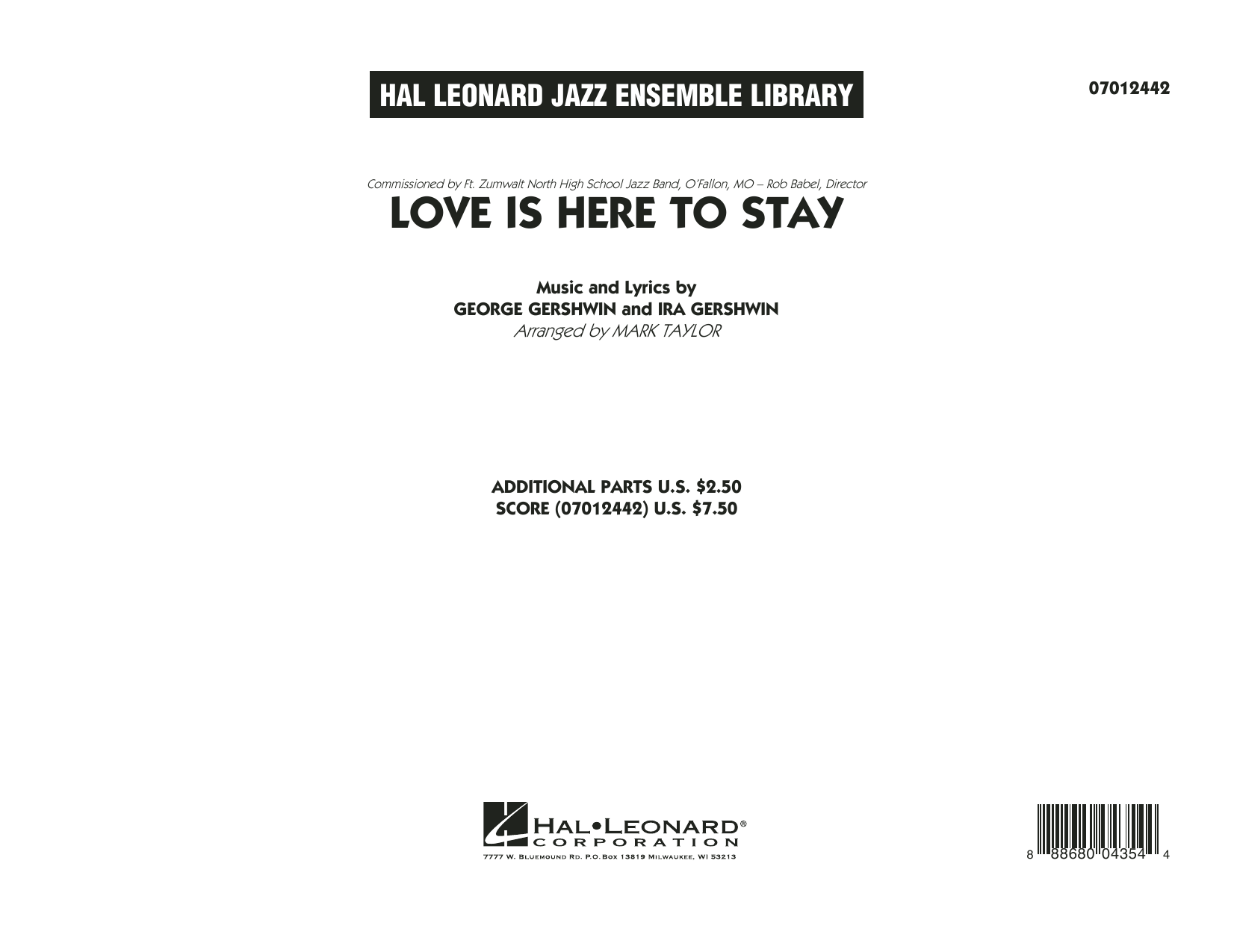
Love Is Here to Stay: Jazz Ensemble Conductor Score & Parts

As performed by George Gershwin / Arranged by Mark Taylor

Grade: 4

Item: 35-PK00309964

Digital Download
$55.00

One moment…

Description
Arranged in a medium tempo Basie-style swing, this arrangement is a study in effective writing for the entire ensemble. From the small group passages contrasted with full band scoring, to the sax soli sections with brass responses, this chart is a gem! Solos are included for trumpet and tenor.

Love Is Here to Stay: Jazz Ensemble Conductor Score & Parts isn't in MakeMusic Cloud just yet...but it could be. Let us know you'd like to see it, and you'll help shape what comes next. In the meantime, start a free trial and dive into thousands of interactive titles your students can play along with today.

Sample Audio
No sample audio found.
Sample Video
Additional Details
Publisher: Hal Leonard
SKU: 35-PK00309964

More about this title

About the Artist: George Gershwin

George Gershwin (1898–1937) bridged classical and popular music in ways that still shape how we teach American composition. His jazzy harmonies, syncopated melodies, and orchestral sophistication made him a rare figure: a composer equally at home writing Broadway scores and concert works. For jazz ensemble directors, Gershwin's music offers a goldmine of swinging lines and harmonic color that challenges players to balance jazz phrasing with composed precision.

Gershwin's influence on jazz arranging is direct and measurable. His use of blues tonality, his ear for brass voicing, and his gift for memorable melody created a template that arrangers still follow. When you teach his work, you're teaching the DNA of American jazz composition itself.

Why we love this

Mark Taylor's Basie-influenced swing charts have always been reliable teaching tools, and this arrangement showcases exactly why. The interplay between small group passages and full band sections keeps the ensemble engaged and gives you multiple teaching moments: sectional balance, ensemble blend, soloistic ownership, and the specificity of Basie-style articulation. It's a chart that works equally well in a read-through and as something worth rehearsing deeply.

What to expect

Sophisticated and swinging. The arrangement moves with the ease of a Basie band circa the 1950s, all groove and conversational interplay. Moments of intimate small group writing breathe easily before the full band kicks in with warmth and brass punch. It feels like eavesdropping on a real bandstand conversation.

Who it's for

Grade 4 jazz ensembles with solid fundamentals in swing feel and at least one capable trumpet soloist and tenor saxophonist. The piece rewards groups that have rehearsed swing phrasing and understand dynamic shaping; it will expose ensembles still developing those skills but teach them in the process.

How to get the most out of it

  • Shape the phrase contours in the sax soli sections with dynamic arcing rather than metronomic precision. Basie's players breathed between ideas, and your ensemble will sound more authentic when they do too.
  • Lock the trumpet and tenor solos into the groove by having the rhythm section (especially drums and bass) lock in their feel during the first run-through. Once the soloists hear the pocket, their interpretation will land much more naturally.
  • Identify exactly where Taylor has orchestrated contrast between small group voicings and tutti sections, then rehearse those transitions cleanly. These shifts define the whole arrangement.
  • Push the top line of the brass response sections with bright articulation and forward dynamic energy. Taylor wrote these passages to punch through the sax soli, not blend underneath.

How to use it

Program this on a concert where you want to showcase both compositional sophistication and your ensemble's solistic depth. It pairs beautifully with other Gershwin-era standards or as a centerpiece alongside more modern jazz fare. The piece also works as a midseason rehearsal project that challenges reading and phrasing without demanding extended technical passages.

Skills your students will build

  • Swing eighth-note articulation and phrasing in an ensemble context
  • Responding to dynamic shifts between small group and full band writing
  • Listening for and supporting soloists while maintaining groove
  • Basie-style brass voicing and sectional balance
  • Jazz interpretation of a composed melody with structural clarity

You May Also Like