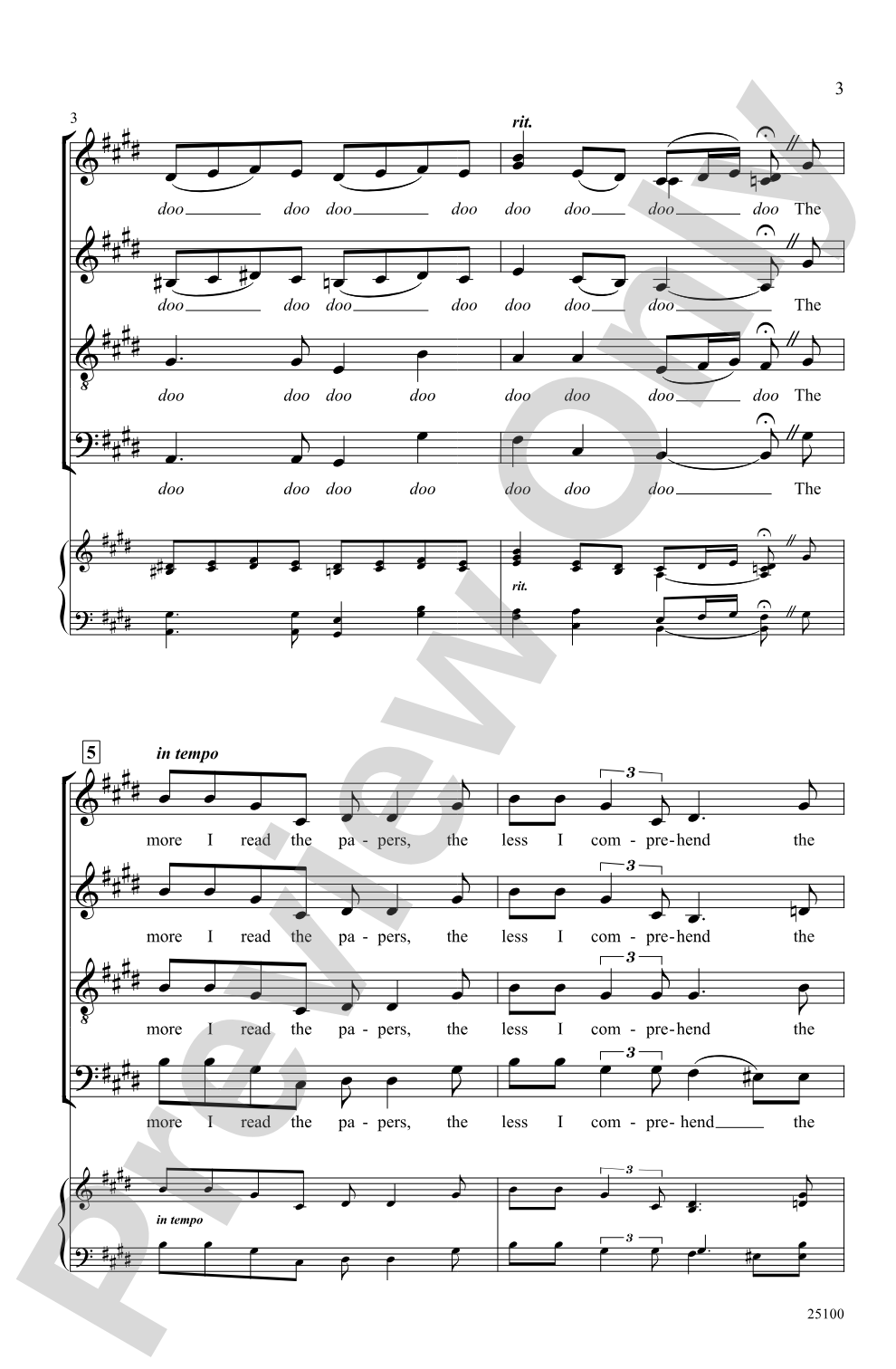
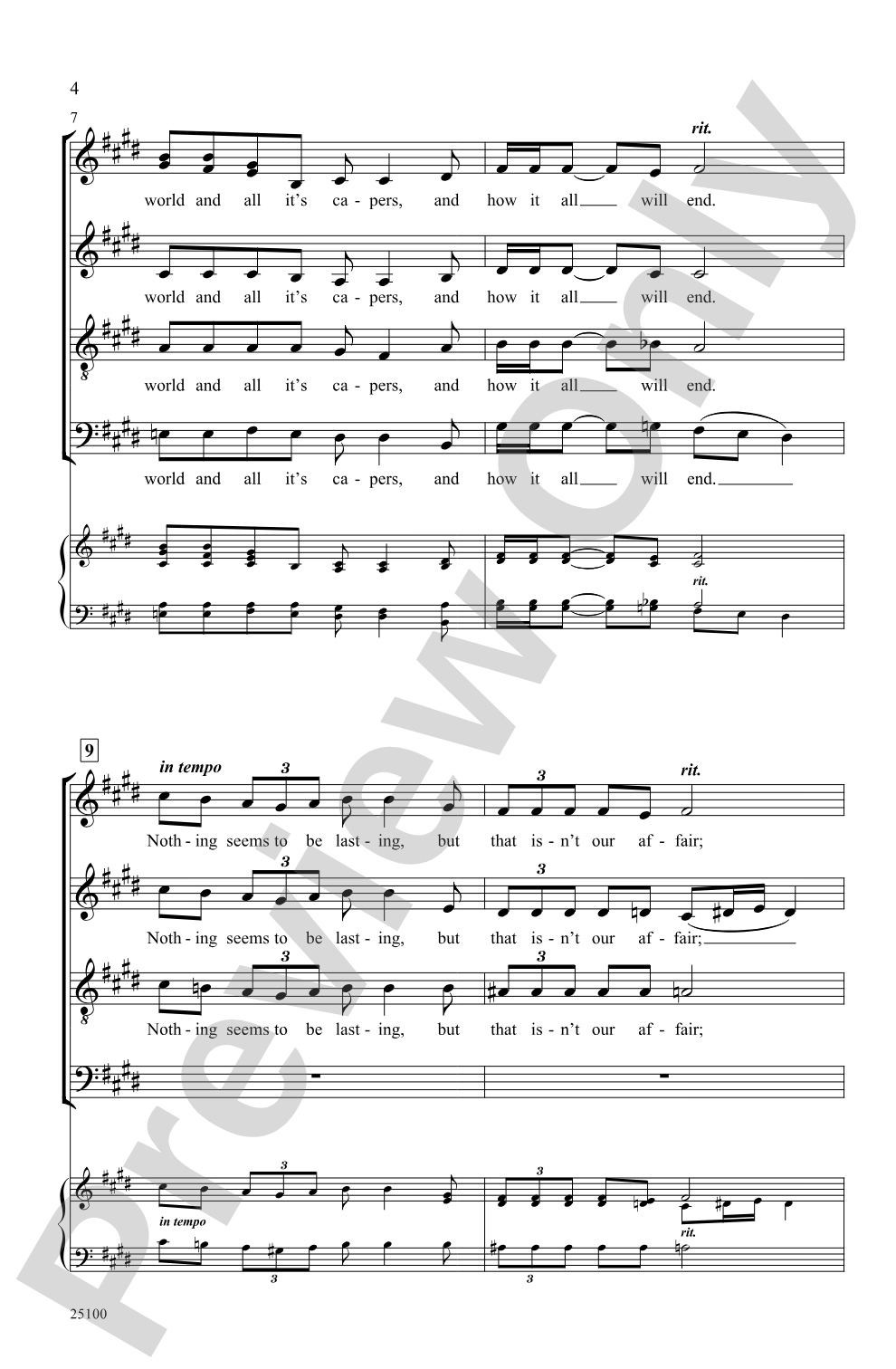
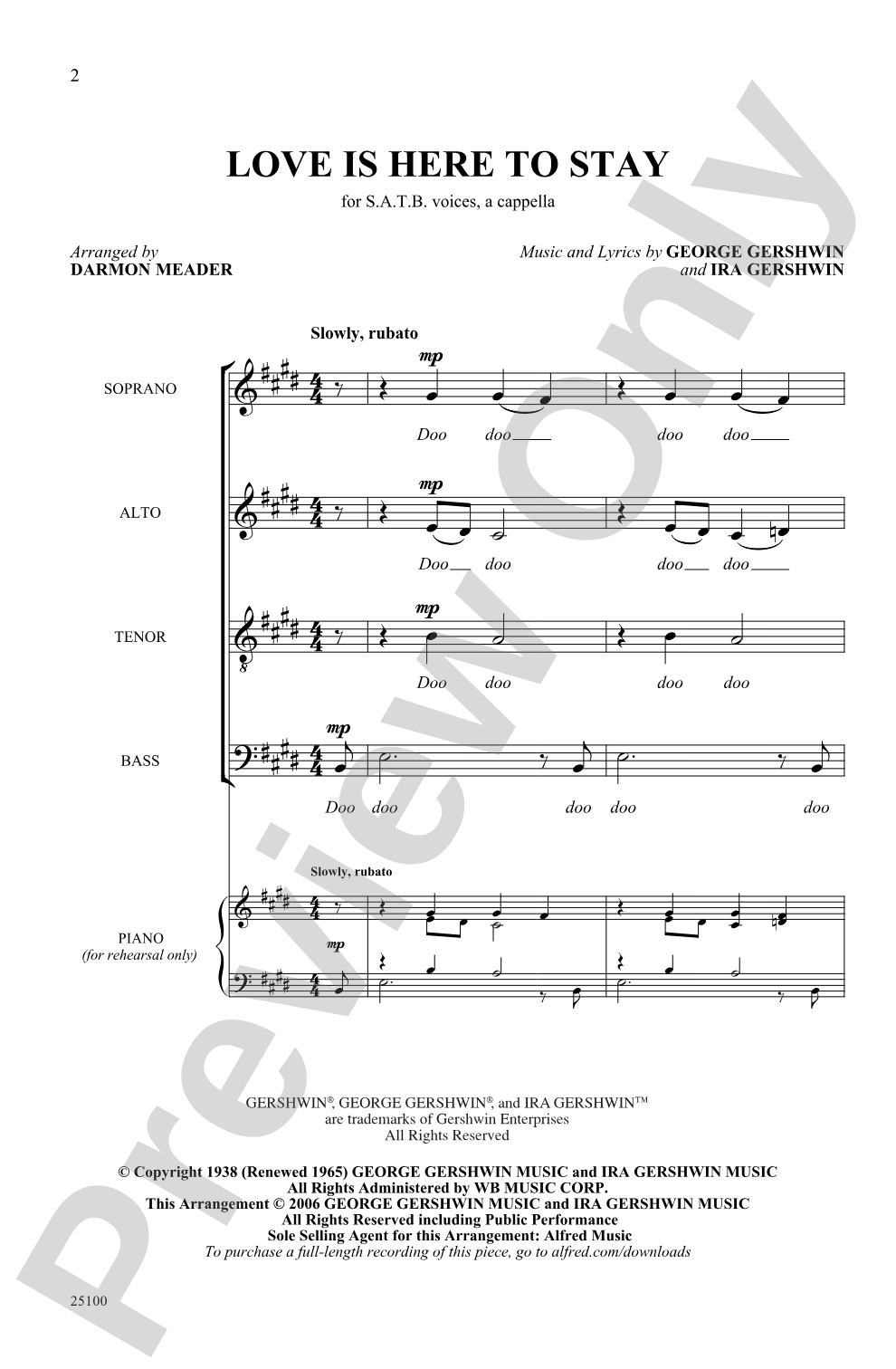
Love Is Here to Stay Sheet Music Preview

Love Is Here to Stay: SATB, a cappella Choral Octavo

By George Gershwin and Ira Gershwin / arr. Darmon Meader

Item: 00-PO-0004354

Digital Download
$2.25

Minimum order quantity: 20 copies

One moment…

Description
This song was the last one written by George Gershwin before his untimely death at the age of 39. New York Voices' Darmon Meader has arranged it in a classic a cappella vocal jazz style, with surprisingly little divisi for such a full-sounding arrangement. An extraordinary song, an extraordinary arrangement.

Love Is Here to Stay: SATB, a cappella Choral Octavo isn't in MakeMusic Cloud just yet...but it could be. Let us know you'd like to see it, and you'll help shape what comes next. In the meantime, start a free trial and dive into thousands of interactive titles your students can play along with today.

Sample Audio
0:00
0:00
Sample Video
Additional Details
Series: Alfred Archive Edition: Alfred Pop Choral Series
Publisher: Alfred Music
Page Count: 12
SKU: 00-PO-0004354

More about this title

About the Composer: George Gershwin

George Gershwin (1898-1937) bridged the worlds of concert music and popular song with an ease few composers have matched. His ability to blend jazz idioms, blues inflections, and sophisticated harmonic language created works that remain central to American music education and performance. Love Is Here to Stay, written with his brother Ira in 1938, stands as one of the Great American Songbook's most enduring standards.

Gershwin's legacy in choral and vocal music extends far beyond his instrumental works. His songs have been arranged countless times for ensembles because their melodic strength and harmonic richness invite reimagining. For choral directors, his music offers a gateway into 20th-century American composition and the jazz vocabulary that defines modern arranging.

Why we love this

Darmon Meader's arrangement captures the emotional depth of Gershwin's melody while stripping away unnecessary complexity. The sparse use of divisi means your singers stay locked together through the progression, making this accessible for mixed choirs without sacrificing sophistication or impact. It's the rare a cappella jazz arrangement that sounds full and harmonically rich without asking singers to split into six or seven parts.

What to expect

The piece unfolds with the quiet confidence of a standard that has earned its place in the repertoire. There's a gentle sophistication in the harmonic movement, a sense of acceptance and peace that matches the lyrical sentiment. Gershwin's melody has a way of settling into the listener's memory, and Meader's arrangement lets that happen naturally, with voice parts supporting rather than competing.

Who it's for

Mixed choirs with solid fundamentals in intonation and blend will find this a rewarding step into vocal jazz arranging. It works equally well for high school honor choirs, college vocal jazz ensembles learning a cappella technique, and community choruses looking to add Great American Songbook repertoire without instrumental support.

How to get the most out of it

  • Shape the melody with a gentle lift rather than a strict beat; let the jazz phrasing breathe and settle into the underlying harmony.
  • Tune the sustained chords by thinking vertically through each voice. Ask each section to listen inward and adjust for blend before worrying about balancing across the choir.
  • Mark the dynamic arc across the entire piece. Many directors underestimate the journey from verse to climax and flatten the song by treating each section at the same volume.
  • Record a reference track in rehearsal and have singers listen critically to their own section's blend and intonation outside of rehearsal time.

How to use it

Pair this with other Gershwin arrangements or standards from the Great American Songbook to build a concert program rooted in American popular song. It can anchor a section of jazz-influenced choral music or stand alone as a poignant closer for a set focused on love songs. Consider programming it after something more energetic; its contemplative character rewards an audience ready to listen closely.

Skills your students will build

  • Tuning jazz harmony and chromatic voice leading
  • Singing with jazz phrasing and rhythmic flexibility in an a cappella setting
  • Balancing multiple sustained lines without doubling or reinforcement
  • Understanding arrangement technique: how space and simplicity create impact

You May Also Like