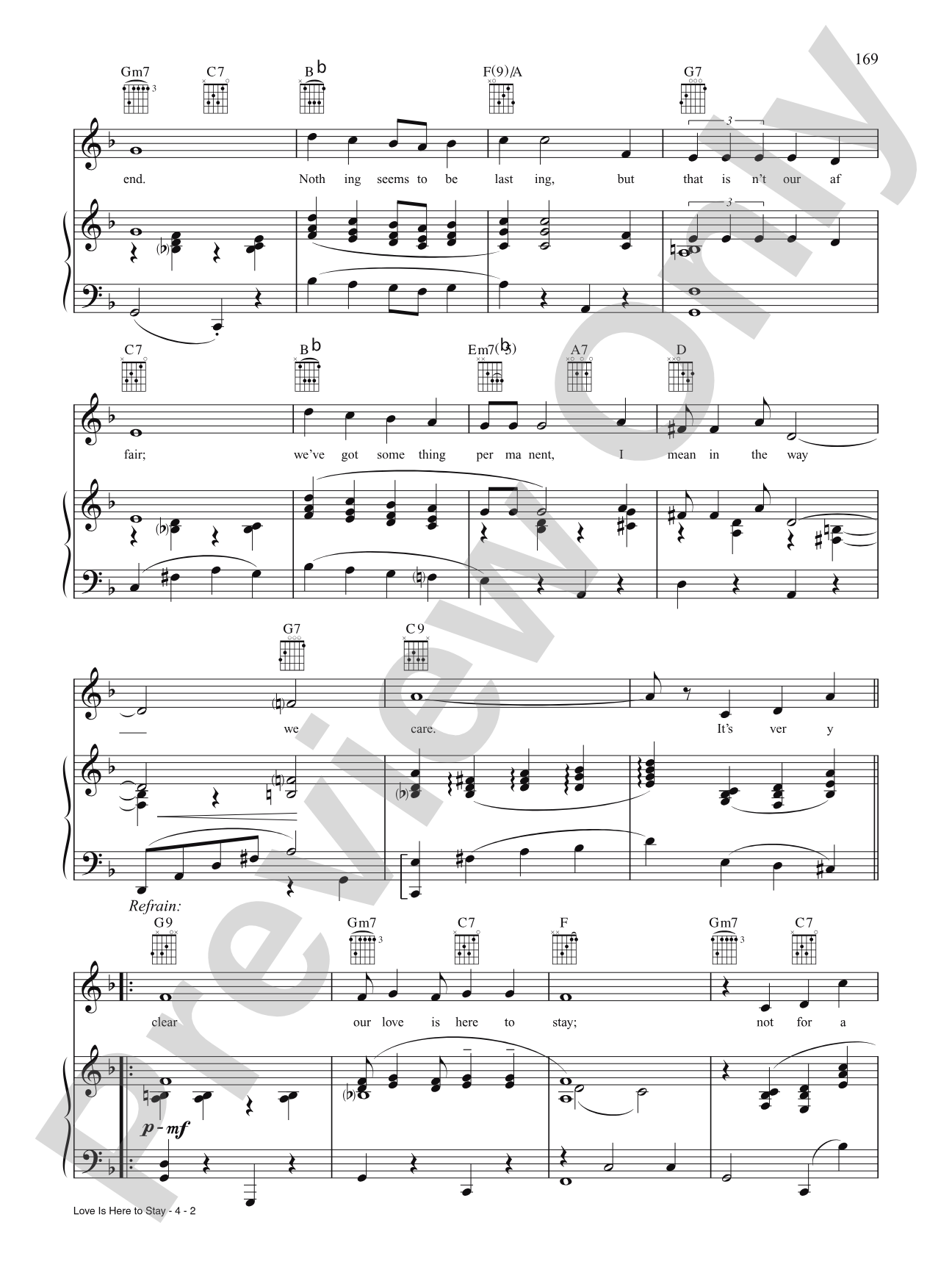
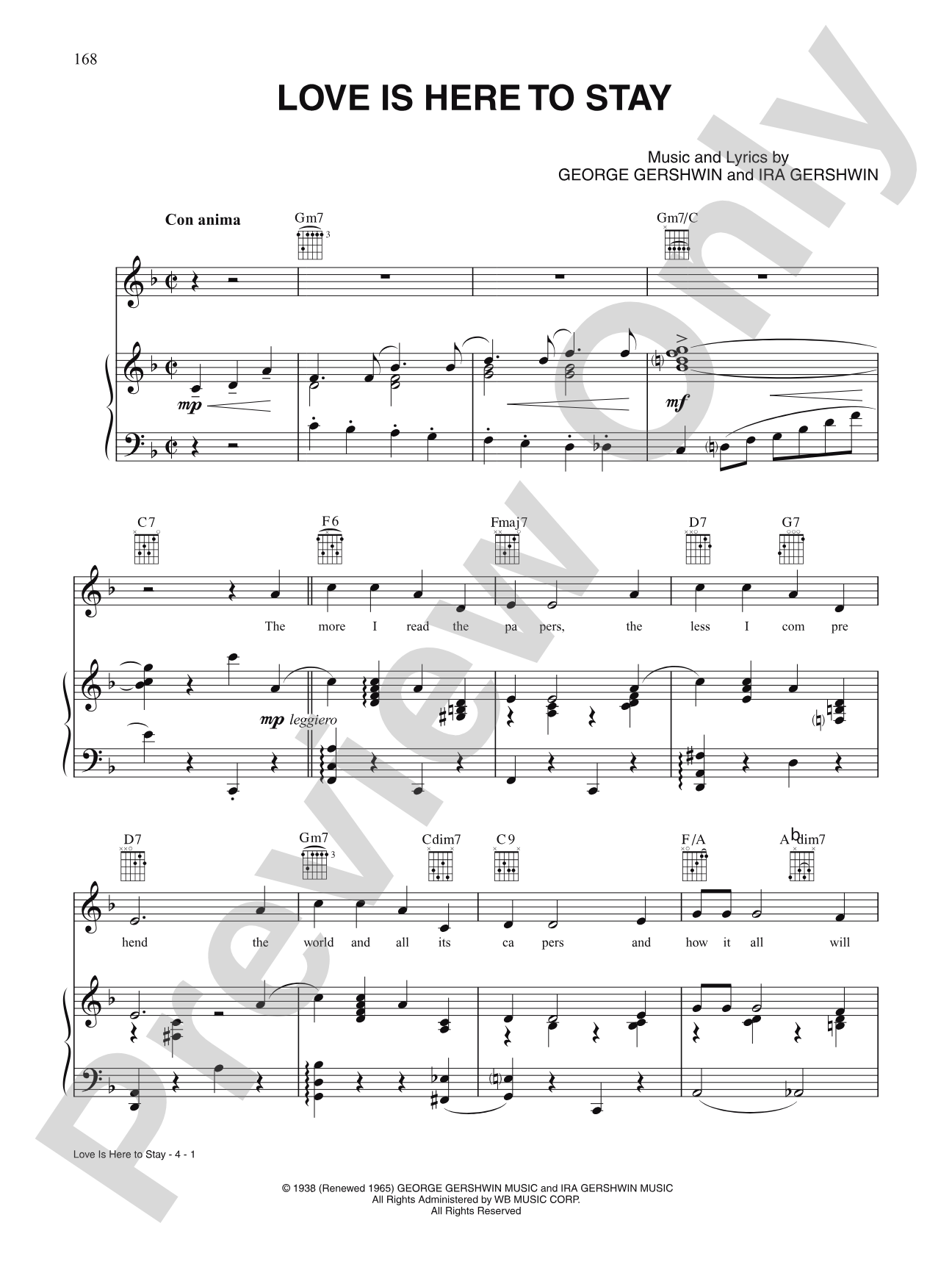
Love Is Here to Stay Sheet Music Preview

Love Is Here to Stay: Piano/Vocal/Chords

Music and lyrics by George Gershwin and Ira Gershwin

Item: 00-PIP-000180

Digital Download
$3.99

One moment…

Description

Love Is Here to Stay: Piano/Vocal/Chords isn't in MakeMusic Cloud just yet...but it could be. Let us know you'd like to see it, and you'll help shape what comes next. In the meantime, start a free trial and dive into thousands of interactive titles your students can play along with today.

Sample Audio
No sample audio found.
Sample Video
Additional Details
Series: Deluxe Edition
Publisher: Alfred Music
Page Count: 6
SKU: 00-PIP-000180

More about this title

About the Composer: George Gershwin

George Gershwin (1898-1937) revolutionized American music by synthesizing jazz idioms, blues harmonies, and classical forms into a distinctly modern sound. His prolific output across musical theater, orchestral works, and popular song established him as a defining voice of the 20th century, influencing generations of composers who followed.

Why we love this

Gershwin's harmonic language feels both sophisticated and immediately singable, making this standard accessible to pianists and vocalists across skill levels while rewarding deeper musical attention. The piano part sits comfortably under the hands without sacrificing the jazz-inflected voicings that make Gershwin's writing so distinctive.

What to expect

The piece radiates quiet confidence and emotional directness, with harmonies that shift and shimmer beneath a melody that feels both inevitable and utterly graceful. There's an unmistakable warmth to Gershwin's harmonic language here, the kind of sophisticated romanticism that makes this standard endure across decades.

Who it's for

Vocalists preparing audition material or recital repertoire will find a standard that sits well in many tessituras and demands genuine musical maturity rather than technical flash. Pianists can use this as both a solo vehicle and skilled accompanying practice, navigating Gershwin's characteristic harmonic color.

How to get the most out of it

  • Treat the chord symbols as harmonic anchors rather than rigid guides; Gershwin's jazz influence means you'll find room to interpret the comping and voice leading in ways that serve the vocalist's phrasing.
  • Shape the melody with a natural lyricism in your playing, letting the piano part breathe rather than mechanically driving the accompaniment.
  • Balance transparency in the accompaniment so the vocalist sits comfortably in the foreground while the piano's rich harmonic content remains audible.

How to use it

This works beautifully in a recital pairing classical and American repertoire, or as a bridge piece between a more formal first half and a lighter second set. Solo pianists might program it alongside other Gershwin works or use it to introduce students to American songbook standards in a concert context.

Skills your students will build

  • jazz-influenced harmonic interpretation and voice leading
  • coordinate melody and accompaniment in piano/vocal texture
  • sight-read and perform chord symbol notation
  • balance lyrical phrasing with harmonic color

You May Also Like