
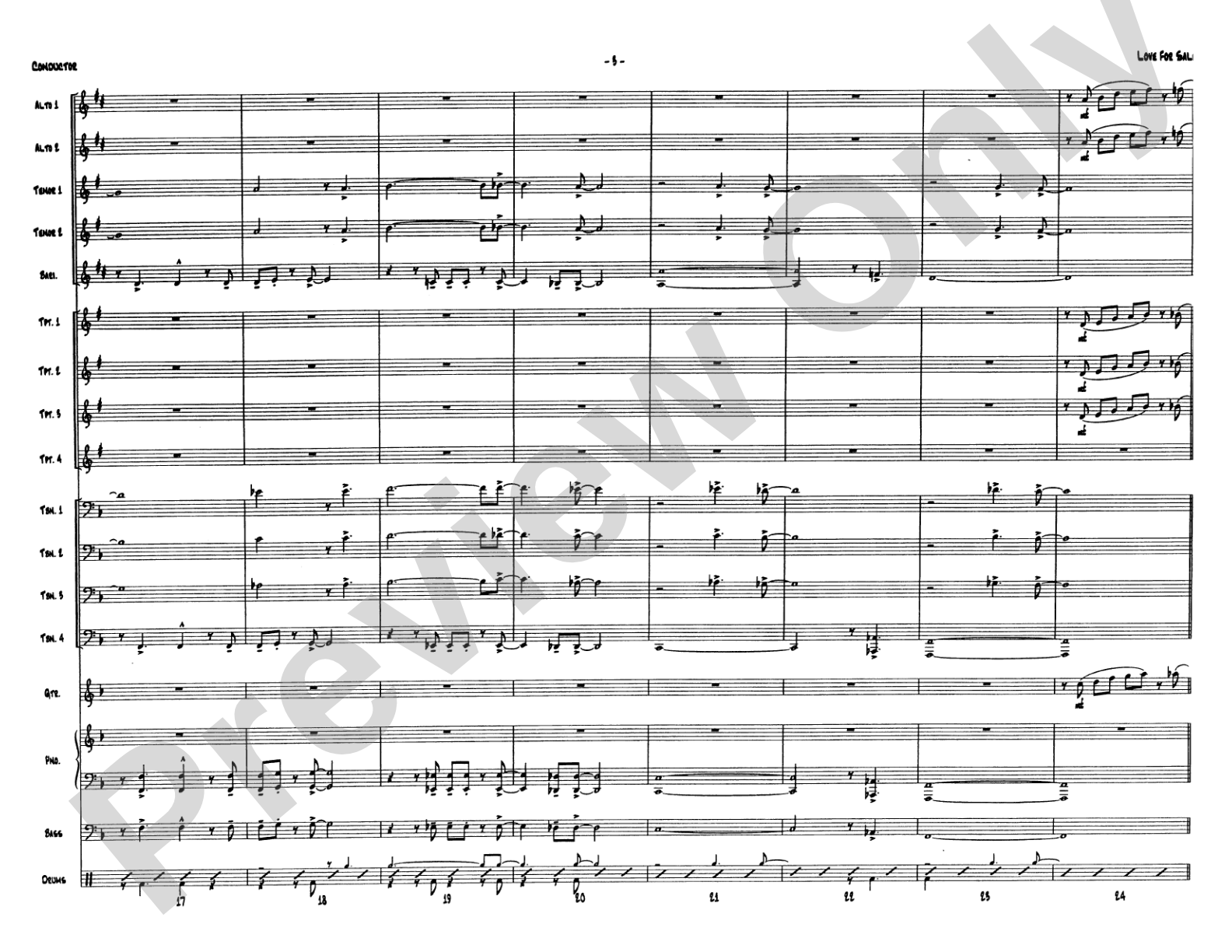
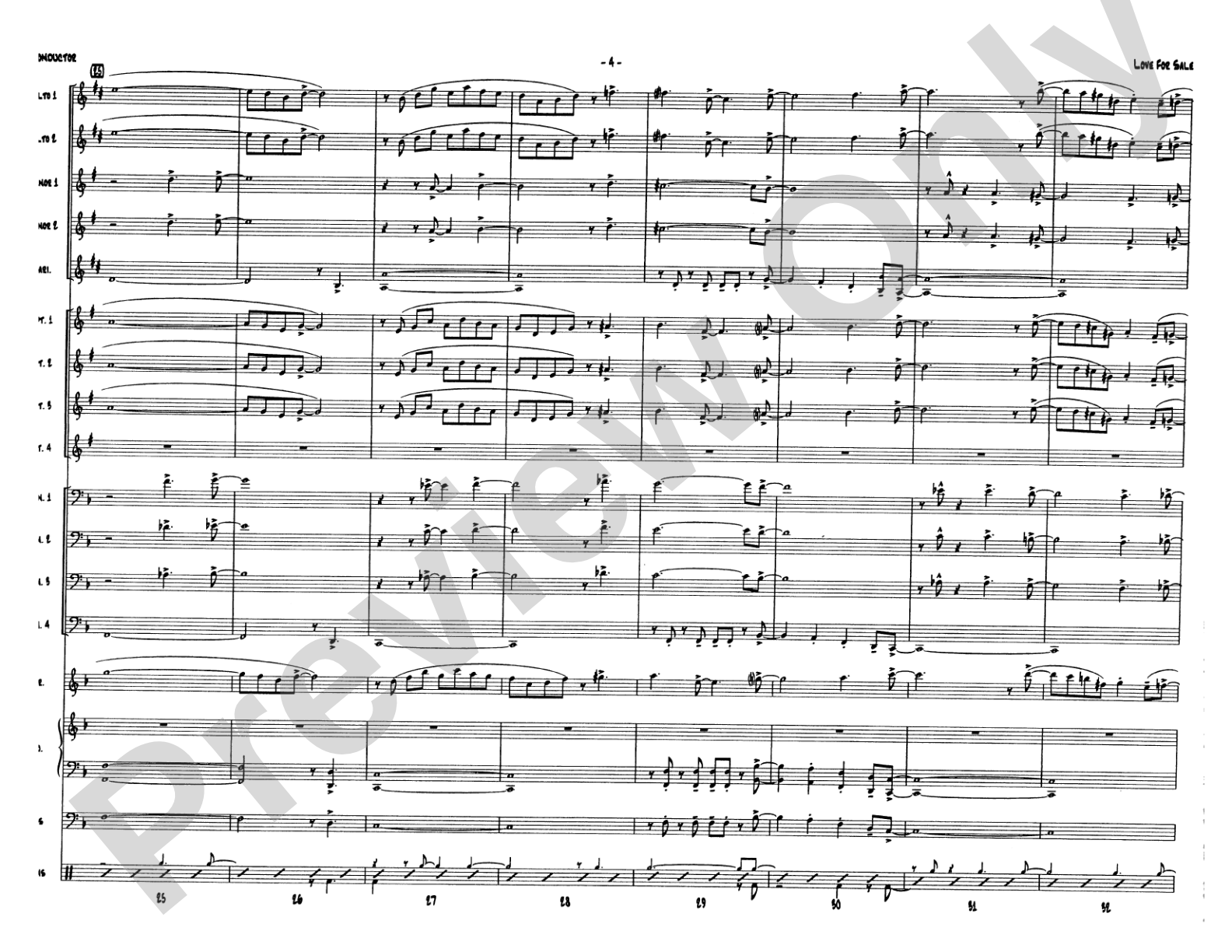
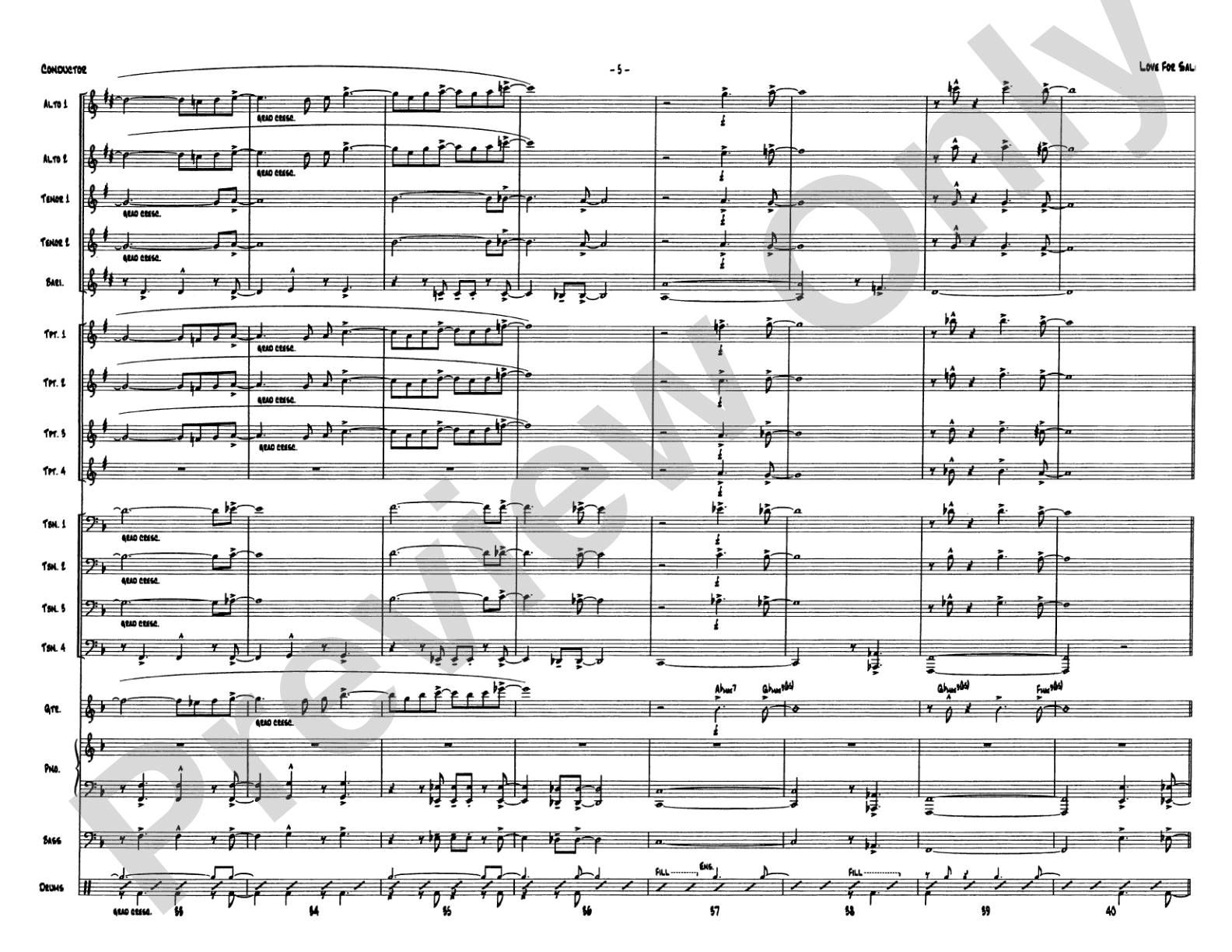
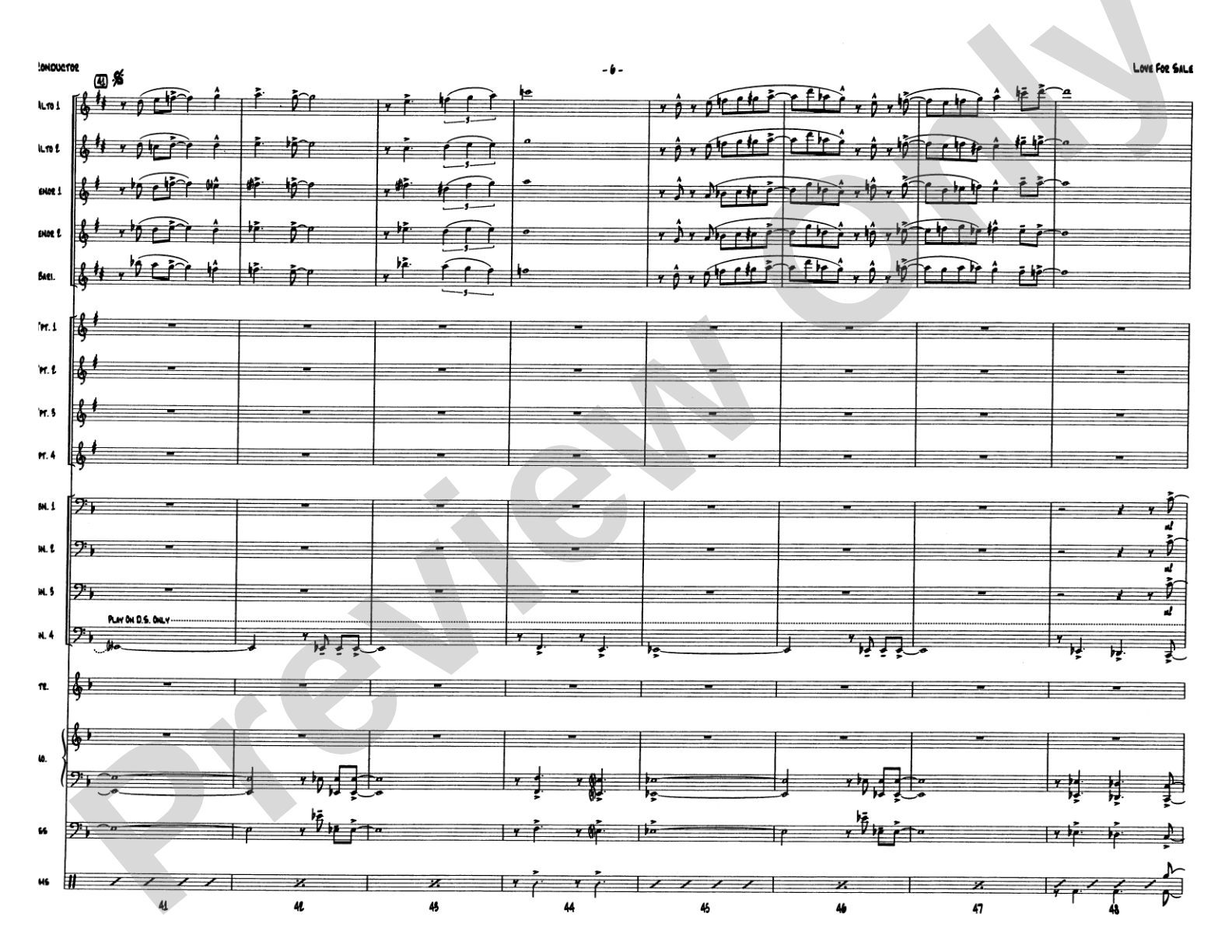
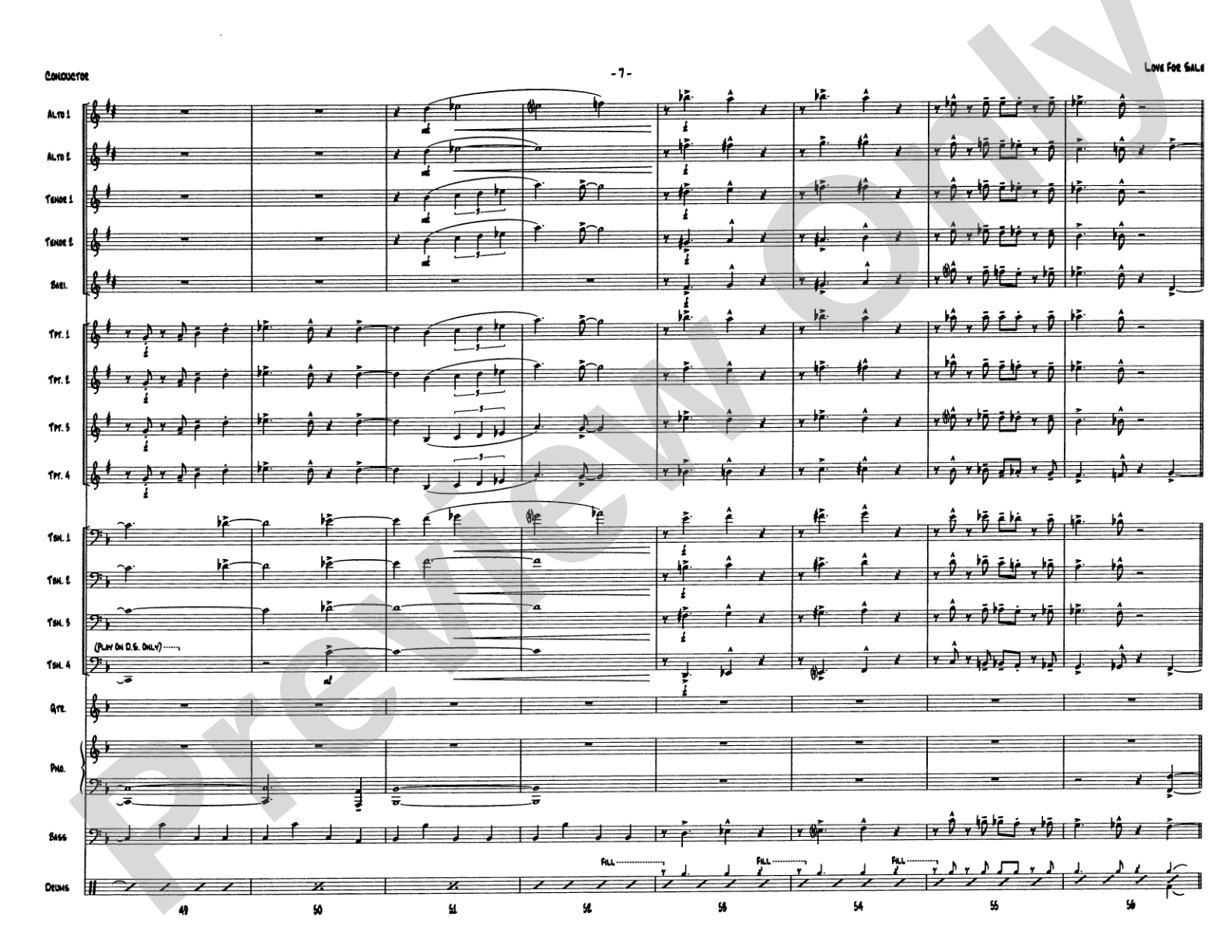
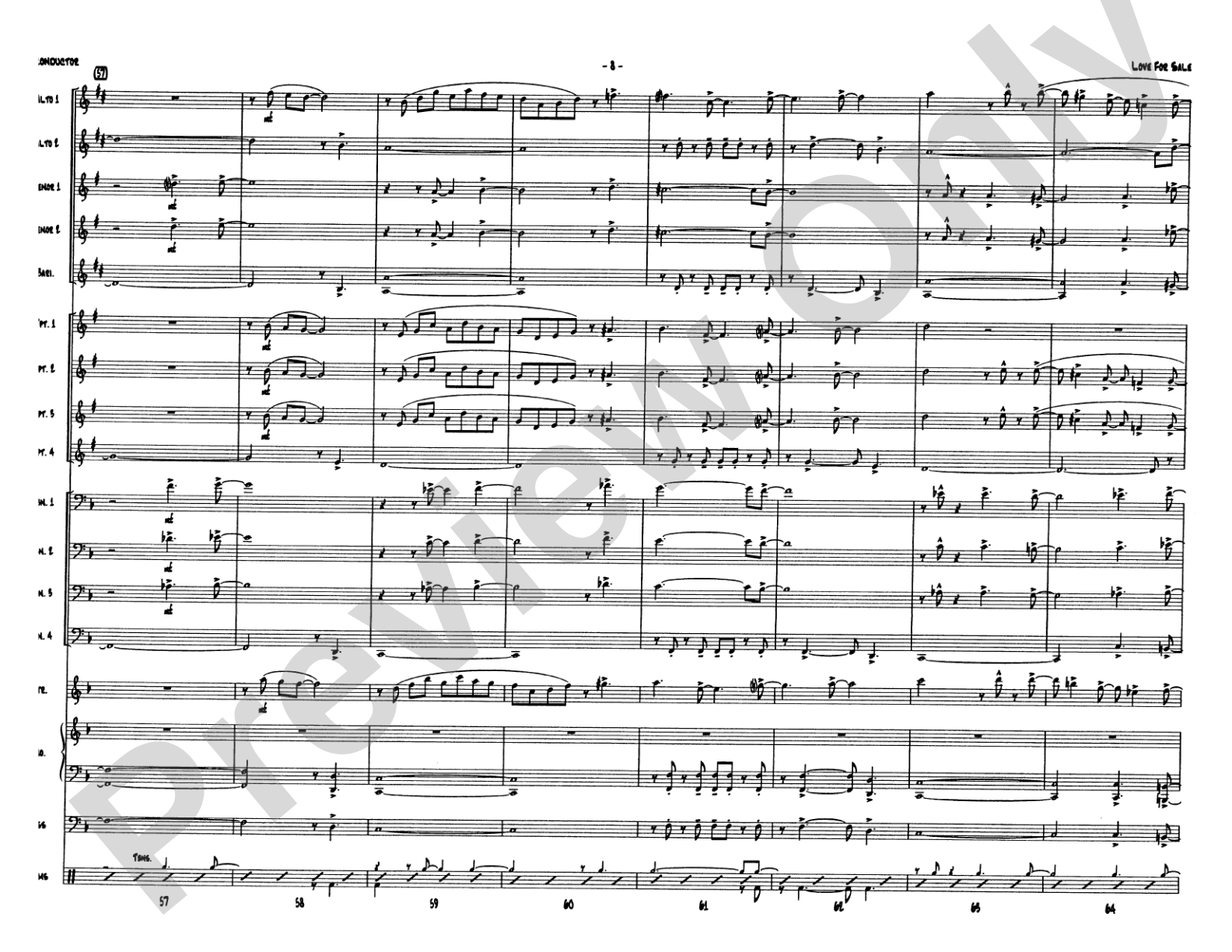
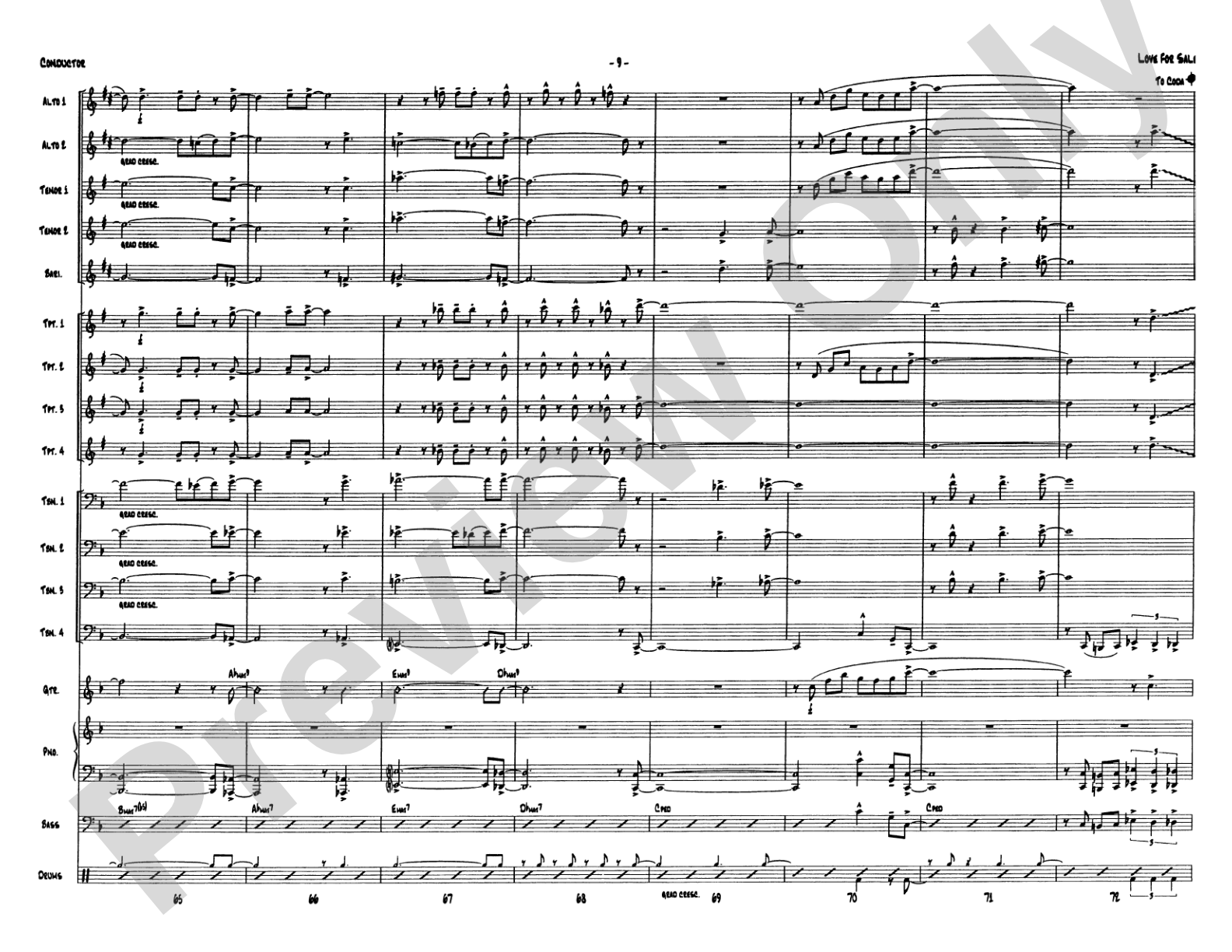
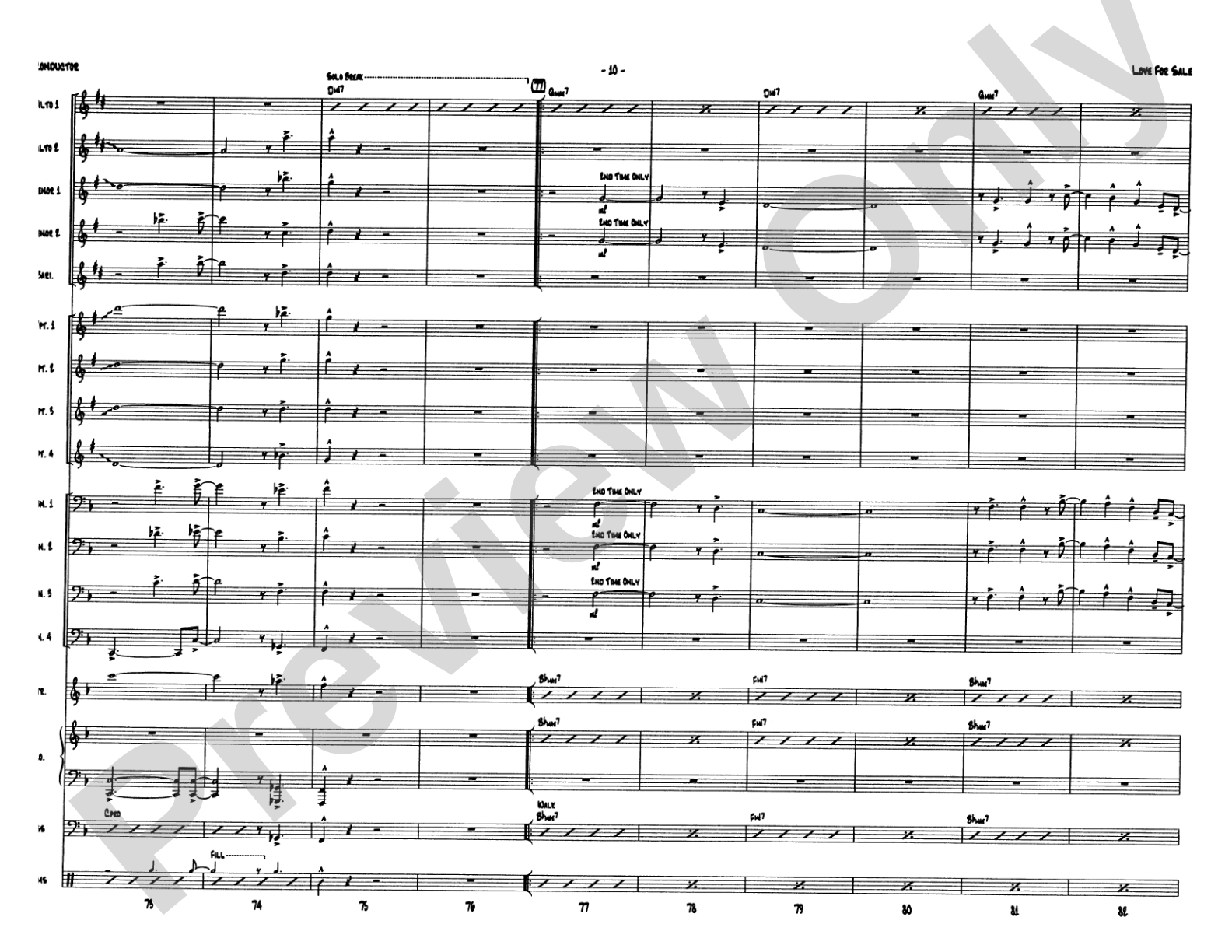
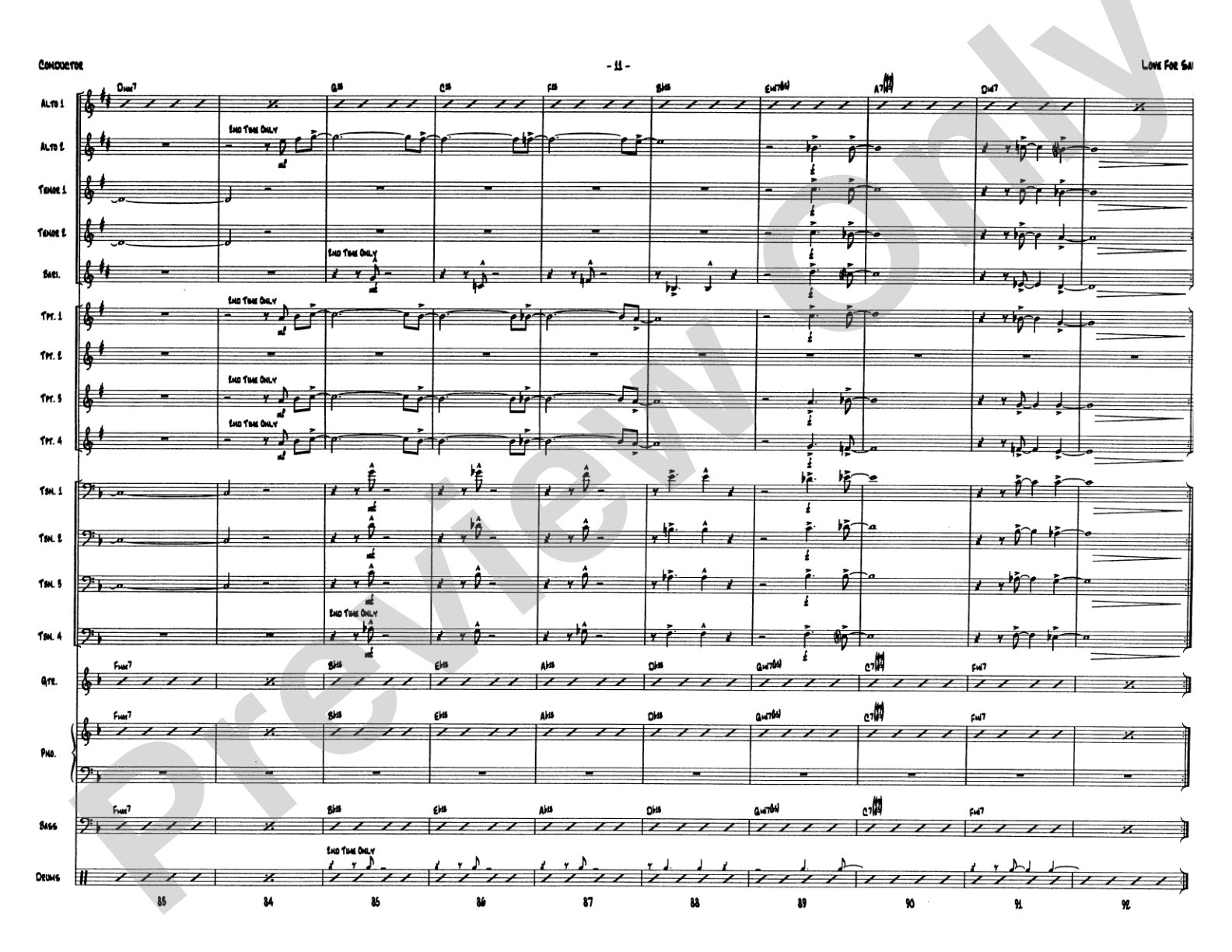
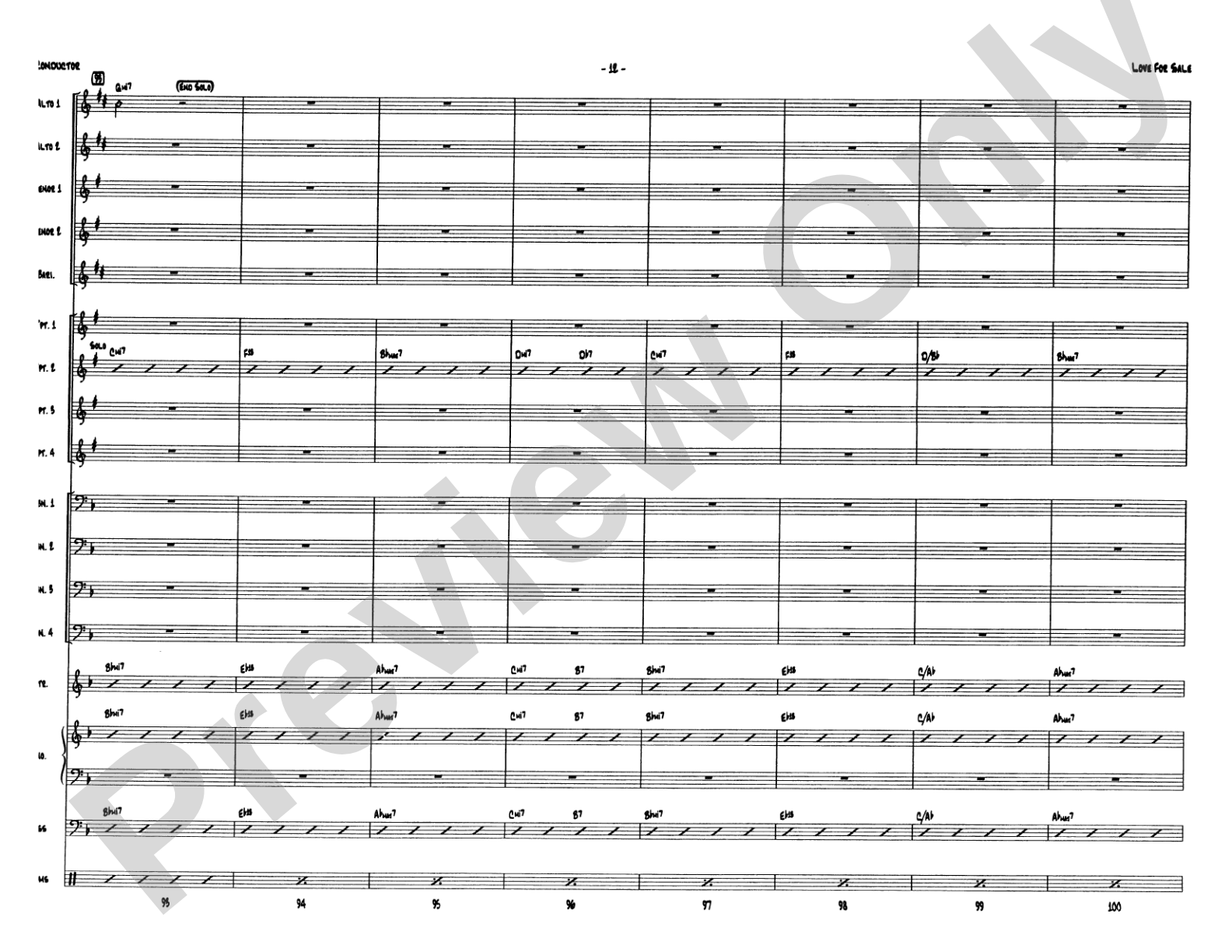
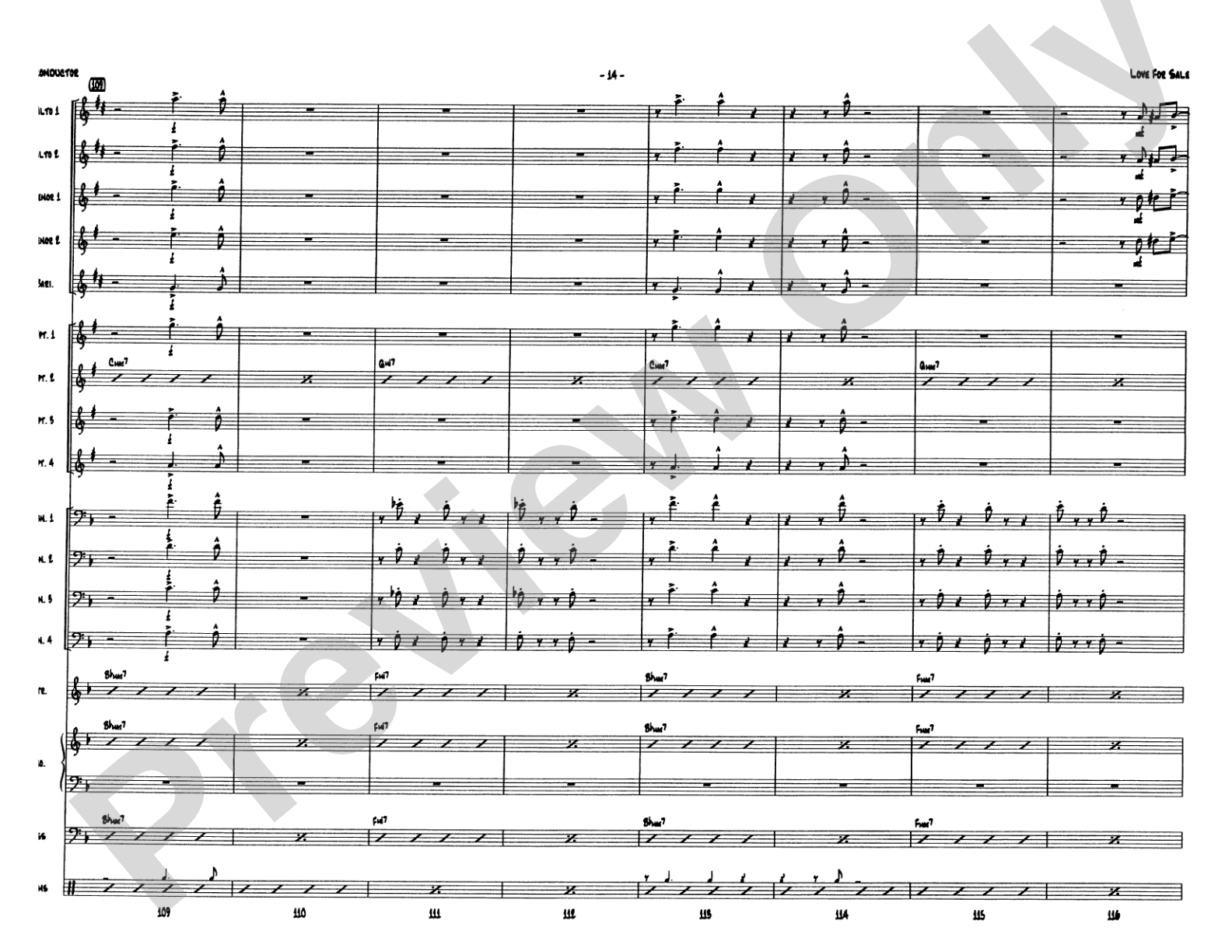
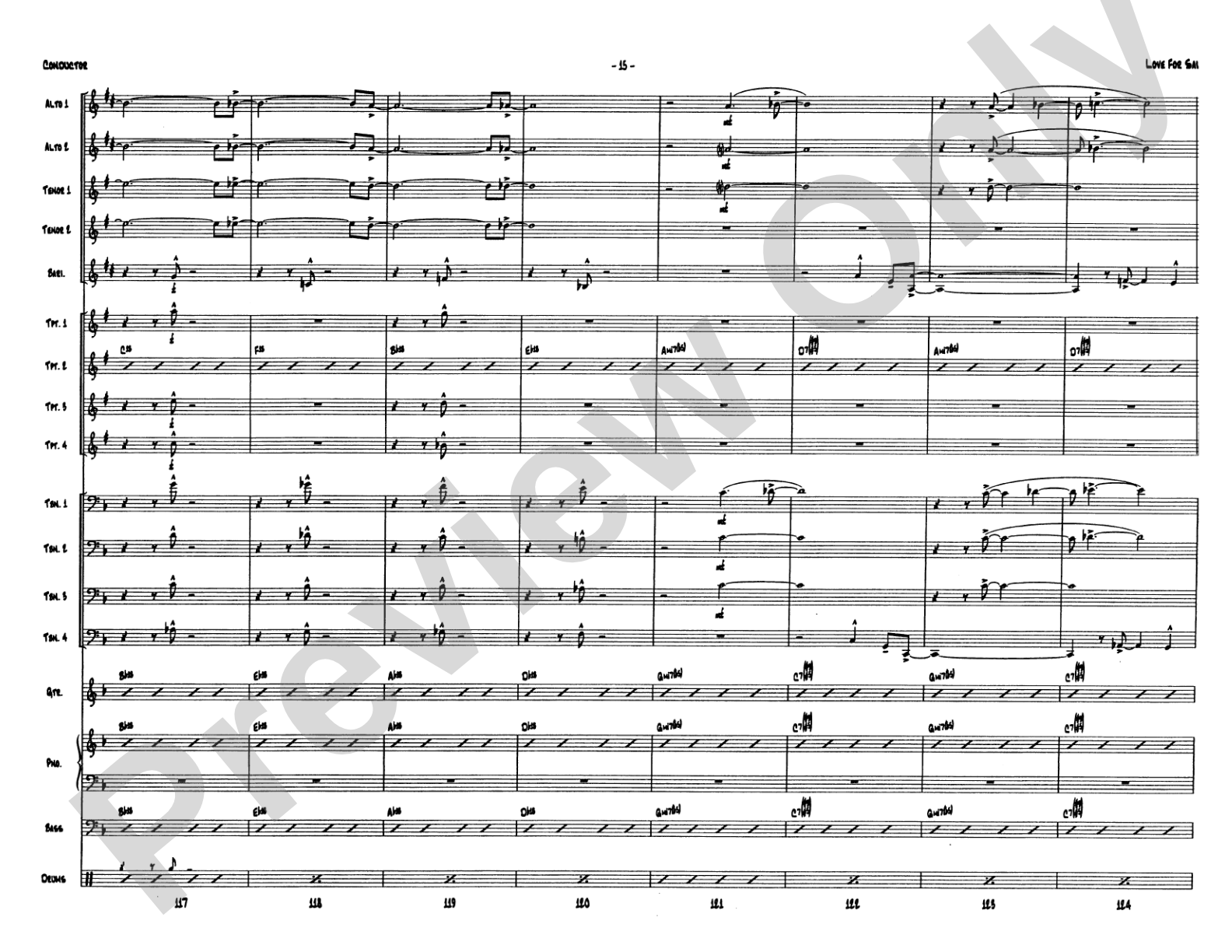
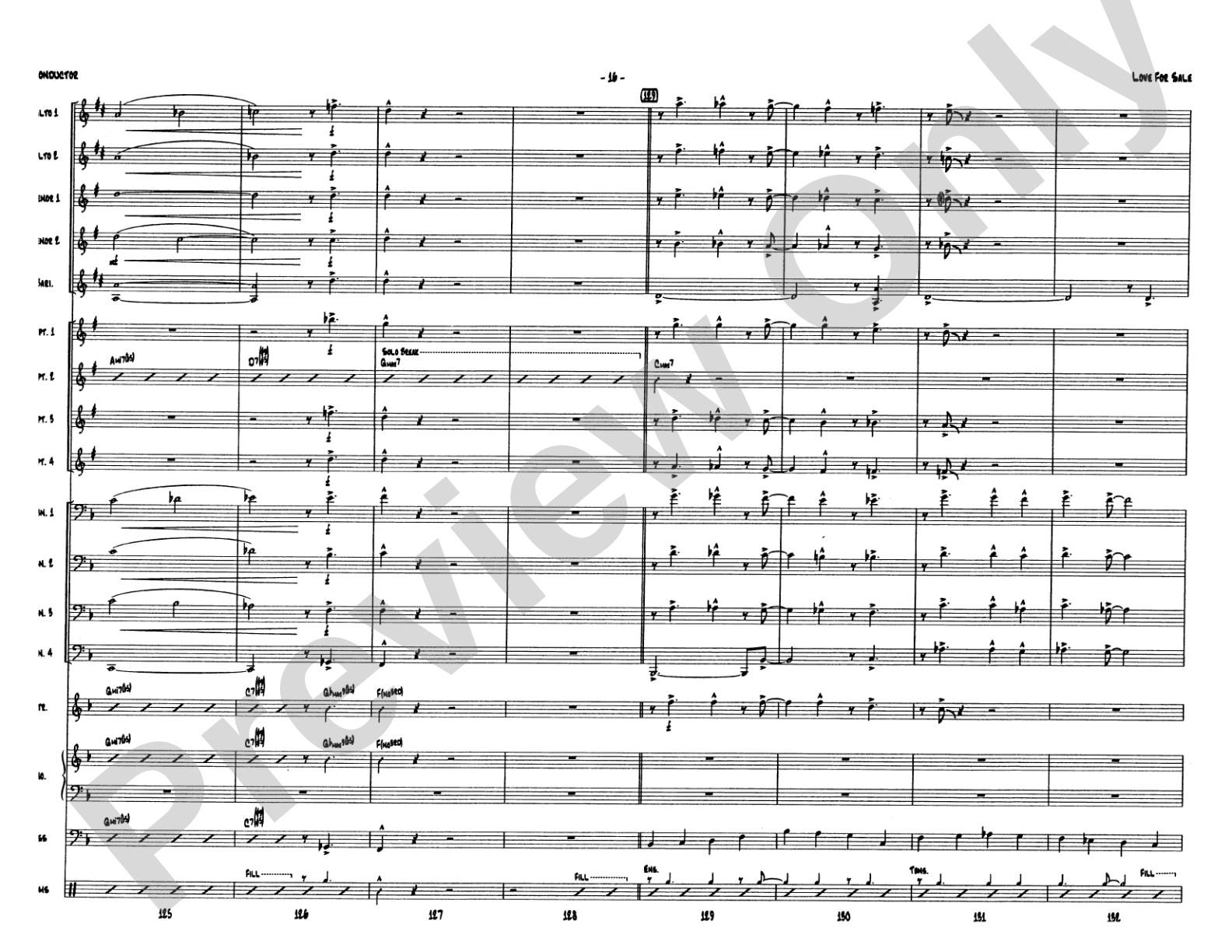
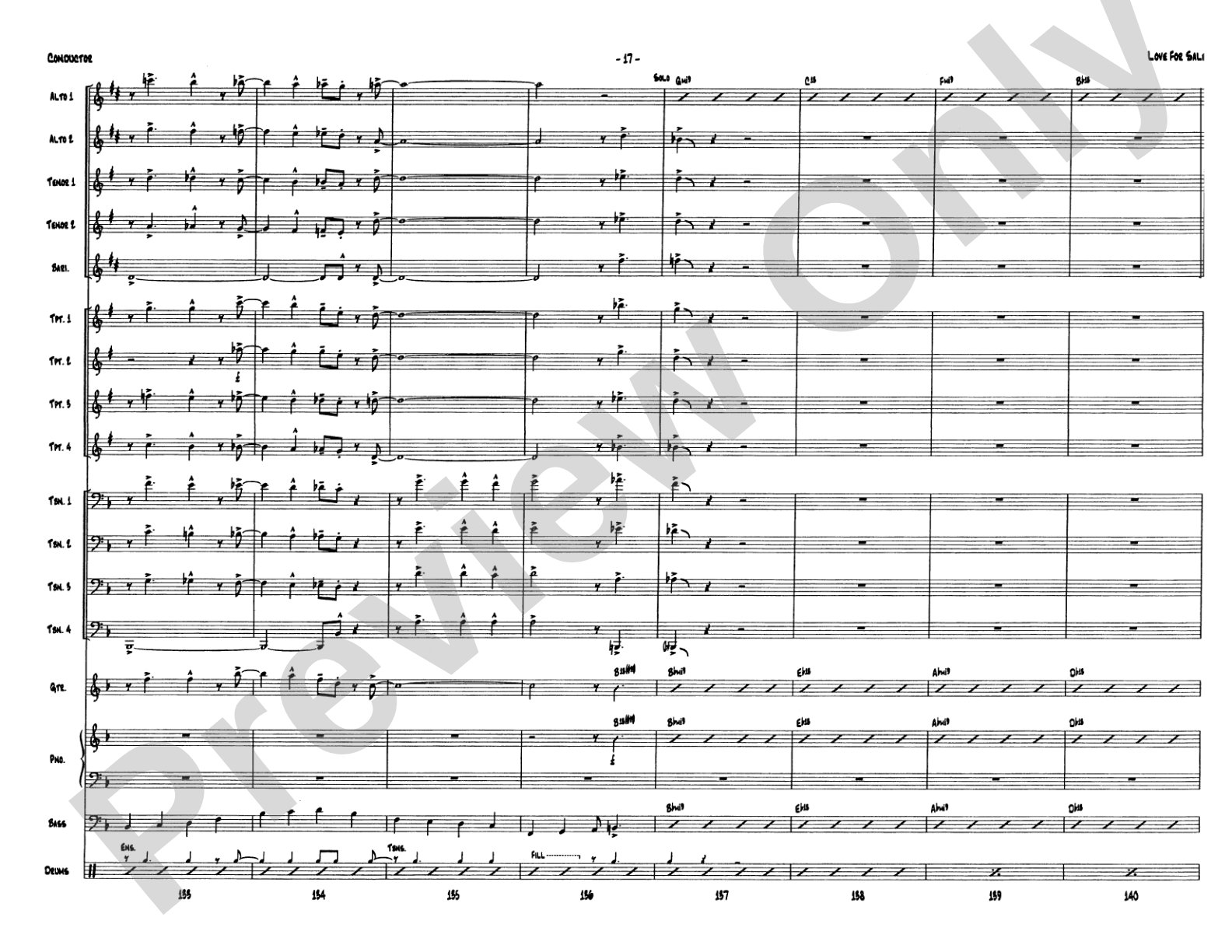
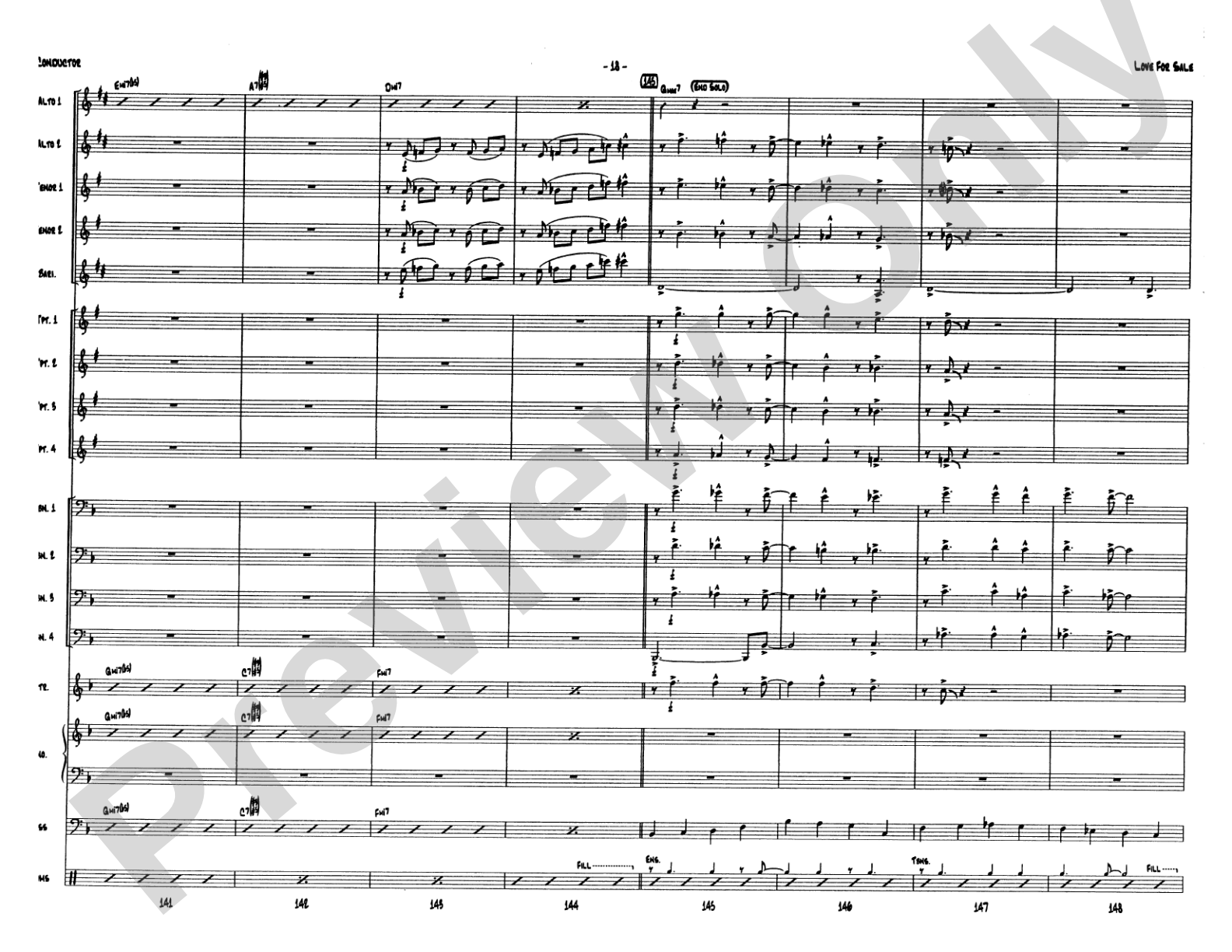
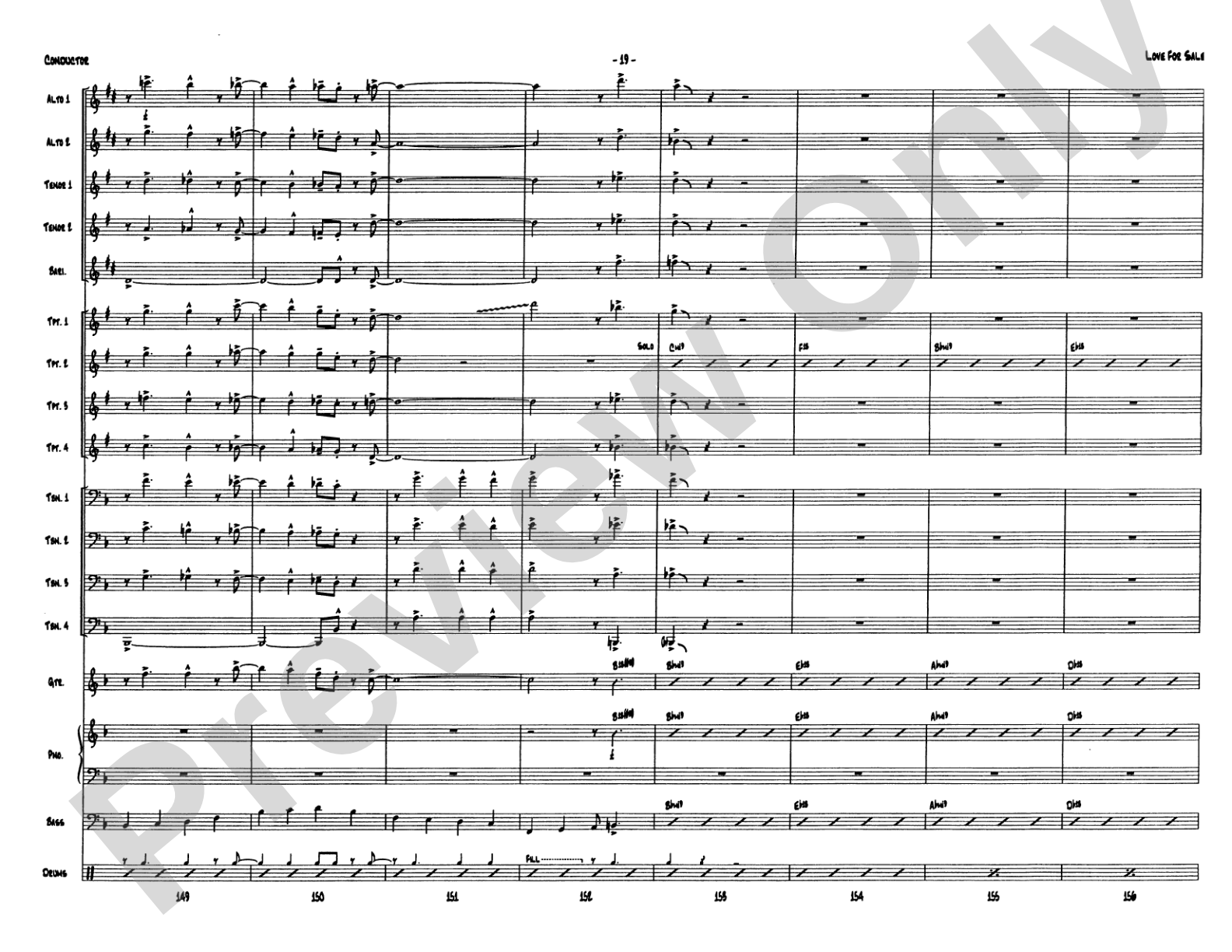
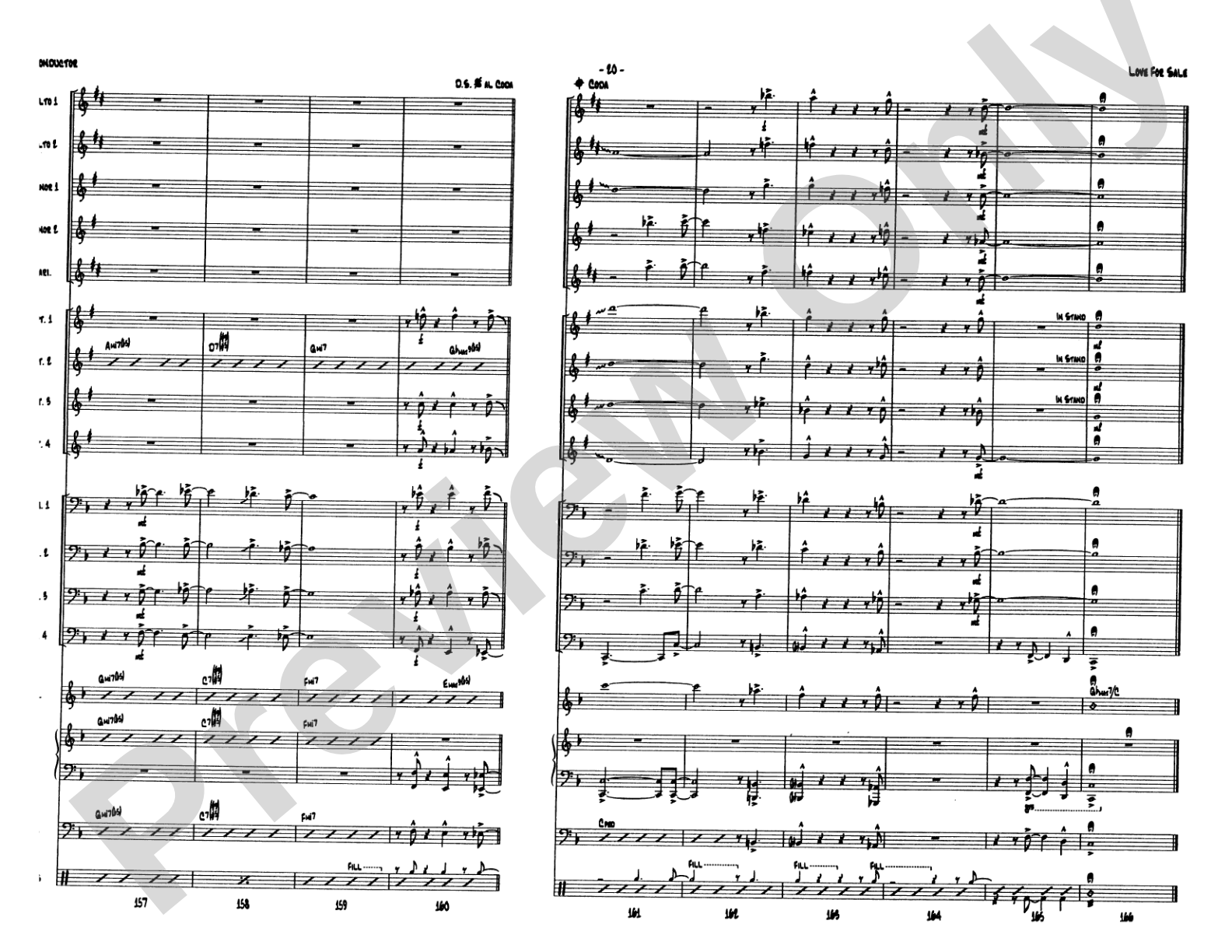



Love for Sale: Jazz Ensemble Conductor Score & Parts
By Cole Porter / arr. Alan Baylock
Grade: 4.5 (Medium Advanced / Difficult)
Item: 00-PK-0002520

$60.00
One moment…
Description
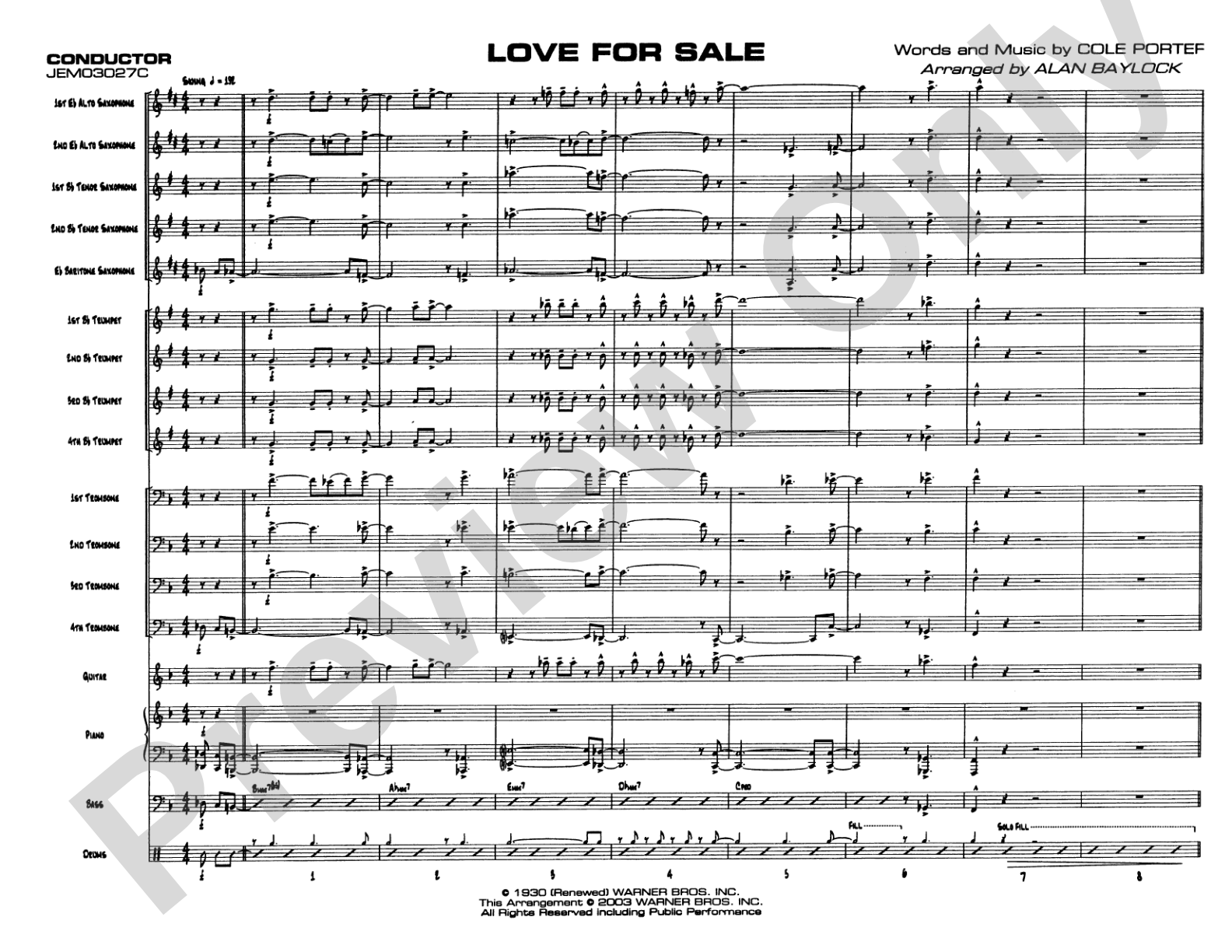
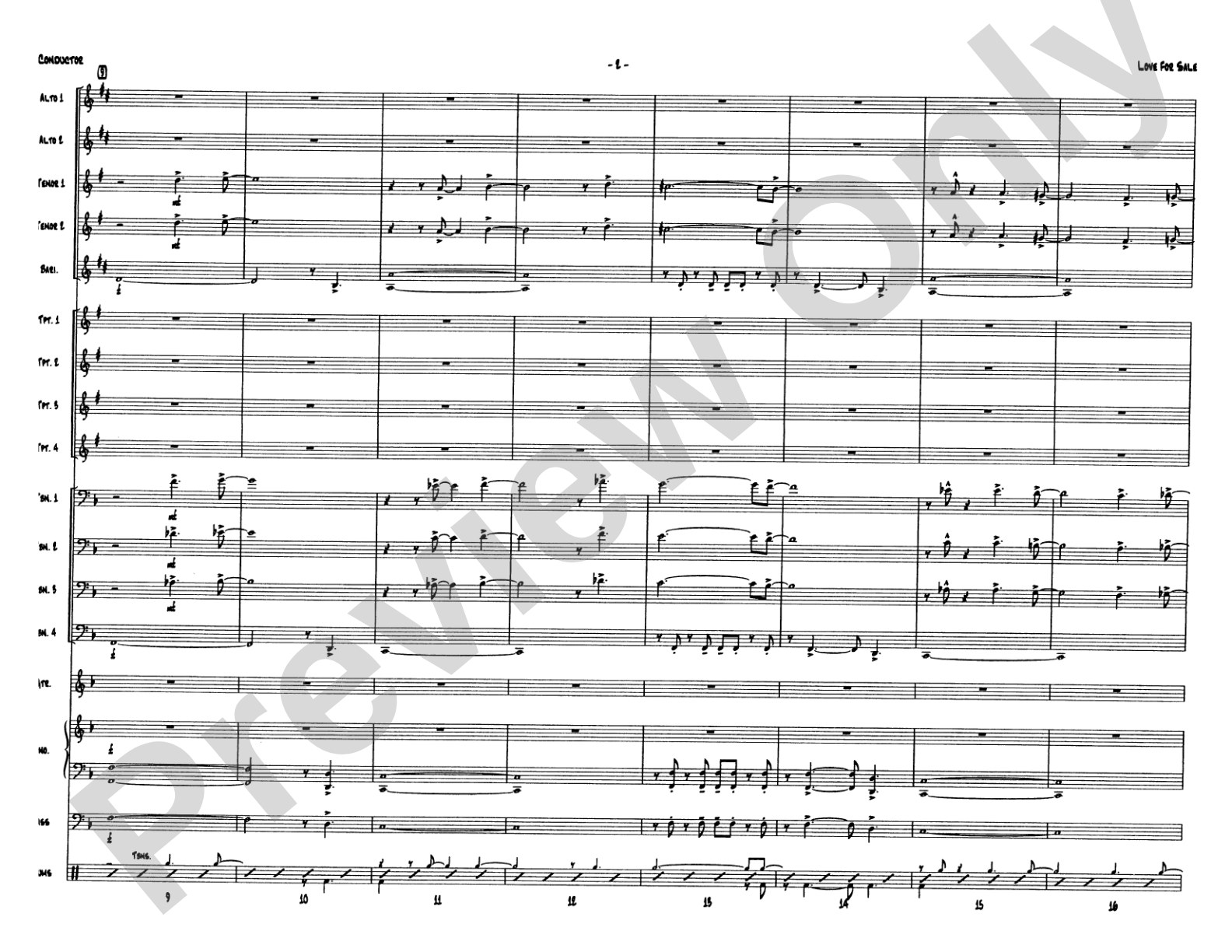
Check out Alan Baylock, one of the finest writers on the scene today. Alan's hip chart for Cole Porter's Love for Sale starts off with bari, bass trombone, and bass handling the melody and it goes upwards and onwards from there. Jazz solos for alto 1 and trumpet 2. Lead trumpet to written D, bone to A-flat. Energy galore, full ensemble, contrapuntal lines, solos, solis - you name it, this fine chart has it. Love for Sale screams festival.


Don't just read it, hear it, play along with it, and watch your students grow with it. In MakeMusic Cloud, Love for Sale: Jazz Ensemble Conductor Score & Parts comes alive with professional accompaniment, adjustable tempo, and built-in practice tools that turn solo practice into real progress.
Open in the Player
Jump straight in and assign it today.
Start Your Free Trial
Open this title and explore the full library in minutes.
Sample Audio
1
Audio File
--:--
0:00
0:00
Sample Video
No sample videos found.
Additional Details
Series:
Premier Jazz Series
Publisher:
Alfred Music
Page Count:
134
SKU:
00-PK-0002520
More about this title
About the Arranger: Cole Porter
Cole Porter (1891-1964) was an American composer and lyricist whose sophisticated harmonies and witty lyrics defined the golden age of American musical theater. His standards remain central to the jazz repertoire, prized for their harmonic complexity and melodic elegance. Porter's influence on jazz arrangers stems from the inherent musicality of his compositions, which reward both straight interpretations and creative reharmonization.
Alan Baylock is a prolific composer and arranger whose work appears regularly on festival and contest programs across North America. His arrangements are known for their accessibility at stated difficulty levels while maintaining the harmonic and rhythmic sophistication that challenges advancing ensembles. Baylock's writing balances tutti moments with featured solos and section work, creating vehicles that develop players across the ensemble.
Why we love this
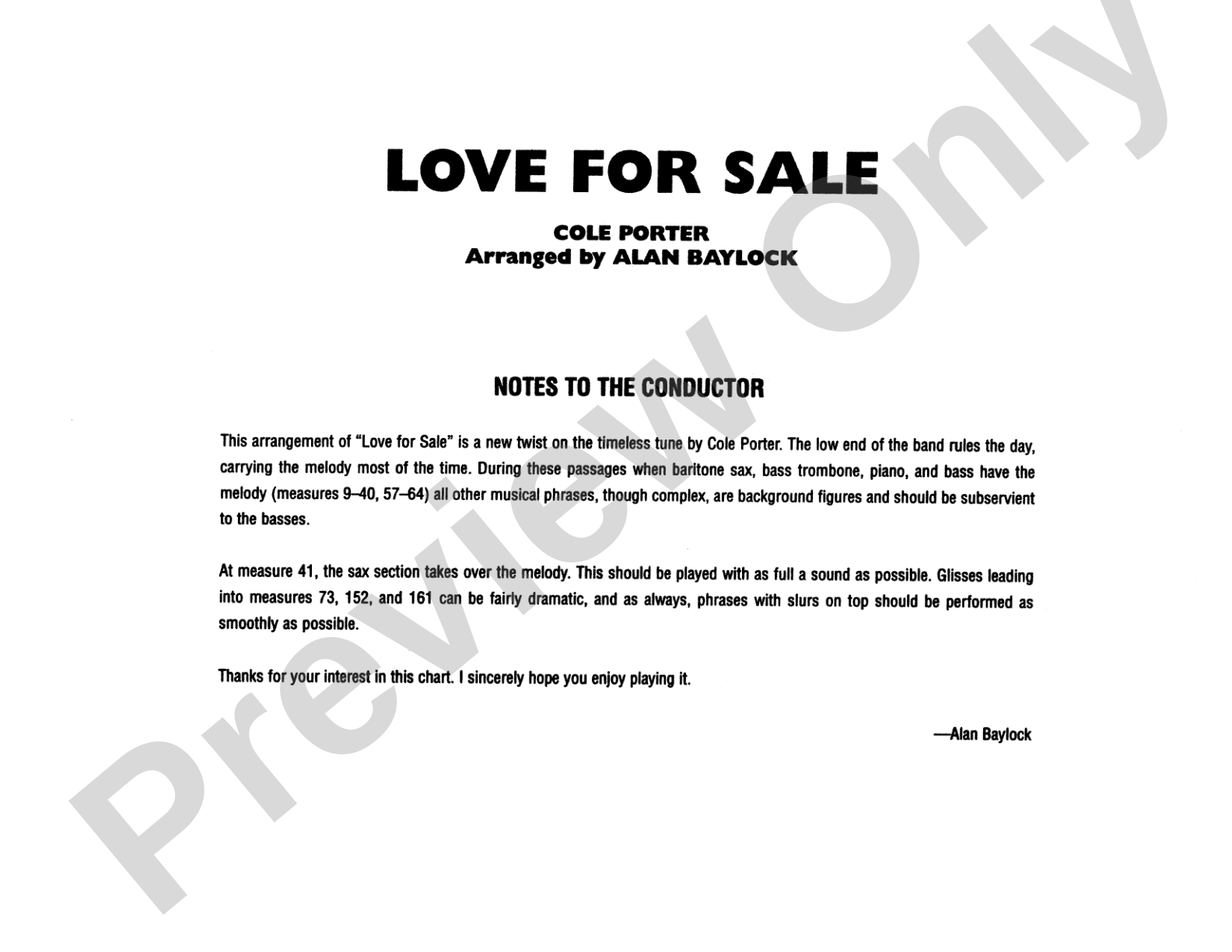
Baylock's treatment of this Porter standard moves beyond the standard head-solos-head approach. The arrangement unfolds architecturally, starting with an ingenious opening that showcases lower reeds and brass before building into full-ensemble drive. The contrapuntal writing keeps the chart engaging for both soloists and ensemble players, and the lead trumpet part demands real brass players, making this a legitimate showcase for festival competition.
What to expect
The chart opens with understated elegance as lower voices carry the melody, then systematically adds layers of energy and texture. By the time the ensemble locks in, the piece radiates swing, drive, and purposeful sophistication, balancing intricate ensemble writing with the breathing space that strong solos demand.
Who it's for
This arrangement serves medium-advanced to advanced jazz ensembles ready for festival and contest repertoire. Ensembles need solid lead trumpet and baritone players, capable soloists on alto and trumpet, and a rhythm section comfortable with swing feel and modern harmonic sophistication.
How to get the most out of it
- Balance the opening section with baritone, bass trombone, and bass as the primary melodic voice; these voices must sing clearly before the chart layers in upper voices and rhythm section fills
- Lock the alto 1 and trumpet 2 solos with the rhythm section through careful sectional work; their harmonic accuracy directly impacts the swing feel during solo breaks
- Shape the ensemble hits and solis passages with uniform articulation and dynamic response; the contrapuntal lines demand precision so each voice remains distinct
How to use it
Program this as a festival centerpiece or contest vehicle that demonstrates ensemble polish and solo strength. It pairs well with other Porter standards or with blues-based charts, offering audiences a sophisticated take on a familiar melody while giving students a real workout on both fundamentals and advanced jazz concepts.
Skills your students will build
- Swing articulation and feel across ensemble and solo contexts
- Reading contrapuntal lines while maintaining ensemble cohesion
- Balancing solo feature passages with ensemble support
- Range extension (lead trumpet to D, trombone to A-flat)
- Harmonic accuracy and reharmonization flexibility within a standard
- Dynamics and sectional independence in layered ensemble writing