
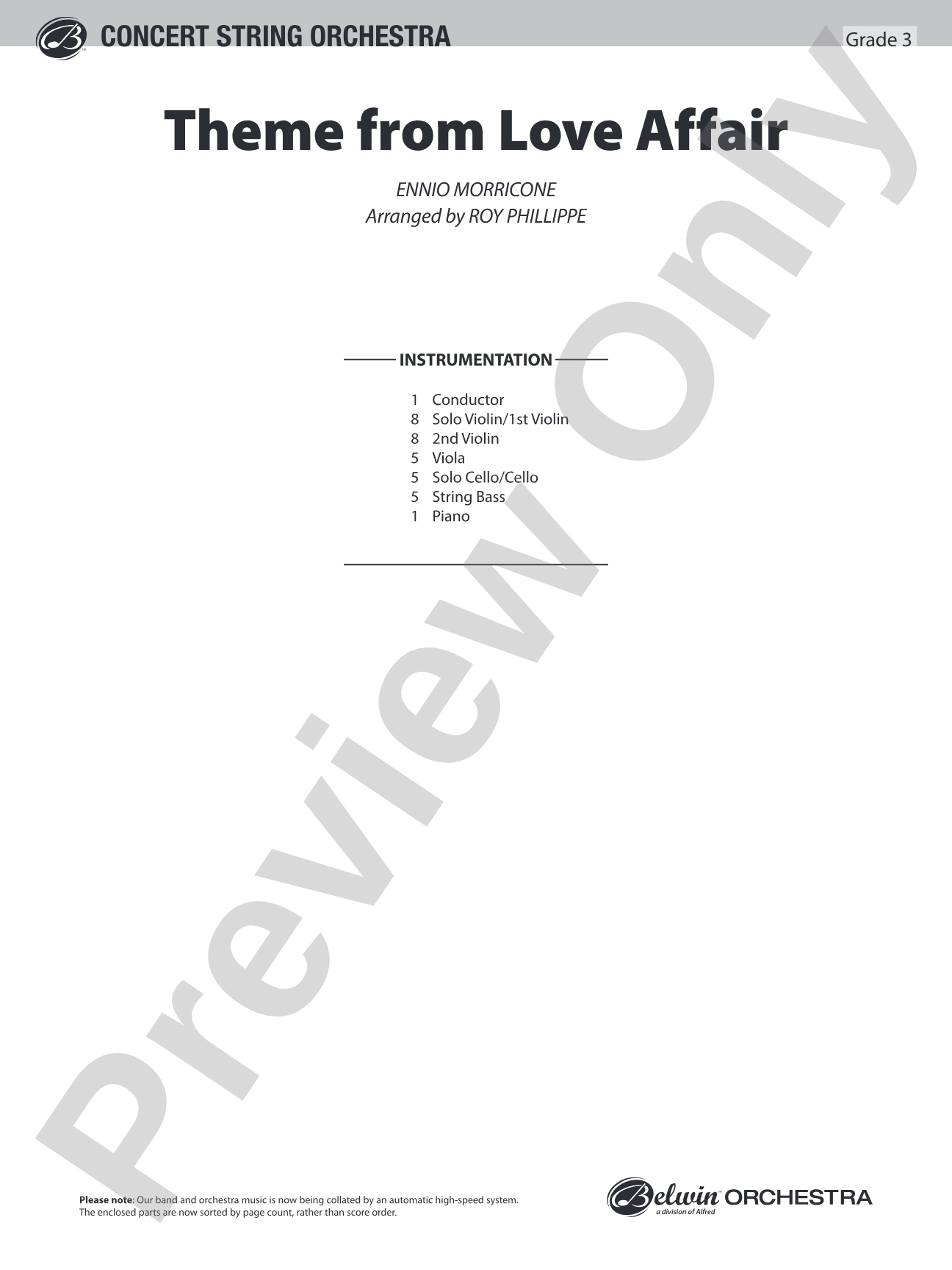
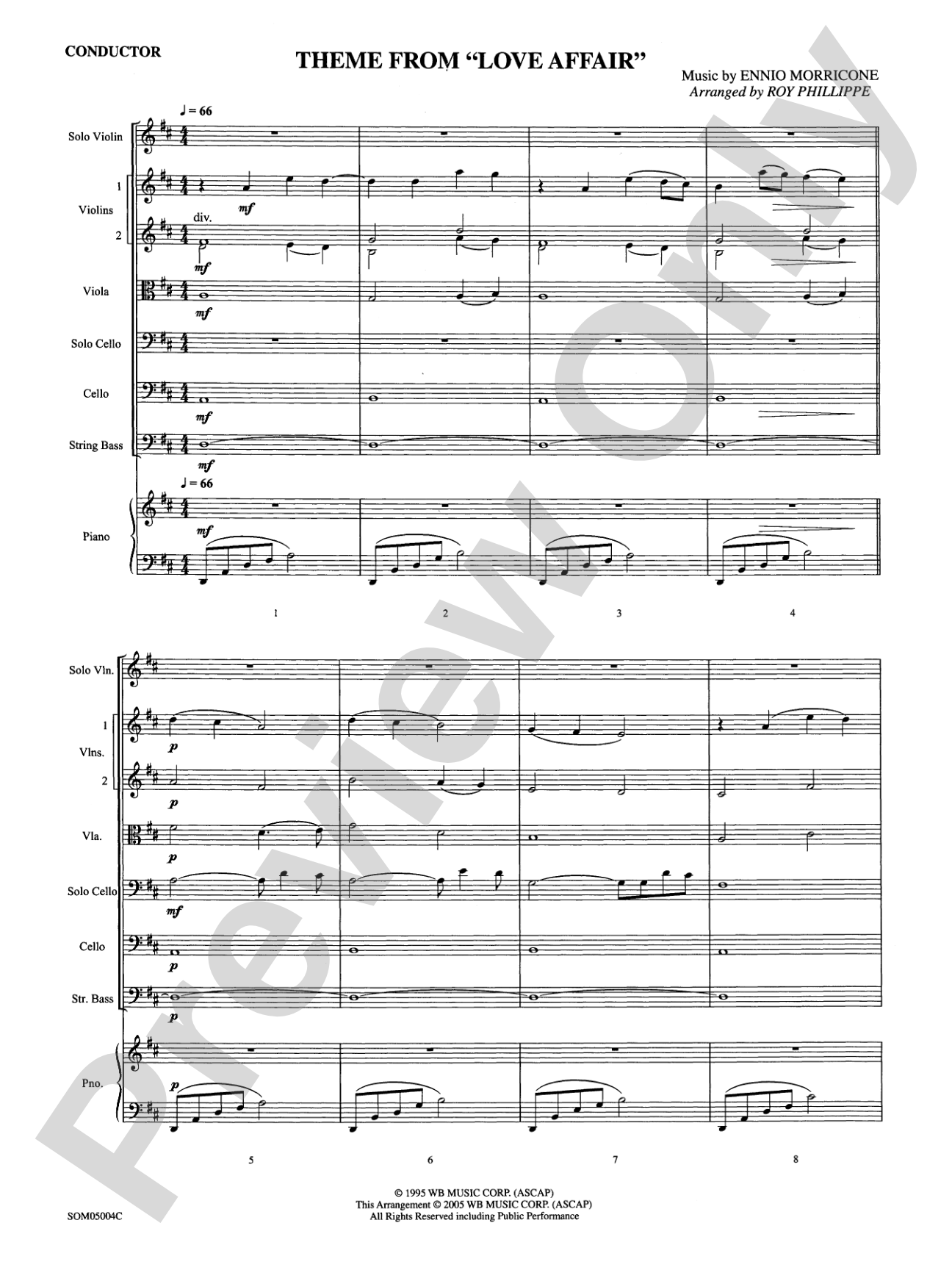
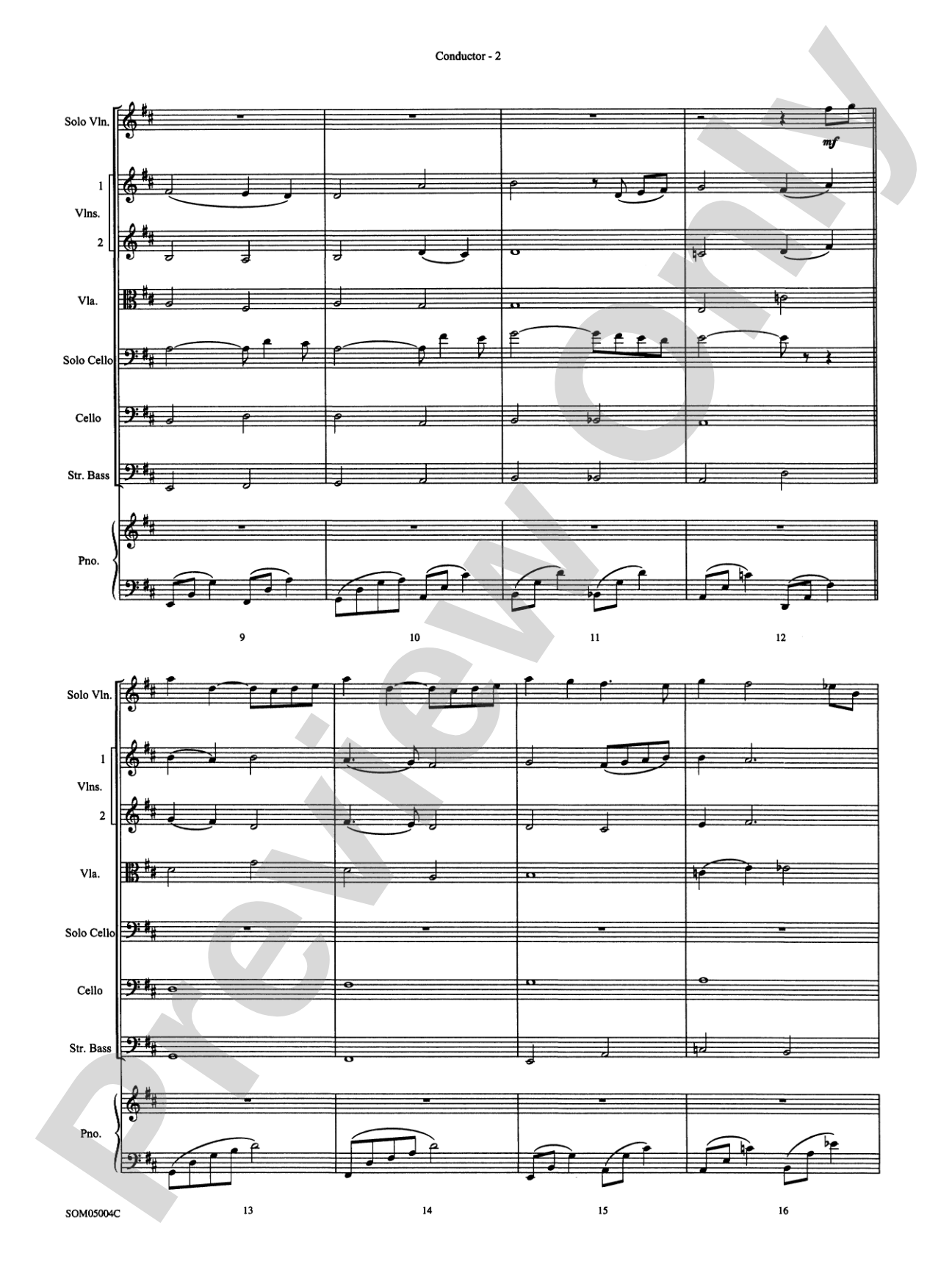
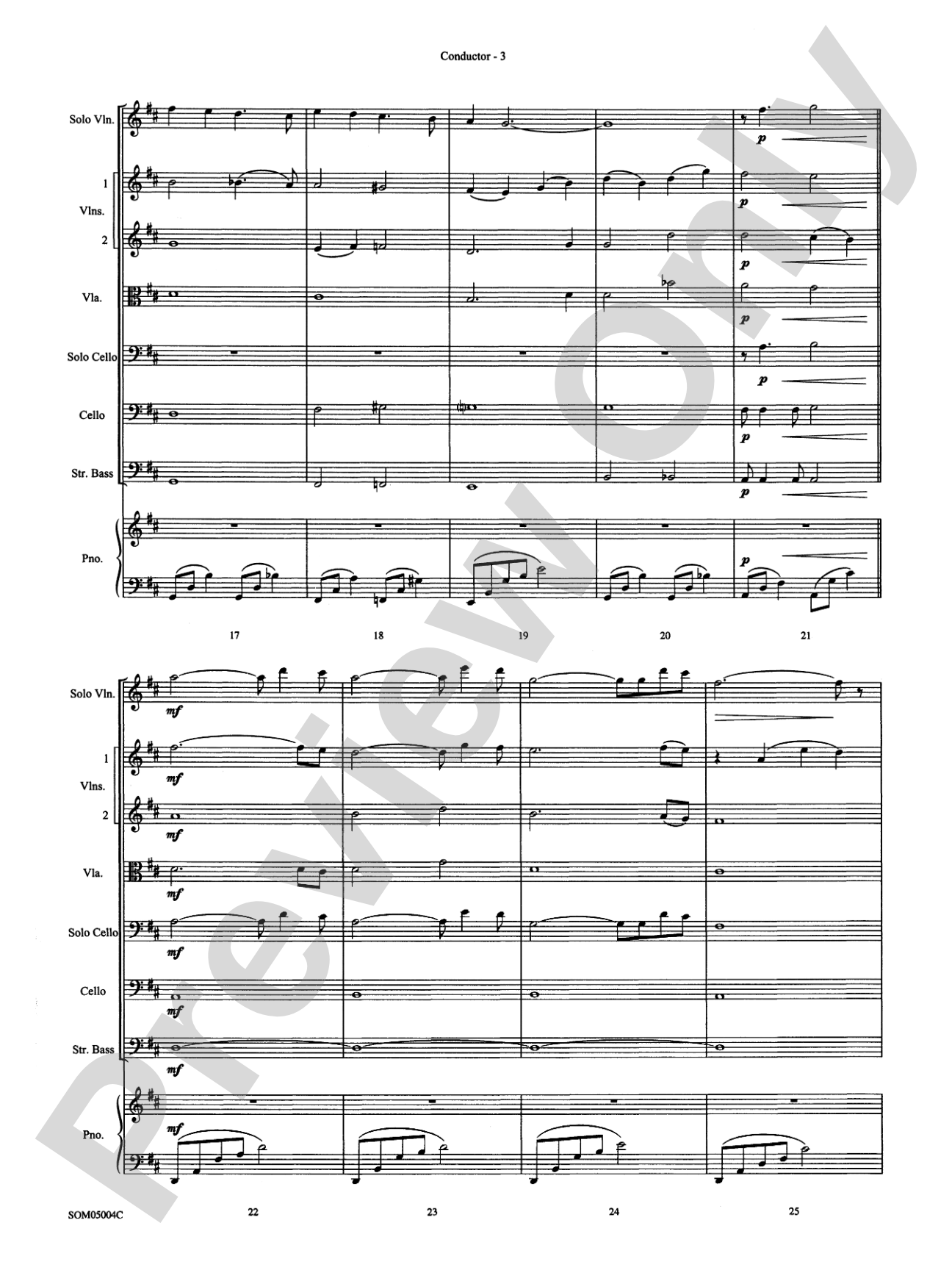
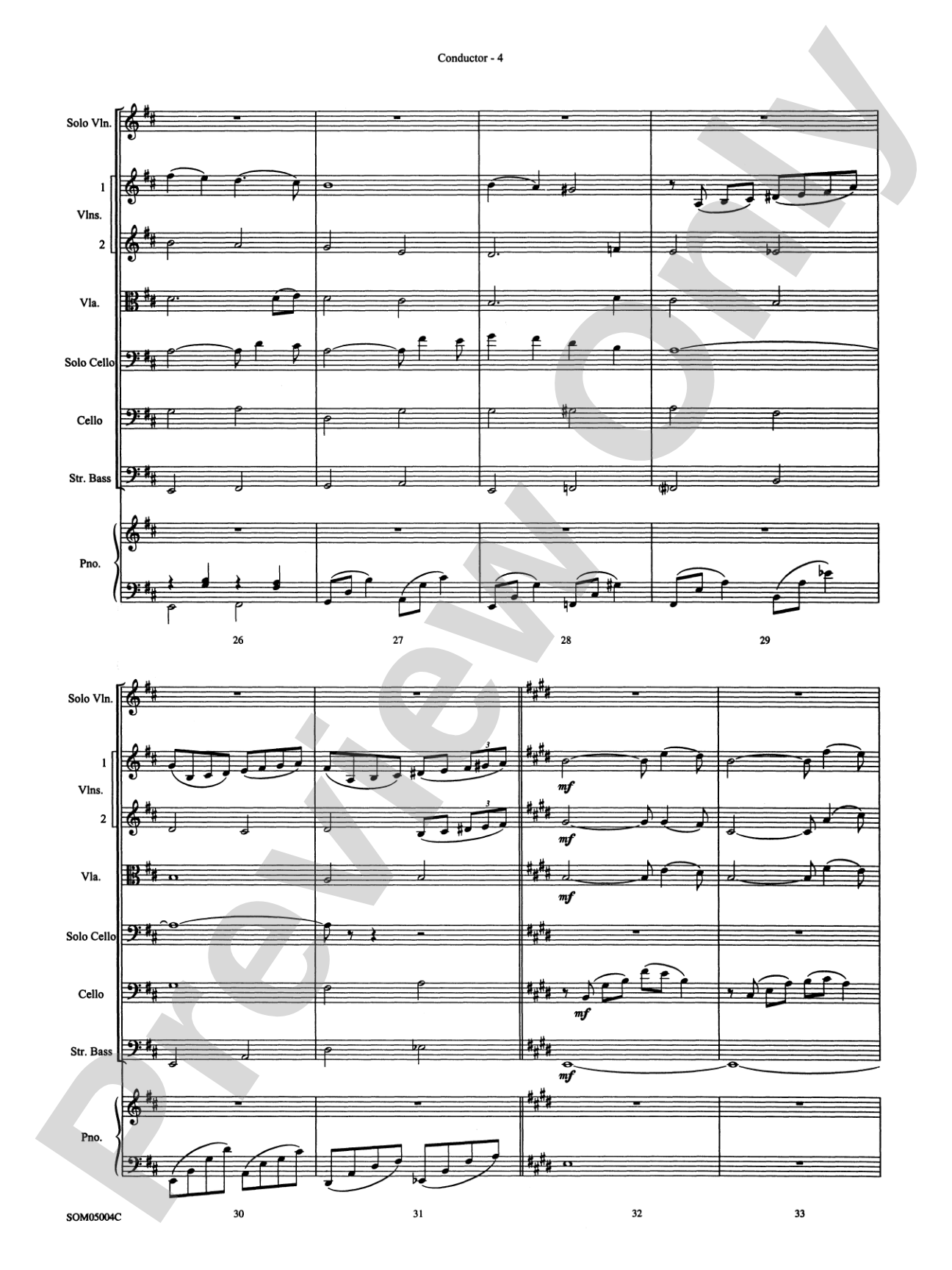
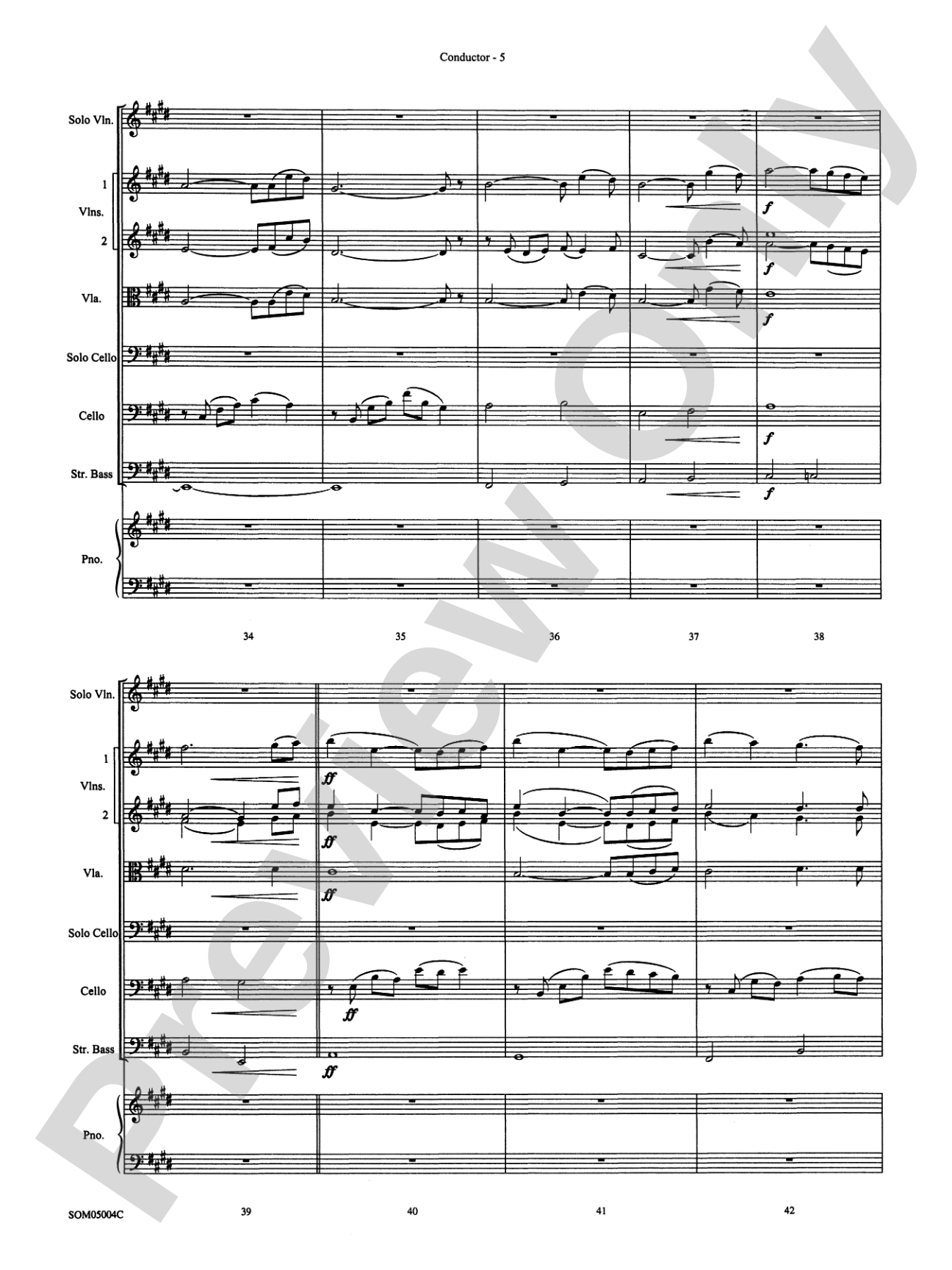
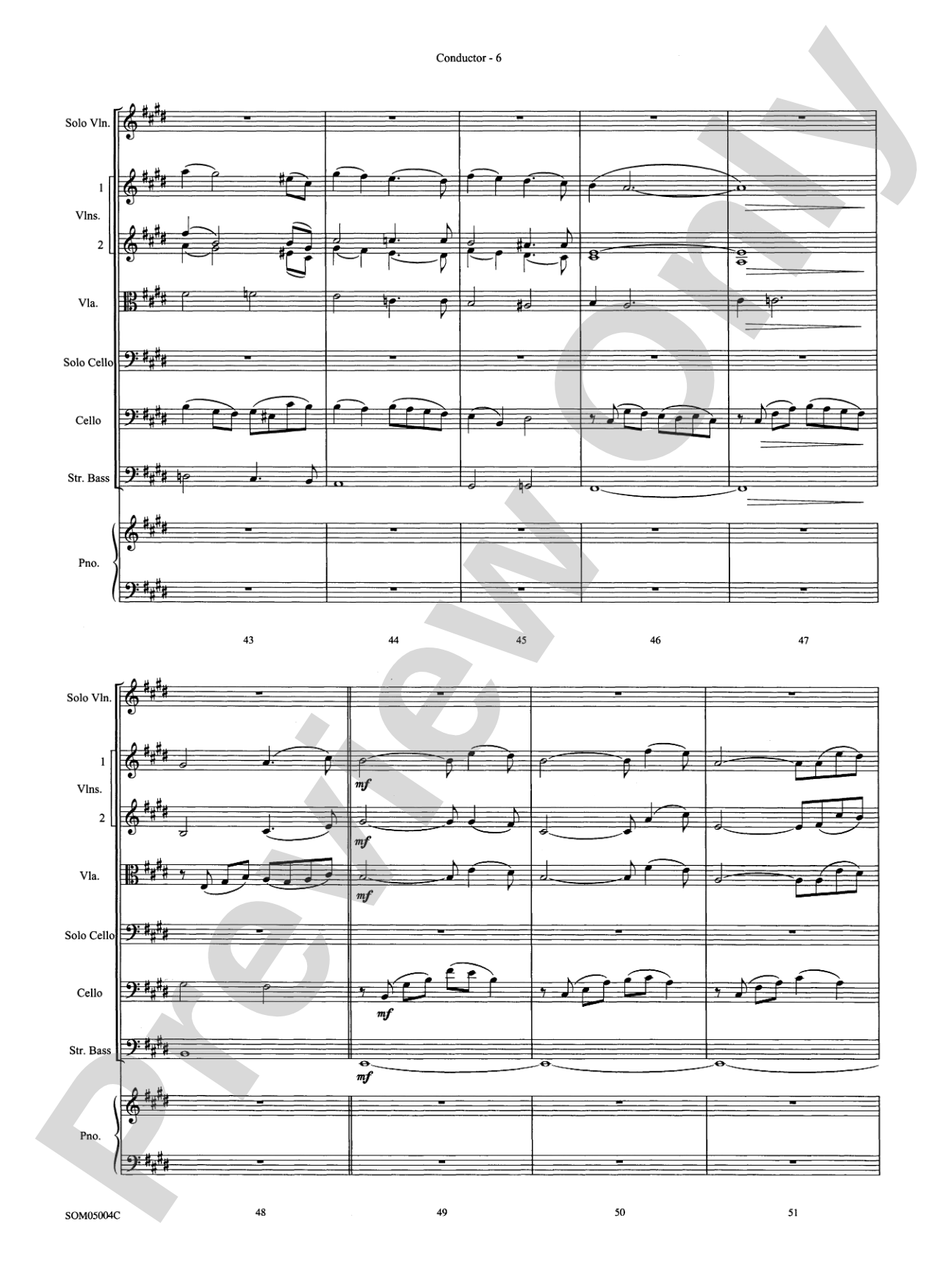
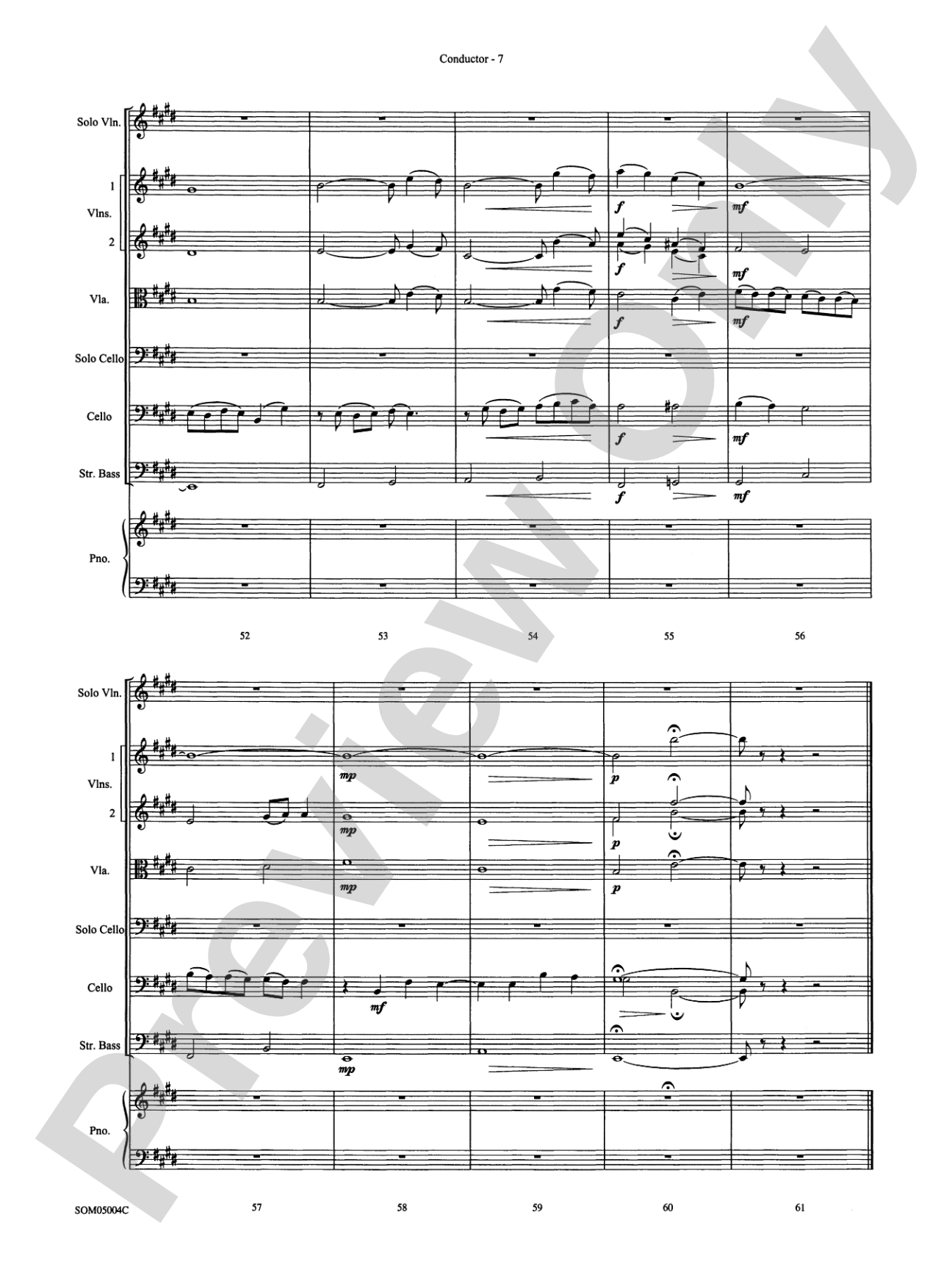

Love Affair, Theme from: String Orchestra Conductor Score & Parts
Ennio Morricone / arr. Roy Phillippe
Grade: 3
Item: 00-PK-0004463

$64.00
Pickup currently not available
Buy Extra Parts (Digital PDF Download)
| Product | Price | Quantity |
|---|---|---|
| Love Affair, Theme from: Score | $9.00 | |
| Love Affair, Theme from: 1st Violin | $5.99 | |
| Love Affair, Theme from: 2nd Violin | $5.99 | |
| Love Affair, Theme from: Viola | $5.99 | |
| Love Affair, Theme from: Cello | $5.99 | |
| Love Affair, Theme from: String Bass | $5.99 | |
| Love Affair, Theme from: Piano Accompaniment | $5.99 |
Parts Added to Cart!
Description
The charming Ennio Morricone ballad, Theme from Love Affair has been solidly scored for your concert string orchestra. Lush with rich harmonies, this is a delightful choice for any concert program. (7:30)


Don't just read it, hear it, play along with it, and watch your students grow with it. In MakeMusic Cloud, Love Affair, Theme from: String Orchestra Conductor Score & Parts comes alive with professional accompaniment, adjustable tempo, and built-in practice tools that turn solo practice into real progress.
Open in the Player
Jump straight in and assign it today.
Start Your Free Trial
Open this title and explore the full library in minutes.
Sample Audio
1
Audio File
--:--
0:00
0:00
Sample Video
No sample videos found.
Additional Details
Series:
Pop Concert String Orchestra
Publisher:
Alfred Music
Page Count:
118
SKU:
00-PK-0004463
More about this title
About the Composer: Ennio Morricone
Ennio Morricone (1928-2020) shaped film music across seven decades, composing scores that ranged from spaghetti westerns to intimate dramas. His gift for melody and orchestration made him one of the most recorded and performed composers of the modern era, earning an Academy Award late in his career for his body of work.
For string orchestra educators, Morricone's music offers straightforward emotional directness. His melodies sing, his harmonies support rather than complicate, and his orchestrations respect the natural sound of strings. These qualities make his film scores ideal teaching repertoire.
Why we love this
Roy Phillippe has arranged this waltz-inflected ballad with genuine care for string texture, layering the ensemble so that every section stays engaged without fighting for space. The piece gives your orchestra something genuinely beautiful to play while keeping the technical demands reasonable for Grade 3 groups.
What to expect
Warm and nostalgic, with the unhurried elegance of a slow waltz. The harmonies feel full and romantic without becoming overly sentimental, and the melody has the gift of seeming simple even when supported by carefully crafted inner voices.
Who it's for
String orchestras at the intermediate level (Grade 3) looking for repertoire with genuine musical substance and emotional appeal. Directors preparing pops concerts, spring programs, or units on film music will find this accessible without talking down to their students.
How to get the most out of it
- Allow the opening phrase to breathe. The melody doesn't rush, so give the first violins room to shape the line without pushing the tempo forward.
- Balance the inner voices carefully during the lush harmonic sections. Cello and viola lines carry real melodic weight here, not just filler.
- Mark your dynamics clearly in rehearsal. The piece relies on gentle dynamic swells rather than sudden changes, so consistent communication about pp and mp moments prevents it from becoming shapeless.
- Listen to at least one film recording of the original before your first read-through. Hearing Morricone's intent for phrasing and rubato will inform your string work immediately.
How to use it
Pair this with contrasting works in an all-pops concert, or use it as a closer for a mixed program where you want to leave your audience with something lyrical and moving. Its 7:30 runtime sits comfortably between shorter openers and longer symphonic works.
Skills your students will build
- Sustaining tone quality through long melodic phrases
- Balancing inner voice independence with ensemble blend
- Responding to subtle dynamic shapes (pp, p, mp transitions)
- Phrasing in a waltz-based harmonic structure
- Coordinating across multiple string sections in thick textures