
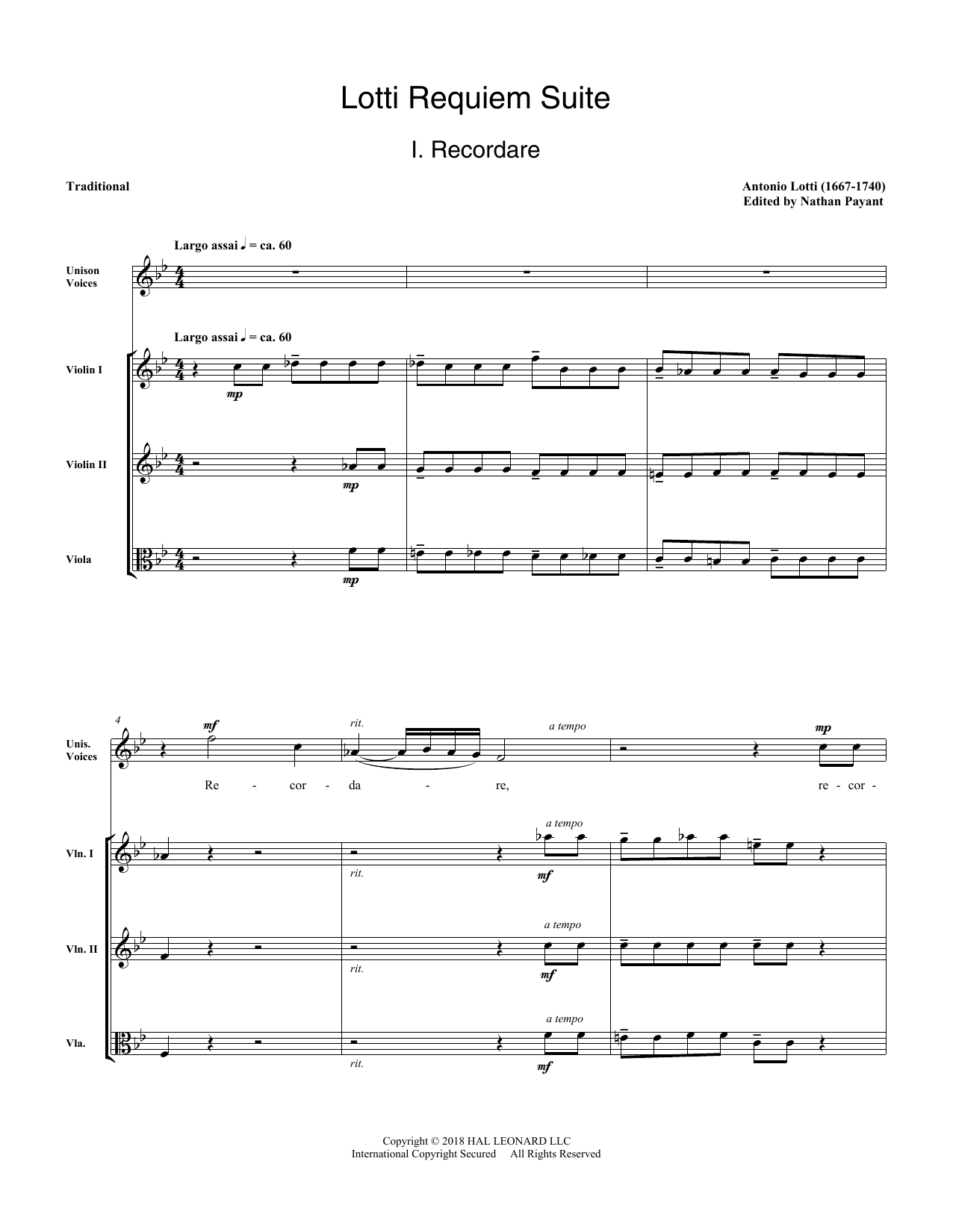

Lotti Requiem Suite (arr. Natahn Payant): Choral Instrumental Pak
Item: 35-PK00432340
$20.00
Pickup currently not available
Buy Extra Parts (Digital PDF Download)
Parts Added to Cart!
Description
Extracting two movements from the Baroque composer, Antonio Lotti's "Requiem Mass", here are two authentic, Baroque anthems for treble choir. Intended to be performed as a pair, a piano accompaniment is provided but a string trio will allow these to soar.


Lotti Requiem Suite (arr. Natahn Payant): Choral Instrumental Pak isn't in MakeMusic Cloud just yet...but it could be. Let us know you'd like to see it, and you'll help shape what comes next. In the meantime, start a free trial and dive into thousands of interactive titles your students can play along with today.
Request This Title
Tell us you want it.
Start Your Free Trial
Explore everything that's ready to play right now.
Sample Audio
No sample audio found.
Sample Video
No sample videos found.
Additional Details
Publisher:
Hal Leonard
SKU:
35-PK00432340
More about this title
About the Creator: Antonio Lotti (arr. Nathan Payant)
Antonio Lotti (1666-1740) was a Venetian master of counterpoint whose sacred music defined the late Baroque liturgical tradition. His compositional technique combined the clarity of modern harmony with the disciplined polyphony of the stile antico, making his works models for church musicians throughout Europe. Nathan Payant's thoughtful arrangement extracts the essential movements from Lotti's Requiem Mass and reimagines them for treble voices, preserving the composer's architectural integrity while opening these treasures to a wider range of ensembles.
Why we love this
Payant's selection captures the heart of Lotti's harmonic language without asking singers to navigate the full mass setting. The two movements work brilliantly as a paired program unit, giving your singers substantive Baroque literature that feels shaped and complete rather than fragmentary. String accompaniment transforms these anthems into concert experiences with genuine textural depth.
What to expect
The music radiates the quiet dignity of the Baroque sacred tradition, where emotional depth emerges from harmonic motion rather than dramatic gesture. Lotti's part writing creates warm, resonant sonorities that feel both introspective and assured, inviting singers into a world of carefully balanced voices and transparent textures.
Who it's for
This arrangement serves treble choirs (SSA, SA, or all-treble groups) wanting to perform stylistically sound Baroque sacred music without requiring larger vocal forces. Directors programming concert or festival dates will find these movements substantial enough to anchor a set, yet lean enough to pair with other shorter works.
How to get the most out of it
- Balance the treble choir against strings by rehearsing the vocal line first without any accompaniment; this establishes secure, ringing tone before layering in harmonic color.
- Shape phrases around harmonic cadences rather than text alone; Lotti's voice leading reveals natural breathing points that may not align with poetic phrases.
- If strings are unavailable, the piano part sustains musical integrity, though the arrangement clearly suggests what orchestration will achieve.
- Work the Latin text slowly at first, attending to the vowel consistency that makes Baroque harmonic writing sound clean and unified.
How to use it
Open a choral concert with these two movements to establish an elevated tone, or position them in the second half of a program as a moment of focused reverence between lighter selections. They pair naturally with other Baroque sacred works and provide an excellent bridge into Renaissance repertoire; they also stand alone as a complete sacred miniature for festival competitions.
Skills your students will build
- Singing authentic Latin pronunciation and vowel consistency in Baroque style
- Reading and interpreting Baroque harmonic structures and cadence types
- Balancing treble voices across multiple independent lines
- Responding to string accompaniment with rhythmic precision and textural awareness
- Understanding voice leading principles in stile antico and modern Baroque practice