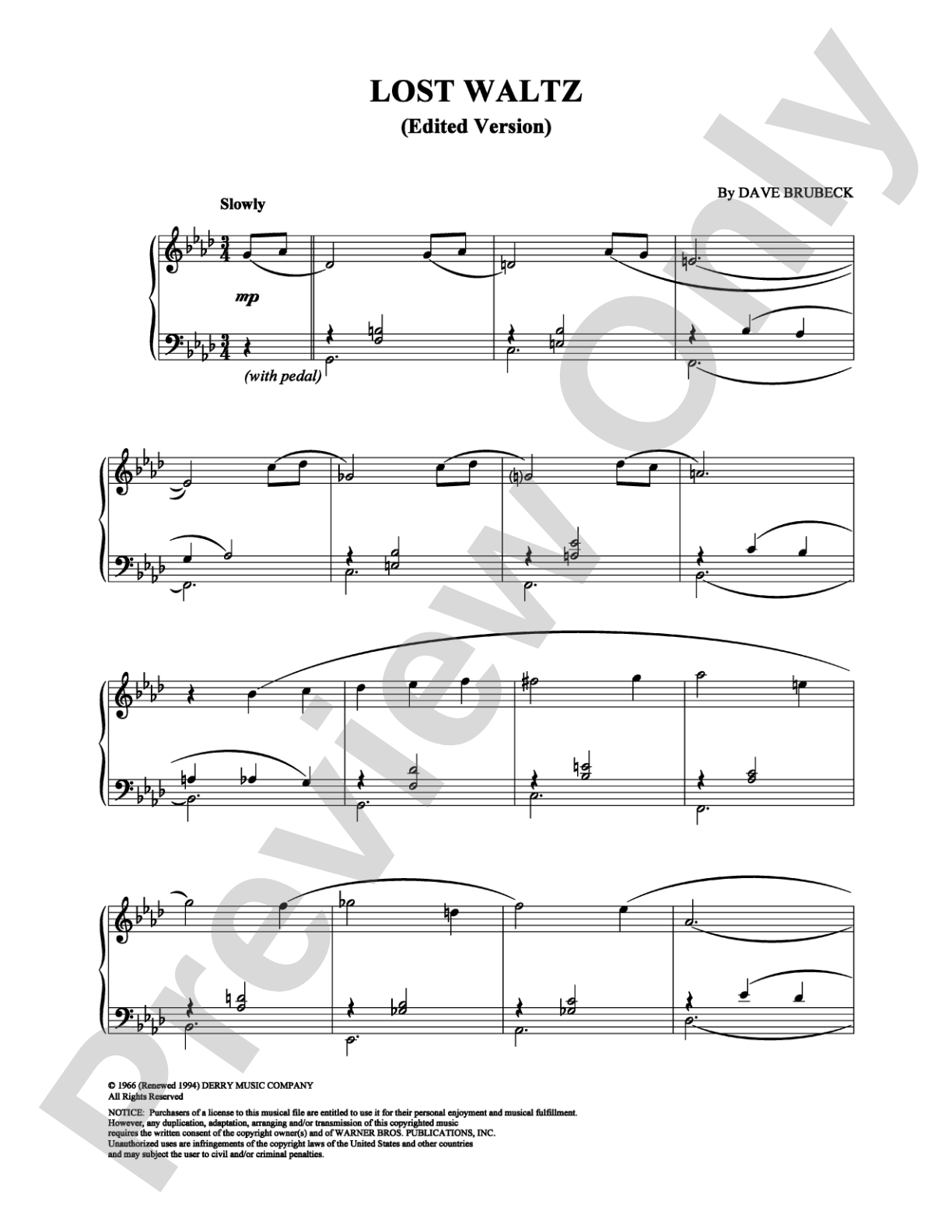
Lost Waltz (Edited Version): Piano Digital Sheet Music

Lost Waltz (Edited Version): Piano Digital Sheet Music

Dave Brubeck

Item: 00-PS-0000940

Digital Download
$3.99
Description

Lost Waltz (Edited Version): Piano Digital Sheet Music isn't in MakeMusic Cloud just yet...but it could be. Let us know you'd like to see it, and you'll help shape what comes next. In the meantime, start a free trial and dive into thousands of interactive titles your students can play along with today.

Sample Audio
No sample audio found.
Sample Video
Additional Details
SKU: 00-PS-0000940

More about this title

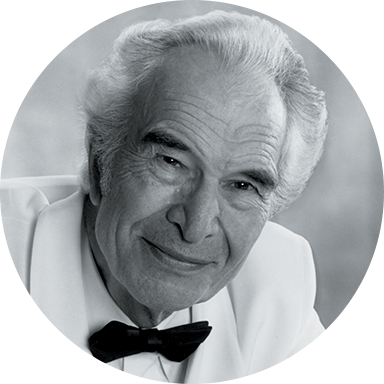
About the Artist: Dave Brubeck

Dave Brubeck

Dave Brubeck stands as one of jazz's most influential voices, equally at home improvising at the piano and crafting fully realized compositions. Beyond his iconic recordings like "Time Out" (the first jazz album to sell over a million copies) and the standard "Take Five," Brubeck composed for orchestras, choirs, ballets, and chamber ensembles, working with the London Symphony Orchestra and Cathedral Choral Society among many others. His study with Darius Milhaud at Mills College shaped his distinctive approach: blending jazz language with classical forms and harmonic sophistication.

Brubeck's legacy extends far beyond music. He was a pioneering force against racial segregation in mid-20th-century America, breaking barriers through integrated performances when such courage was uncommon. His honors include the Grammy Lifetime Achievement Award, the Presidential Medal of the Arts, and induction into the American Classical Music Hall of Fame, reflecting both his artistic achievement and his cultural impact.

Why we love this

This edited version opens Brubeck's compositional world to pianists who might find the original's demands prohibitive. The waltz form sits naturally under the hands while retaining the harmonic language and rhythmic sophistication that define Brubeck's voice. Programming it offers a genuine jazz alternative to the usual classical waltz repertoire, signaling to audiences that jazz deserves concert consideration alongside European tradition.

What to expect

An elegant waltz that moves with understated sophistication, its harmonies hinting at Brubeck's classical training while the rhythmic ease speaks jazz. The piece evokes a dimly lit ballroom where swing musicians have taken over the piano, turning familiar dance form into something quietly modern and unhurried.

Who it's for

Pianists with solid classical training who want to explore jazz repertoire without waiting for advanced technique. This suits intermediate to early advanced players working toward recitals or concert programs that celebrate American composers.

How to get the most out of it

  • Honor the swing feel even within the waltz meter; let the pulse breathe rather than metronomic precision dictate the character.
  • Balance the written voicings carefully. Brubeck's harmonic colors depend on clarity, so voice leading matters as much as melody.
  • Explore the tempo slightly; this piece can live comfortably across a range. Find the speed where the form reveals itself without rushing the harmony.

How to use it

Pair this with other American composers (Gershwin, Copland, Bernstein) to anchor a concert around jazz-classical fusion. It also works beautifully as a solo recital opener, establishing both the pianist's classical grounding and willingness to embrace jazz language.

Skills your students will build

  • Jazz harmonic voicing and chord substitution within a structured form
  • Swing rhythmic feel in triple meter
  • Translating classical piano technique to jazz interpretive practice
  • Balance between written notation and stylistic flexibility

You May Also Like