Lost Tomb of the Incas: 2nd Percussion Sheet Music Preview

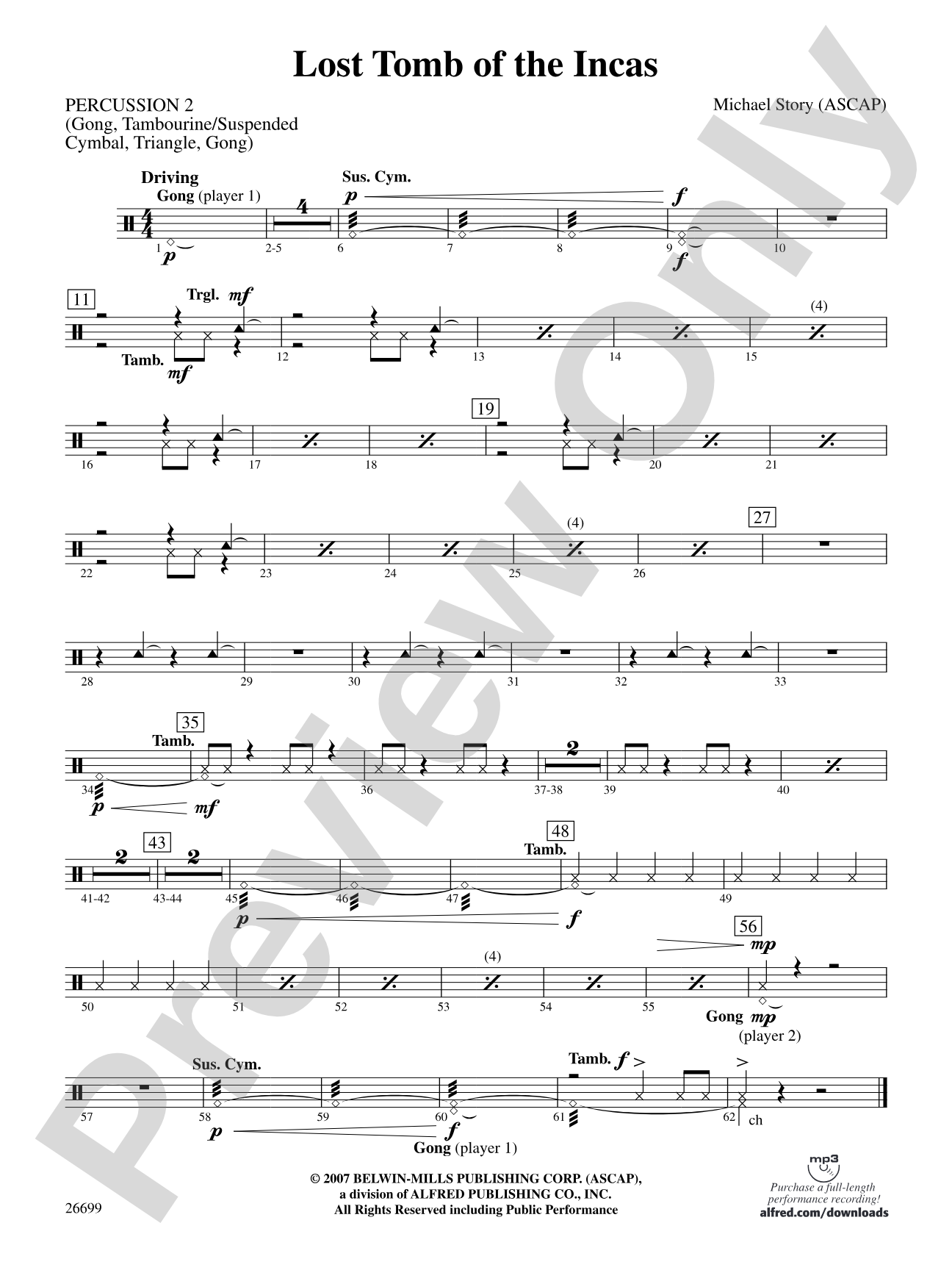
Lost Tomb of the Incas: 2nd Percussion

By Michael Story

Grade: 1 (Very Easy)

Item: 00-PC-0001179_PC2

Digital Download
$3.00
Description
Inspired by the 1911 discovery of a well preserved Inca ruin in Peru, Michael Story has scored this intriguing work for beginners. Lost Tomb of the Incas opens with a driving fanfare followed by an initial flute statement of the characteristic melody. The theme develops and builds to a dynamic conclusion. Certain to capture the imaginations of students and audiences alike! This title is available in MakeMusic Cloud.

Don't just read it, hear it, play along with it, and watch your students grow with it. In MakeMusic Cloud, Lost Tomb of the Incas: 2nd Percussion comes alive with professional accompaniment, adjustable tempo, and built-in practice tools that turn solo practice into real progress.

Sample Audio
0:00
0:00
Sample Video
Additional Details
Series: Belwin Beginning Band
Publisher: Alfred Music
Page Count: 69
SKU: 00-PC-0001179_PC2

More about this title

About the Composer: Michael Story

Michael Story has established himself as a prolific composer and arranger for young bands, with a catalog spanning hundreds of works across multiple genres. His compositions for beginning ensembles balance accessibility with musical substance, demonstrating a keen understanding of how to engage developing musicians while maintaining artistic integrity.

Why we love this

Story crafts the narrative architecture carefully here: the opening fanfare immediately signals that something important is happening, and the subsequent flute melody gives your ensemble a genuine theme to shape and develop. The progression from introduction through thematic statement to dynamic conclusion teaches directors how to build momentum on limited technical resources, making this an excellent model for discussing form and pacing with young musicians.

What to expect

The music captures the intrigue of discovery: a fanfare announces something significant, then a memorable theme emerges and grows in importance as the band adds texture and energy around it. By the final measures, the ensemble has built something genuinely exciting from simple materials.

Who it's for

Beginning concert bands at the Grade 1 level will find this piece immediately accessible without sacrificing musical substance. Directors seeking repertoire that engages students' imaginations while staying well within technical reach should consider this a core selection.

How to get the most out of it

  • Give the opening fanfare room to breathe. Even at Grade 1, the rhythmic drive matters more than rushing; let the brass articulation define the energy.
  • Balance the flute statement of the main melody against the accompaniment. This is your chance to work on instrumental independence and expose young woodwinds to carrying a real musical line.
  • Shape the development section by bringing out internal voice movement. The theme is being passed around the band, so rehearse it section by section to show students how material gets reused and transformed.
  • Support the dynamic conclusion with clear conducting. The students need to feel when the piece is building toward the final statement so the arrival lands with impact.

How to use it

Open a fall or winter concert with this piece to set an imaginative tone and establish your ensemble's ability to execute rhythmic precision and thematic clarity. It pairs well on the same program with folk song arrangements or other Grade 1 selections where you want to showcase developing musicians without overshadowing them.

Skills your students will build

  • Articulation control in brass and woodwinds
  • Following a conductor's interpretation of tempo and dynamics
  • Maintaining rhythmic precision while listening to surrounding parts
  • Identifying and performing a recurring theme across different instrumental sections
  • Building dynamic momentum over multiple phrases

You May Also Like