Lost In The Stars Sheet Music Preview

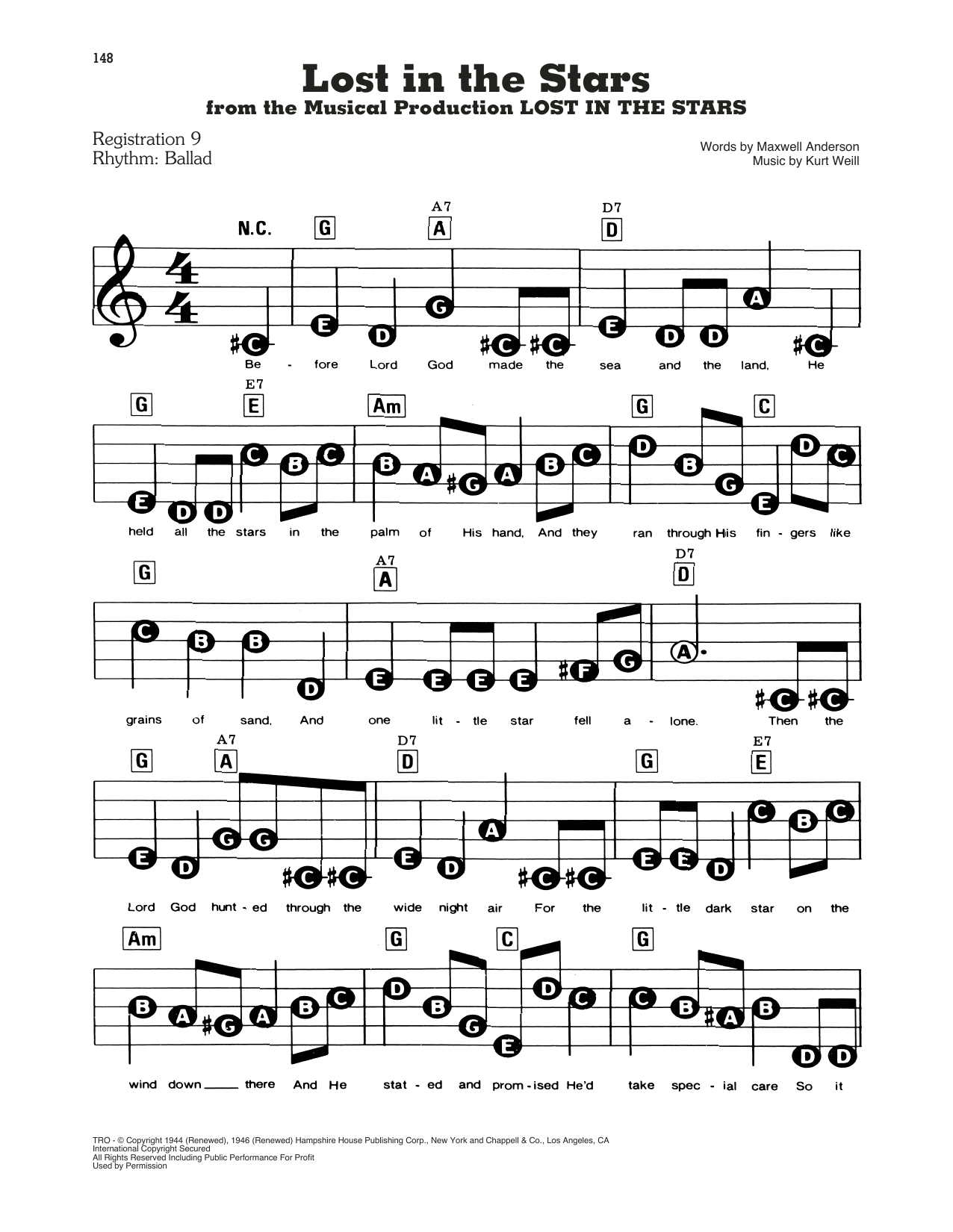
Lost In The Stars: E-Z Play Today

Item: 35-DS00569717

Digital Download
$4.99
Description

Lost In The Stars: E-Z Play Today isn't in MakeMusic Cloud just yet...but it could be. Let us know you'd like to see it, and you'll help shape what comes next. In the meantime, start a free trial and dive into thousands of interactive titles your students can play along with today.

Sample Audio
No sample audio found.
Sample Video
Additional Details
Publisher: Hal Leonard
Page Count: 3
SKU: 35-DS00569717

More about this title

About the Creator

Maxwell Anderson and Kurt Weill created "Lost in the Stars" for the 1949 musical of the same name, a powerful exploration of race and injustice in South Africa. Weill's compositional voice blends American musical theater traditions with the sophistication of his European classical training, while Anderson's lyrics deliver emotional weight without sentimentality. Together they produced one of Broadway's most socially conscious scores, with this title song becoming an enduring standard.

Why we love this

The E-Z Play arrangement makes this profound Broadway ballad accessible to pianists still building their technical foundation, without stripping away the song's emotional core. Students get to experience authentic Weill harmony and phrasing in a manageable format, and the three-page length means it's substantial enough to feel like a real accomplishment. Programming this creates space for meaningful musical storytelling in your concert without requiring advanced technique.

What to expect

"Lost in the Stars" unfolds with quiet reflection, moving through passages of gentle longing before building toward moments of quiet urgency. The harmonic language feels both familiar and slightly unexpected, creating an intimate, almost conversational intimacy. There's a bittersweet quality throughout, as if the song is searching for hope in difficult circumstances.

Who it's for

This arrangement welcomes pianists at the early intermediate level who want to engage with substantive Broadway material. It's ideal for students studying American musical theater history, and also works well for collaborative pianists learning to support a vocalist.

How to get the most out of it

  • Shape the melody with purposeful rubato; Weill's songs respond to subtle tempo flexibility rather than mechanical steadiness.
  • Balance the accompaniment quietly enough that every word of the lyric lands clearly if a vocalist joins you.
  • Mark phrase endings with small breath pauses, even in the piano part, to honor the conversational quality of the text.
  • Explore the dynamic range between the verse and chorus; the emotional arc deepens when you allow genuine contrast rather than playing at one volume.

How to use it

Include this as part of a Broadway or 20th-century American songwriting unit to demonstrate how theater composers tackled serious social themes. Its modest technical demands make it perfect for a winter or spring recital when you want your developing pianists performing meaningful material. Consider pairing it with other Weill songs or period pieces to create a thematic concert program.

Skills your students will build

  • Reading and executing understated dynamic control in a ballad setting
  • Interpreting Broadway harmony and voice leading
  • Coordinating melody and accompaniment with clarity and sensitivity
  • Shaping musical phrases through thoughtful use of rubato and breath

You May Also Like