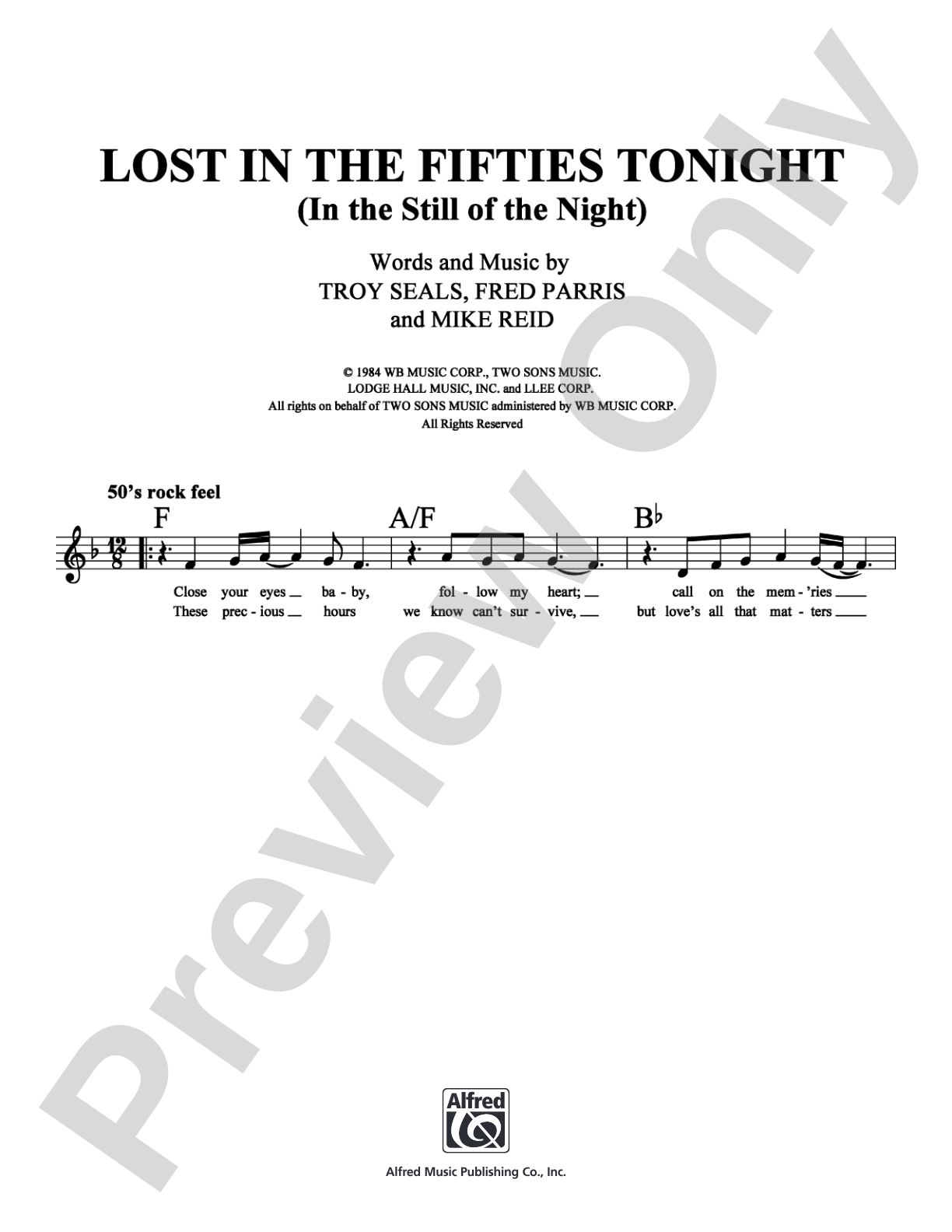
Lost in the Fifties Tonight (In the Still of the Night): Lead Sheet Digital Sheet Music

Lost in the Fifties Tonight (In the Still of the Night): Lead Sheet Digital Sheet Music

Troy Seals, Ronnie Milsap, Mike Reid, Fred Parris

Item: 00-PS-0009141

Digital Download
$1.99
Description

Lost in the Fifties Tonight (In the Still of the Night): Lead Sheet Digital Sheet Music isn't in MakeMusic Cloud just yet...but it could be. Let us know you'd like to see it, and you'll help shape what comes next. In the meantime, start a free trial and dive into thousands of interactive titles your students can play along with today.

Sample Audio
No sample audio found.
Sample Video
Additional Details
SKU: 00-PS-0009141

More about this title

About the Artist: Ronnie Milsap

Ronnie Milsap is a country music icon whose career spans five decades of chart-topping hits and Grammy Award recognition. Blind from birth, he became one of the most successful recording artists in country music history, known for his ability to blend country, pop, and R&B influences into crossover hits that reached audiences far beyond the country format.

Why we love this

This lead sheet captures one of Milsap's most enduring recordings, a song that works equally well in jazz combo settings, pop ensembles, or as a vocal showcase. The melody sits comfortably for singers and translates beautifully to various instrumentation, making it a versatile choice for programs that blend genres or feature vocalist soloists.

What to expect

Nostalgic and intimate, the song evokes the doo-wop and R&B influences of the 1950s while maintaining the warmth and maturity Milsap brings to every performance. There's a reflective quality to the melody that invites listeners into a moment of quiet contemplation.

Who it's for

This lead sheet suits jazz musicians, pop vocalists, piano players, and mixed ensembles looking for accessible yet sophisticated standards repertoire. It works for advanced high school students through adult performers who want material with strong melodic appeal and harmonic depth.

How to get the most out of it

  • Balance the melody line with chord changes that support rather than overshadow the vocal or lead instrument; the lead sheet gives you room to voice harmonies distinctly.
  • Pay attention to the song's sentimental pacing; resist rushing through phrases to let the lyrical quality breathe.
  • Experiment with rhythmic interpretation in the accompaniment; the song tolerates both straightforward time-keeping and subtle swing inflections depending on your ensemble's style.

How to use it

Pair this with other crossover standards or 1950s-influenced repertoire in a concert celebrating American songwriting across genres. It works especially well in recitals featuring vocalist soloists or in jazz ensemble programs exploring the intersection of country and pop sensibilities.

Skills your students will build

  • Reading lead sheet notation and chord symbols
  • Interpreting melodic phrasing with lyrical awareness
  • Voicing harmonies that support rather than complicate the melody
  • Balancing formal musical structure with interpretive flexibility

You May Also Like