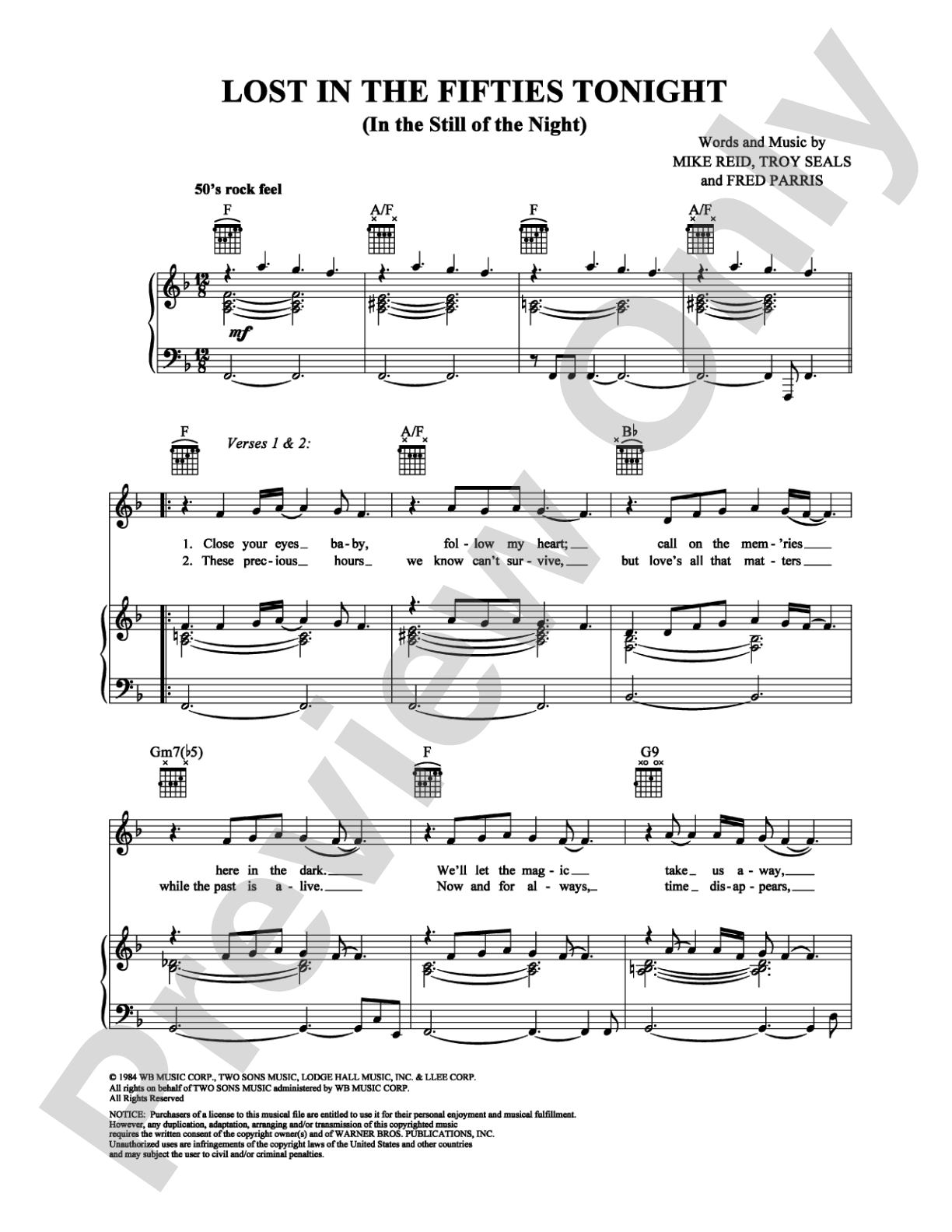
Lost in the Fifties Tonight (In the Still of the Night): Piano/Vocal/Chords Digital Sheet Music

Lost in the Fifties Tonight (In the Still of the Night): Piano/Vocal/Chords Digital Sheet Music

Troy Seals, Ronnie Milsap, Mike Reid, Fred Parris

Item: 00-PS-0009140

Digital Download
$3.99
Description

Lost in the Fifties Tonight (In the Still of the Night): Piano/Vocal/Chords Digital Sheet Music isn't in MakeMusic Cloud just yet...but it could be. Let us know you'd like to see it, and you'll help shape what comes next. In the meantime, start a free trial and dive into thousands of interactive titles your students can play along with today.

Sample Audio
No sample audio found.
Sample Video
Additional Details
SKU: 00-PS-0009140

More about this title

About the Artist: Ronnie Milsap

Ronnie Milsap is a country music innovator who brought orchestral sophistication and emotional depth to the genre during the 1970s and 1980s. Blind from birth, he became one of country music's most successful recording artists and a virtuoso pianist, earning multiple Grammy Awards and Country Music Association honors.

Millsap's artistry shaped how contemporary country ballads could incorporate pop sensibilities and lush instrumental arrangements without losing authenticity. His work demonstrated that country music could command mainstream audiences while maintaining its narrative tradition and emotional core.

Why we love this

This arrangement captures the nostalgic pull that makes the song resonate across generations. The piano/vocal/chords format gives singers genuine flexibility in how they approach the arrangement, whether accompanying themselves or working with a band.

What to expect

Warm, reflective, and tinged with longing. The piece evokes late-night radio and the particular melancholy of songs built on memory and nostalgia. The fifties references give it retro character, but Milsap's orchestral sensibility keeps it from feeling dated.

Who it's for

Singers working in country, pop-country, or acoustic crossover contexts will find this arrangement accessible and musically rewarding. Pianists accompanying vocalists at recitals or in studio settings can use the chord symbols to craft accompaniment that fits their performance space and technical level.

How to get the most out of it

  • Establish the piano introduction with clarity and space; resist the urge to rush into the vocal entry. Let the instrumental foundation settle first.
  • Shape the vocal line through phrase breathing rather than strict metric breaks. Country ballads thrive on conversational pacing.
  • Use the chord symbols to guide harmonic color rather than as literal voicing requirements. Adapt the accompaniment to match your ensemble's instrumentation.
  • Balance dynamics between verses and chorus to build emotional arc. The arrangement works best when the verse feels intimate before opening up.

How to use it

Program this as a solo feature for a vocalist with strong interpretive skills, or as a duet with piano and another instrument. It also works well as a bridge piece between more traditional country numbers and contemporary material, showing how the genre evolved while staying rooted in storytelling.

Skills your students will build

  • Balancing vocal phrasing against strict rhythmic accompaniment
  • Interpreting chord symbols for flexible accompaniment voicing
  • Managing emotional dynamics across verse and chorus structures
  • Adapting country ballad style to personal interpretation

You May Also Like