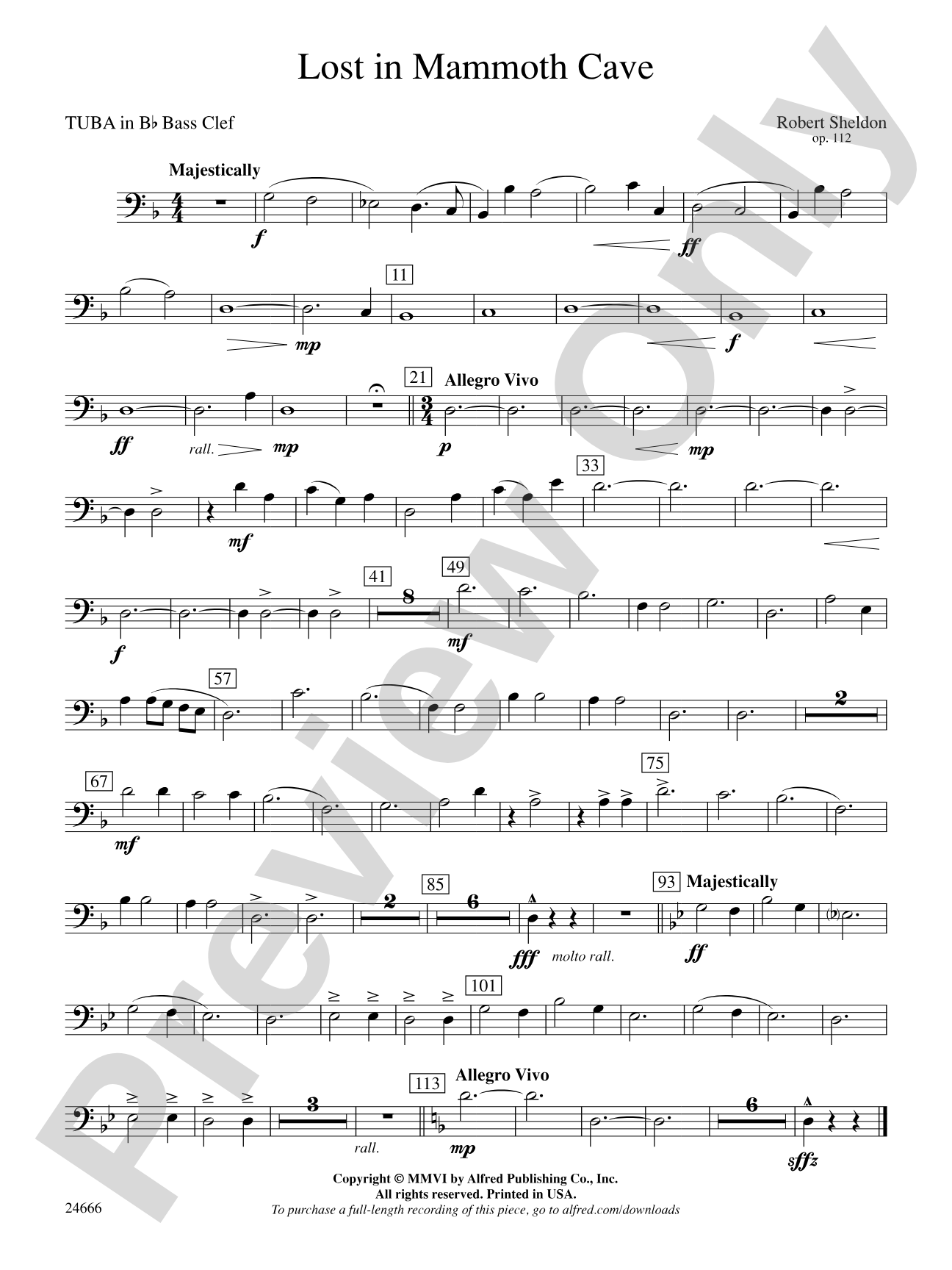
Lost in Mammoth Cave: (wp) B-flat Tuba B.C. Sheet Music Preview

Lost in Mammoth Cave: (wp) B-flat Tuba B.C.

By Robert Sheldon

Grade: 2.5 (Medium Easy)

Item: 00-PC-0000834_wpTBBBC

Digital Download
$3.00
Description
Lost in Mammoth Cave was commissioned by the Third District Band Directors Association of the Kentucky Music Education Association for the 2006 Seventh & Eighth Grade All-District Honor Band. The piece takes the form of a descriptive journey into this wondrous cave, depicting the thrill of exploration and the awe in seeing these immense caverns.

Don't just read it, hear it, play along with it, and watch your students grow with it. In MakeMusic Cloud, Lost in Mammoth Cave: (wp) B-flat Tuba B.C. comes alive with professional accompaniment, adjustable tempo, and built-in practice tools that turn solo practice into real progress.

Sample Audio
0:00
0:00
Sample Video
Additional Details
Series: Young Symphonic
Publisher: Alfred Music
Page Count: 104
SKU: 00-PC-0000834_wpTBBBC

More about this title

About the Composer: Robert Sheldon

Robert Sheldon

Robert Sheldon's compositions appear on festival and contest lists worldwide, performed by thousands of ensembles annually. His catalog spans concert band, orchestra, and wind ensemble literature, each work crafted with careful attention to expression and musicianship. He has received honors from the American School Band Director's Association, Phi Beta Mu, and ASCAP, and regularly conducts All-State and Regional Honor Bands across the country and internationally.

Beyond composition, Sheldon co-authored Sound Innovations for Concert Band and maintains an active schedule as a clinician and guest conductor. He has conducted his works at Carnegie Hall, Orchestra Hall in Chicago, Boston's Symphony Hall, the Sydney Opera House, and the Kennedy Center. In 2020, VanderCook College of Music awarded him an honorary doctorate in recognition of his contributions to wind band education.

Why we love this

This piece delivers narrative programming that doesn't require elaborate staging or props, making it ideal for concert programs that need visual interest through music alone. The Grade 2.5 accessibility means serious middle school bands can tackle genuine descriptive writing rather than simplified versions of concert favorites. Sheldon's commission history with honor bands and festivals signals that this work sits at the sweet spot where students feel genuinely challenged and audiences hear real artistry.

What to expect

A guided exploration that balances wonder with adventure. The music captures both intimate moments inside cavern chambers and expansive passages that open into vast spaces, creating a sense of discovery that unfolds naturally across the piece.

Who it's for

Middle school concert bands seeking substantive programmatic literature that engages both musicians and audiences. Bands preparing for festivals or contests benefit from a work that combines accessibility with genuine musical content and clear performance appeal.

How to get the most out of it

  • Shape the opening exploration section with clear dynamic contrasts between passages that suggest movement through tight passages versus those depicting vast cavern spaces.
  • Balance the programmatic elements by letting the music tell its own story; resist over-interpreting or underlining dramatic moments with exaggerated tempos.
  • Pay attention to internal balance in the parts so that secondary melodic lines (common in Sheldon's writing) shine through and support the narrative arc.
  • Use the full dynamic range available; this piece gains much of its descriptive power from subtle shifts in color and intensity rather than sustained loudness.

How to use it

Program this as a centerpiece for a concert built around nature or regional themes, or pair it with other descriptive concert band works to create a thematic evening. Its medium difficulty and engaging subject matter make it a strong choice for spring concerts or festival competitions where program variety enhances audience engagement.

Skills your students will build

  • Sustaining musical phrases across longer sections
  • Balancing dynamic control and expressive phrasing
  • Following programmatic cues to shape interpretation
  • Responding to shifting harmonic color and tonal centers
  • Maintaining ensemble unity across varied rhythmic textures

You May Also Like