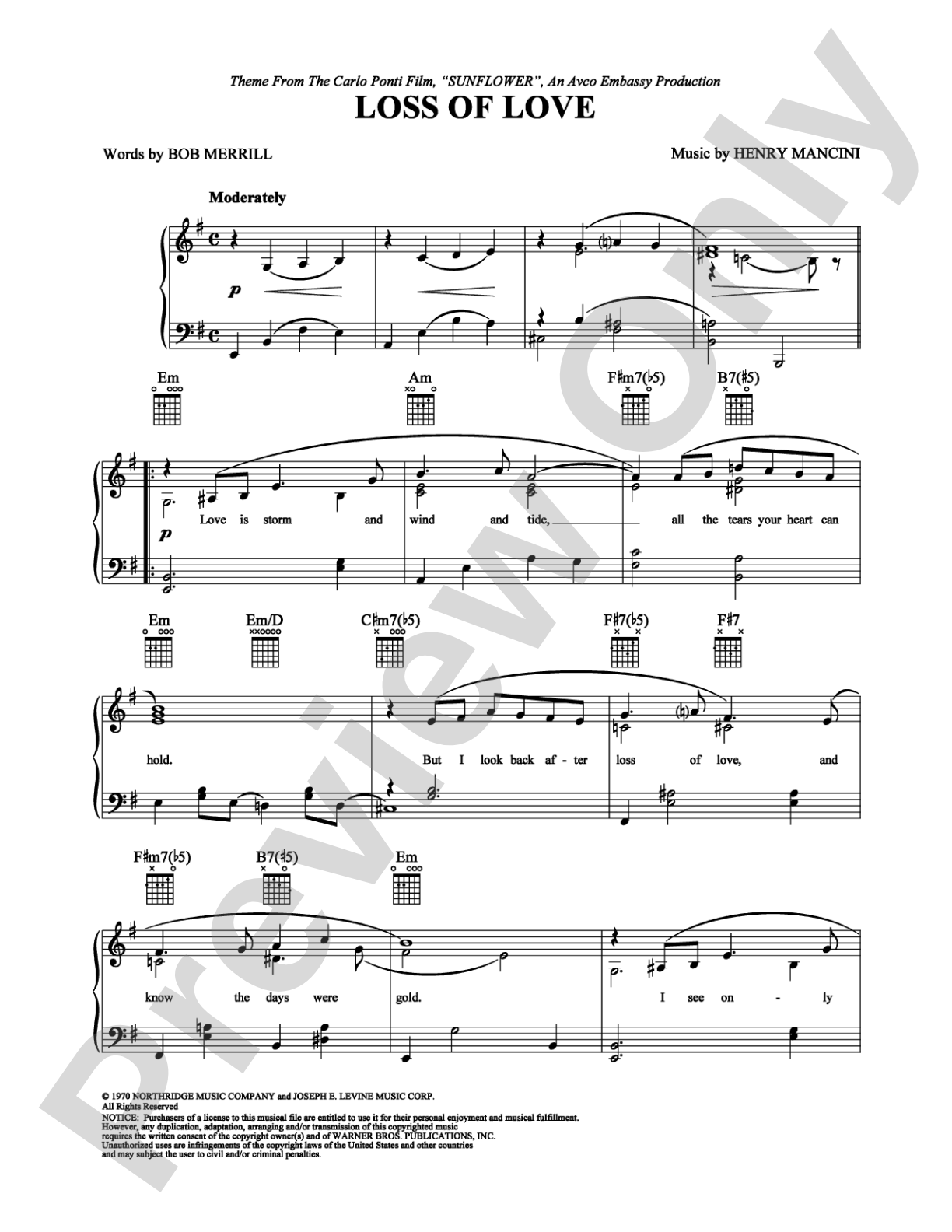
Loss of Love: Piano/Vocal/Chords Digital Sheet Music

Loss of Love: Piano/Vocal/Chords Digital Sheet Music

Henry Mancini

Item: 00-PS-0007644

Digital Download
$2.95
Description

Loss of Love: Piano/Vocal/Chords Digital Sheet Music isn't in MakeMusic Cloud just yet...but it could be. Let us know you'd like to see it, and you'll help shape what comes next. In the meantime, start a free trial and dive into thousands of interactive titles your students can play along with today.

Sample Audio
No sample audio found.
Sample Video
Additional Details
SKU: 00-PS-0007644

More about this title

Why we love this

The chord symbols printed alongside the vocal line make this accessible for pianists who read lead sheets or prefer to voice chords themselves rather than follow figured accompaniment. The straightforward layout lets singers focus on interpretation while allowing flexible instrumental support, whether that's a classically trained pianist or a guitarist reading the same chart.

What to expect

The piece inhabits quiet emotional terrain where vulnerability and resilience coexist. Expect a musical landscape that honors the specific ache of loss without descending into melodrama, creating space for both restraint and genuine expression.

Who it's for

Singers preparing art song repertoire, singer-pianists looking for emotionally grounded material, and vocal studios seeking contemporary or popular songs with lyrical depth. This works equally well for recital preparation, audition material, or concert programming that calls for intimate vocal storytelling.

How to get the most out of it

  • Shape the vocal phrases with attention to lyrical breathing points rather than strict metric regularity; this allows the emotional arc to emerge naturally.
  • Experiment with the piano texture during rehearsal: sparse chord voicings can intensify vulnerability, while fuller voicings add warmth and foundation.
  • Mark any interpretive choices about tempo flexibility or dynamics directly on your score during early run-throughs so both singer and pianist stay synchronized.

How to use it

Include this in recital programs pairing art songs with contemporary vocal literature, or use it as a bridge piece between classical and popular styles. It also serves well as an audition selection for programs emphasizing interpretive maturity and emotional authenticity.

Skills your students will build

  • interpreting harmonic language from chord symbols
  • sustaining vocal line independence from piano accompaniment
  • balancing technical accuracy with emotional communication
  • collaboration between vocalist and accompanist in minimally notated sections

You May Also Like