
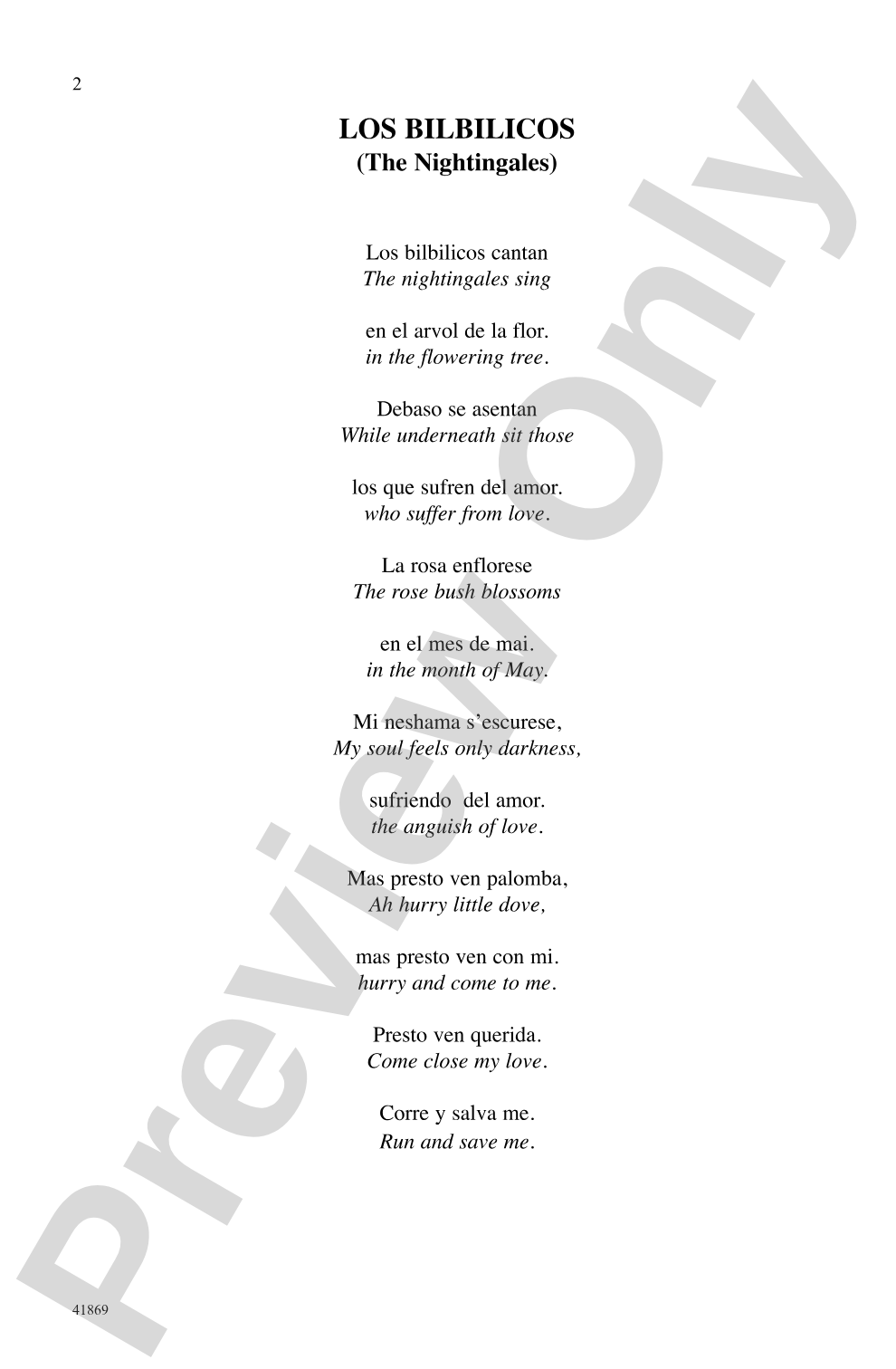
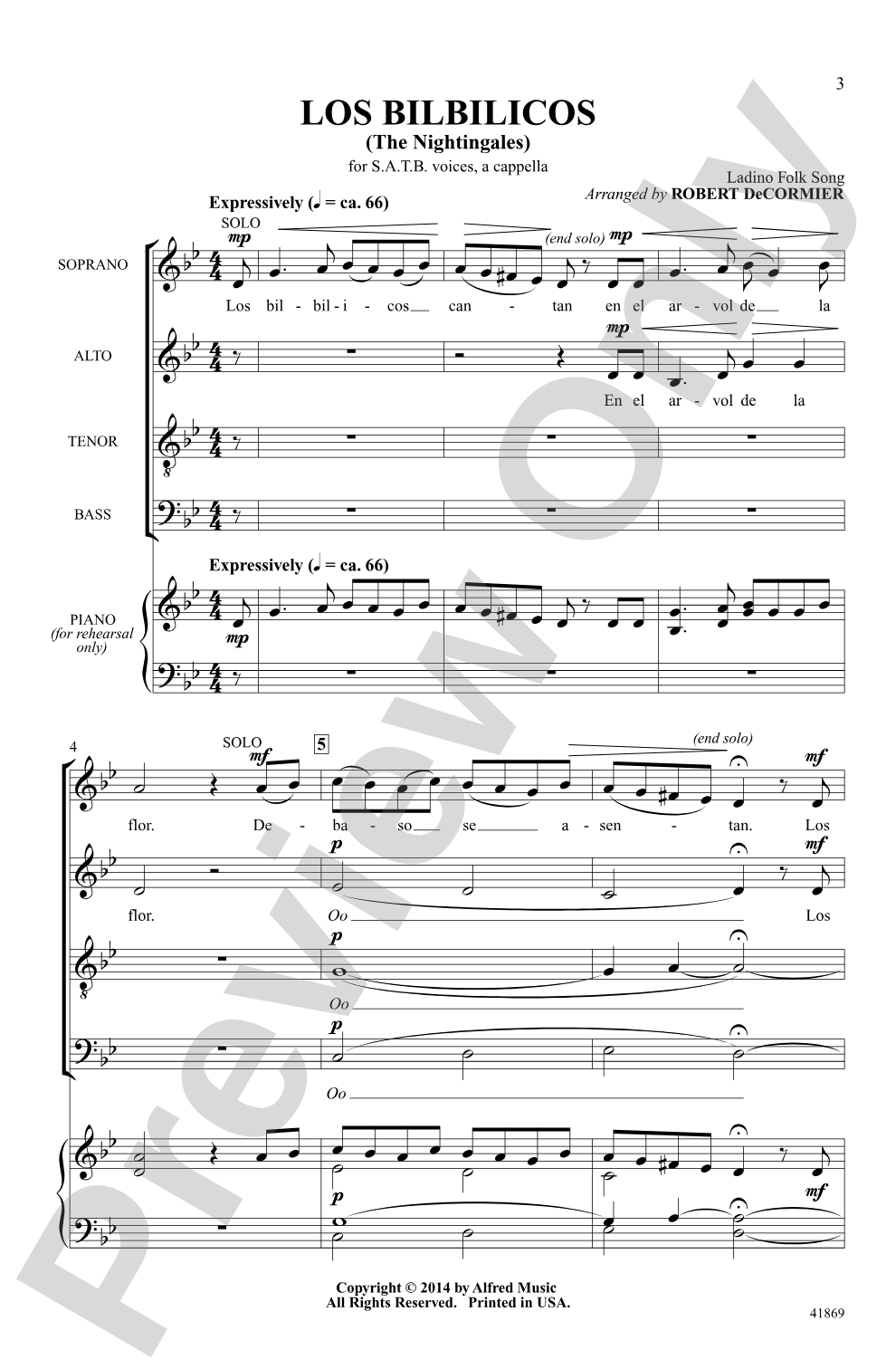

Los Bilbilocos: SATB a cappella Choral Octavo
(The Nightingales)
Ladino Folk Song / arr. Robert DeCormier
Item: 00-PO-0002371
$1.85
Minimum order quantity: 20 copies
Pickup currently not available
Related Items
Los Bilbilicos: SATB a cappella Choral Octavo |
$1.85
|
View |
Description
A plaintive melody is skillfully passed between soloists and sections as we are reminded that only the nightingale understands the anguish of those in love.


Los Bilbilocos: SATB a cappella Choral Octavo isn't in MakeMusic Cloud just yet...but it could be. Let us know you'd like to see it, and you'll help shape what comes next. In the meantime, start a free trial and dive into thousands of interactive titles your students can play along with today.
Request This Title
Tell us you want it.
Start Your Free Trial
Explore everything that's ready to play right now.
Sample Audio
1
Audio File
--:--
0:00
0:00
Sample Video
No sample videos found.
Additional Details
Series:
Lawson-Gould
Publisher:
Alfred Music
Page Count:
8
SKU:
00-PO-0002371
More about this title
About the Arranger: Robert DeCormier

Robert DeCormier studied at the Juilliard School and built a career spanning classical conducting, Broadway production, and folk music direction. He served seventeen years as music director of the New York Choral Society, worked as conductor and arranger for Harry Belafonte, and held the position of music director for Peter, Paul and Mary from 1978 to 2010. His teaching included a tenure at the Eastman School of Music, where he led conducting and ensemble studies.
Beyond the concert hall, DeCormier founded Counterpoint, a professional vocal ensemble based in Vermont that recorded extensively and mentored high school choirs across New England. His arrangements drew from African-American spirituals, American folk songs, and international traditions. Recognition for his contributions includes the Vermont Governor's Award for Excellence in the Arts and a Lifetime Achievement Award from the New England Choral Arts Foundation.
Why we love this
DeCormier understood how to pass a melody between soloists and full sections in ways that feel both intimate and architecturally sound. This arrangement respects the folk source while creating real musical drama; singers will find genuine moments to shine individually, then blend seamlessly back into the ensemble. It's the kind of piece that shows your choir's musicality without requiring extensive rehearsal time.
What to expect
A conversation overheard at dusk. The nightingale's understanding of loneliness becomes tangible through melody that floats between individuals and the group, creating intimacy within a collective sound. The piece holds a gentle ache throughout; there's no dramatic climax, only the persistent beauty of voices finding harmony around a simple, haunting idea.
Who it's for
Any SATB choir comfortable with a cappella singing and interested in folk repertoire arranged for voice-leading clarity rather than novelty. This works equally well for community choirs, school groups, and concert ensembles seeking material that develops blend and balance without extensive technical demands.
How to get the most out of it
- Shape each melodic phrase as it travels from soloist to section; the handoff points should feel like natural conversation, not abrupt shifts in texture.
- Balance is crucial in a cappella writing. Use your rehearsal time to find the sweet spot where soloists project clearly without the ensemble underneath disappearing.
- Pay attention to vowel consistency across the group, especially in the longer sustained passages; this will clarify the harmonic center and give the piece vocal resonance.
- Allow space and breath between major sections. The plaintive quality of this arrangement depends on moments of quiet restraint, not constant forward motion.
How to use it
Pair this with other folk arrangements or spirituals to build a program theme around cultural voices and arranged traditions. Its reflective character makes it an excellent choice for the second half of a concert, where audiences have settled in and can appreciate lyrical subtlety. A cappella pieces like this also serve as valuable rehearsal windows; programming it teaches singers to listen critically to tuning and blend.
Skills your students will build
- Balancing solo lines with harmonic backgrounds in a cappella settings
- Maintaining vowel consistency and intonation across four-part writing
- Responding to melodic hand-offs between sections and individual singers
- Sustaining musical line and phrasing without instrumental support