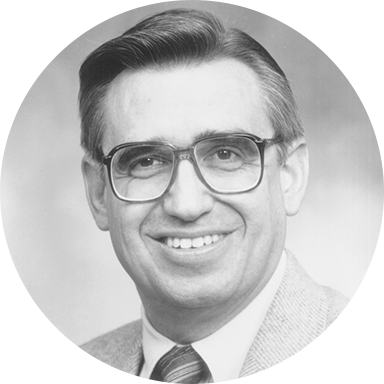
Don Besig spent 31 years directing music in western New York public schools, where his concert choirs and show choirs became known regionally for their performances at clinics, competitions, and community venues. His work spans all grade levels and settings. He now serves as director of music at Perinton Presbyterian Church in Fairport, NY.
Besig began composing when he recognized that student singers and volunteer church choirs needed repertoire written with their voices and capabilities in mind. His output has been substantial: over 350 original works and arrangements published by major school and church music houses, with more than 15 million copies in circulation worldwide. He has received multiple ASCAP Special Awards and regularly conducts festivals and workshops across 40 states and Canada. A graduate of Ithaca College, he holds membership in Phi Mu Alpha, ACDA, MENC, NYSSMA, and ASCAP.
Why we love this
Besig and Price craft a piece that sits comfortably in the middle of the SATB repertoire without sounding like it's treading water. The text carries real spiritual weight, and the musical setting respects both the message and the singers delivering it. You'll find this works equally well in a concert setting, a worship service, or as a meaningful closer to a spring festival program.
What to expect
The piece has an earnest, congregational quality to it, with warm harmonic language that feels accessible without being simplistic. There's genuine uplift in the writing, and the four voices blend into something larger than their individual parts.
Who it's for
This octavo suits intermediate to advanced high school choirs, college select groups, and volunteer church choirs looking for sacred repertoire with musical substance. It works for groups wanting to program a contemporary sacred work that doesn't demand instrumental accompaniment or excessive rehearsal time.
How to get the most out of it
Balance the piece so the text remains clear; resist the urge to push dynamics beyond what serves the message of the text.
Shape the melodic line through the harmonic progressions rather than holding every note at the same dynamic level.
Let the altos and tenors breathe slightly with the soprano and bass lines so the four voices move as one organism, not four independent parts.
How to use it
Open a spring concert with this piece to set a thoughtful tone, or use it as a powerful closing number for a program centered on sacred or inspirational themes. Its length and emotional directness make it an ideal selection for a worship service where you want your choir to feel integrated into the spiritual moment rather than performing at it.
Skills your students will build
Singing text expressively within an SATB harmonic framework
Balancing four-part voicing so each part supports the whole
Sustaining longer phrases at moderate tempos
Understanding how harmonic movement shapes musical phrasing
You May Also Like
Scan to Complete Your Purchase
Use your phone's camera to scan the code below
You'll log in on your phone and the order will be added to your account