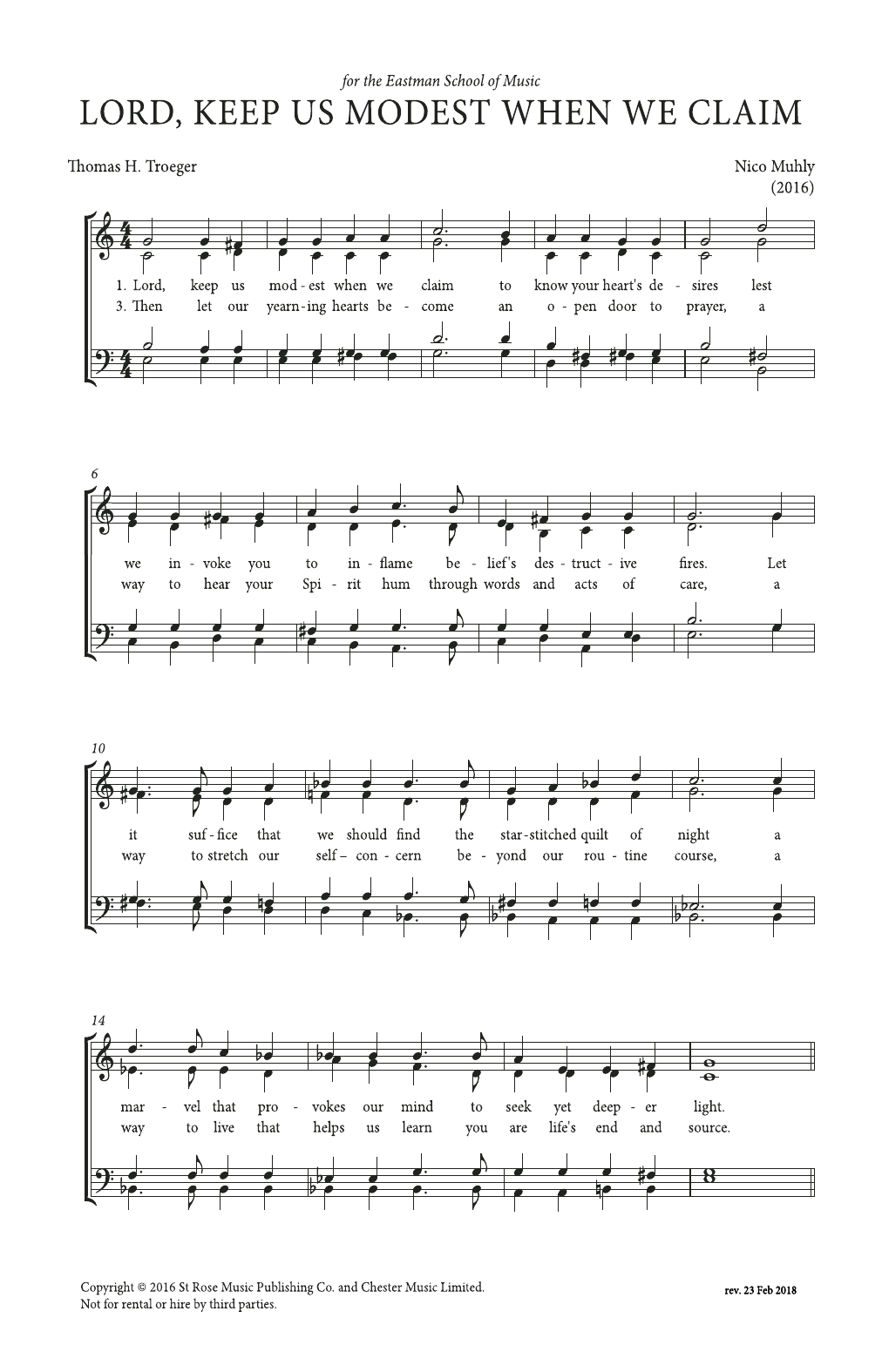
Lord, Keep Us Modest When We Claim Sheet Music Preview

Lord, Keep Us Modest When We Claim: SATB Choral Octavo

By Nico Muhly

Item: 35-DS00495303

Digital Download
$2.99
Description

Lord, Keep Us Modest When We Claim: SATB Choral Octavo isn't in MakeMusic Cloud just yet...but it could be. Let us know you'd like to see it, and you'll help shape what comes next. In the meantime, start a free trial and dive into thousands of interactive titles your students can play along with today.

Sample Audio
No sample audio found.
Sample Video
Additional Details
Publisher: Hal Leonard
Page Count: 5
SKU: 35-DS00495303

More about this title

About the Composer: Nico Muhly

Nico Muhly is an American composer known for blending classical training with accessible, immediate musical language. His works span opera, orchestral music, and choral writing, and he has become a significant voice in contemporary classical music through commissions from major institutions and collaborations across genres.

Why we love this

Muhly writes for choir with genuine understanding of vocal ranges and ensemble sonority. This piece pairs a direct, contemplative text with music that rewards singers' attention to vertical alignment and phrase shaping without demanding extreme technical display.

What to expect

The music has an intimate, searching quality that suits its modest text. Harmonies shift subtly beneath sustained phrases, creating moments of tender uncertainty alongside passages of quiet affirmation.

Who it's for

This octavo suits choirs comfortable with contemporary harmonic language and willing to invest rehearsal time in vertical ensemble work. It works well for programs that include both traditional sacred repertoire and modern choral writing.

How to get the most out of it

  • Balance the text clarity against the harmonic density. Muhly's writing sometimes stacks voices thickly, so rehearse vertical sections (block by block) before addressing phrase flow to ensure the words emerge.
  • Pay close attention to dynamic markings within phrases. Small shifts in volume create the piece's emotional architecture and prevent it from settling into a single dynamic level.
  • Shape individual lines as if each voice is singing a solo line that happens to harmonize with others. This prevents rhythmic drag and keeps the piece alive across the five pages.

How to use it

Pair this with a heavier choral work to provide textural and emotional contrast. It also serves well as a prelude to spoken text or reflection in a multi-movement liturgical program, or as a standalone thoughtful closing piece in a mixed concert.

Skills your students will build

  • Reading contemporary harmonic language and atonal voice-leading
  • Maintaining phrase direction across rests and held notes
  • Balancing individual line independence with vertical ensemble blend
  • Interpreting dynamic and expressive markings as emotional roadmap

You May Also Like