
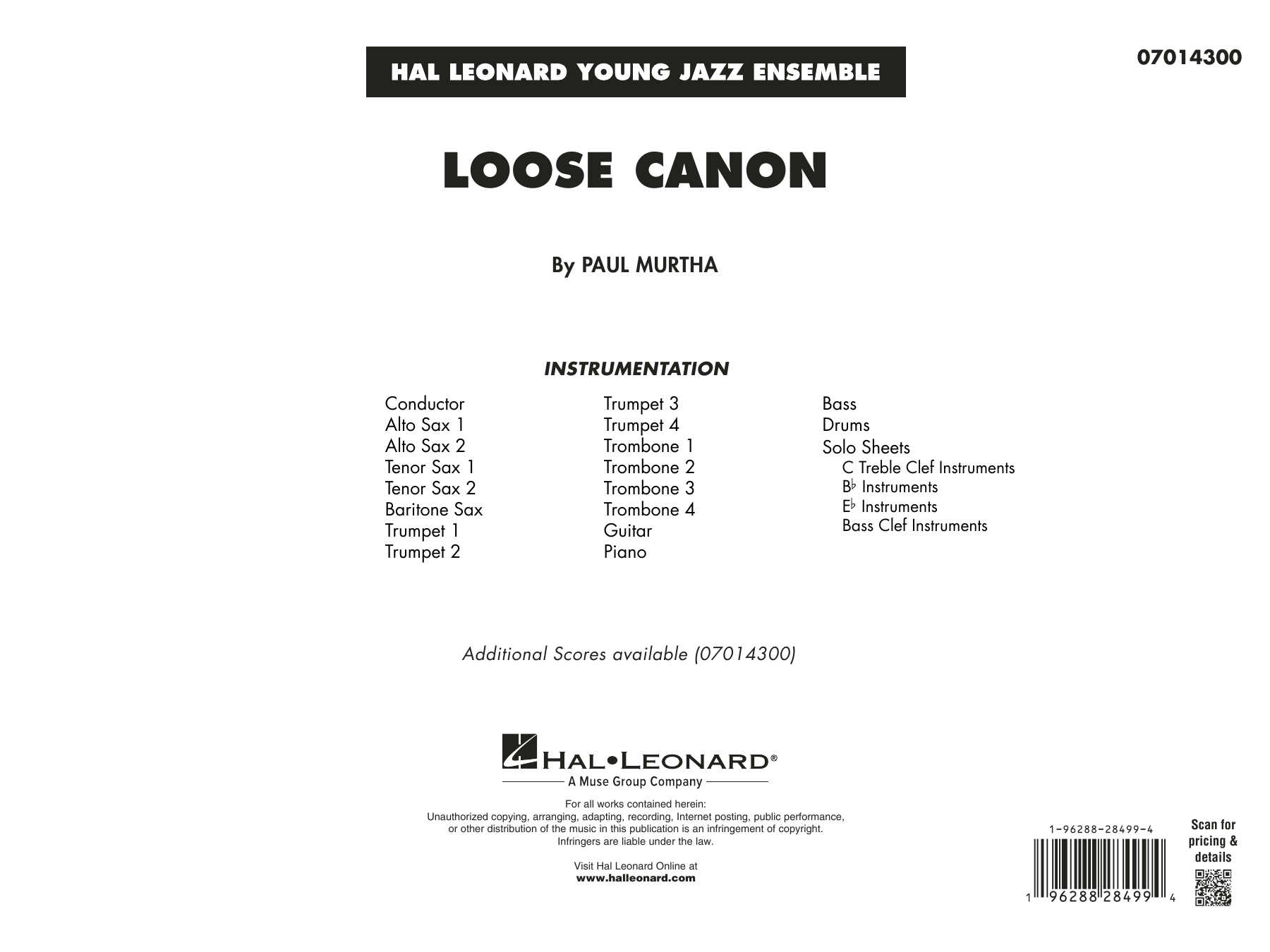

Loose Canon: Jazz Ensemble Conductor Score & Parts
By Paul Murtha
Grade: 3
Item: 35-PK01588312
$50.00
Pickup currently not available
Buy Extra Parts (Digital PDF Download)
| Product | Price | Quantity |
|---|---|---|
| Loose Canon - Conductor Score (Full Score) | $7.50 | |
| Loose Canon - Alto Sax 1 | $6.00 | |
| Loose Canon - Alto Sax 2 | $6.00 | |
| Loose Canon - Tenor Sax 1 | $6.00 | |
| Loose Canon - Tenor Sax 2 | $6.00 | |
| Loose Canon - Baritone Sax | $6.00 | |
| Loose Canon - Trumpet 1 | $6.00 | |
| Loose Canon - Trumpet 2 | $6.00 | |
| Loose Canon - Trumpet 3 | $6.00 | |
| Loose Canon - Trumpet 4 | $6.00 | |
| Loose Canon - Trombone 1 | $6.00 | |
| Loose Canon - Trombone 2 | $6.00 | |
| Loose Canon - Trombone 3 | $6.00 | |
| Loose Canon - Trombone 4 | $6.00 | |
| Loose Canon - Guitar | $6.00 | |
| Loose Canon - Piano | $6.00 | |
| Loose Canon - Bass | $6.00 | |
| Loose Canon - Drums | $6.00 | |
| Loose Canon - C Solo Sheet | $6.00 | |
| Loose Canon - Bb Solo Sheet | $6.00 | |
| Loose Canon - Eb Solo Sheet | $6.00 | |
| Loose Canon - Bass Clef Solo Sheet | $6.00 |
Parts Added to Cart!
Description
Highlight your sax section with this great F minor blues chart. Hip swinging melodies wrapped in phat brass and rhythm section hits along with great unison brass writing on the bridge make this highly accessible while sounding far more advanced. Open solos for Tenor Sax, Trumpet, and Trombone. Lead trumpet plays A, lead bone plays F.


Loose Canon: Jazz Ensemble Conductor Score & Parts isn't in MakeMusic Cloud just yet...but it could be. Let us know you'd like to see it, and you'll help shape what comes next. In the meantime, start a free trial and dive into thousands of interactive titles your students can play along with today.
Request This Title
Tell us you want it.
Start Your Free Trial
Explore everything that's ready to play right now.
Sample Audio
No sample audio found.
Sample Video
No sample videos found.
Additional Details
Publisher:
Hal Leonard
SKU:
35-PK01588312
More about this title
About the Composer: Paul Murtha
Paul Murtha has built a reputation as a prolific composer and arranger for jazz ensembles at all levels. His work balances accessibility with musical substance, creating pieces that sound sophisticated while remaining within the technical reach of developing players. Murtha understands what works in the rehearsal room and on the concert stage, consistently delivering charts that engage both students and audiences.
Why we love this
Murtha nails the tension between ease and impact here. Your saxes get genuine showcase material over a walking blues, while the brass section sounds unified and punchy without requiring professional-level synchronization. The arrangement respects the blues form enough to feel authentic but keeps the harmonic and rhythmic demands grounded in Grade 3 reality.
What to expect
Loose Canon settles into that sweet spot where swing feels natural rather than forced. The F minor blues framework gives the piece a warm, slightly soulful character, while the hip melodic writing and clean brass hits keep things contemporary and fun.
Who it's for
Jazz ensembles ready to tackle blues vocabulary and small group solos without getting bogged down in changes or extended ranges. This works beautifully for groups that need material sounding genuine while keeping rehearsal time efficient.
How to get the most out of it
- Let the rhythm section settle into the groove before the melody enters. A solid pocket makes the sax feature shine and gives soloists something reliable to hang onto.
- Balance the unison brass passages on the bridge so they sit as one voice rather than four separate instruments fighting for space. Think blend, not blend-and-balance.
- Encourage soloists to listen to blues recordings where the best players use space and phrasing rather than filling every beat. The open solo sections invite rhythmic conversation with the rhythm section.
- Shape the A section melodies with gentle swing feel; avoid the temptation to rush the relaxed written rhythms.
How to use it
Drop this into a jazz concert to showcase section strength and individual players in a short spotlight. It also pairs nicely with other blues or swing charts, giving you a program segment that feels cohesive without repetition.
Skills your students will build
- Swing eighth-note feel and groove synchronization
- Blues form comprehension and solo navigation
- Brass section unison and blend
- Leading melodic phrasing as a soloist
- Listening and responding to rhythm section in real time