Looney Tunes Overture: Bass Sheet Music Preview

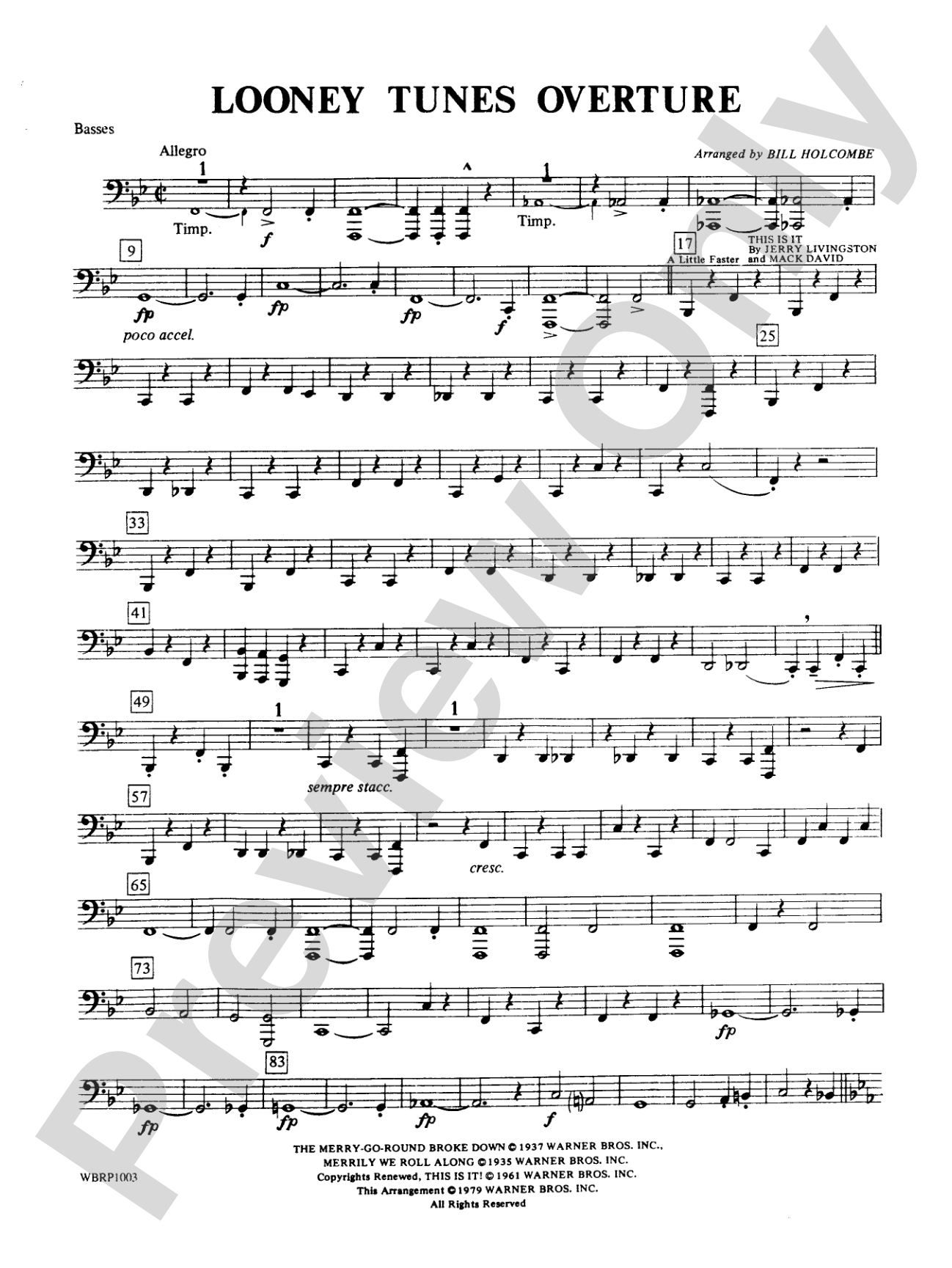
Looney Tunes Overture: Bass

Arr. Bill Holcombe

Grade: 4 (Medium)

Item: 00-PC-0016131_BSS

Digital Download
$3.00
Description
Music is called 'the universal language,' and cartoons should probably have the same distinction. The wonderful humor of the animated characters takes us into a world where anything is possible. Identifying those marvelous Warner Bros. 'toons are theme songs known wherever motion pictures, television, and computers are found. This medley is one of the most perfectly balanced ever written. It plays itself! (duration 3:02)

Don't just read it, hear it, play along with it, and watch your students grow with it. In MakeMusic Cloud, Looney Tunes Overture: Bass comes alive with professional accompaniment, adjustable tempo, and built-in practice tools that turn solo practice into real progress.

Sample Audio
No sample audio found.
Sample Video
Additional Details
Series: Symphonic Band
Publisher: Alfred Music
Page Count: 276
SKU: 00-PC-0016131_BSS

More about this title

About the Arranger: Bill Holcombe

Bill Holcombe has built a career arranging popular music and film themes for concert band, with a gift for translating orchestral scoring to the strengths of wind ensembles. His arrangements prioritize clarity and accessibility without sacrificing musical interest, making them reliable choices for groups seeking substantial repertoire that engages both players and audiences.

Why we love this

This arrangement captures the kinetic energy and comedic timing of classic Warner Bros. cartoons without requiring a pit orchestra or elaborate staging. The medley works because Holcombe understands pacing; each theme emerges clearly, the transitions feel inevitable, and the whole thing maintains momentum from downbeat to finish. Directors consistently report that students remain engaged throughout the entire three minutes, which is no small feat for a Grade 4 group.

What to expect

Pure cartoon logic translated into music: absurdist pacing, unexpected harmonic turns, ridiculous rhythmic catches, and moments of genuine melodic charm. The overture bounces between themes with the same unpredictability as a Looney Tunes sequence, never staying in one place long enough to become predictable.

Who it's for

This works for concert bands at the Grade 4 level who want to engage audiences with familiar, beloved material. It's ideal for directors building a program that balances lighter moments with more substantial repertoire, and for bands looking to develop stylistic flexibility and rhythmic accuracy.

How to get the most out of it

  • Clarify the cartoon character associations for your band before the first rehearsal. When students know that they're playing the Road Runner theme or Bugs Bunny's signature music, the stylistic choices (accents, dynamic shifts, rhythmic quirkiness) suddenly make intuitive sense.
  • Balance the section featuring prominent woodwind solos so they register without drowning out the harmonic support underneath. These moments define the personality of each theme and deserve careful voicing.
  • Treat the tempo shifts between themes as comedic beats rather than technical challenges. Let your conducting telegraph the character change so the band can adjust style without losing ensemble cohesion.
  • Emphasize the rhythmic precision in sections with rapid articulation and syncopation. Cartoon music lives or dies by its rhythmic snap; loose ensemble rhythm deflates the humor.

How to use it

Consider this as a closer for a lighter concert program, or as the centerpiece of a family-friendly concert where the audience already knows these characters. It pairs well with other medleys and contemporary arrangements, and works especially well when sandwiched between a serious opening work and a rousing finale.

Skills your students will build

  • Stylistic flexibility across multiple cartoon themes
  • Rapid articulation and rhythmic precision in fast passages
  • Dynamic balance in solos and section accompaniment
  • Tempo flexibility and conducting responsiveness to style changes
  • Ensemble cohesion during frequent modulations and theme transitions

You May Also Like