Looking Up: B-flat Bass Clarinet Sheet Music Preview

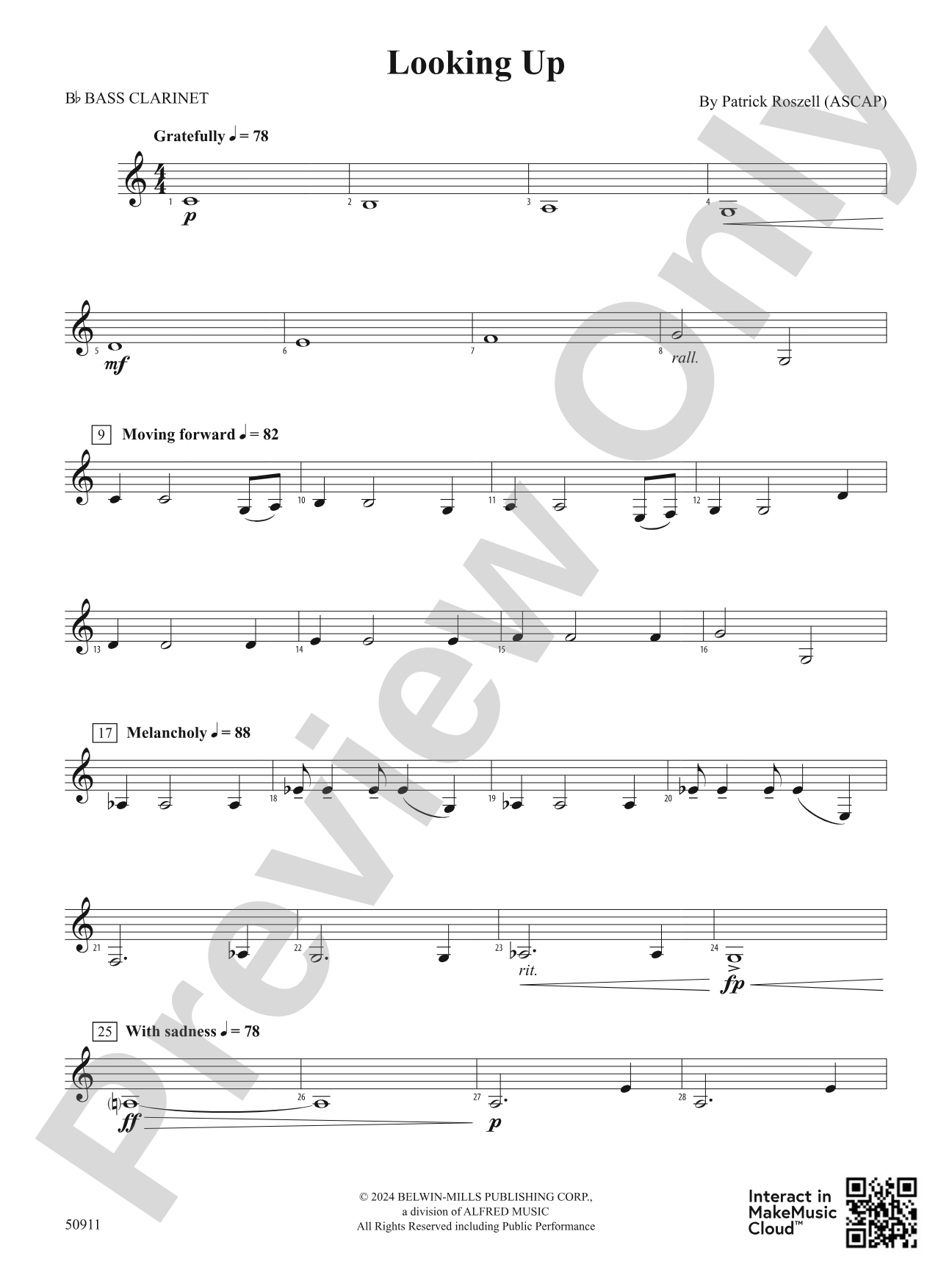
Looking Up: B-flat Bass Clarinet

By Patrick Roszell

Grade: 2

Item: 00-PC-0019305_BC

Digital Download
$3.00
Description
Going through a major life change can be tough, but it can show you strengths you never knew you had. Written with flowing melodies and lush harmonies, Looking Up, by Patrick Roszell

Don't just read it, hear it, play along with it, and watch your students grow with it. In MakeMusic Cloud, Looking Up: B-flat Bass Clarinet comes alive with professional accompaniment, adjustable tempo, and built-in practice tools that turn solo practice into real progress.

Sample Audio
0:00
0:00
Sample Video
Additional Details
Series: Belwin Young Band
Publisher: Alfred Music
SKU: 00-PC-0019305_BC

More about this title

Why we love this

Roszell crafts a piece that speaks directly to young musicians without talking down to them. The flowing melodies and lush harmonies reward careful ensemble listening, and the program note about resilience gives your band genuine emotional material to play with, not just notes on a page.

What to expect

Warm and affirming. The piece unfolds with the calm confidence of someone who has learned something about themselves. Flowing lines and rich harmonies create space for reflection without ever feeling heavy or overly serious.

Who it's for

Grade 2 concert bands seeking accessible repertoire with real musical substance. This works equally well for a first-time festival entry or a program piece that showcases what your ensemble can do musically at an intermediate level.

How to get the most out of it

  • Balance the inner harmonies carefully during sustained passages; the lush texture only works if all four voices contribute equally, not just the outer ones.
  • Let the melodies breathe naturally rather than rushing them; younger bands often tighten up when they should be relaxing into the harmonic support underneath.
  • Use sectional rehearsals to lock the harmonic foundation first, then layer in the primary melody so students understand how their part connects to the larger shape.

How to use it

Program this as a contrasting centerpiece alongside more energetic or technically demanding selections. It pairs well with faster contemporary works or lighter openers because it gives audiences a moment to settle and listen carefully.

Skills your students will build

  • Balancing sustained harmonic lines with primary melodic voices
  • Phrasing and shaping longer melodic lines across multiple measures
  • Ensemble listening and blend in texturally rich settings
  • Connecting musical content to expressive intent

You May Also Like