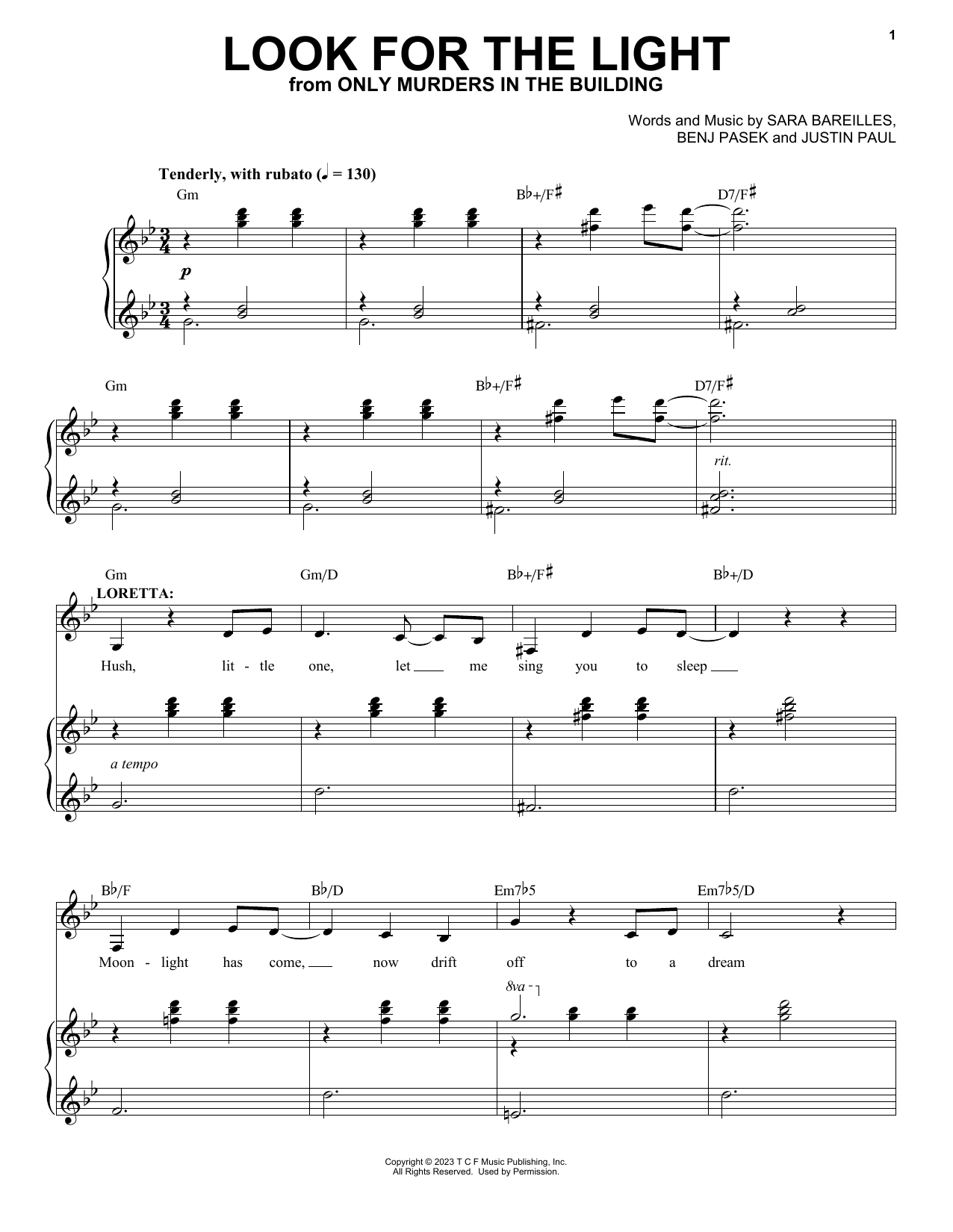
Look For The Light (from Only Murders In The Building: Season 3) Sheet Music Preview

Look For The Light (from Only Murders In The Building: Season 3): Piano Vocal

As performed by Meryl Streep and Ashley Park / As performed by Meryl Streep / As performed by Ashley Park

Item: 35-DS01292446

Digital Download
$5.99
Description

Look For The Light (from Only Murders In The Building: Season 3): Piano Vocal isn't in MakeMusic Cloud just yet...but it could be. Let us know you'd like to see it, and you'll help shape what comes next. In the meantime, start a free trial and dive into thousands of interactive titles your students can play along with today.

Sample Audio
No sample audio found.
Sample Video
Additional Details
Publisher: Hal Leonard
Page Count: 7
SKU: 35-DS01292446

More about this title

About the Artist: Meryl Streep and Ashley Park

Meryl Streep brings decades of acclaimed acting to her musical performances, demonstrating a gift for emotional vulnerability and precise interpretation across genres. Ashley Park's background in musical theater and acting combines technical vocal skill with theatrical presence, making her a natural collaborator in contemporary song.

Why we love this

This duet captures intimate character dynamics from prestige television with genuine emotional weight. The writing balances vocal accessibility with sophisticated storytelling, making it viable for singers who understand how to use restraint and nuance rather than sheer technical prowess.

What to expect

Intimate and slightly melancholic, with the quality of two people having a quiet conversation late in the evening. The song carries an undercurrent of sincerity beneath its understated surface.

Who it's for

Solo singers and duet partnerships preparing audition material or contemporary recital repertoire. Pianists and vocalists interested in film and television songwriting that prioritizes character and narrative over vocal display.

How to get the most out of it

  • Study the original recording to absorb the conversational pacing between the two voices; these are not parallel melodies but rather characters speaking and listening to each other.
  • Shape phrase endings by pulling back slightly rather than punching them; the song's power lives in what's understated.
  • Coordinate with your pianist on the rhythmic flexibility the accompaniment allows, especially during moments that feel more spoken than sung.

How to use it

Pair this with other contemporary theatrical songs to create a recital section exploring how character and emotion shape melody. It works equally well as a showcase piece for singers developing maturity in their interpretation or as part of a broader program celebrating music from film and television.

Skills your students will build

  • Sustaining emotional subtlety across longer phrases without overacting
  • Coordinating vocal line with accompaniment that prioritizes character over strict rhythmic precision
  • Communicating between duet partners as distinct characters within a shared narrative
  • Navigating contemporary song vocabulary that sits between conversational speech and lyrical singing

You May Also Like