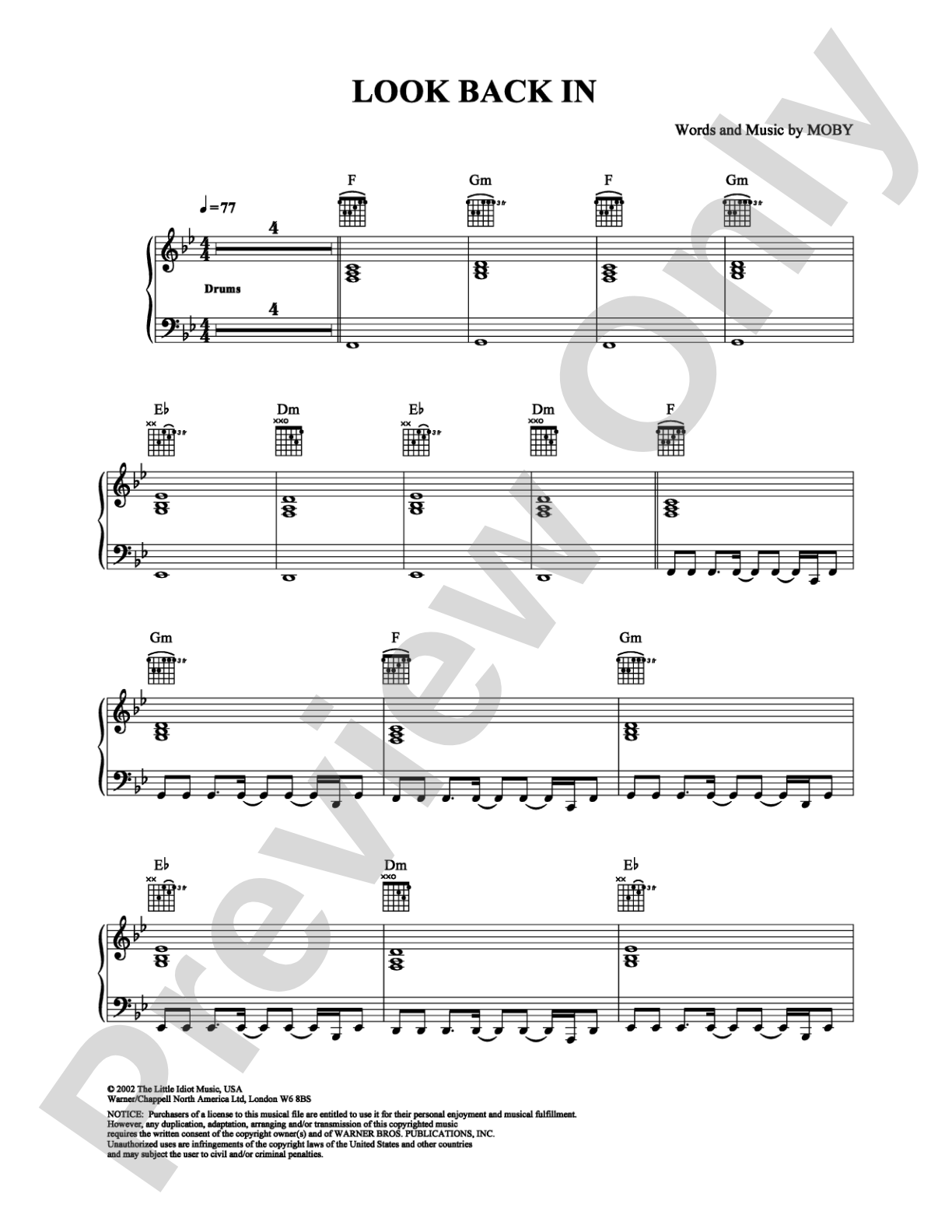
Look Back In: Piano Digital Sheet Music

Look Back In: Piano Digital Sheet Music

Moby

Item: 00-PS-0008394

Digital Download
$3.99
Description

Look Back In: Piano Digital Sheet Music isn't in MakeMusic Cloud just yet...but it could be. Let us know you'd like to see it, and you'll help shape what comes next. In the meantime, start a free trial and dive into thousands of interactive titles your students can play along with today.

Sample Audio
No sample audio found.
Sample Video
Additional Details
SKU: 00-PS-0008394

More about this title

About the Artist: Moby

Moby (Richard Melville Hall) emerged from New York's electronic and alternative music scenes in the 1990s, building a career that spans electronic production, rock songwriting, and film scoring. His work has influenced generations of musicians across genres, from ambient and dance music to alternative rock, demonstrating how electronic and acoustic elements can coexist in compelling arrangements.

Why we love this

This piece brings a recognizable contemporary artist into the piano studio without requiring students to compromise on musical substance. The arrangement captures Moby's production sensibility while remaining accessible to pianists working at an intermediate level.

What to expect

The piece carries the understated sophistication of modern electronic-influenced songwriting, with clean production values and a groove-oriented sensibility. It feels both polished and intimate, the kind of music that rewards focused listening.

Who it's for

Pianists exploring contemporary and pop-rock repertoire who want to connect classical training to music they hear in modern contexts. This works well for students seeking recital pieces beyond traditional classical literature or for those interested in scoring and production arrangements.

How to get the most out of it

  • Attend to dynamic control across the range of the keyboard; contemporary pop-rock arrangements often rely on subtle shifts in touch rather than dramatic contrasts.
  • Consider the interplay between melodic and harmonic layers—decide which elements should sit forward in the mix and which should recede to create depth.
  • Lock in the rhythmic foundation early; the groove is essential to how this style communicates.

How to use it

Program this in a recital that mixes genres or in a concert themed around contemporary songwriting and film scoring. It signals to audiences that classical training and modern music are not opposing forces.

Skills your students will build

  • Navigating contemporary harmonic language and rhythm patterns
  • Balancing melodic lines with accompaniment textures
  • Maintaining steady groove and rhythmic precision in a pop-rock idiom
  • Interpreting digital sheet music and understanding how production values translate to acoustic performance

You May Also Like