Long Train Runnin': Lead Sheet Digital Sheet Music

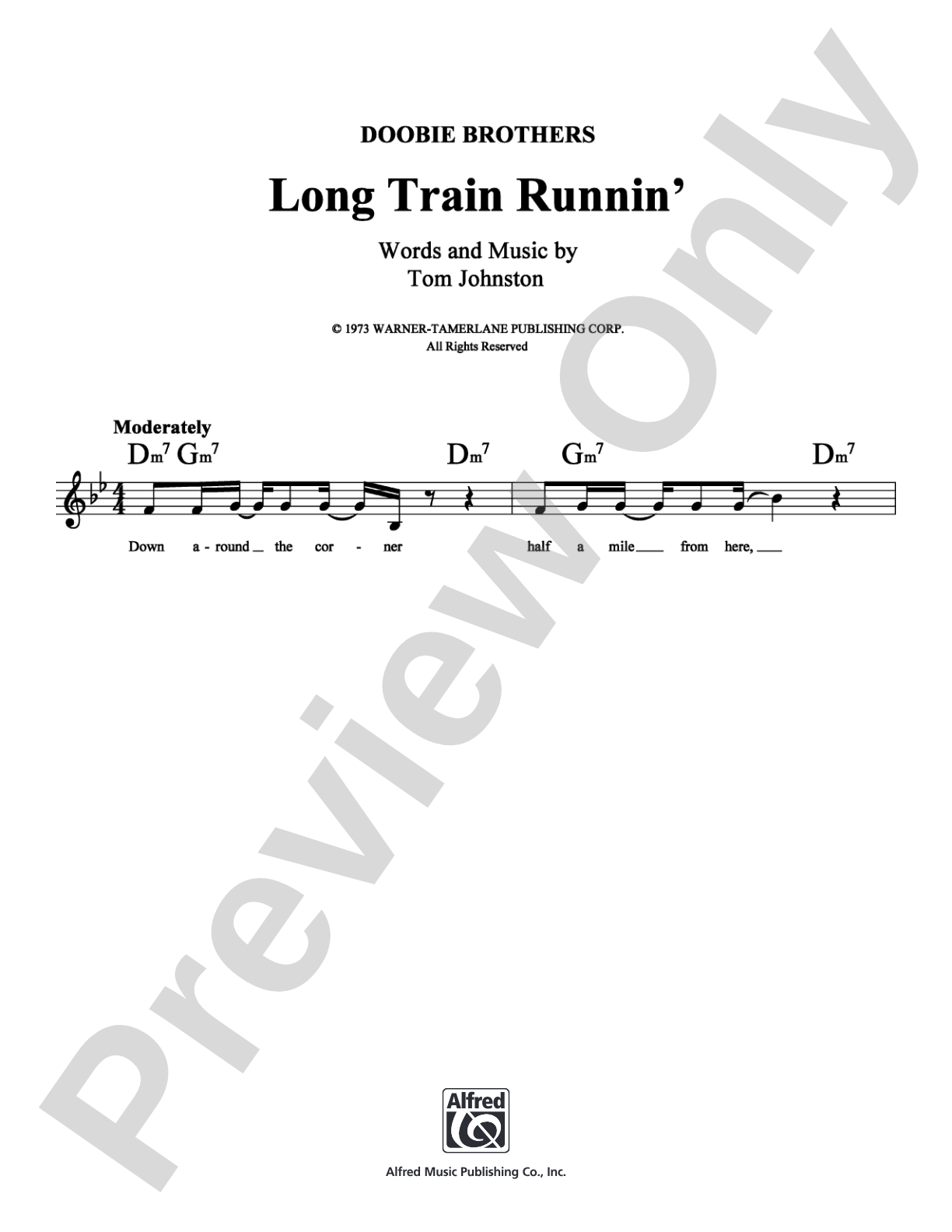
Long Train Runnin': Lead Sheet Digital Sheet Music

Tom Johnston, Doobie Brothers

Item: 00-PS-0008795

Digital Download
$1.99
Description

Long Train Runnin': Lead Sheet Digital Sheet Music isn't in MakeMusic Cloud just yet...but it could be. Let us know you'd like to see it, and you'll help shape what comes next. In the meantime, start a free trial and dive into thousands of interactive titles your students can play along with today.

Sample Audio
No sample audio found.
Sample Video
Additional Details
SKU: 00-PS-0008795

More about this title

About the Artist: Doobie Brothers

The Doobie Brothers emerged from San Jose in the early 1970s as one of America's most distinctive rock bands, blending rock, soul, and country influences into infectious, radio-friendly hits. Known for their tight harmonies, funky rhythms, and genre-crossing versatility, the band achieved massive commercial success while maintaining strong musicianship across their lineup. Their catalog remains a staple of classic rock radio and provides excellent material for exploring rock composition, groove-based arranging, and the interplay between melody and rhythm section.

Why we love this

"Long Train Runnin'" captures the laid-back swagger and rhythmic pocket that made the Doobie Brothers instantly recognizable on the radio. For student musicians and bandroom directors, this lead sheet offers a chance to study the anatomy of a hit song that balances commercial appeal with genuine musicianship and groove.

What to expect

Easygoing and hypnotic, with a shuffle-tinged groove that makes you want to move. The song has a conversational, almost spoken-sung quality in its delivery, paired with earthy instrumentation that feels both warm and propulsive. It's the musical equivalent of a long drive with the windows down.

Who it's for

This lead sheet works well for jazz ensembles studying rock composition, pop/rock vocalists building a contemporary standards repertoire, and music theory students analyzing successful songwriting craft. Piano players and guitarists can use it to develop comping skills and groove awareness in a pop idiom.

How to get the most out of it

  • Lock into the rhythmic pocket first. The groove depends on steady, relaxed timing rather than rushing; practice the basic beat pattern before adding any embellishment.
  • Balance the melody line with the groove underneath. The lead should float just slightly ahead of the beat to create the song's characteristic push without losing clarity.
  • Explore the space in the arrangement. This song thrives on what is left unsaid; resist the urge to fill every available moment with notes.
  • Pay attention to dynamics and phrasing over the chord changes. Small vocal inflections and breath points will shape the listener's journey through the form.

How to use it

Include this as a closer on a pop/rock or variety concert, or use it to build a "Classic Rock Grooves" segment alongside other 1970s hits. It also serves as an excellent teaching tool in jazz or contemporary music classes for studying how mainstream songs use blues and rock idioms.

Skills your students will build

  • Reading and interpreting lead sheet notation
  • Understanding rock and blues groove feel in a pop context
  • Phrasing and inflection in vocal delivery
  • Comping and accompaniment patterns for rock/funk grooves
  • Recognizing and playing the swing eighth-note feel common in 1970s rock

You May Also Like