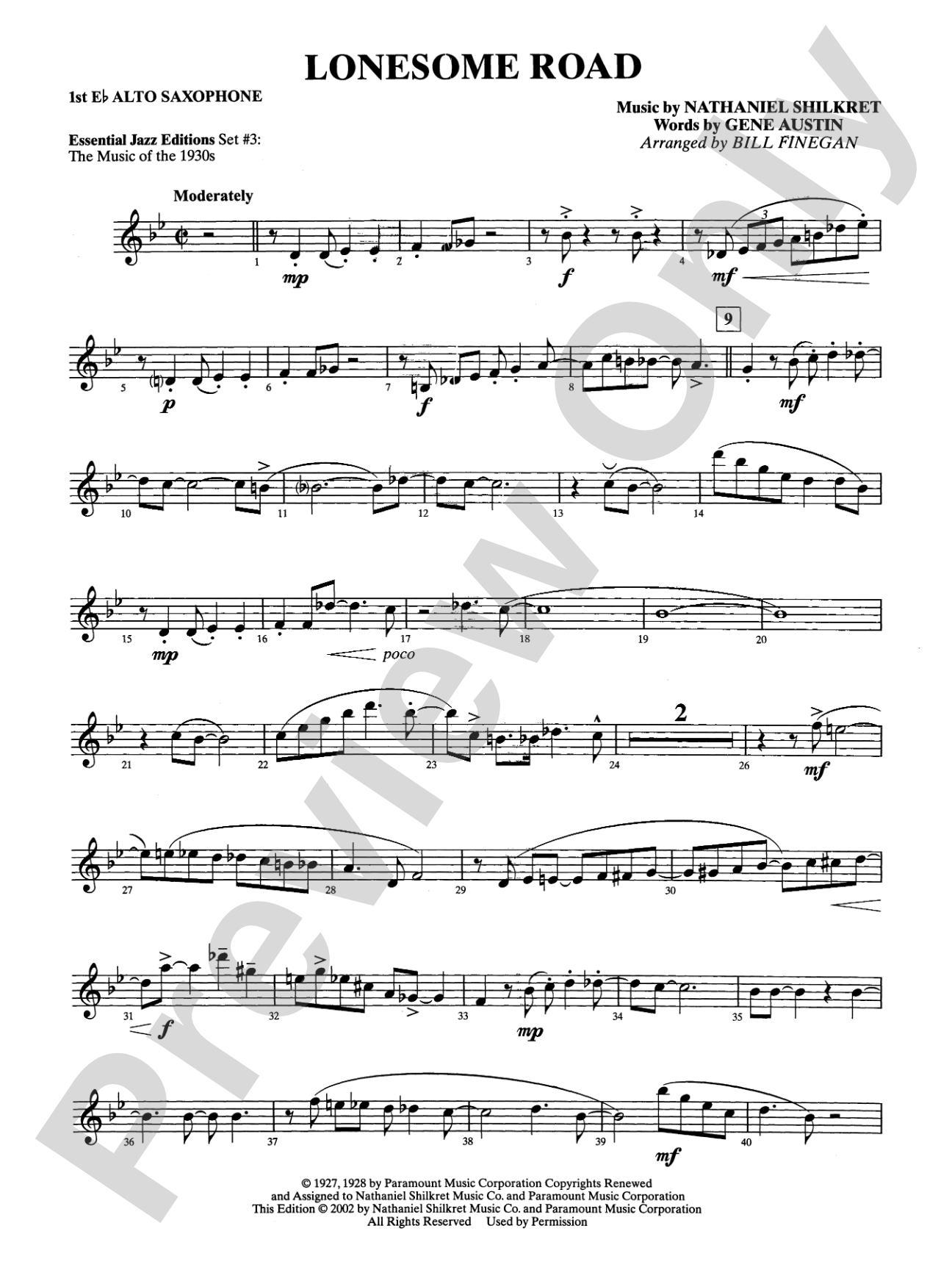
Lonesome Road: E-flat Alto Saxophone Sheet Music Preview

Lonesome Road: E-flat Alto Saxophone

Arr. Bill Finegan

Grade: 3.5 (Medium)

Item: 00-PC-0014703_AX1

Digital Download
$3.00
Description
From Essential Jazz Editions, Set #3: Music of the 1930s.

Don't just read it, hear it, play along with it, and watch your students grow with it. In MakeMusic Cloud, Lonesome Road: E-flat Alto Saxophone comes alive with professional accompaniment, adjustable tempo, and built-in practice tools that turn solo practice into real progress.

Sample Audio
No sample audio found.
Sample Video
Additional Details
Series: Essential Jazz Editions (Jazz at Lincoln Center)
Publisher: Alfred Music
Page Count: 66
SKU: 00-PC-0014703_AX1

More about this title

About the Arranger: Bill Finegan

Bill Finegan was a composer, arranger, and bandleader whose work shaped the sound of big band jazz from the 1940s onward. He served as a primary arranger for the Glenn Miller Orchestra and later led his own ensembles, earning recognition for his sophisticated orchestrations and ability to balance complexity with accessibility. His arrangements remain central to jazz education curricula because they demonstrate how to voice instruments idiomatically while maintaining strong melodic and harmonic clarity.

Finegan's contributions to Essential Jazz Editions reflect his commitment to preserving and teaching the jazz standards of the swing era. His approach to arrangement emphasizes sectional clarity, rhythmic precision, and the integration of soloists within ensemble contexts, making his work invaluable for student musicians learning to navigate both written parts and improvisational freedom.

Why we love this

Finegan's arrangement of this 1930s standard balances accessibility with genuine jazz sophistication, making it an ideal entry point for ensembles developing their swing feel and section balance. The voicings are clean and playable without sacrificing the character of the era, and the orchestration naturally teaches how brass and reed sections can support soloists while maintaining ensemble cohesion.

What to expect

The arrangement carries the nostalgic, reflective character of the original standard while breathing with the ease and swing energy typical of 1930s-era jazz. Finegan's orchestration creates moments of intimate interplay between soloists and ensemble, pulling listeners into the unhurried pace and warm, mellow tone that defines the song's emotional landscape.

Who it's for

This conductor score and parts set works well for Grade 3 to 4 ensembles with some jazz experience and reliable section leaders. It suits student groups preparing for jazz festival adjudication, concert performance, or as part of a comprehensive study of swing-era arranging. Directors will find it especially useful for ensembles ready to move beyond basic big band charts into repertoire that demands thoughtful musicianship.

How to get the most out of it

  • Establish a steady swing eighth-note feel before bringing dynamics into play; without groove underneath, articulation and phrasing will sound thin and rushed.
  • Balance the melody line against the harmonies in the supporting sections; Finegan's voicings are designed to enhance, not compete with, the lead voice.
  • Give soloists space to breathe and shape their phrases, even when ensemble figures continue beneath them. The written parts work best as a framework, not a boundary.
  • Pay attention to section entrances and cuts; the precision of the ensemble punctuations will define the overall clarity and feel of the arrangement.

How to use it

This piece works particularly well as a showcase for a featured soloist or small group within a larger jazz concert, allowing the rest of the ensemble to support and frame the performance. It can anchor a set exploring 1930s repertoire, complementing other Essential Jazz Editions selections from the same era to demonstrate how great arrangers approached standard material across different moods and instrumental combinations.

Skills your students will build

  • Swing eighth-note feel and rhythmic precision in ensemble contexts
  • Balance between melody and supporting harmonies in multi-voice textures
  • Integration of soloists with written ensemble figures
  • Jazz articulation and phrasing appropriate to the swing era
  • Section communication and unified stylistic interpretation

You May Also Like