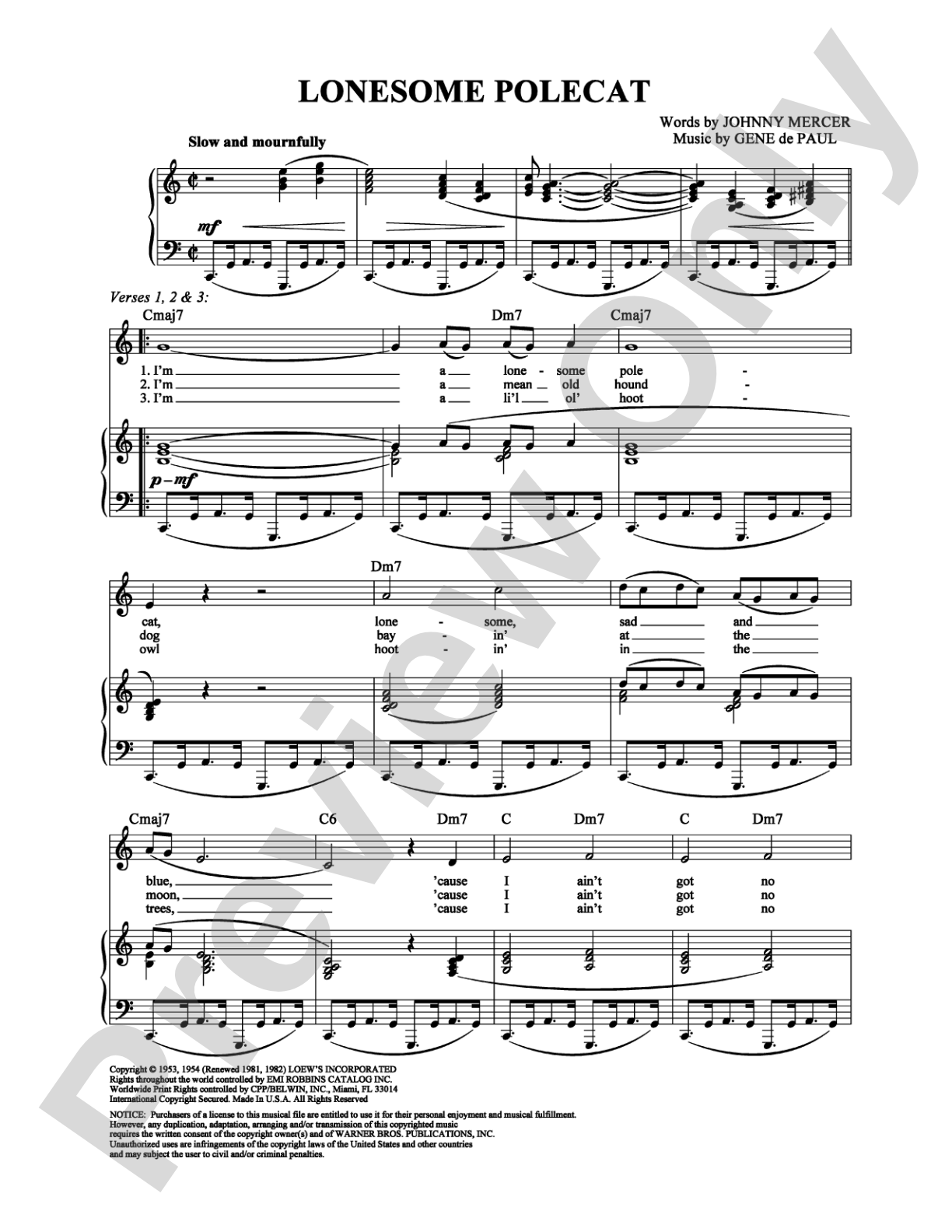
Lonesome Polecat: Piano/Vocal/Chords Digital Sheet Music

Lonesome Polecat: Piano/Vocal/Chords Digital Sheet Music

Gene de Paul

Item: 00-PS-0000659

Digital Download
$3.99
Description

Lonesome Polecat: Piano/Vocal/Chords Digital Sheet Music isn't in MakeMusic Cloud just yet...but it could be. Let us know you'd like to see it, and you'll help shape what comes next. In the meantime, start a free trial and dive into thousands of interactive titles your students can play along with today.

Sample Audio
No sample audio found.
Sample Video
Additional Details
SKU: 00-PS-0000659

More about this title

Why we love this

This arrangement captures the wistful, character-driven charm of the original without demanding elaborate production values. A pianist and vocalist can deliver genuine impact with just these three elements: melody, harmony, and voice, making it ideal for recitals, cabaret programs, or intimate concert settings where restraint serves the song's emotional core.

What to expect

Melancholic and introspective, with the kind of emotional honesty that comes from character-driven storytelling. The sparse three-part texture allows vulnerability to surface without distraction, creating space for both the piano part and the singer's interpretation to breathe.

Who it's for

Pianists who accompany singers in recital settings, vocalist-pianist duos developing their collaborative repertoire, and music theater students building their song interpretation skills. This format works equally well for solo vocalists preparing audition material or for coaching sessions where a clear, accessible score is essential.

How to get the most out of it

  • Shape the vocal line with natural phrasing that mirrors speech rhythms rather than over-legato singing; the lyrical content carries meaning that melodrama will obscure.
  • Balance the piano accompaniment to support without drowning the vocalist; chords suggest texture and color, not wall-of-sound density.
  • Let the chord symbols guide harmonic interpretation; experiment with voicing and rhythmic comping to match the emotional temperature of each section.

How to use it

Pair this with other intimate vocal pieces in a recital's second half, where the audience expects emotional depth and simplicity. It works well alongside art song or musical theater selections that prioritize lyrical storytelling over production spectacle, and it's particularly effective as a closing number when you want to leave the audience with something contemplative.

Skills your students will build

  • Vocal interpretation and character development in solo repertoire
  • Piano accompaniment technique with chord-symbol voicing
  • Collaborative balance between voice and piano parts
  • Reading and executing piano/vocal/chord lead sheets

You May Also Like