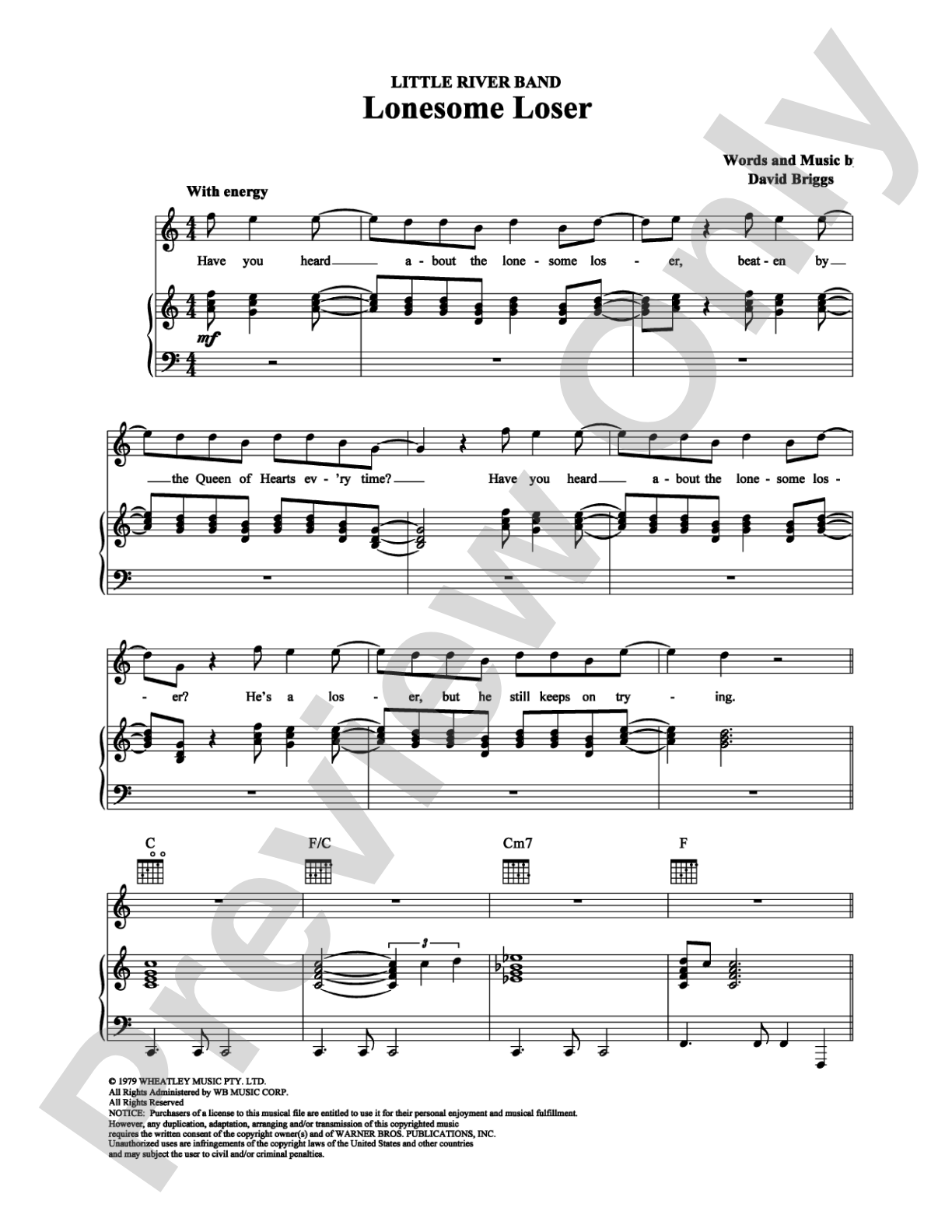
Lonesome Loser: Piano/Vocal/Chords Digital Sheet Music

Lonesome Loser: Piano/Vocal/Chords Digital Sheet Music

Little River Band, David Briggs

Item: 00-PS-0003564

Digital Download
$3.99
Description

Lonesome Loser: Piano/Vocal/Chords Digital Sheet Music isn't in MakeMusic Cloud just yet...but it could be. Let us know you'd like to see it, and you'll help shape what comes next. In the meantime, start a free trial and dive into thousands of interactive titles your students can play along with today.

Sample Audio
No sample audio found.
Sample Video
Additional Details
SKU: 00-PS-0003564

More about this title

About the Artist: Little River Band

Little River Band emerged from Australia in the 1970s to become one of the era's most successful rock acts, blending country-rock sensibilities with polished pop production. Their string of hits throughout the late 1970s and 1980s showcased their gift for crafting emotionally direct songs that resonated across radio formats, from country stations to mainstream pop playlists.

Why we love this

Lonesome Loser endures because it captures vulnerability without sentimentality. The song's straightforward melody and accessible harmonic structure make it rewarding for singers developing control over emotional phrasing and dynamic range, while the piano part provides a sympathetic foundation that never overshadows the lyrical content.

What to expect

The tune sits in a contemplative middle ground between country balladry and soft rock introspection. There's a weariness in the melody that feels honest and lived-in, with the kind of quiet resignation that comes from hard-won self-awareness rather than self-pity.

Who it's for

This arrangement works well for vocal students developing interpretive skills and emotional authenticity in pop-rock repertoire, and for pianists seeking accessible accompaniment material that demands sensitivity rather than technical display. Singer-songwriters and music theater students will find the simple, direct song structure useful for understanding how restraint can amplify emotional impact.

How to get the most out of it

  • Shape the vocal line with gentle dynamic swells at phrase peaks rather than maintaining a flat dynamic throughout; the emotional weight lives in the small moments of emphasis.
  • Keep the piano accompaniment conversational and spare, allowing silence and space to enhance the introspective quality of the text.
  • Pay attention to the lyrical narrative and make specific choices about where vulnerability enters and where resignation settles; this textual clarity will inform your vocal interpretation naturally.
  • Sync the piano's rhythmic feel with the vocal phrasing rather than maintaining strict metronomic time; the organic flow of spoken confession matters more than mechanical precision.

How to use it

This works beautifully as a palate cleanser in an otherwise ambitious recital, offering your audience a moment of genuine human connection in a program that might otherwise showcase technical prowess. It also pairs naturally with other 1970s and 1980s singer-songwriter material for a themed recital exploring the era's approach to vulnerability in popular music.

Skills your students will build

  • Vocal control over emotional subtext and textual clarity in contemporary song
  • Piano accompaniment that supports rather than dominates the vocal line
  • Shaping phrasing through dynamic nuance rather than tempo manipulation
  • Understanding song structure and lyrical narrative as a guide to interpretation

You May Also Like