
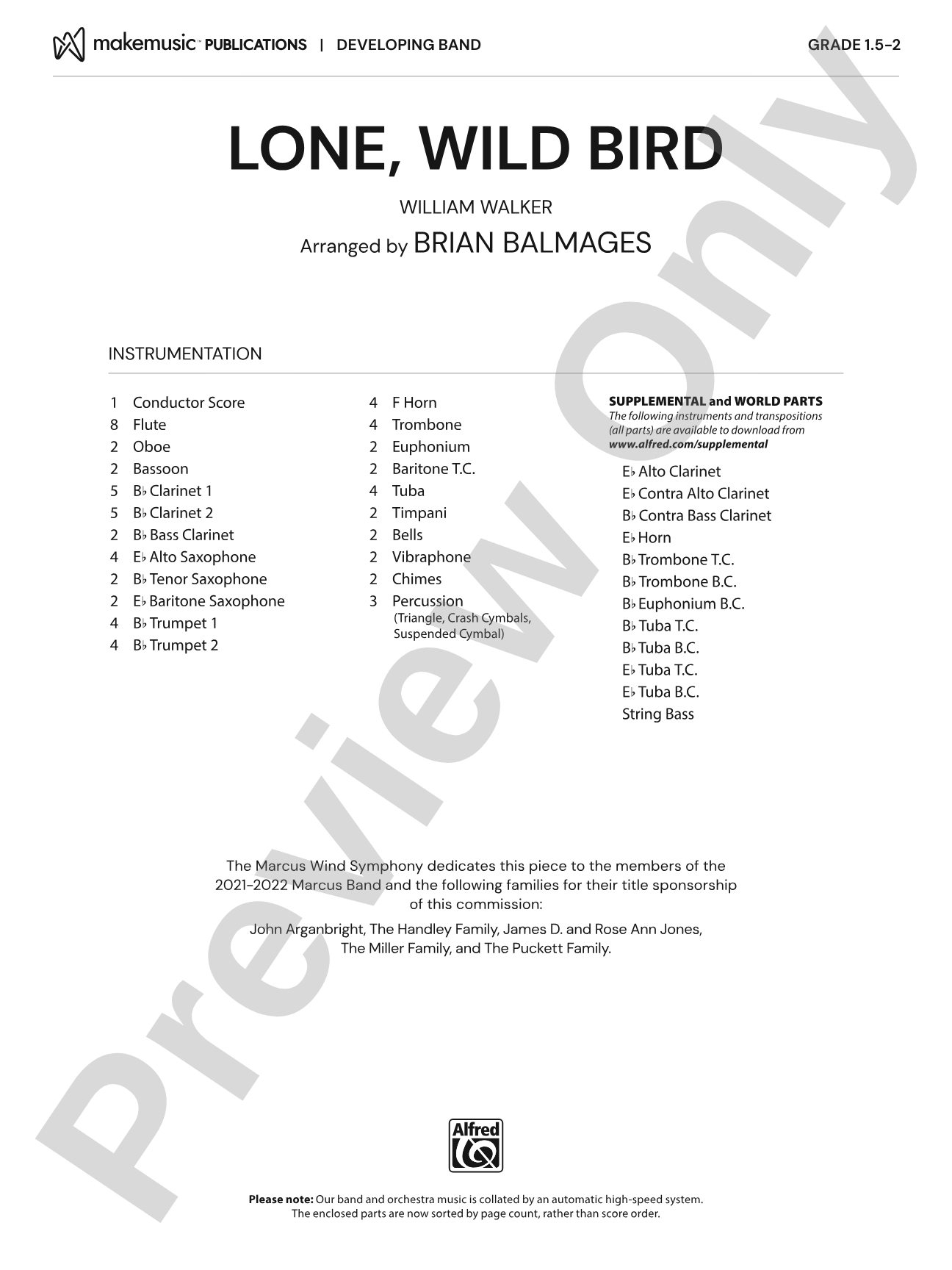
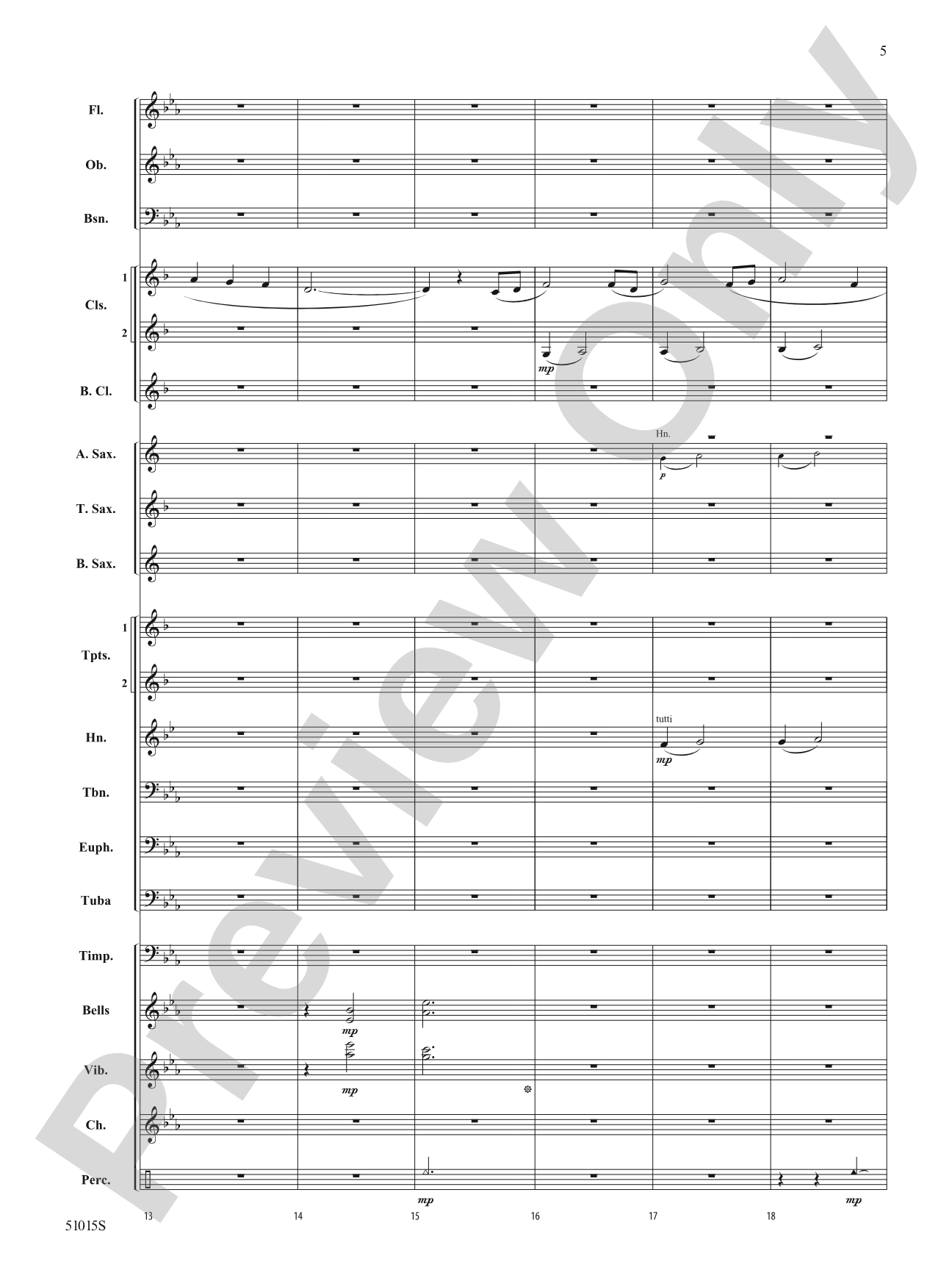
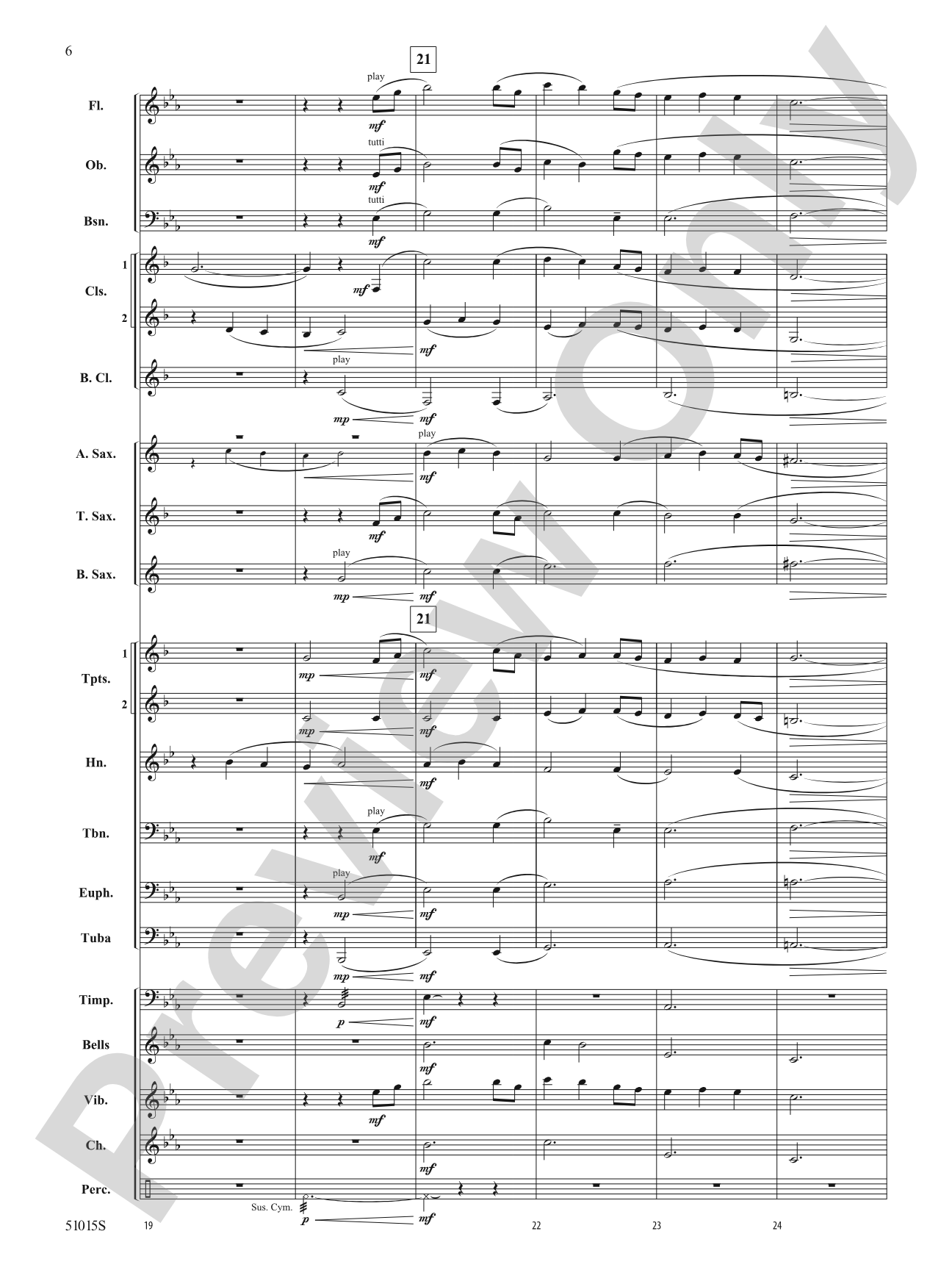
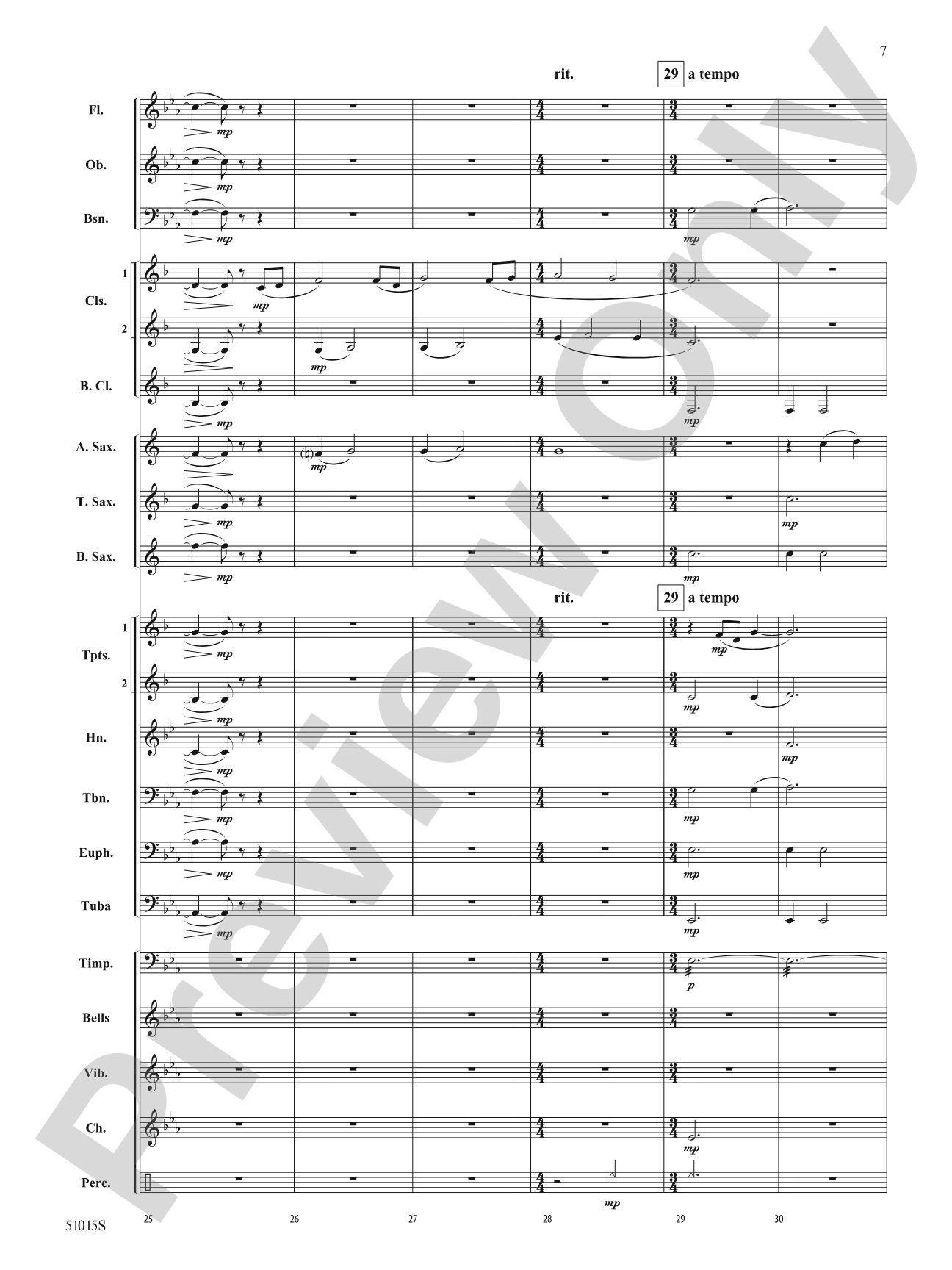
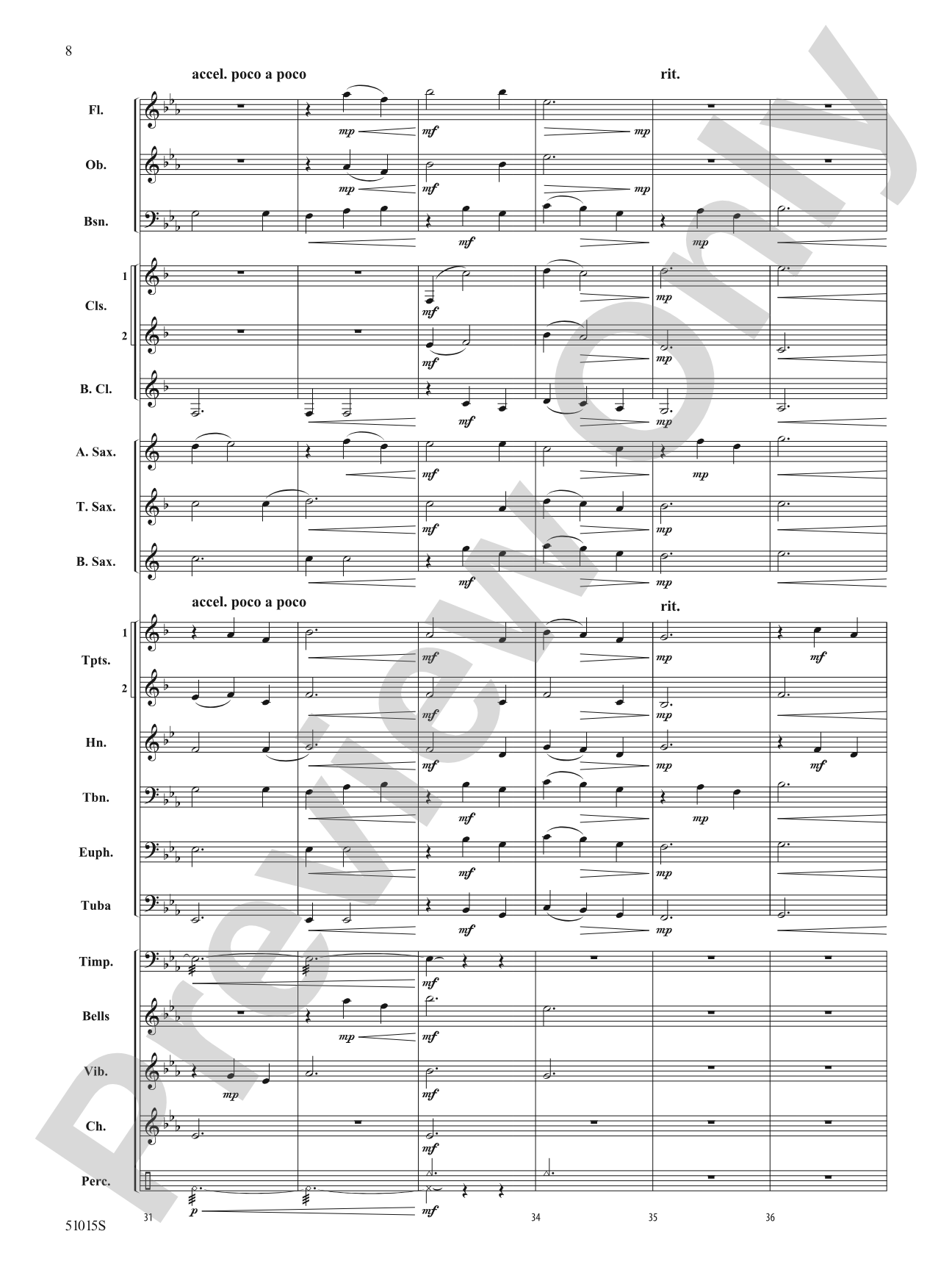
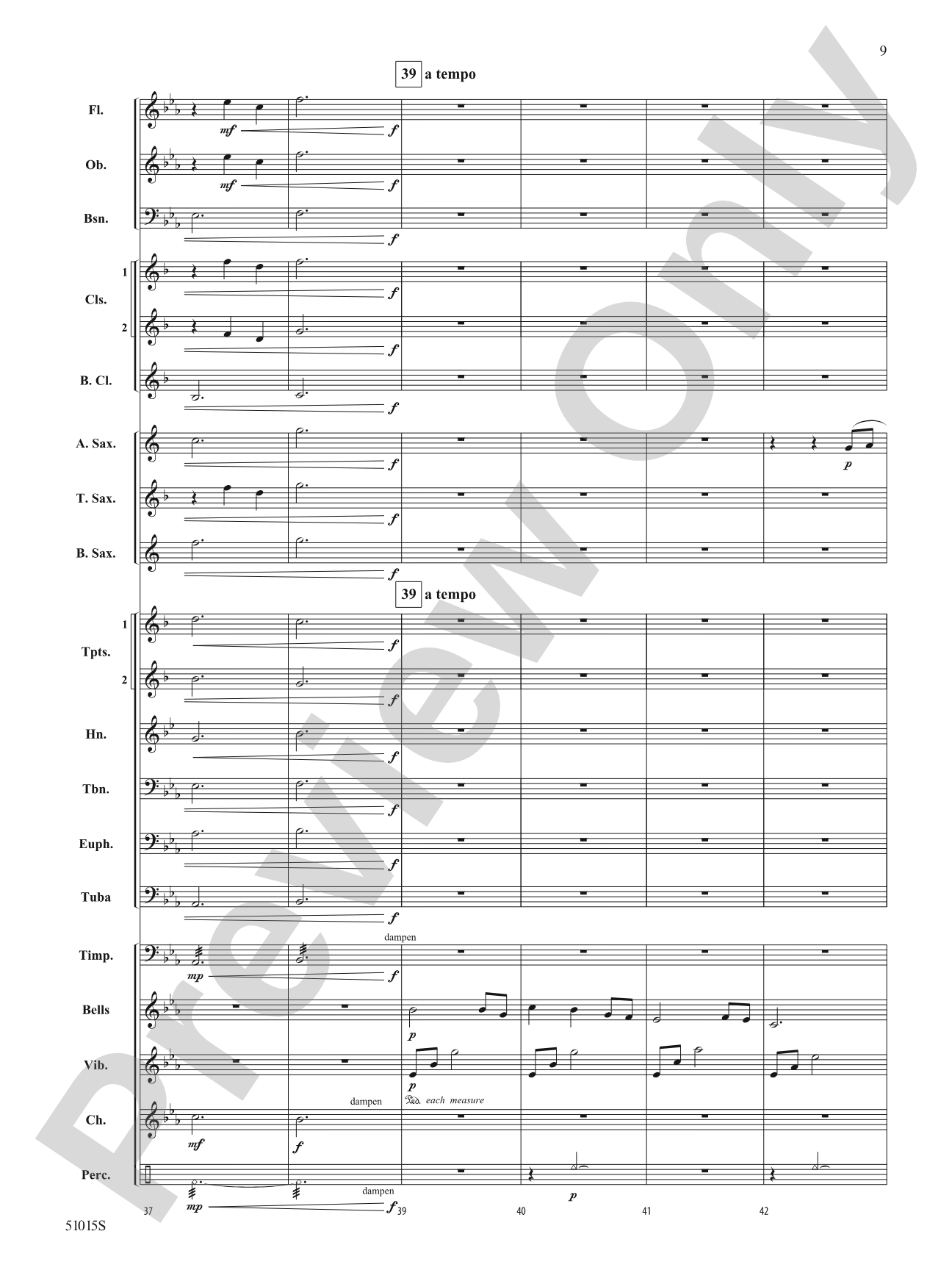
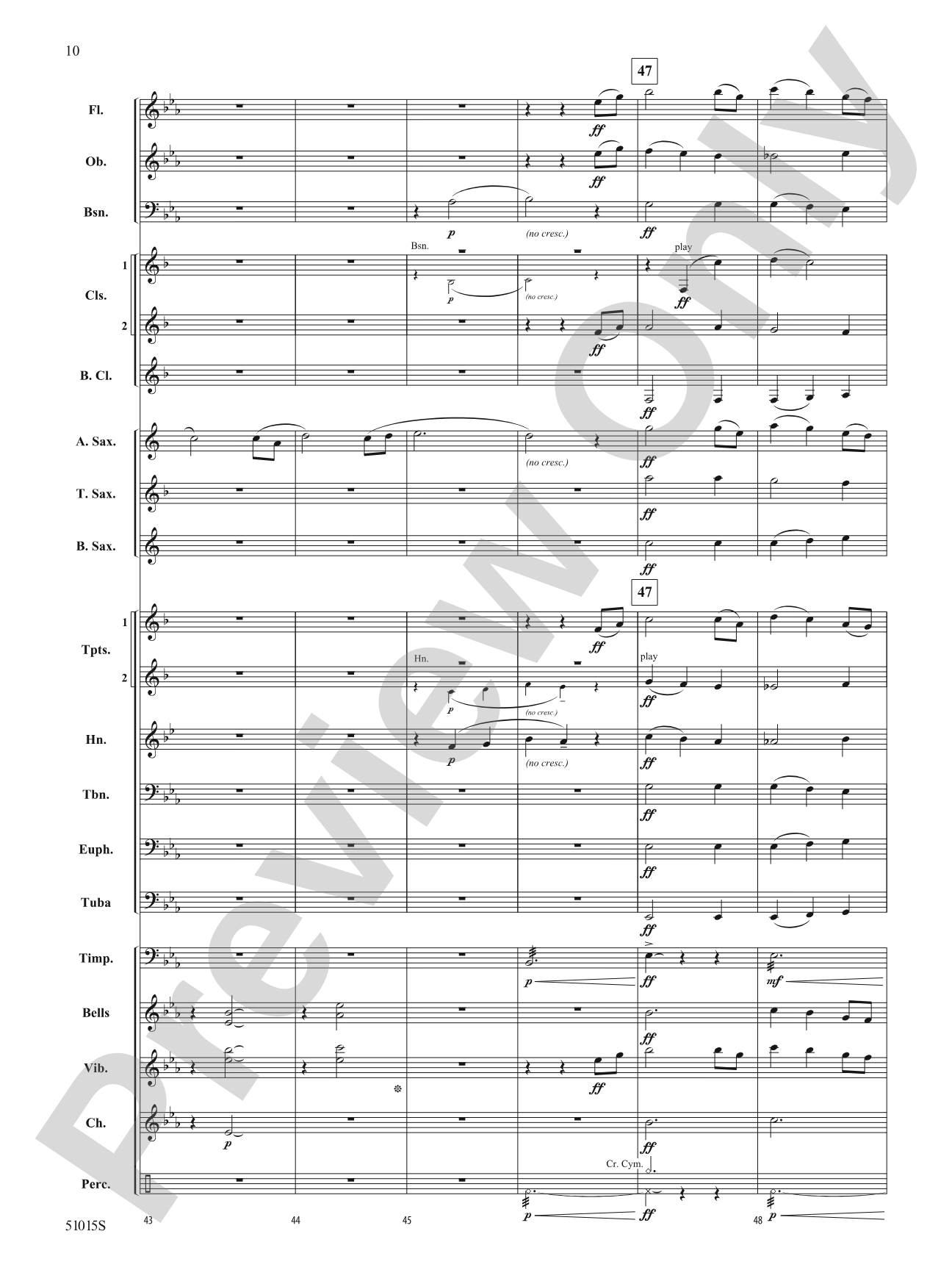
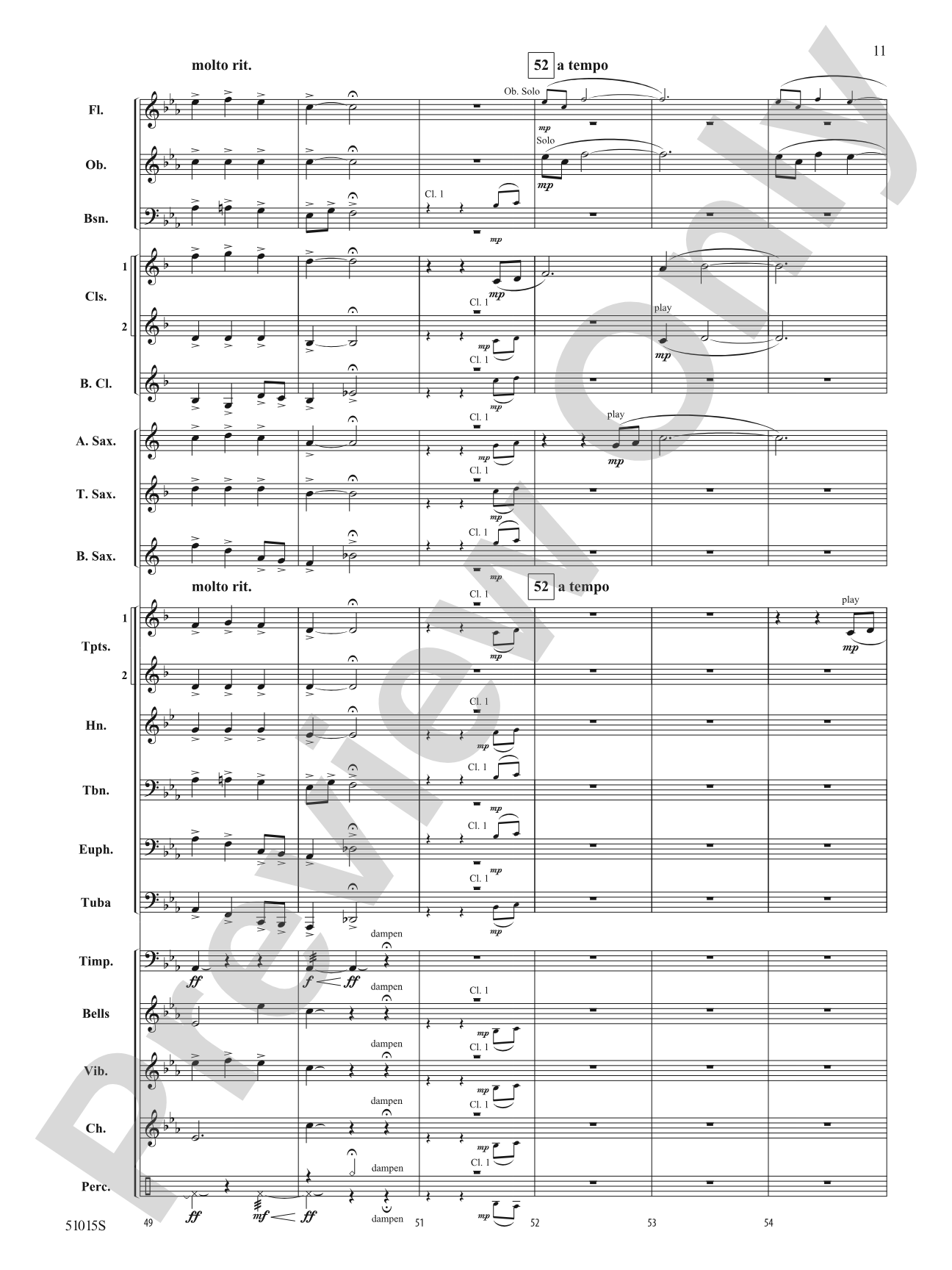
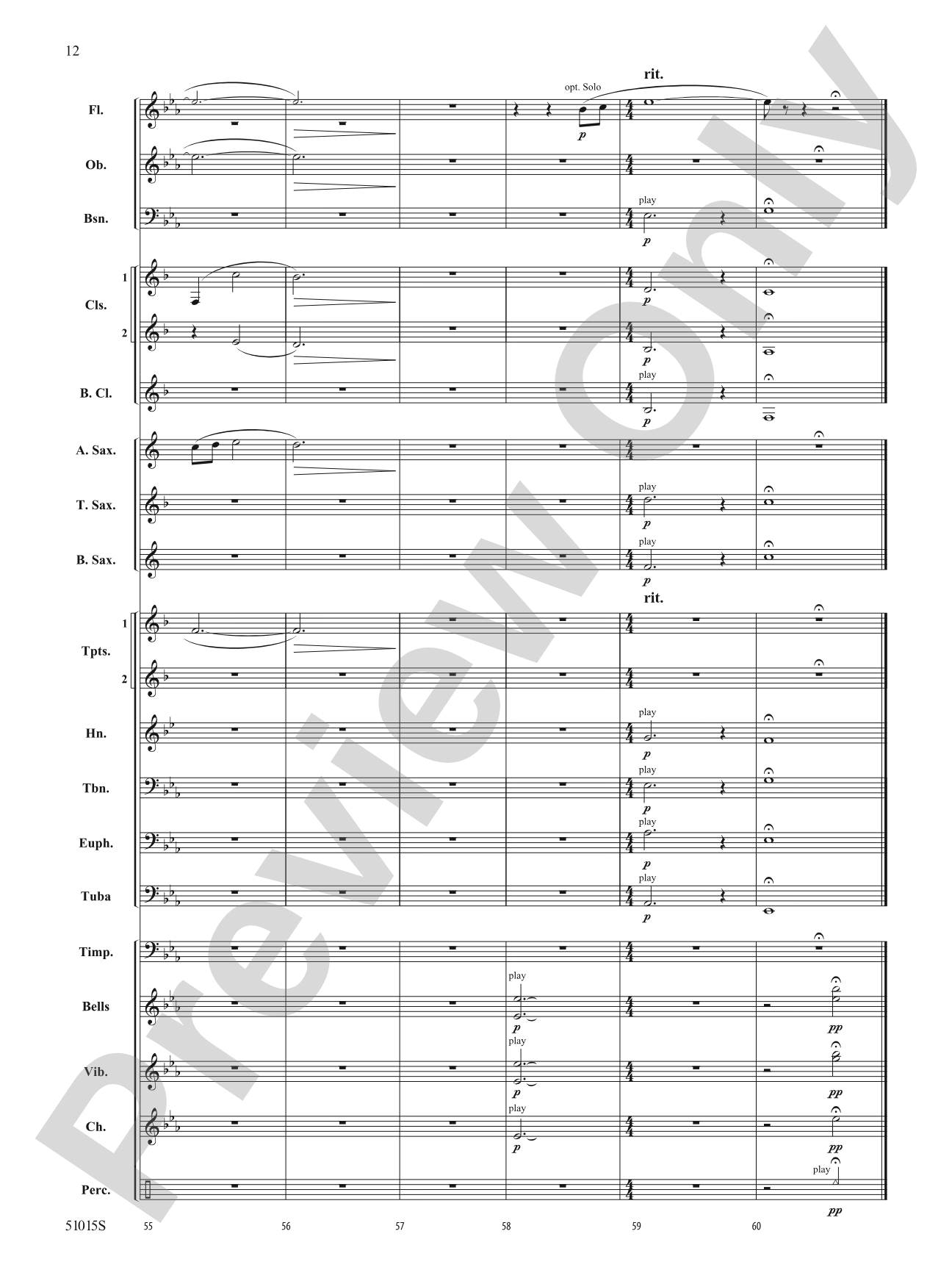

Lone, Wild Bird: Concert Band Conductor Score & Parts
By William Walker / arr. Brian Balmages
Grade: 1.5-2
Item: 00-PK-0008935

$60.00
Pickup currently not available
Buy Extra Parts (Digital PDF Download)
| Product | Price | Quantity |
|---|---|---|
| Lone, Wild Bird: Score | $10.00 | |
| Lone, Wild Bird: Flute | $3.00 | |
| Lone, Wild Bird: Oboe | $3.00 | |
| Lone, Wild Bird: Bassoon | $3.00 | |
| Lone, Wild Bird: 1st B-flat Clarinet | $3.00 | |
| Lone, Wild Bird: 2nd B-flat Clarinet | $3.00 | |
| Lone, Wild Bird: B-flat Bass Clarinet | $3.00 | |
| Lone, Wild Bird: E-flat Alto Saxophone | $3.00 | |
| Lone, Wild Bird: B-flat Tenor Saxophone | $3.00 | |
| Lone, Wild Bird: E-flat Baritone Saxophone | $3.00 | |
| Lone, Wild Bird: 1st B-flat Trumpet | $3.00 | |
| Lone, Wild Bird: 2nd B-flat Trumpet | $3.00 | |
| Lone, Wild Bird: 1st F Horn | $3.00 | |
| Lone, Wild Bird: 1st Trombone | $3.00 | |
| Lone, Wild Bird: Baritone B.C. | $3.00 | |
| Lone, Wild Bird: Baritone T.C. | $3.00 | |
| Lone, Wild Bird: Tuba | $3.00 | |
| Lone, Wild Bird: Timpani | $3.00 | |
| Lone, Wild Bird: Bells | $3.00 | |
| Lone, Wild Bird: Vibraphone | $3.00 | |
| Lone, Wild Bird: Chimes | $3.00 | |
| Lone, Wild Bird: 1st Percussion | $3.00 |
Parts Added to Cart!
Description
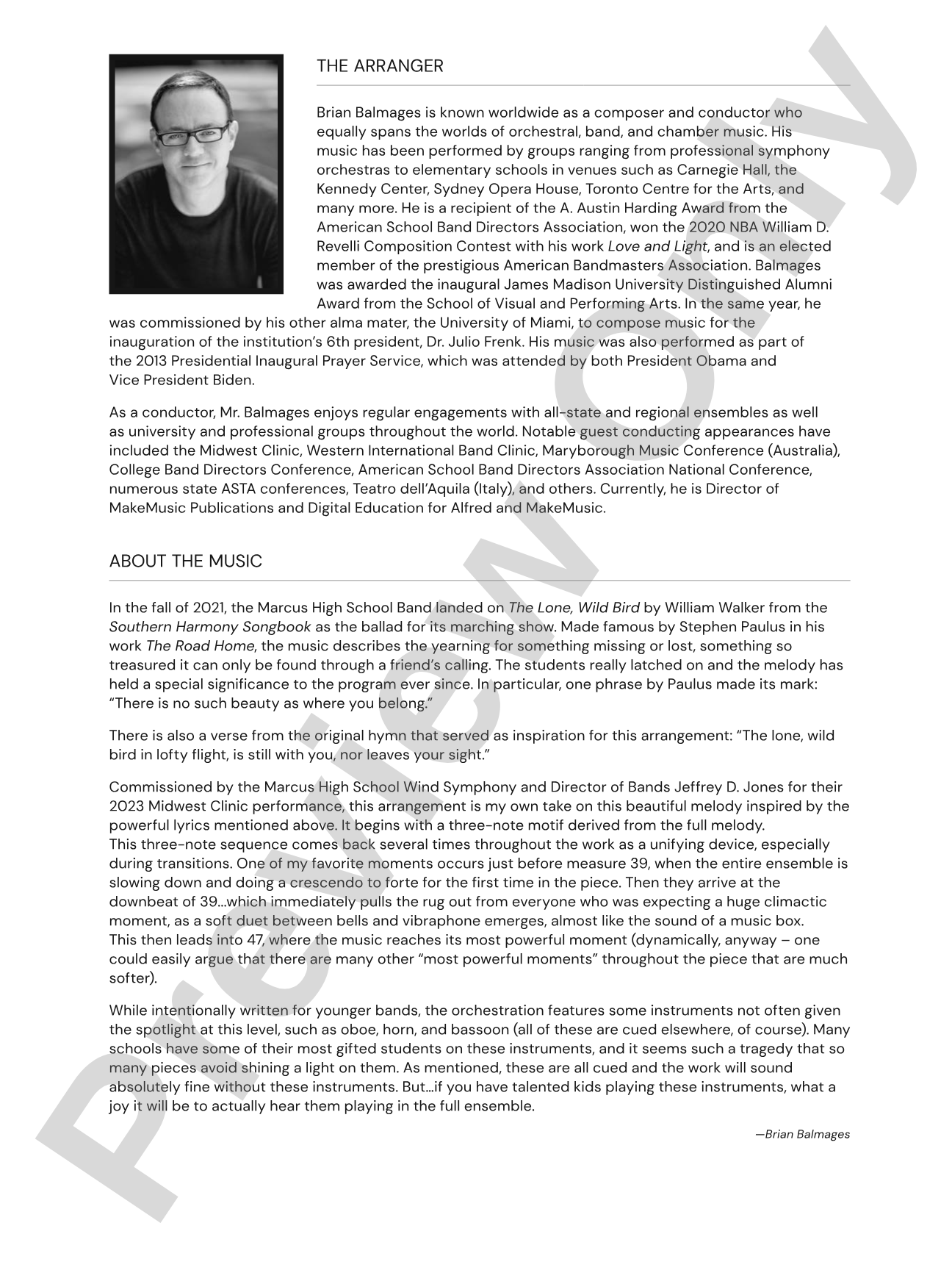
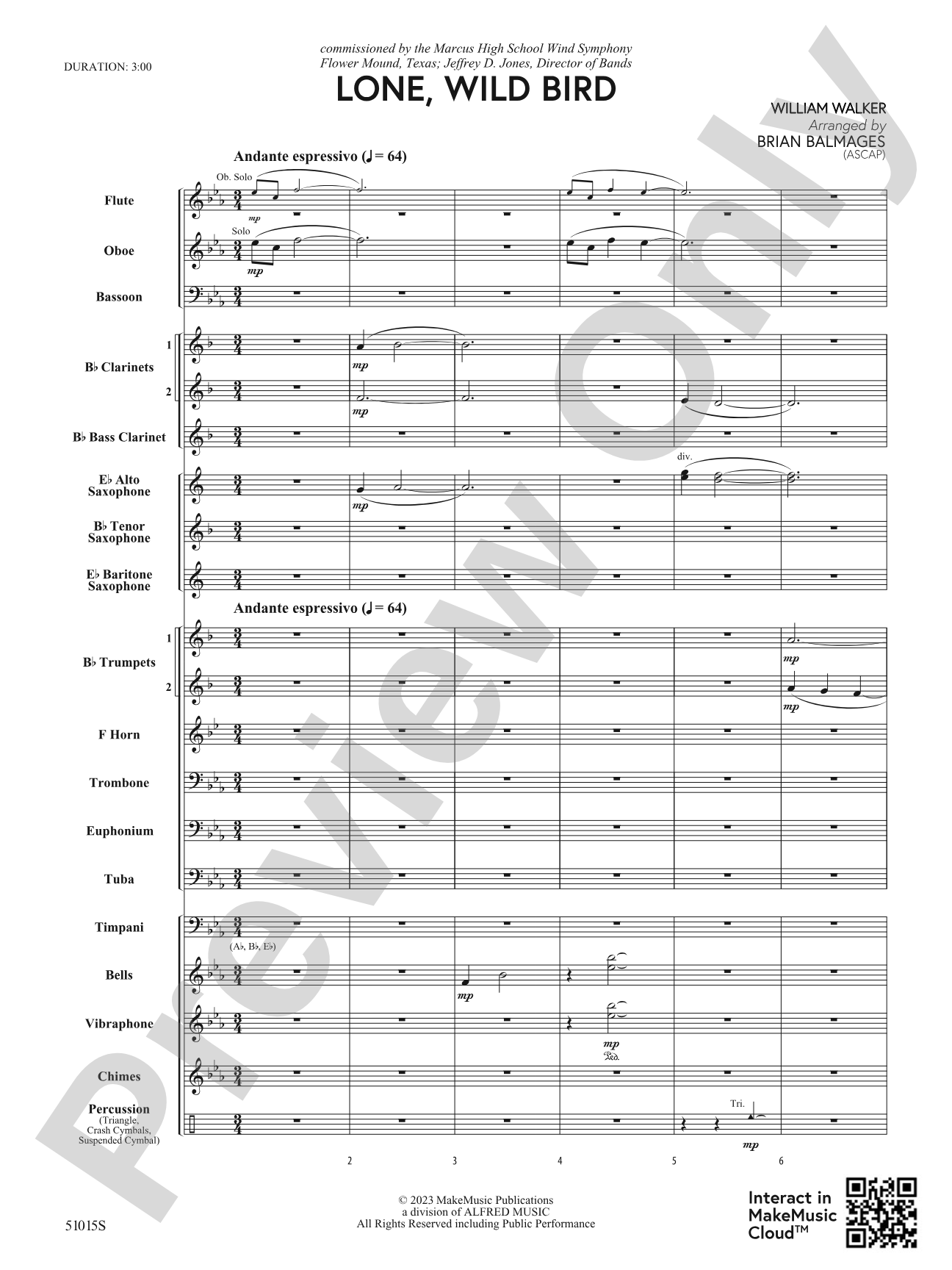
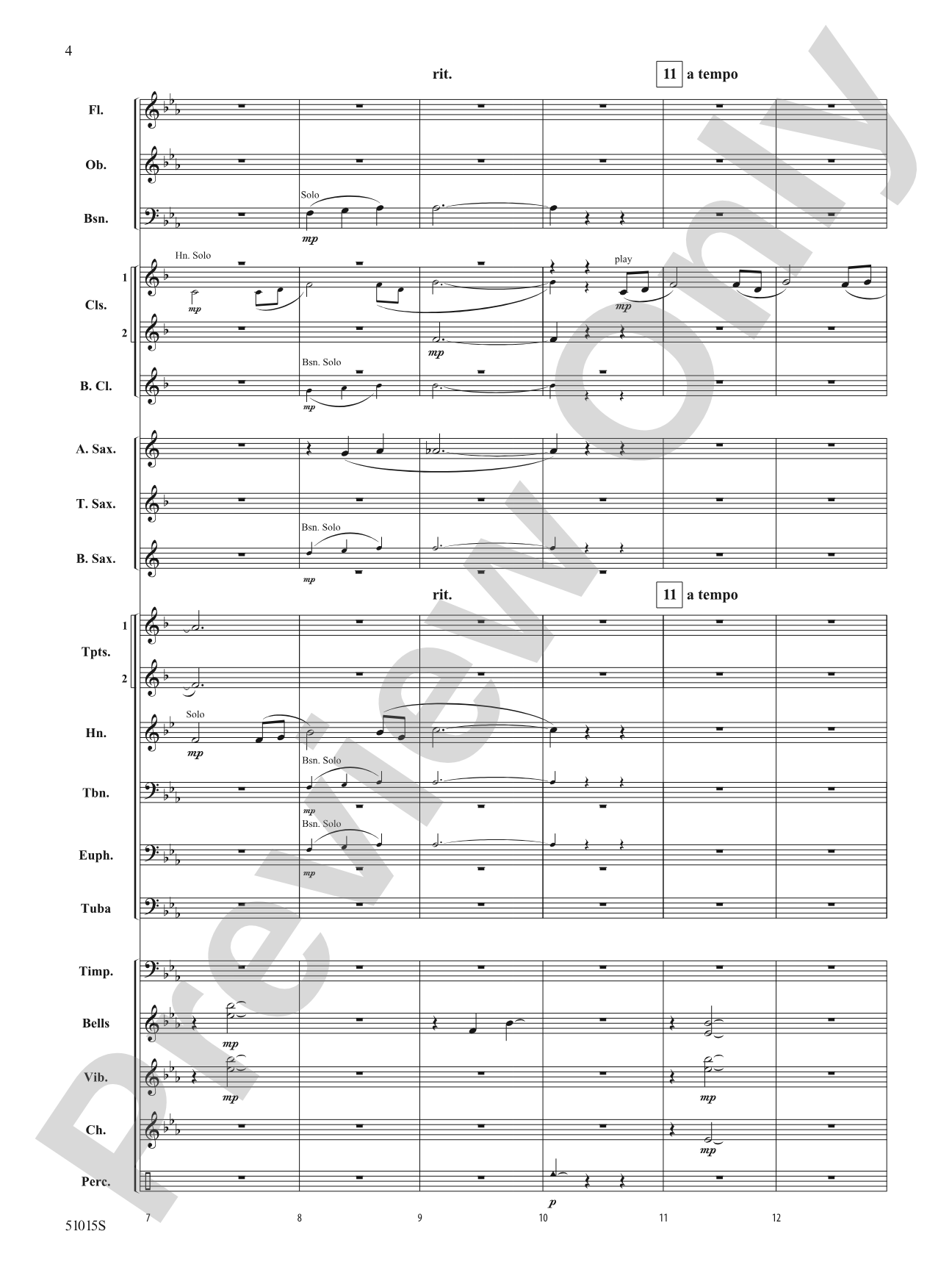
This hauntingly beautiful arrangement of Lone, Wild Bird is surprisingly accessible despite its complex sound. Brian Balmages has created multiple opportunities for instruments that are often not heard at this level, such as oboe, bassoon, and horn (cues are always provided). A powerful musical experience that will surprise you several times as the work develops. (3:00)


Don't just read it, hear it, play along with it, and watch your students grow with it. In MakeMusic Cloud, Lone, Wild Bird: Concert Band Conductor Score & Parts comes alive with professional accompaniment, adjustable tempo, and built-in practice tools that turn solo practice into real progress.
Open in the Player
Jump straight in and assign it today.
Start Your Free Trial
Open this title and explore the full library in minutes.
Sample Audio
1
Audio File
--:--
0:00
0:00
Sample Video
Additional Details
Series:
MakeMusic Developing Band
Publisher:
MakeMusic Publications
SKU:
00-PK-0008935
More about this title
About the Composer: William Walker
William Walker (1809–1875) was a Scottish-born music educator and composer whose hymn texts and melodies became foundational to American sacred music traditions. Best known for his hymn collection "Christian Hymns," Walker shaped congregational singing across denominational lines and left a legacy of accessible, singable melodies that endure in worship and concert settings today.
Why we love this
Brian Balmages captures the spiritual quietude of Walker's hymn while crafting an arrangement that genuinely showcases younger ensemble players. The scoring distributes solo moments across oboe, bassoon, and horn—instruments that rarely carry the musical narrative at this level—without sacrificing the piece's meditative power. Your band will discover musical maturity in themselves as they shape the architecture of a hymn arrangement that builds with purpose.
What to expect
Solitary and contemplative, yet gradually expanding into something more luminous. The piece unfolds like a prayer spoken aloud—first alone, then joined by others—creating moments of unexpected warmth and depth without ever losing its quiet dignity.
Who it's for
Grade 1.5–2 concert bands seeking repertoire that sounds more sophisticated than its technical demands suggest. Teachers who want to give younger students a meaningful solo experience and conductors programming hymn-based works for festivals or contests will find this arrangement especially valuable.
How to get the most out of it
- Shape the opening phrases with gentle direction; let the melody breathe rather than press forward. The beauty emerges from restraint and clarity of line.
- Balance featured voices carefully, especially when oboe or bassoon takes the tune. Reduce surrounding harmonies so soloists project without strain.
- Watch the pacing as the arrangement develops and thickens. Tempo should remain steady, but dynamics must lift organically to avoid rushing into the climactic moments.
- Use the provided cues judiciously in rehearsal so all players understand the full harmonic picture, then trust your featured musicians to carry their lines with independence.
How to use it
This works beautifully on a concert devoted to sacred or seasonal themes, or as a contrasting centerpiece between more energetic selections. The three-minute duration and concert/festival designation make it ideal for competition programming where you need an accessible piece that demonstrates musical sophistication and score preparation.
Skills your students will build
- Sustaining lyrical lines through longer phrases without rushing
- Balance and blend when supporting a featured instrumental soloist
- Dynamic control across a growing texture, from intimate to fuller ensemble sound
- Ensemble independence—playing a harmonic role while other sections carry the melody