London Sheet Music Preview

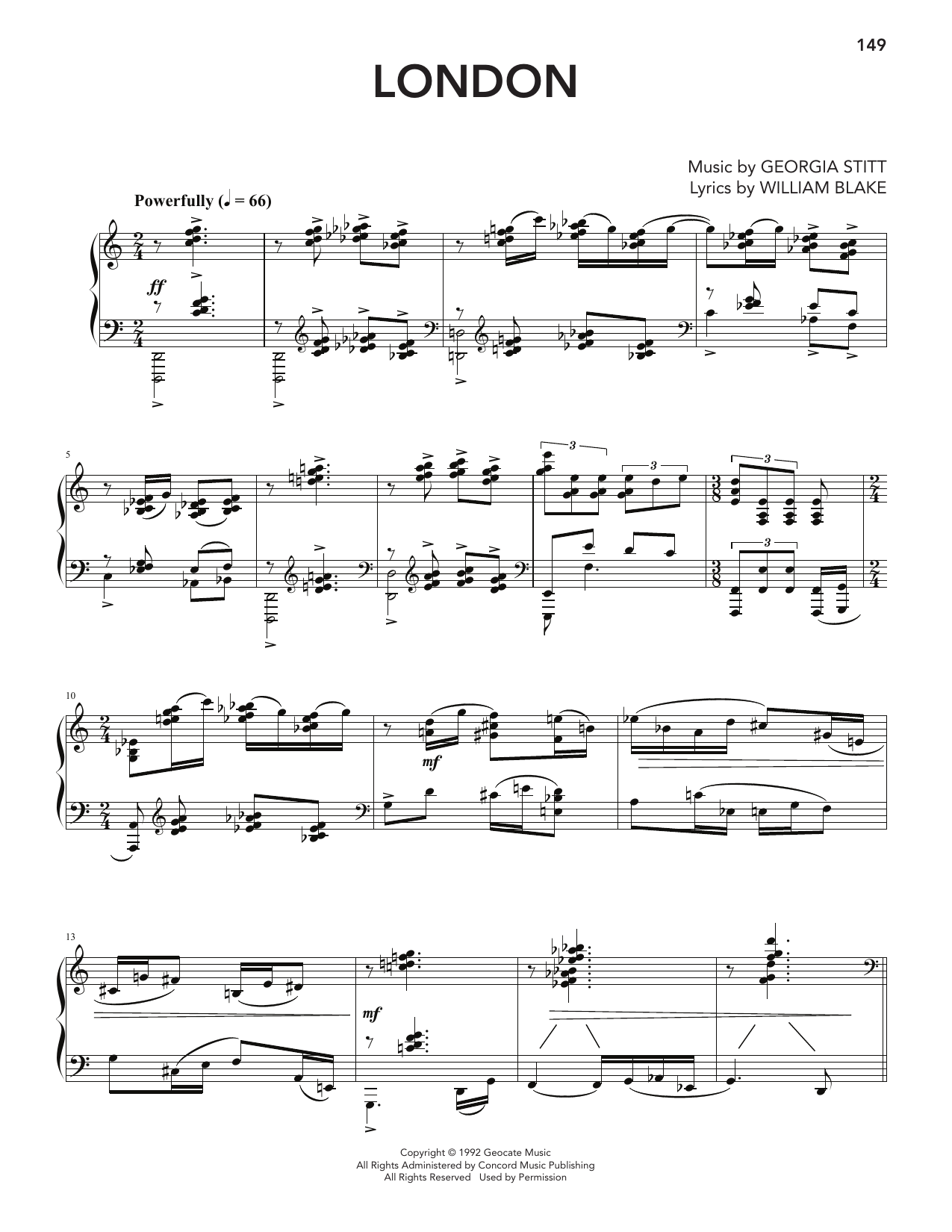
London: Piano Vocal

As performed by Georgia Stitt

Item: 35-DS01905437

Digital Download
$5.99
Description

London: Piano Vocal isn't in MakeMusic Cloud just yet...but it could be. Let us know you'd like to see it, and you'll help shape what comes next. In the meantime, start a free trial and dive into thousands of interactive titles your students can play along with today.

Sample Audio
No sample audio found.
Sample Video
Additional Details
Publisher: Hal Leonard
Page Count: 5
SKU: 35-DS01905437

More about this title

About the Artist: Georgia Stitt

Georgia Stitt is a composer and lyricist whose work spans musical theater, concert music, and art song. Her writing combines sophisticated harmonic language with singable, dramatically compelling vocal lines, making her compositions valuable for both performance and study. Stitt's background in both composition and theater gives her a distinctive understanding of how text and music can serve each other.

Why we love this

Stitt's songs strike a rare balance between accessibility and compositional depth. The writing sits beautifully for voices while offering pianists genuinely interesting harmonic and textural challenges. This is the kind of piece that sounds deceptively simple until you sit down to learn it.

What to expect

The piece unfolds with an intimate, conversational quality. There is poetry in the restraint of the writing and a genuine warmth in how the melody shapes itself around the words.

Who it's for

This song serves intermediate to advanced singers and pianists seeking art song that engages thoughtfully with text and harmony. It works equally well as recital material, audition preparation, or part of a student's contemporary vocal repertoire survey.

How to get the most out of it

  • Establish the harmonic language in your first read-through. Understanding how Stitt uses unexpected chord progressions will help both singer and pianist find security in the accompaniment.
  • Attend to the relationship between the vocal line and the piano figuration. Often the most expressive moments come from where they converge or diverge rather than move in parallel.
  • Balance transparency with color. The accompaniment should support without overwhelming; let the voice emerge naturally from the texture.

How to use it

Pair this with other contemporary American art songs to showcase how modern composers approach the genre. It also makes a strong solo for voice recitals or works beautifully alongside instrumental chamber music in a mixed program.

Skills your students will build

  • Interpreting contemporary harmonic language
  • Collaborative listening between vocalist and pianist
  • Characterization through lyrical understatement
  • Balancing technical precision with emotional directness

You May Also Like