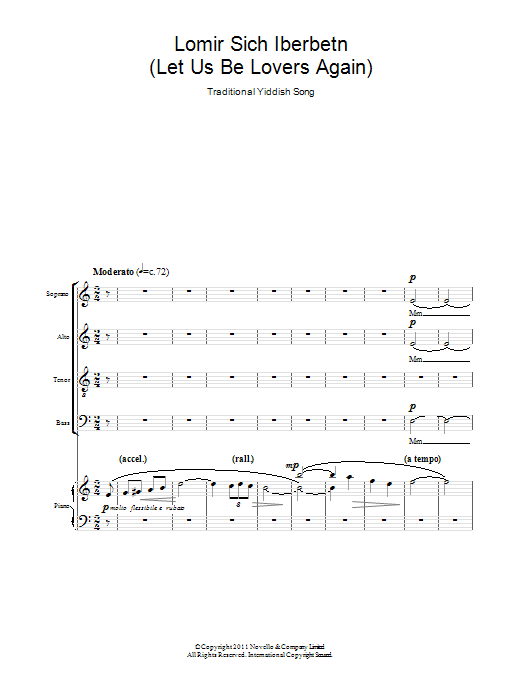
Lomir Sich Iberbetn (Let Us Be Lovers Again) Sheet Music Preview

Lomir Sich Iberbetn (Let Us Be Lovers Again): SATB Choral Octavo

As performed by Traditional

Item: 35-DS00207642

Digital Download
$2.99
Description

Lomir Sich Iberbetn (Let Us Be Lovers Again): SATB Choral Octavo isn't in MakeMusic Cloud just yet...but it could be. Let us know you'd like to see it, and you'll help shape what comes next. In the meantime, start a free trial and dive into thousands of interactive titles your students can play along with today.

Sample Audio
No sample audio found.
Sample Video
Additional Details
Publisher: Hal Leonard
Page Count: 9
SKU: 35-DS00207642

More about this title

About the Artist: Traditional

Yiddish folk tradition carries the voice of Eastern European Jewish culture, preserving stories of love, loss, and longing across generations. These songs emerged from community life, passed down through families and gatherings, each version shaped by the singers who kept them alive. "Lomir Sich Iberbetn" belongs to this rich heritage, a testament to how traditional melodies can express universal human emotions with remarkable directness.

Why we love this

This Yiddish standard gives your singers access to authentic folk material that sounds sophisticated without requiring complicated harmonic language. The emotional restraint of the text (a plea to restore a broken relationship) pairs perfectly with straightforward SATB writing, letting your ensemble focus on phrasing and lyrical singing rather than technical challenges.

What to expect

A quiet conversation between people who once loved each other, tentative and hopeful. The music carries restraint and dignity, avoiding sentimentality while honoring deep feeling. There is longing here, but also a kind of acceptance woven into the melody.

Who it's for

Any SATB choir seeking repertoire that connects to cultural tradition and emotional storytelling. This works particularly well for groups interested in folk music, secular humanist programming, or concerts exploring diaspora and memory.

How to get the most out of it

  • Shape the melody by listening to the text's natural speech rhythms; the emotional weight lives in how you breathe between phrases rather than in dramatic dynamic changes.
  • Tune the alto and tenor lines with care in this arrangement; traditional folk harmony sometimes challenges modern ear training, so isolate those parts early.
  • Let the soprano line float slightly above the rest of the ensemble, but keep it integrated. This song works when it sounds like a conversation, not a solo with accompaniment.

How to use it

This pairs beautifully in a concert exploring immigrant experiences or cultural heritage; it also stands alone as a poignant secular piece for spring or fall concerts. Consider programming it near other folk arrangements or traditional material to build thematic coherence.

Skills your students will build

  • Singing in Yiddish with accurate pronunciation and natural phrasing
  • Balancing folk melody style with SATB blend
  • Sustaining emotional authenticity across simple harmonic progressions
  • Tuning traditional harmony that differs from common-practice chord structures

You May Also Like