Locus Iste Sheet Music Preview

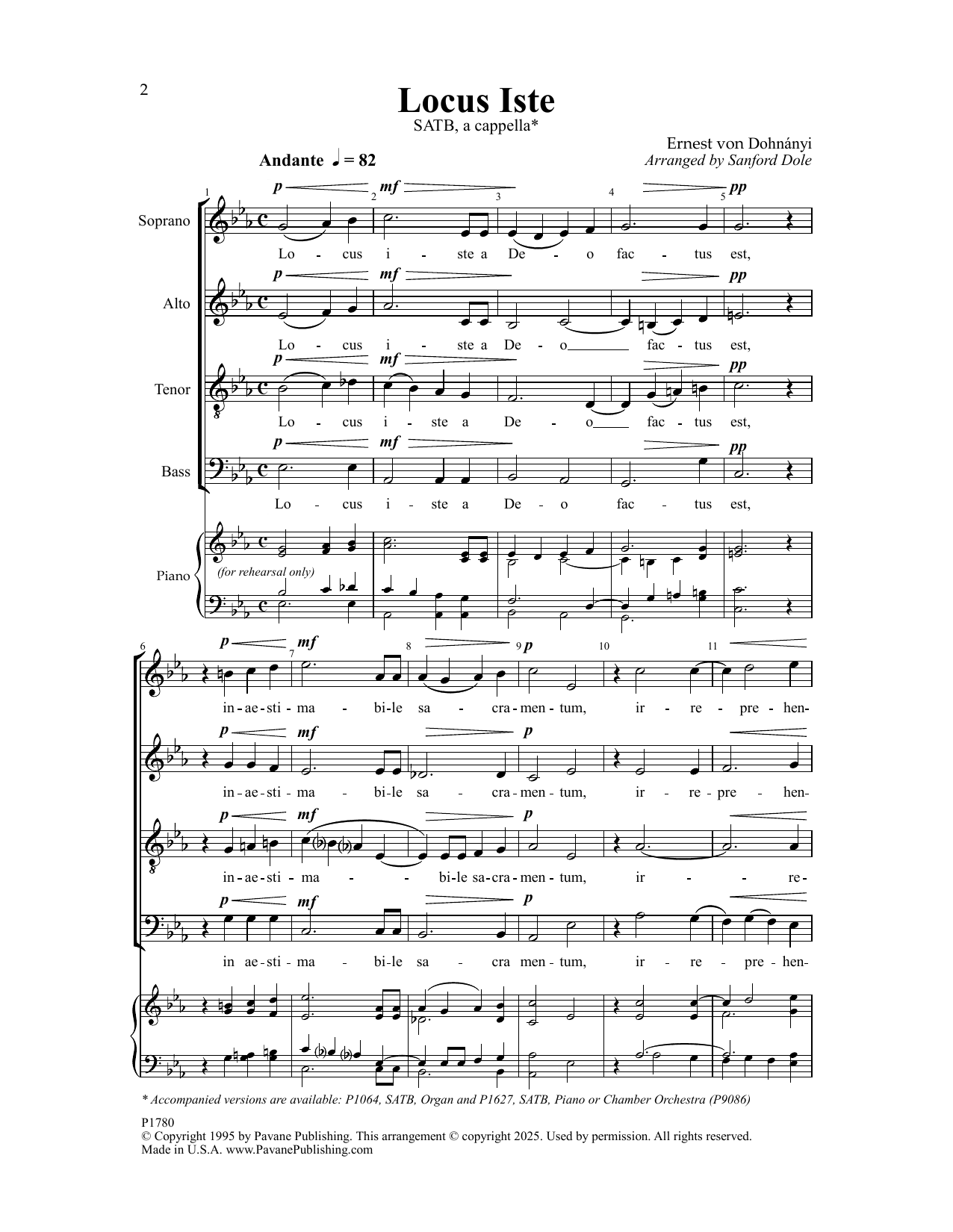
Locus Iste: SATB Choral Octavo

Item: 35-DS01576749

Digital Download
$3.05
Description

Locus Iste: SATB Choral Octavo isn't in MakeMusic Cloud just yet...but it could be. Let us know you'd like to see it, and you'll help shape what comes next. In the meantime, start a free trial and dive into thousands of interactive titles your students can play along with today.

Sample Audio
No sample audio found.
Sample Video
Additional Details
Publisher: Hal Leonard
Page Count: 7
SKU: 35-DS01576749

More about this title

Why we love this

This piece cuts through the noise with its crystalline harmonic language and emotional directness. A seven-page octavo that rewards careful attention to balance and intonation, it offers your singers a genuine musical challenge without requiring extreme ranges or unusual vocal demands.

What to expect

Contemplative and spacious, with the quality of light filtering through stained glass. The harmony moves with intention rather than motion, creating a sense of suspension and reverence that depends entirely on the singers' commitment to ensemble precision.

Who it's for

Choirs seeking repertoire that builds musicianship through close harmony work and sophisticated listening. Works well for groups comfortable with non-functional harmonic language and ready to explore twentieth-century choral writing.

How to get the most out of it

  • Shape each phrase with a sense of arrival rather than pressing forward; the stillness of the harmonic language requires singers to listen across the ensemble.
  • Pay close attention to vowel consistency across all four parts, especially in sustained passages where blend determines whether the harmony registers as luminous or muddy.
  • Consider how tempo relates to breath: a slightly slower tempo gives singers room to support longer lines without tension creeping in.

How to use it

Pair this with other modern sacred or secular works to create a thoughtful concert program moment. Its length and character make it ideal as a centerpiece rather than an opening or closer, giving your audience a chance to settle into its particular sound world.

Skills your students will build

  • Listening for and balancing non-functional harmonies
  • Sustaining long phrases with consistent tone quality
  • Blending vowels across four independent parts
  • Interpreting harmonic language as expressive content rather than functional progression

You May Also Like