Loco-Motive Sheet Music Preview

Loco-Motive: Piano

By Melody Bober

Item: 98-DW9299

Digital Download
$4.95
Description
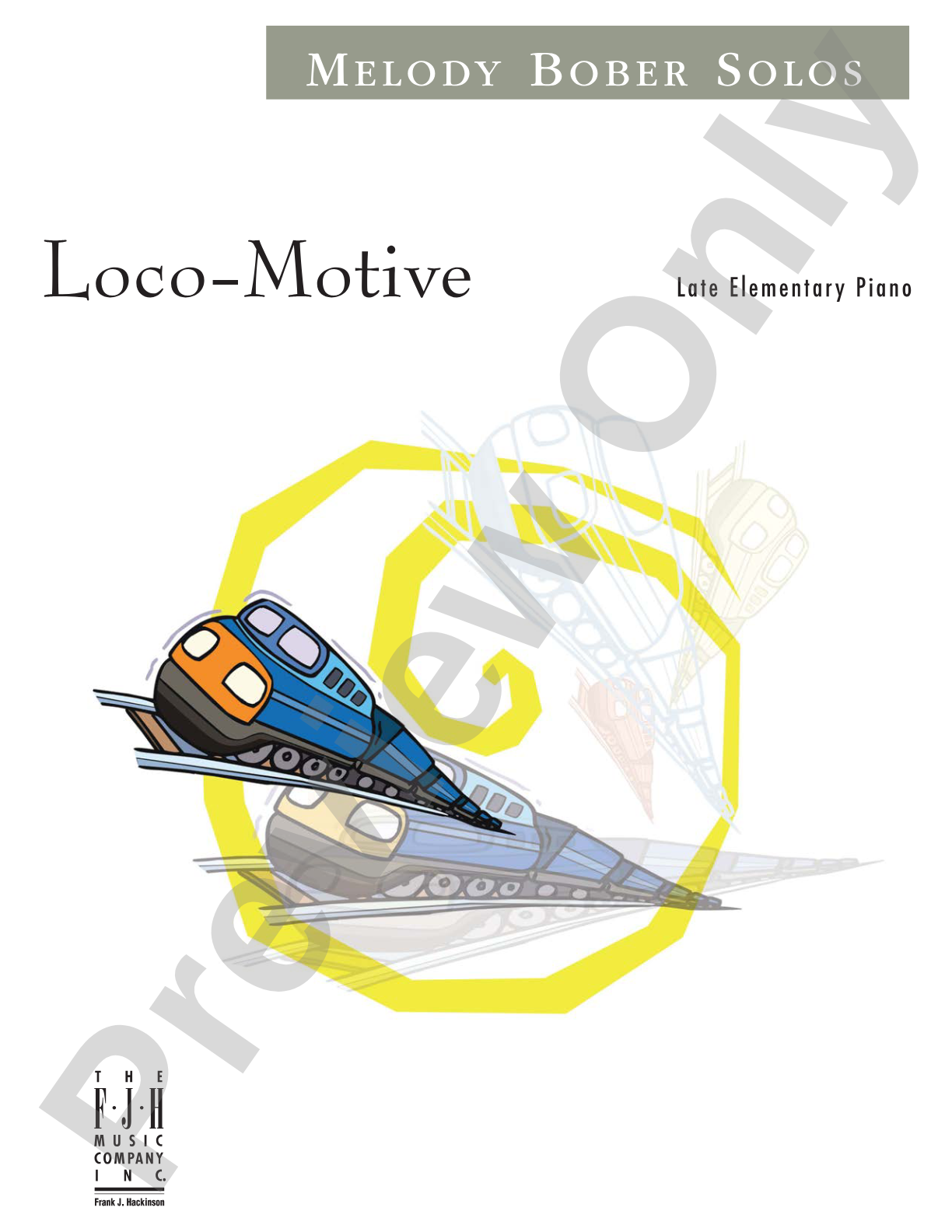
Students will love playing this piece written in the key of C minor that portrays an exhilarating train ride. Offering dynamics from p to f, and rapid alternating patterns utilizing staccatos, legatos and accents in just the right places, helps to create the perfect effect. This fast and furious late elementary solo will be a favorite in your studio!

Loco-Motive: Piano isn't in MakeMusic Cloud just yet...but it could be. Let us know you'd like to see it, and you'll help shape what comes next. In the meantime, start a free trial and dive into thousands of interactive titles your students can play along with today.

Sample Audio
No sample audio found.
Sample Video
Additional Details
Series: Written For You
Publisher: The FJH Music Company, Inc.
SKU: 98-DW9299

More about this title

About the Composer: Melody Bober

Melody Bober

Melody Bober composes with her studio students at the center of her vision, crafting pieces that deepen musicianship while sustaining genuine engagement. Her training runs deep: a summa cum laude music education degree from the University of Illinois, followed by a Master of Arts in piano performance from Minnesota State University, Moorhead, where she studied with accomplished pianists Joel Shapiro and Andrew Froelich. Beyond her private teaching practice, she brings two decades of public school experience and university-level instruction to her work, grounded in mentorship from educators like Mary Hoffman and Tony Caramia.

Bober's reputation extends across North America as a clinician and speaker at teacher conventions and workshops. She serves her community as an active church pianist and former music director, roles that have shaped her understanding of how music functions in real performance spaces. Living in Minnesota with her husband Jeff, she continues to teach privately while composing pieces that balance technical growth with the joy students need to keep practicing.

Why we love this

Bober captures the raw energy of a train in motion without resorting to cheap effects; instead, she builds excitement through well-placed staccatos, legatos, and accents that give students real interpretive choices. The C minor key and dynamic range from soft to loud demand that students shape the piece intentionally, turning a "fun" concept into genuine musical work. Pieces like this remind us why students practice: they sound thrilling when played right.

What to expect

Kinetic and propulsive, with the urgent momentum of something powerful gathering steam. The staccato-legato interplay creates a tactile sense of wheels turning and pistons firing, while the key of C minor lends an edge that keeps the excitement from feeling childish.

Who it's for

Late elementary pianists ready to explore dynamics and articulation across a range of touch techniques. This piece works especially well for students who respond to programmatic music and need motivation to work on fast, controlled passages.

How to get the most out of it

  • Set a steady tempo before diving into the rapid alternating patterns; a metronome locked on the main pulse helps prevent the piece from accelerating under the excitement of the moment.
  • Map out the staccato versus legato passages in advance so the shift between them reads as intentional rather than accidental. These contrasts create the locomotive's rhythm.
  • Shape the dynamic arch within each phrase rather than jumping abruptly from p to f; let the intensity build like the train gathering speed.
  • Listen to the articulation in your left hand as carefully as your right. The accompaniment patterns matter as much as the melody in creating the illusion of motion.

How to use it

Pair this with other character pieces by Bober or her contemporaries to build a themed recital around music that tells a story. It also serves as an excellent showpiece for spring studio recitals where you want late elementary students to play something with genuine impact and personality.

Skills your students will build

  • Contrast between staccato and legato articulation
  • Dynamic control from soft to loud
  • Rapid alternating hand patterns with precision
  • Accent placement for rhythmic clarity
  • Tempo stability at faster speeds
  • Musical interpretation through articulation choices

You May Also Like