
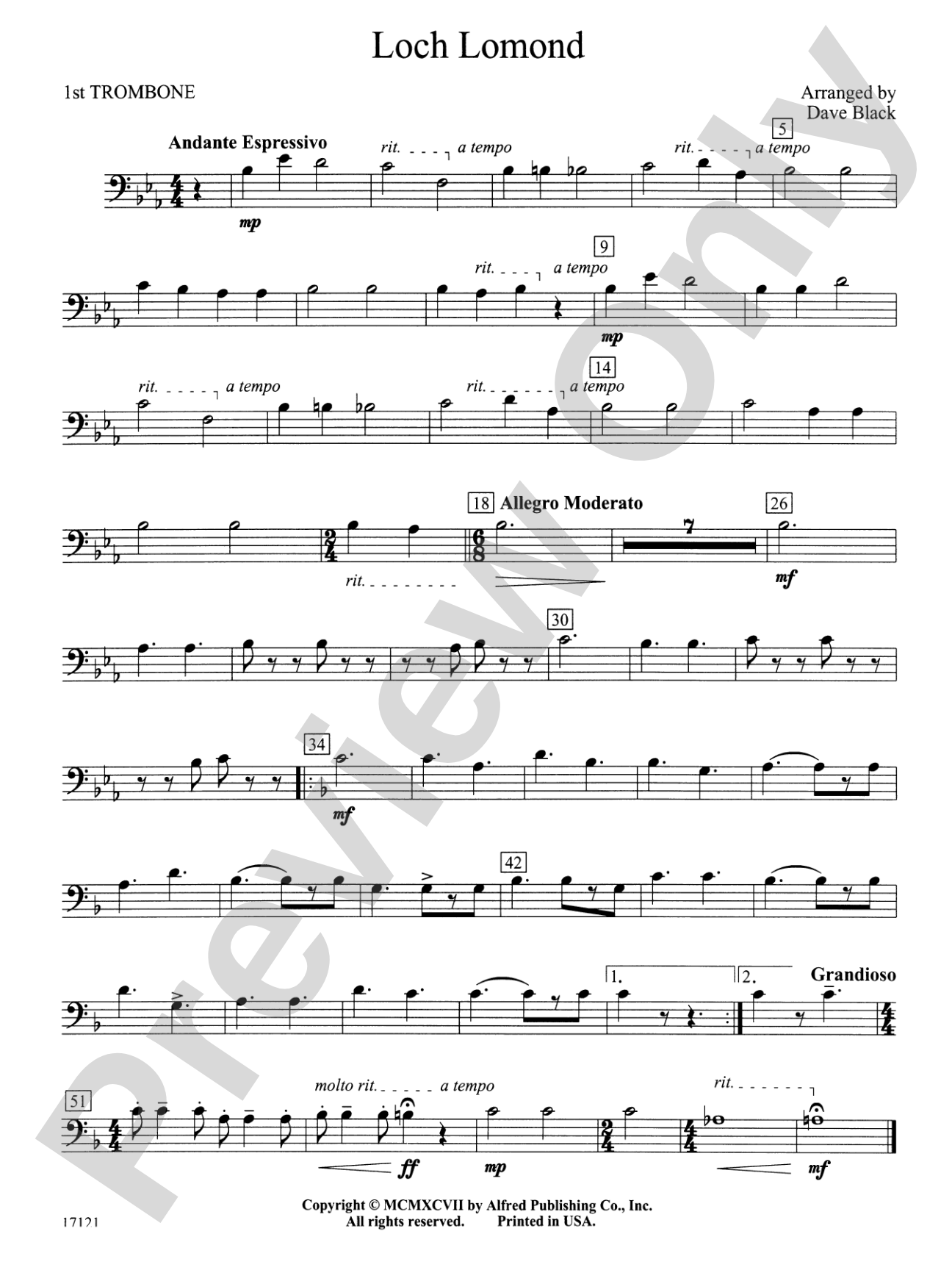

Loch Lomond: 1st Trombone
Traditional / arr. Dave Black
Grade: 2 (Medium Easy)
Item: 00-PC-0000207_TN1
$3.00
Pickup currently not available
Description
Here are two contrasting treatments of this beautiful Scottish tune in a unique arrangement for young band. The tune is first presented using the lush harmonies, full textures and interesting inner lines that have become a Dave Black trademark. The second treatment is an enchanting dance-like march in 6/8 time that starts with a snare drum introduction, followed by open fifths in the low brass. The tune is developed with the addition of a woodwind countermelody before a final statement of the tune brings the piece to a close. Great for working on phrasing, balance and dynamics. And every section gets their share of the melodic action! (2:30) This title is available in MakeMusic Cloud.


Don't just read it, hear it, play along with it, and watch your students grow with it. In MakeMusic Cloud, Loch Lomond: 1st Trombone comes alive with professional accompaniment, adjustable tempo, and built-in practice tools that turn solo practice into real progress.
Open in the Player
Jump straight in and assign it today.
Start Your Free Trial
Open this title and explore the full library in minutes.
Sample Audio
1
Audio File
--:--
0:00
0:00
Sample Video
Additional Details
Series:
Young Symphonic
Publisher:
Alfred Music
Page Count:
128
SKU:
00-PC-0000207_TN1
More about this title
About the Arranger: Dave Black

Dave Black is a percussionist and composer with a Bachelor of Music in percussion performance from California State University, Northridge. His career has spanned decades of performance and recording with major entertainers and touring productions across the globe. With over 60 published compositions and arrangements through leading music publishers, Black has become one of the most recorded and performed contemporary composers in music education.
His accolades include 26 consecutive ASCAP Popular Composer Awards, two GRAMMY Award participation certificates, and the Percussive Arts Society President's Industry Award. As an author, Black has sold over two million combined units of his educational materials worldwide, including Alfred's Drum Method, which remains the bestselling percussion method book. His music has been featured in film and television, including the movie Drumline, and his arrangements are performed by young musicians globally.
Why we love this
Black's treatment gives you two distinct musical experiences from a single, beloved tune, which means your band gets genuine variety without doubling your rehearsal load. The writing is characteristically smart about texture and balance; every section carries the melody at some point, so your trumpet section isn't the only one invested in the performance. The 6/8 march section has real rhythmic personality and will energize your students while the opening harmonization demonstrates sophisticated arranging craft at a level Grade 2 students can actually execute.
What to expect
The opening unfolds like stepping into a misty Scottish landscape, with warm harmonies that wrap around a familiar melody. The transition to the 6/8 march sparks energy and movement, transforming the tune into something celebratory and dance-like, before returning to quiet lyricism.
Who it's for
Young bands at Grade 2 level seeking repertoire that's musically substantive without requiring advanced technique. Directors building programs around folk material or looking for contest pieces that reward thoughtful musicianship will find this especially useful.
How to get the most out of it
- Shape the opening section's phrasing around the inner harmonic lines rather than just the melody; this is what separates a polished reading from a competent one.
- Let the snare drum introduction sit confidently alone for a moment before the low brass enters. That stillness creates genuine contrast and draws the audience into the 6/8 section.
- Balance the woodwind countermelody against the main tune during the development; neither should dominate, but both voices need audibility for the arrangement to breathe.
- Control dynamics carefully during transitions between the two treatments. The shift from the lush opening to the march-like character should feel intentional, not accidental.
How to use it
This works beautifully on a concert pairing contrasting Scottish or folk-inspired selections, where the two treatments of Loch Lomond frame other related repertoire. Its contest appeal and 2:30 runtime make it efficient for festival submissions, and the strong individual voices throughout keep sectional rehearsals productive and engaged.
Skills your students will build
- Phrasing and shaping long melodic lines with varied harmonic support
- Balance and blend between principal voices and inner harmony lines
- Transitioning between contrasting meters and musical characters (4/4 to 6/8)
- Dynamic control and sensitivity to textural changes
- Developing individual musical responsibility through sectional melodic moments