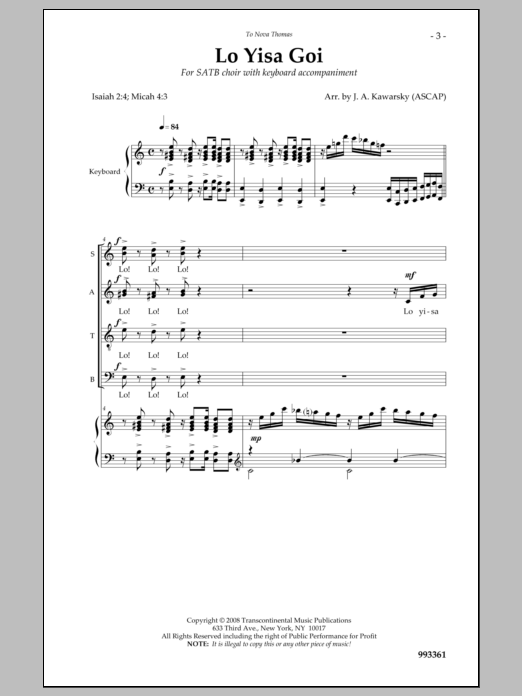
Kawarsky's arrangement respects the liturgical weight of this Hebrew text while writing for voices in a way that feels natural and singable. Four-part writing at this length gives your choir room to develop blend and balance without sacrificing the profound spiritual intent of the piece.
What to expect
Contemplative and reverent, with the kind of harmonic language that lets silence speak as loudly as sound. The arrangement honors both the gravity of the text and the voices singing it, creating moments of genuine congregational or audience connection.
Who it's for
SATB choirs with intermediate to advanced singers who can handle four-part writing with textual sensitivity. This works well for choirs preparing sacred music programs, interfaith concerts, or repertoire exploring Jewish musical traditions.
How to get the most out of it
Shape the phrases according to the Hebrew text's natural speech rhythms rather than strict metric regularity. This clarifies meaning for listeners unfamiliar with the language.
Balance the soprano line carefully; it often carries the melodic line but should never overwhelm the harmonic foundation beneath it.
Allow space between sections to let the acoustics settle. Sacred music benefits from singers resisting the urge to rush between phrases.
How to use it
Include this in a thematic program exploring prayers from different faith traditions, or feature it as a standalone spiritual selection during a pops concert seeking depth. Its fifteen pages give you substantial material without demanding excessive rehearsal time for a piece this rewarding.
Skills your students will build
Singing text in Hebrew with proper phrasing and articulation
Four-part harmonic balance and blend in SATB writing
Interpreting sacred music with appropriate dynamic restraint and line shaping
Maintaining textual clarity across multiple voice parts
You May Also Like
Scan to Complete Your Purchase
Use your phone's camera to scan the code below
You'll log in on your phone and the order will be added to your account