

Live-a-Humble: SATB, a cappella Choral Octavo
Arr. Peter Bagley
Item: 00-PO-0002936
$2.95
Minimum order quantity: 20 copies
Pickup currently not available
Description
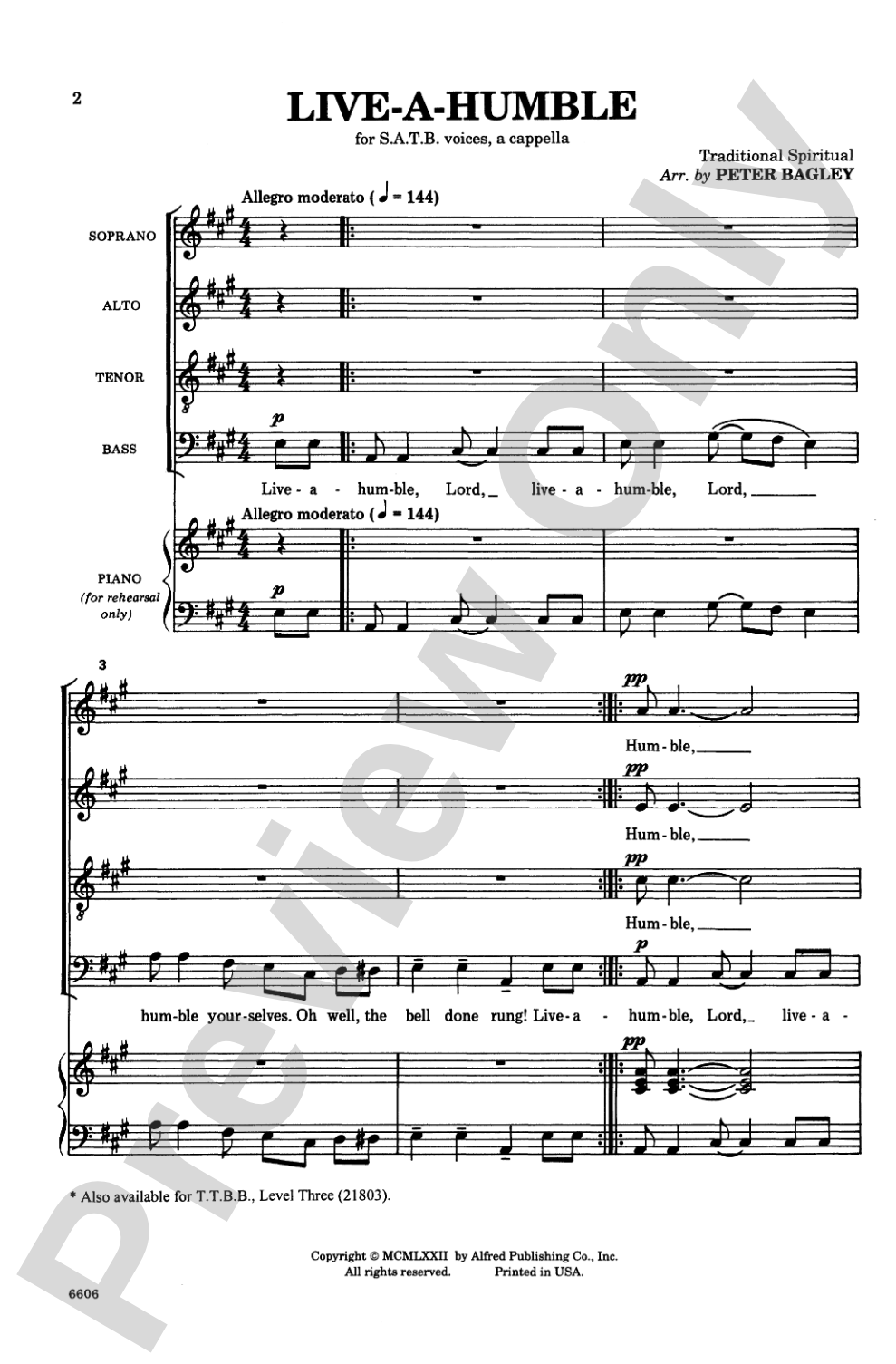
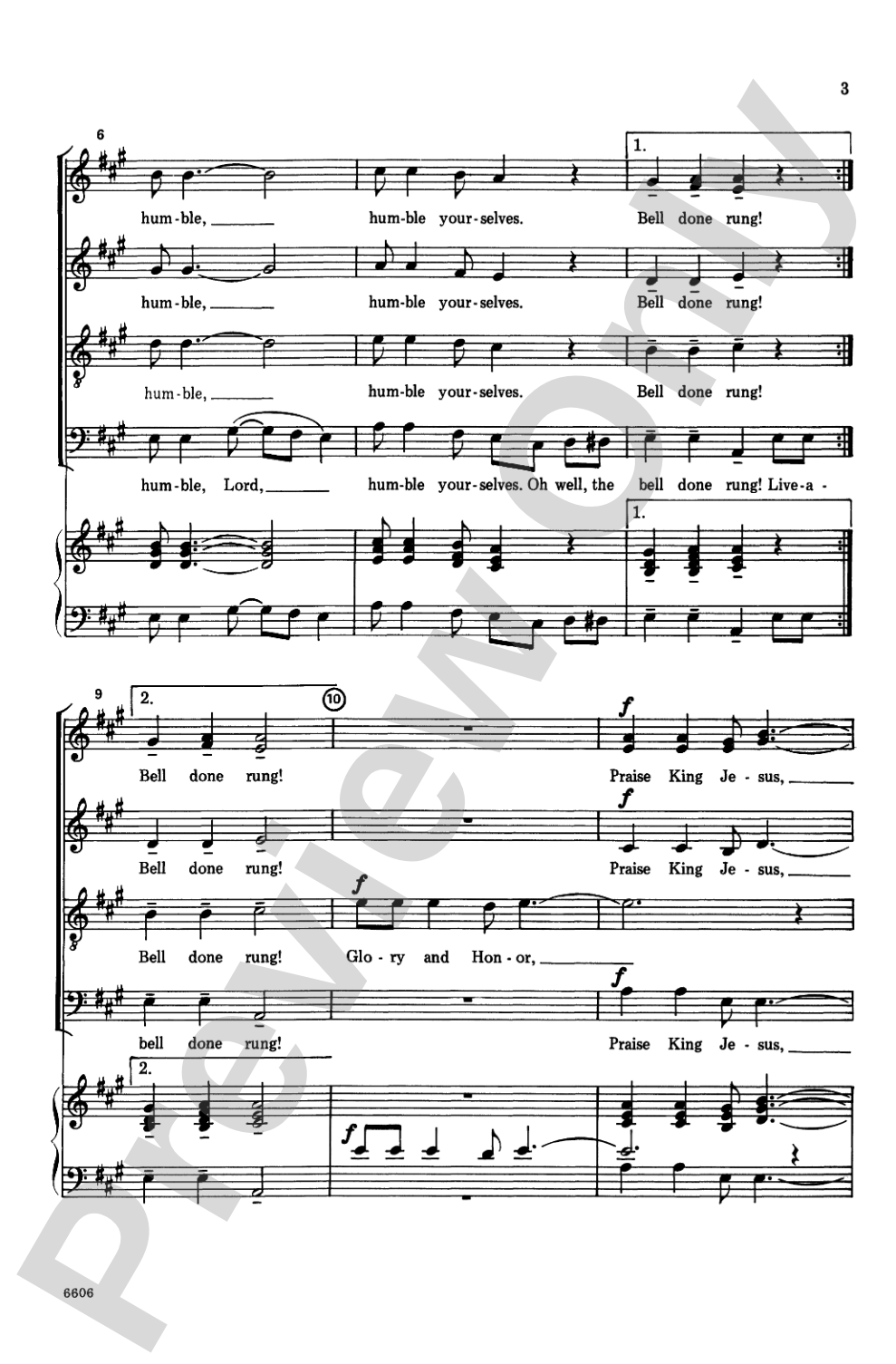
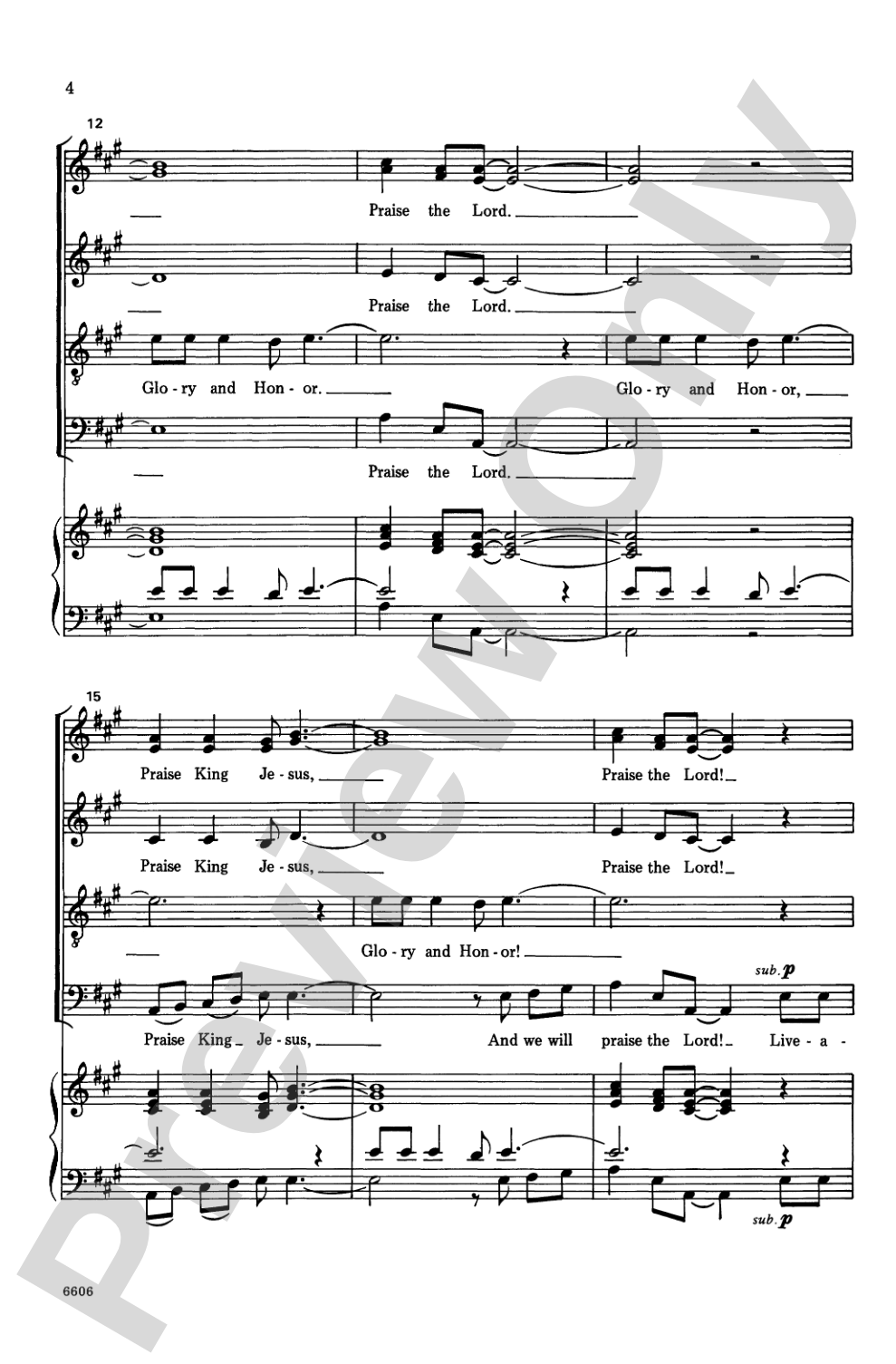
Using a variety of choral textures to build on an opening ostinato, this beloved a cappella setting boasts full chords, rhythmic intensity, and dynamic changes that are absolutely stunning. Resounding "Hallelujahs" and a key change in the middle make for an awe-inspiring performance that's equally appropriate for the sanctuary or the concert hall.


Live-a-Humble: SATB, a cappella Choral Octavo isn't in MakeMusic Cloud just yet...but it could be. Let us know you'd like to see it, and you'll help shape what comes next. In the meantime, start a free trial and dive into thousands of interactive titles your students can play along with today.
Request This Title
Tell us you want it.
Start Your Free Trial
Explore everything that's ready to play right now.
Sample Audio
1
Audio File
--:--
0:00
0:00
Sample Video
No sample videos found.
Additional Details
Series:
Alfred Archive Edition: Alfred Choral Designs
Publisher:
Alfred Music
Page Count:
16
SKU:
00-PO-0002936
More about this title
About the Arranger: Peter Bagley
Peter Bagley has built a reputation as an arranger who understands what makes spiritual music resonate in contemporary choral settings. His work balances respect for traditional material with fresh harmonic and textural choices that engage singers and audiences alike.
Why we love this
Peter Bagley's arrangement strips away complexity in favor of textural variety and emotional power. The opening ostinato draws singers in immediately, then the piece unfolds with rhythmic drive and harmonic richness that keeps an audience leaning forward. A cappella settings at this level rarely balance accessibility with the kind of choral sophistication that makes singers feel like they're making real music.
What to expect
Spiritual fervor meets deliberate craft. The opening ostinato pulls you into a steady current, and as harmonies accumulate and rhythms intensify, the piece builds toward moments of genuine exuberance. Those resounding "Hallelujahs" feel earned rather than imposed.
Who it's for
SATB choirs seeking repertoire that works in both liturgical and secular concert settings. The 16-page score and a cappella requirement suit established groups comfortable with four-part writing and independent voice lines.
How to get the most out of it
- Lock the opening ostinato firmly before layering additional voices; this foundation determines the entire piece's rhythmic integrity.
- Treat the key change as a dramatic pivot, not just a transposition. Bring fresh energy and brightness to the new harmonic area.
- Shape the "Hallelujahs" with clear articulation and unified vowel placement so they cut through cleanly without sacrificing blend.
- Use dynamic contrast strategically: the quieter passages gain impact only if the full chords earlier have real weight behind them.
How to use it
Program this as a second-half opener after a more reflective selection, or close a concert with it when you want the audience to leave energized. Its spiritual authenticity pairs well alongside other sacred works, and the key change provides a natural programming contrast if you're building a multi-piece set.
Skills your students will build
- Sustaining independent lines within four-part harmony
- Reading and executing rhythmic intensity without instrumental support
- Balancing blend and diction in a cappella contexts
- Responding to dynamic and textural shifts as an ensemble
- Interpreting the emotional arc of a spiritual arrangement