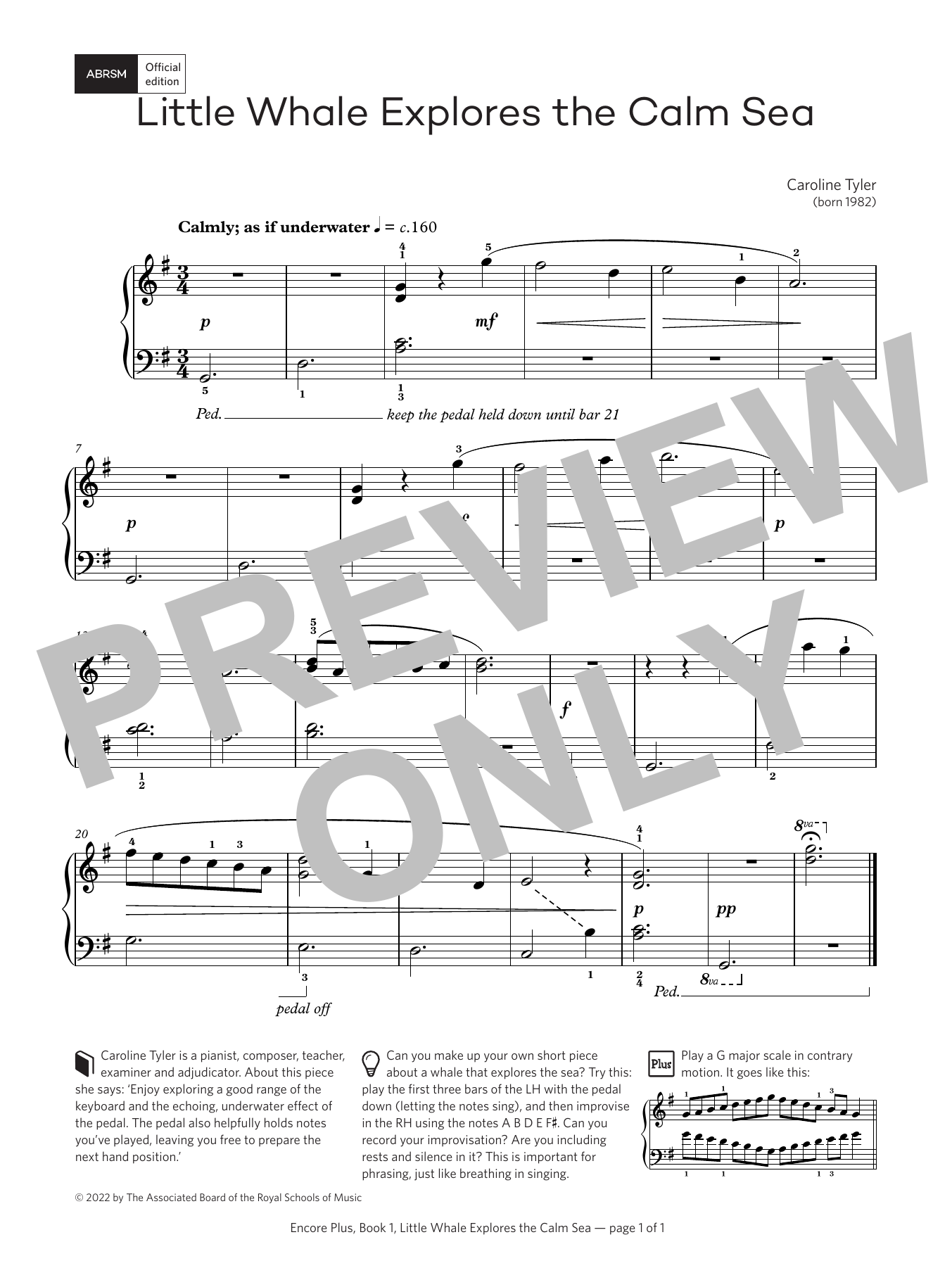
Tyler's writing for young pianists strikes a rare balance between genuine musical substance and accessible technique. The narrative quality of this piece invites students to think musically from day one, making it far more than a finger exercise dressed up with a charming title.
What to expect
Gentle and contemplative, like watching something small and peaceful move through quiet water. The music unfolds without urgency, inviting the player to inhabit a moment of calm curiosity rather than rush toward a finish line.
Who it's for
Beginning pianists in their first year of study who benefit from repertoire that combines approachable hand positions and rhythms with genuine musicality. The narrative framework gives younger students a reason to care about musical phrasing rather than just hitting notes accurately.
How to get the most out of it
Establish a steady, unhurried pulse before playing. Young students often rush through simple pieces, so singing or counting aloud first anchors their sense of time.
Listen for where the whale's journey breathes. Slight natural pauses between musical phrases help the story unfold rather than flatten into mechanical repetition.
Experiment with subtle dynamic shaping in repeated sections. Even minimal crescendos and diminuendos awaken the ear to musical form.
How to use it
This works beautifully as a solo recital opener, especially in spring or end-of-year performances where you want to establish an intimate, thoughtful mood. It also pairs well with other descriptive Grade 1 solos in a thematic concert about nature or animals.
Skills your students will build
Sustaining a consistent tempo in simple meters
Reading single-staff melodies in treble clef
Interpreting basic dynamic markings
Understanding how repetition and variation create musical form
Connecting programmatic titles to musical choices
You May Also Like
Scan to Complete Your Purchase
Use your phone's camera to scan the code below
You'll log in on your phone and the order will be added to your account