Little Shop Of Horrors (arr. Doug Watts) Sheet Music Preview

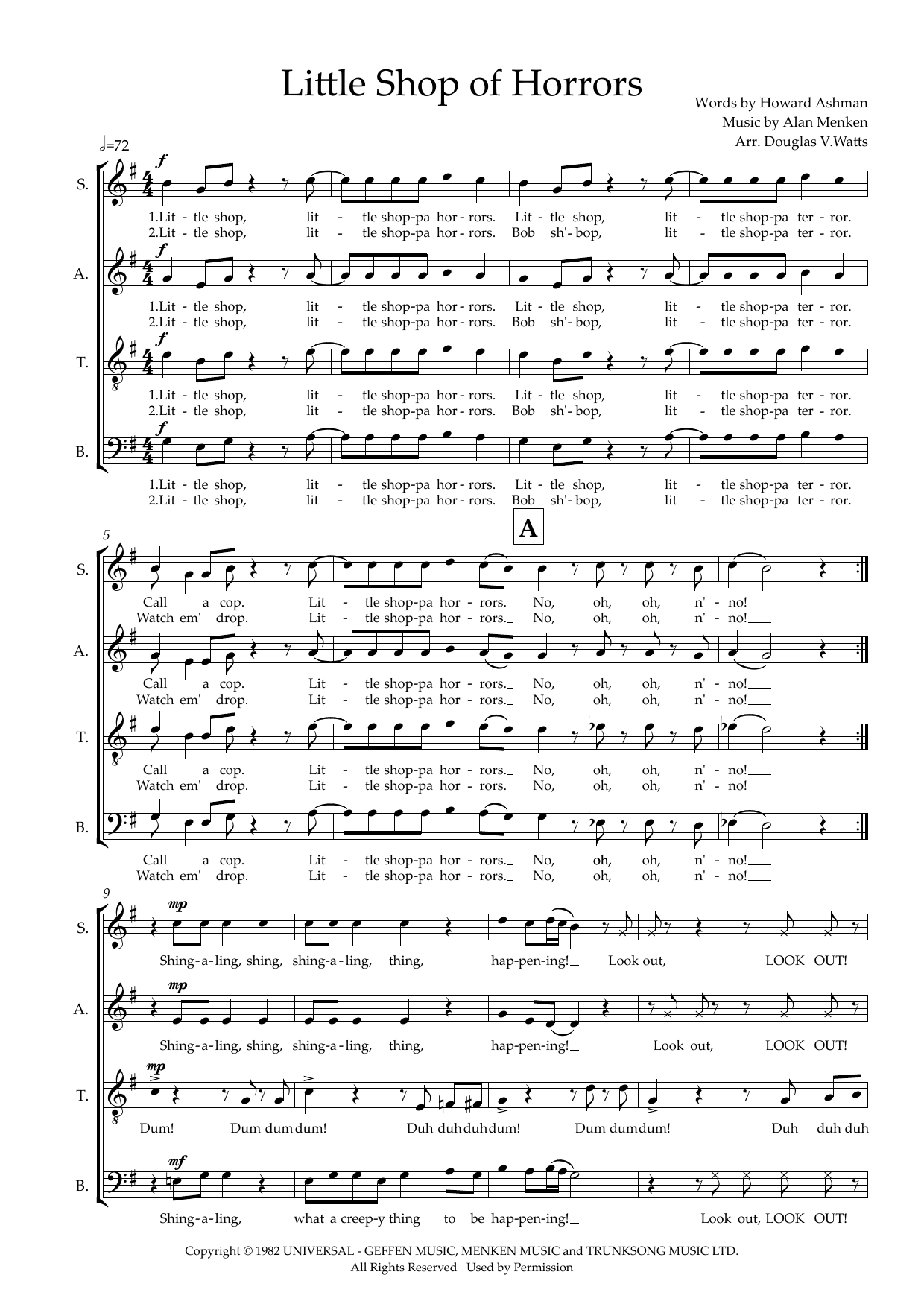
Little Shop Of Horrors (arr. Doug Watts): SATB Choral Octavo

By Alan Menken / By Howard Ashman / Arranged by Doug Watts

Item: 35-DS00462018

Digital Download
$1.99
Description

Little Shop Of Horrors (arr. Doug Watts): SATB Choral Octavo isn't in MakeMusic Cloud just yet...but it could be. Let us know you'd like to see it, and you'll help shape what comes next. In the meantime, start a free trial and dive into thousands of interactive titles your students can play along with today.

Sample Audio
No sample audio found.
Sample Video
Additional Details
Publisher: Hal Leonard
Page Count: 3
SKU: 35-DS00462018

More about this title

About the Composer: Alan Menken

Alan Menken has shaped musical theater for four decades, beginning with his collaboration with Howard Ashman on Little Shop of Horrors in 1982. His gift for writing instantly singable melodies that work equally well in intimate scenes and full-ensemble moments earned him recognition across Broadway, film, and concert music. For educators, Menken's arrangements offer accessible entry points into contemporary musical theater without sacrificing harmonic sophistication or dramatic intent.

Beyond theater, Menken has composed for Disney films, concert pieces, and educational contexts, always prioritizing clarity and emotional directness. His music teaches students how pop and theater vocabularies function: functional harmony, conversational phrasing, and the relationship between lyrics and melody. Directors return to his work repeatedly because students connect to it immediately and learn authentic stagecraft through performance.

Why we love this

Doug Watts' arrangement preserves the comedic energy and satirical spirit of Menken's original while sitting comfortably for four-part choirs. The voice leading stays singable across all parts, and the harmonic language remains tight enough to keep rehearsal time focused on interpretation rather than technical survival. When your choir performs this, audiences recognize the tune instantly, but the arrangement rewards the ensemble with a full, modern sound.

What to expect

Quirky, syncopated, and sly. The piece captures the darkly comic tone of the show's premise: a plant that eats people, delivered with complete sincerity by music that bounces along with infectious melodic charm. You'll feel the 1980s sensibility in the rhythms and harmony without anything sounding dated; instead, it feels intentional and tongue-in-cheek.

Who it's for

This arrangement works for high school and college choirs seeking contemporary Broadway material with genuine comedic substance. It also serves community and adult choirs looking for something recognizable that doesn't require extensive rehearsal investment. Any ensemble wanting to program a full show excerpt or standalone number from the musical will find this version dependable and engaging.

How to get the most out of it

  • Balance the rhythmic precision required in the accompaniment against the conversational feel Menken intended. The chart wants steady, clean articulation without sounding stiff or mechanical.
  • Attend to vowel consistency within each section, especially across the chord changes. Menken's harmonies sit close together, and sloppy vowel transitions will muddy the sound.
  • Shape phrases by following the lyrical content rather than the phrase marks. The comedy and charm emerge when singers treat this like dialogue set to music, not as a formal concert piece.

How to use it

Program this as a palate cleanser between heavier classical or contemporary works, or pair it with other comedic repertoire for an evening celebrating humor in choral music. It also works beautifully as a standalone concert number that draws audiences in with recognition before the arrangement's craft becomes apparent. Alternatively, use it as part of a musical theater sequence that includes contrasting material from other eras or styles.

Skills your students will build

  • Rhythmic confidence in syncopated, pop-influenced phrasing
  • Singing close jazz harmonies without losing vowel clarity
  • Character work and comedic timing through text interpretation
  • Blending ensemble sound across parts while maintaining lyrical independence

You May Also Like