
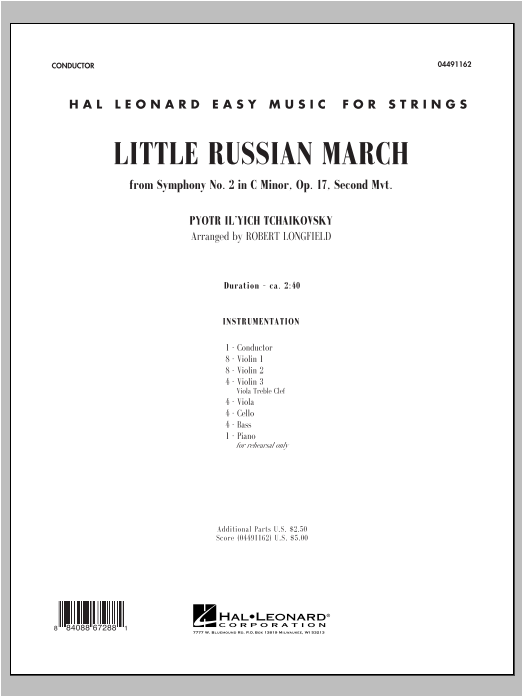

Little Russian March (from Symphony No. 2): String Orchestra Conductor Score & Parts
As performed by Pyotr Il'yich Tchaikovsky / Arranged by Robert Longfield
Grade: 2
Item: 35-PK00250381
$50.00
Pickup currently not available
Buy Extra Parts (Digital PDF Download)
Parts Added to Cart!
Description
The colorful, tuneful march from Tchaikovsky's second symphony, considered to be one of his most joyous works, makes an ideal teaching piece with its distinctive dotted 8th-16th note figure throughout. The nickname "Little Russia" was given to the symphony based on its use of Ukrainian folk songs. Dur: 2:40


Discover MakeMusic Cloud: thousands of interactive titles your students can play along with today.
Sample Audio
No sample audio found.
Sample Video
Additional Details
Publisher:
Hal Leonard
SKU:
35-PK00250381
More about this title
About the Artist: Pyotr Il'yich Tchaikovsky
Tchaikovsky's output spans nearly every musical genre, but his genius for melody and orchestration earned him a towering reputation across Europe and Russia during his lifetime. His symphonies showcase his ability to blend Russian musical traditions with Western European forms, creating works that are both intellectually substantial and emotionally direct. Among his four completed symphonies, the Second stands out for its embrace of folk material and its buoyant character, qualities that make it both culturally significant and genuinely accessible to audiences.
Why we love this
Longfield's arrangement preserves the march's infectious energy and that signature dotted rhythmic figure that makes it instantly recognizable, all while keeping the string writing clean and playable at Grade 2. Young orchestras thrive on material with strong melodic content and forward momentum, and this excerpt delivers both without sacrificing any of Tchaikovsky's character. It's the kind of piece that reminds students why they wanted to learn an instrument in the first place.
What to expect
Bright and celebratory, with the buoyant optimism of a village festival. The driving rhythm propels the piece forward while a clear, singable melody makes every player feel like they're part of something joyful and complete.
Who it's for
This work suits Grade 2 ensembles that have developed basic bow control and can execute rhythms cleanly. It works equally well for an early-level youth orchestra, a middle school string program, or an advanced elementary group ready to encounter a composer outside their usual repertoire.
How to get the most out of it
- Lock the dotted 8th-16th figure rhythmically across all sections from the first rehearsal; this pattern defines the piece and must feel natural, not labored.
- Balance the melody between first violins and violas in passages where they share thematic material; neither should disappear.
- Keep the march tempo steady and confident, resisting the temptation to rush through faster rhythmic passages.
- Shape phrases by slight dynamic swell on the strongest beats of each measure, letting the character emerge through articulation rather than weight.
How to use it
Consider this piece for a pops concert or a spring program where you want to introduce students to the symphonic tradition without demanding the stamina of a full symphony. It pairs beautifully with lighter classical fare and makes an excellent opener for a concert that explores folk traditions in classical music.
Skills your students will build
- Executing dotted 8th-16th note patterns with precision and consistency
- Reading and playing Ukrainian-influenced melodies and harmonic progressions
- Balancing independence in parts while maintaining ensemble rhythmic unity
- Sustaining forward momentum across a full phrase in march time
- Distinguishing between primary melody and accompaniment figuration in orchestral texture