Little Russian March (from Symphony No. 2): 1st Violin Sheet Music Preview

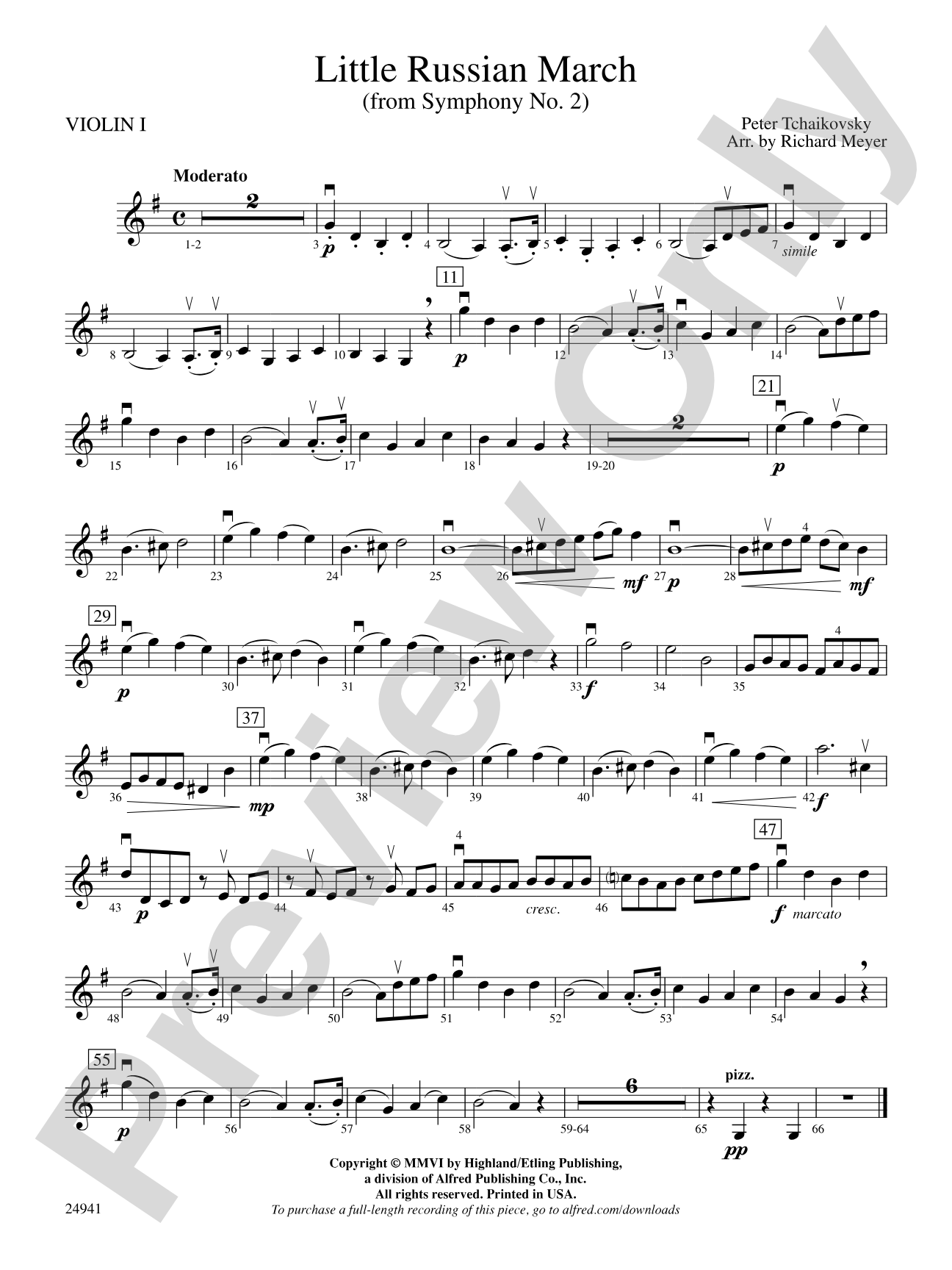
Little Russian March (from Symphony No. 2): 1st Violin

By Peter Ilyich Tchaikovsky / arr. Richard Meyer

Grade: 2

Item: 00-PC-0000933_VN1

Digital Download
$5.99
Description
It was while visiting his sister in "Little Russia" (an area of Southern Russia known better as the Ukraine) that Tchaikovsky got the idea to compose a new symphony based on songs he heard from the inhabitants. The first performance of the new symphony (his second) took place in Moscow in 1873, and was revised eight years later. This march (the symphony's second movement) is actually the tragic wedding march from Tchaikovsky's discarded opera "Undine". Simple chromatics, hooked bowings, and staccato and marcato bow styles make this charming work an excellent teaching piece for young orchestras. Perfect for contests! This title is available in MakeMusic Cloud.

Don't just read it, hear it, play along with it, and watch your students grow with it. In MakeMusic Cloud, Little Russian March (from Symphony No. 2): 1st Violin comes alive with professional accompaniment, adjustable tempo, and built-in practice tools that turn solo practice into real progress.

Sample Audio
0:00
0:00
Sample Video
Additional Details
Series: Highland/Etling String Explorer
Publisher: Alfred Music
Page Count: 36
SKU: 00-PC-0000933_VN1

More about this title

About the Composer: Peter Ilyich Tchaikovsky

Peter Ilyich Tchaikovsky (1840-1893) stands as Russia's most internationally celebrated composer, known for ballets, concertos, and symphonies that merge Western European forms with Russian melodic sensibility. His Second Symphony emerged from a visit to Ukraine, where he absorbed folk melodies that would shape the work's character and give it the nickname "Little Russian."

Tchaikovsky's gift for orchestration and his ability to craft memorable, singable themes made his music immediately accessible to audiences while remaining sophisticated enough to engage serious musicians. For young orchestras, his works offer the rare combination of authentic masterwork status with genuinely playable string writing.

Why we love this

Richard Meyer's arrangement preserves all the melodic grandeur of Tchaikovsky's original while keeping the technical demands reasonable for Grade 2 orchestras. The piece proves that young players can perform recognizable, substantial music without losing the emotional impact that makes a march work; it's contest-ready without feeling like a simplification.

What to expect

A processional moment of dark dignity; this march carries the gravity of ceremony without heaviness. The chromatic underpinnings create a shadowy, introspective quality that surprises listeners expecting a lighter Russian piece.

Who it's for

String orchestras at the Grade 2 level who are ready to tackle a piece with real historical weight and authentic orchestration. Conductors looking for contest repertoire that builds musicianship while remaining within reach of intermediate players will find this especially valuable.

How to get the most out of it

  • Balance the chromatic passages clearly so the passing tones don't muddy the main melody; a slight separation between chromatic figures and structural notes helps articulation shine through.
  • Shape the hooked bowings as intentional musical gestures, not mechanical techniques; they should feel like they're pushing the phrase forward.
  • Lock the staccato and marcato sections with precision across all sections, since rhythmic clarity is what makes young orchestra marcato sound professional rather than scattered.

How to use it

Program this as a concert centerpiece or opening number to establish musical sophistication early in the program. It works equally well as a contest selection where judges recognize the Tchaikovsky name and hear genuine orchestral writing rather than simplified versions of masterworks.

Skills your students will build

  • Hooked bowings and rapid direction changes
  • Articulation control across staccato and marcato bow strokes
  • Chromatic voice leading and intonation through passing tones
  • Balancing accompaniment figures against primary melodic lines
  • Sustaining dramatic character through deliberate tempo control

You May Also Like