
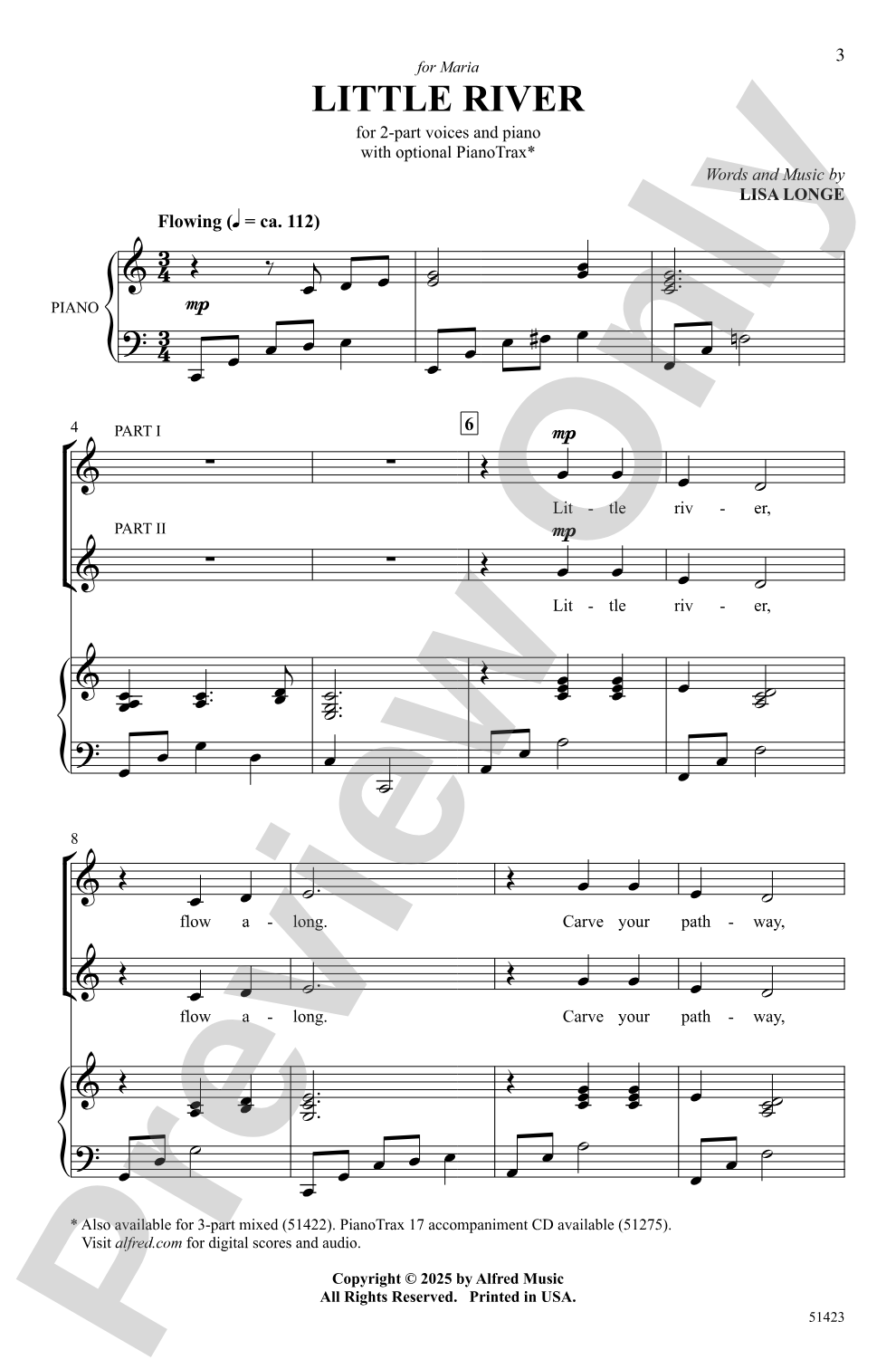

Little River: 2-Part Choral Octavo
Words and music by Lisa Longe
Item: 00-PO-0007443
$2.30
Minimum order quantity: 20 copies
Pickup currently not available
Description
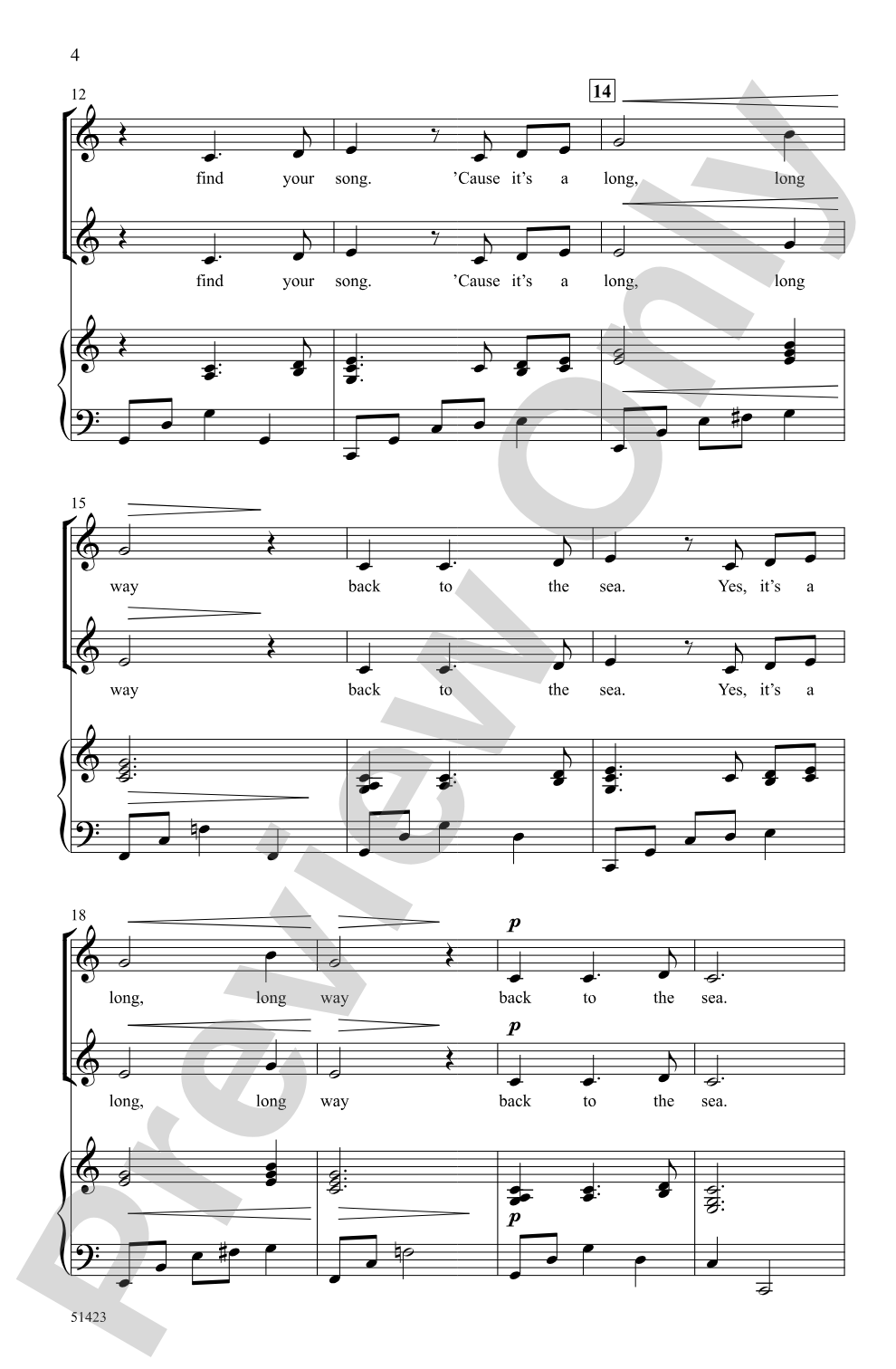
The inspiring words of this nature-themed original are a metaphor for carving your pathway in life. Delicate voices come and go from unison, creating a satisfying harmonic tapestry that is easy to learn. A supportive piano part lies beautifully in the hands, and expressive dynamics highlight the ebb and flow of the river. Simply sweet.


Little River: 2-Part Choral Octavo isn't in MakeMusic Cloud just yet...but it could be. Let us know you'd like to see it, and you'll help shape what comes next. In the meantime, start a free trial and dive into thousands of interactive titles your students can play along with today.
Request This Title
Tell us you want it.
Start Your Free Trial
Explore everything that's ready to play right now.
Sample Audio
1
Audio File
--:--
0:00
0:00
Sample Video
Additional Details
Series:
Alfred Choral Designs
Publisher:
Alfred Music
Page Count:
12
SKU:
00-PO-0007443
More about this title
About the Composer: Lisa Longe

Lisa Longe earned degrees in Music Education from the Crane School of Music at SUNY Potsdam and studied Christian Spirituality at Fordham University. For over two decades, she has taught music in the Schenectady City Public Schools in Upstate New York, where she initially taught general music before transitioning to instrumental band instruction.
Longe finds her deepest professional fulfillment in two distinct ways: introducing young students to their first instruments and accompanying school choirs. After twenty years in the classroom, she remains committed to nurturing musicians through every stage of their development, from their earliest attempts through accomplished musicianship. She lives in Albany, New York, with her family, which includes two teenagers, two dogs, a bird, and a gecko.
Why we love this
This piece speaks to what makes 2-part writing most effective: the interplay between unison and harmony allows voices to blend seamlessly while still creating rich textures. Longe's nature metaphor lands without heavy-handedness, and the expressive dynamic arc mirrors the river itself, giving singers something genuine to interpret rather than just notes to execute. The piano part is genuinely singable-friendly, supporting without overwhelming, which means your singers stay present and confident.
What to expect
Gentle and contemplative, yet with quiet forward momentum. The delicate alternation between unison and harmony creates a flowing, almost meditative quality that mirrors the journey a river takes. There's an understated beauty here that builds through accumulation rather than dramatic gesture.
Who it's for
This octavo works for middle and early high school choirs seeking accessible material that doesn't talk down to singers. The 2-part voicing keeps rehearsal time manageable while the metaphorical text engages singers emotionally, making it suitable for both concert and festival settings.
How to get the most out of it
- Shape the phrase contours around the river imagery; the ebb and flow Longe notates should feel organic, not mechanical. Let dynamics breathe with the text rather than hitting them all at once.
- Balance unison and 2-part sections by adjusting how you blend the voices. Unison moments should feel unified and purposeful, not like a transition between harmonized passages.
- Work the piano accompaniment early. A pianist who understands the supportive role here will help singers find their pitch confidence, which pays off in performance.
How to use it
Pair this as an opening or transitional piece in a concert program where you want to establish a thoughtful mood. Its moderate length and accessible difficulty make it ideal for spring festivals or concerts centered on nature or personal growth themes. It also works well as a confidence-builder earlier in the year when your section is still finding their blend.
Skills your students will build
- Blending unison and 2-part writing seamlessly within a single piece
- Responding to expressive dynamic markings that serve the text
- Following a piano accompaniment that supports rather than doubles the vocal line
- Interpreting metaphorical text through musical shape and phrasing