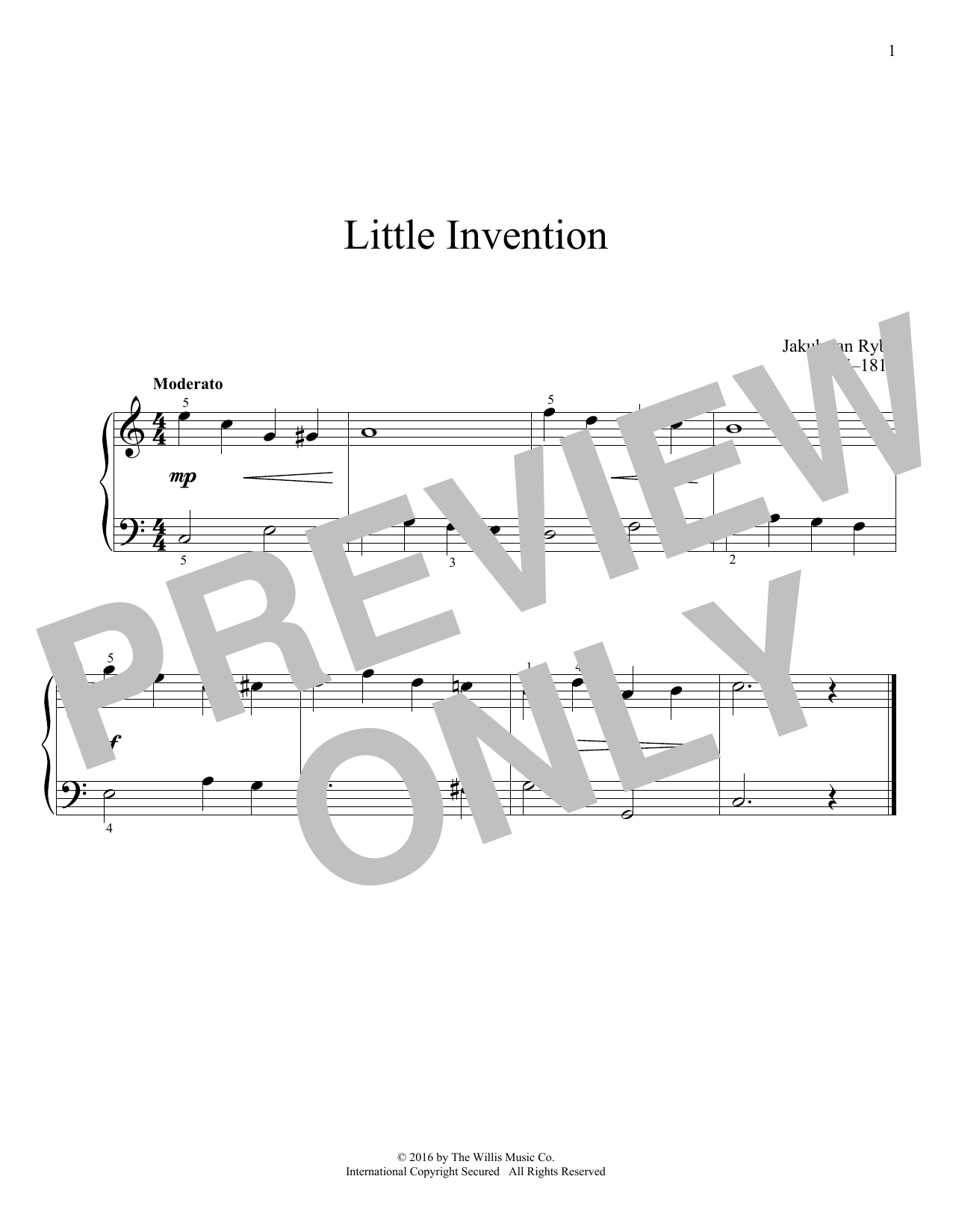
Jakub Jan Ryba (1765-1815) was a Czech composer and organist whose output spanned sacred music, orchestral works, and pedagogical pieces. Working during a pivotal time for Czech musical nationalism, Ryba composed with both sophistication and practical awareness of what musicians needed to learn. His educational works reveal a composer who understood how to build technical facility without sacrificing musical integrity.
Why we love this
This piece demonstrates the classical approach to teaching musical thinking at the keyboard. Ryba constructs a miniature with genuine voice leading and harmonic purpose, so students aren't just practicing mechanics but absorbing how composers actually think. A single page of substance beats a dozen pages of drills.
What to expect
Elegant and conversational. The piece unfolds with the logic of spoken language, each phrase answering or extending the one before. There's a clarity and directness typical of the classical aesthetic, yet enough harmonic movement to keep the ear engaged.
Who it's for
Early intermediate pianists building fluency with classical phrasing and balanced texture. Teachers who want students to learn form and voice leading through composition rather than analysis. This works equally well as a teaching piece or a concert encore for young performers.
How to get the most out of it
Shape the phrases as you would in a sonata movement. Breathe between sections and let cadences land with clarity rather than rushing through the entire piece.
Distinguish between melody and accompaniment textures through subtle dynamic grading. The supporting voices should recede enough to let the primary line sing.
Experiment with tempo flexibility at structural moments. A gentle ritardando before a section change can highlight the invention's architecture without disrupting the underlying pulse.
How to use it
Pair this with larger baroque or classical works to demonstrate stylistic continuity across periods. A young soloist might perform it as an opener before something more substantial, since it establishes classical idiom without overstaying its welcome. Consider using it in a recital showcasing student compositions or arrangements, as it frames the pedagogical lineage students are inheriting.
Skills your students will build
Balancing melody and accompaniment in a single staff
Recognizing and executing phrase structure in classical style
Controlling tempo and shaping musical sections
Voice leading across hand positions
Reading and maintaining harmonic clarity in moderate textures
You May Also Like
Scan to Complete Your Purchase
Use your phone's camera to scan the code below
You'll log in on your phone and the order will be added to your account