
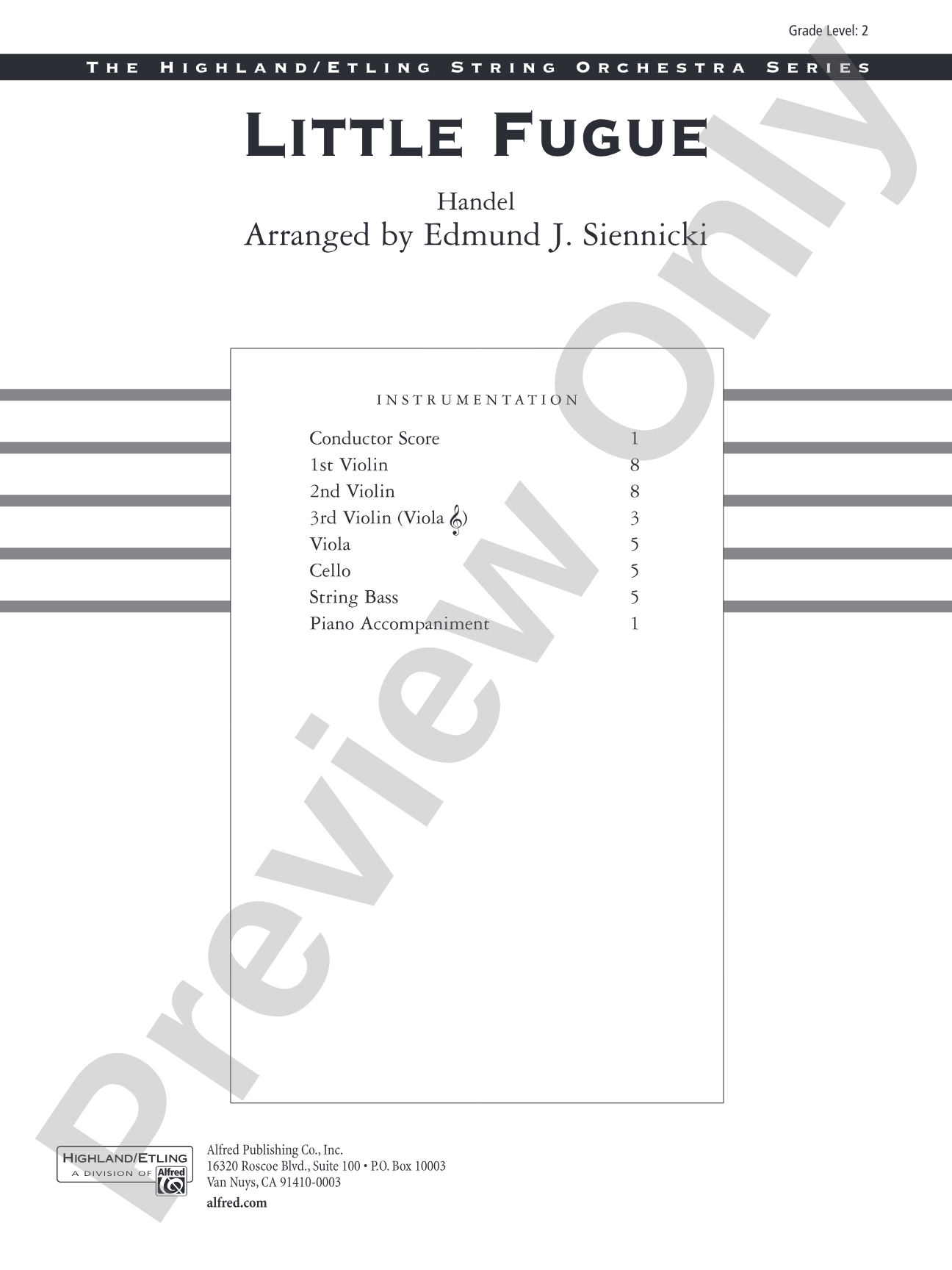
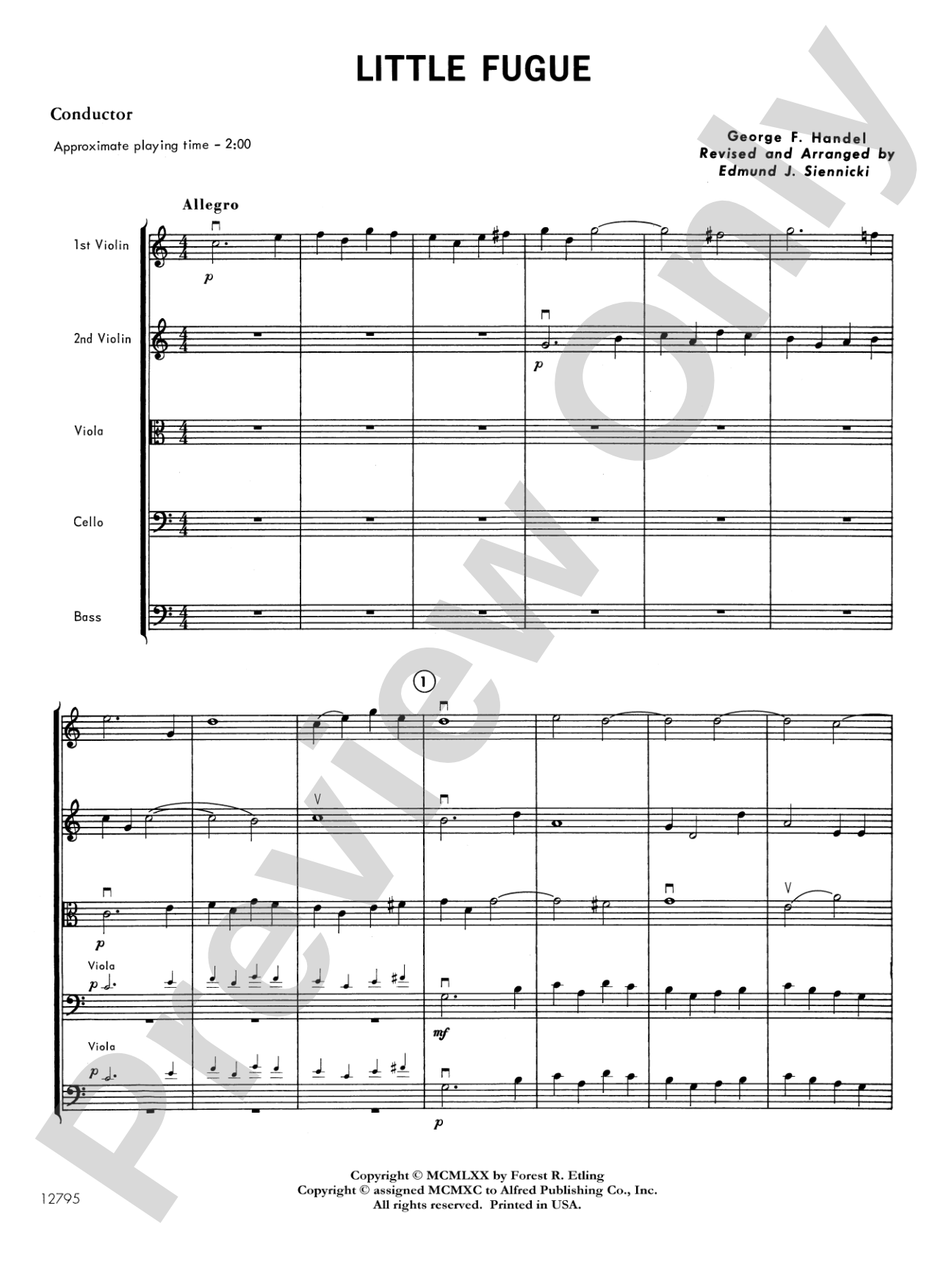
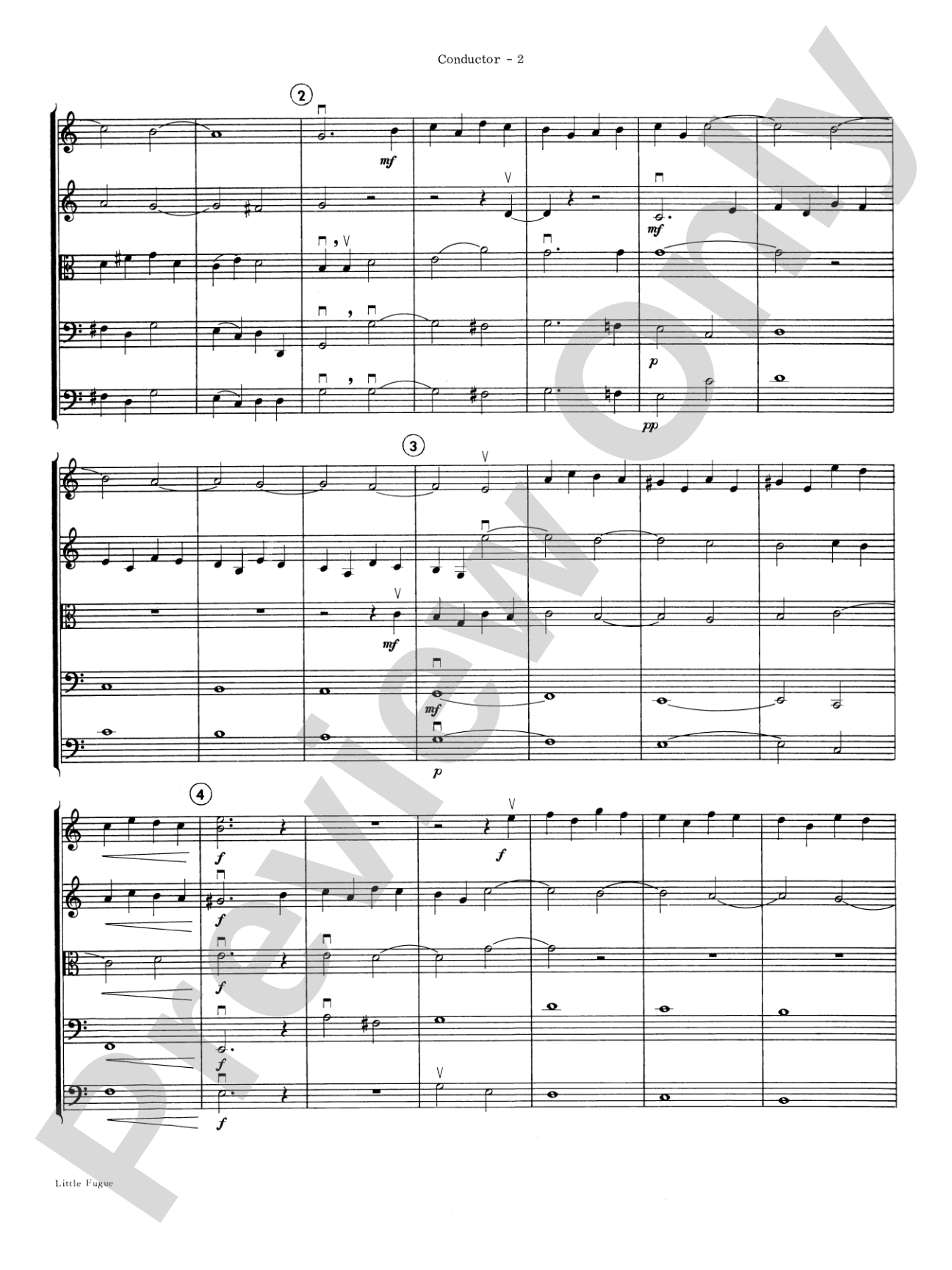
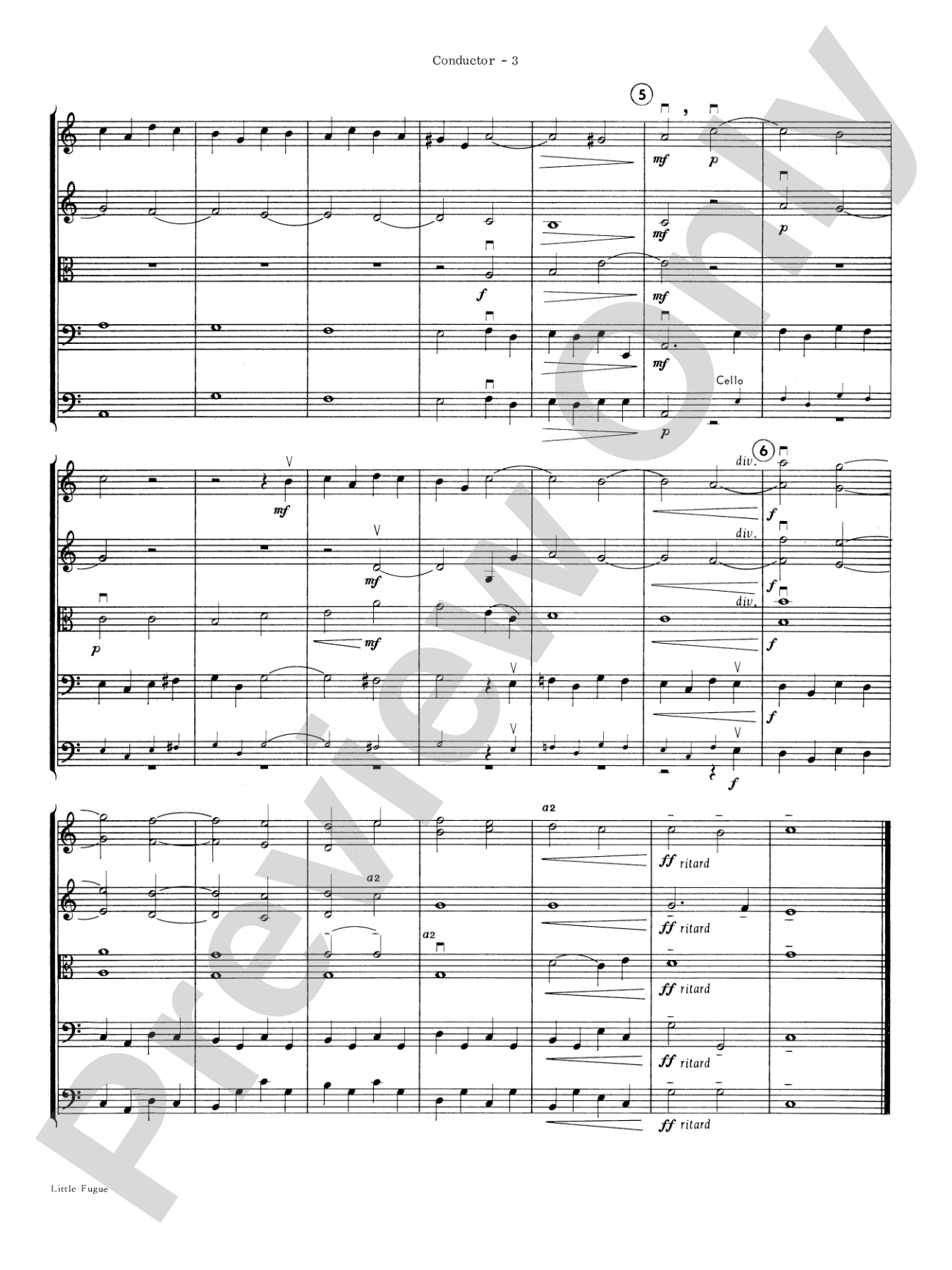

Little Fugue: String Orchestra Conductor Score & Parts
By George Frideric Handel / arr. Edmund J. Siennicki
Grade: 2
Item: 00-PK-0000111

$48.00
Pickup currently not available
Buy Extra Parts (Digital PDF Download)
| Product | Price | Quantity |
|---|---|---|
| Little Fugue: Score | $9.00 | |
| Little Fugue: 1st Violin | $5.99 | |
| Little Fugue: 2nd Violin | $5.99 | |
| Little Fugue: 3rd Violin (Viola [TC]) | $5.99 | |
| Little Fugue: Viola | $5.99 | |
| Little Fugue: Cello | $5.99 | |
| Little Fugue: String Bass | $5.99 | |
| Little Fugue: Piano Accompaniment | $5.99 |
Parts Added to Cart!
Description
This title is available in MakeMusic Cloud.


Don't just read it, hear it, play along with it, and watch your students grow with it. In MakeMusic Cloud, Little Fugue: String Orchestra Conductor Score & Parts comes alive with professional accompaniment, adjustable tempo, and built-in practice tools that turn solo practice into real progress.
Open in the Player
Jump straight in and assign it today.
Start Your Free Trial
Open this title and explore the full library in minutes.
Sample Audio
No sample audio found.
Sample Video
No sample videos found.
Additional Details
Series:
Highland/Etling String Orchestra
Publisher:
Alfred Music
Page Count:
70
SKU:
00-PK-0000111
More about this title
About the Composer: George Frideric Handel
George Frideric Handel (1685-1759) stands as one of the Baroque era's most prolific and versatile composers. Born in Germany and trained in Italy, he spent most of his creative life in England, where he became a master of opera, oratorio, and instrumental music. His gift for memorable melody and structural clarity made his works instantly appealing to audiences then and now.
Handel's instrumental works remain teaching staples because they balance Baroque sophistication with directness. His fugues, in particular, showcase counterpoint without overwhelming young musicians. Teachers return to Handel again and again because his music teaches itself.
Why we love this
Edmund J. Siennicki's Grade 2 arrangement preserves everything that makes this Handel fugue musically genuine while keeping the technical demands reasonable for young orchestras. The idioms are string-appropriate, the counterpoint stays transparent, and students actually sound like they're playing real music, not a simplified exercise. It's the kind of arrangement that builds musicians, not just readers.
What to expect
Elegant and purposeful. The fugal design creates a sense of architectural inevitability, voices enter and weave together in patterns that feel both inevitable and surprising. It's Baroque clarity filtered through string color, giving you the warmth of the ensemble while maintaining the precision that counterpoint demands.
Who it's for
This arrangement serves Grade 2 orchestras building contrapuntal listening and part independence. It works equally well for intermediate high school orchestras seeking accessible Baroque literature that doesn't sacrifice musical integrity. Contest and festival directors appreciate its musical substance at a manageable technical level.
How to get the most out of it
- Bring out each voice of the fugal subject as it enters. Mark those moments clearly in rehearsal so the orchestra hears where the melodic thread moves between sections.
- Keep the tempo steady but not metronomic. Baroque music breathes, especially in the development sections where the subject fragments and sequences.
- Balance the inner voices evenly. Young orchestras often let violas and second violins disappear; they carry essential harmonic and contrapuntal lines here.
How to use it
Program this as a contest entry or festival offering where you want to represent the Baroque era with confidence. It also pairs well in a mixed concert program as a bridge between contemporary works and later Classical pieces, showing students the continuity of Western musical thought.
Skills your students will build
- Following and playing fugal subjects with clarity and independence
- Tracking contrapuntal lines across multiple voice parts
- Maintaining steady pulse and evenness during sequential repetitions
- Balancing inner voices in a four-part harmonic texture
- Reading parts with attention to their role within the larger structure