
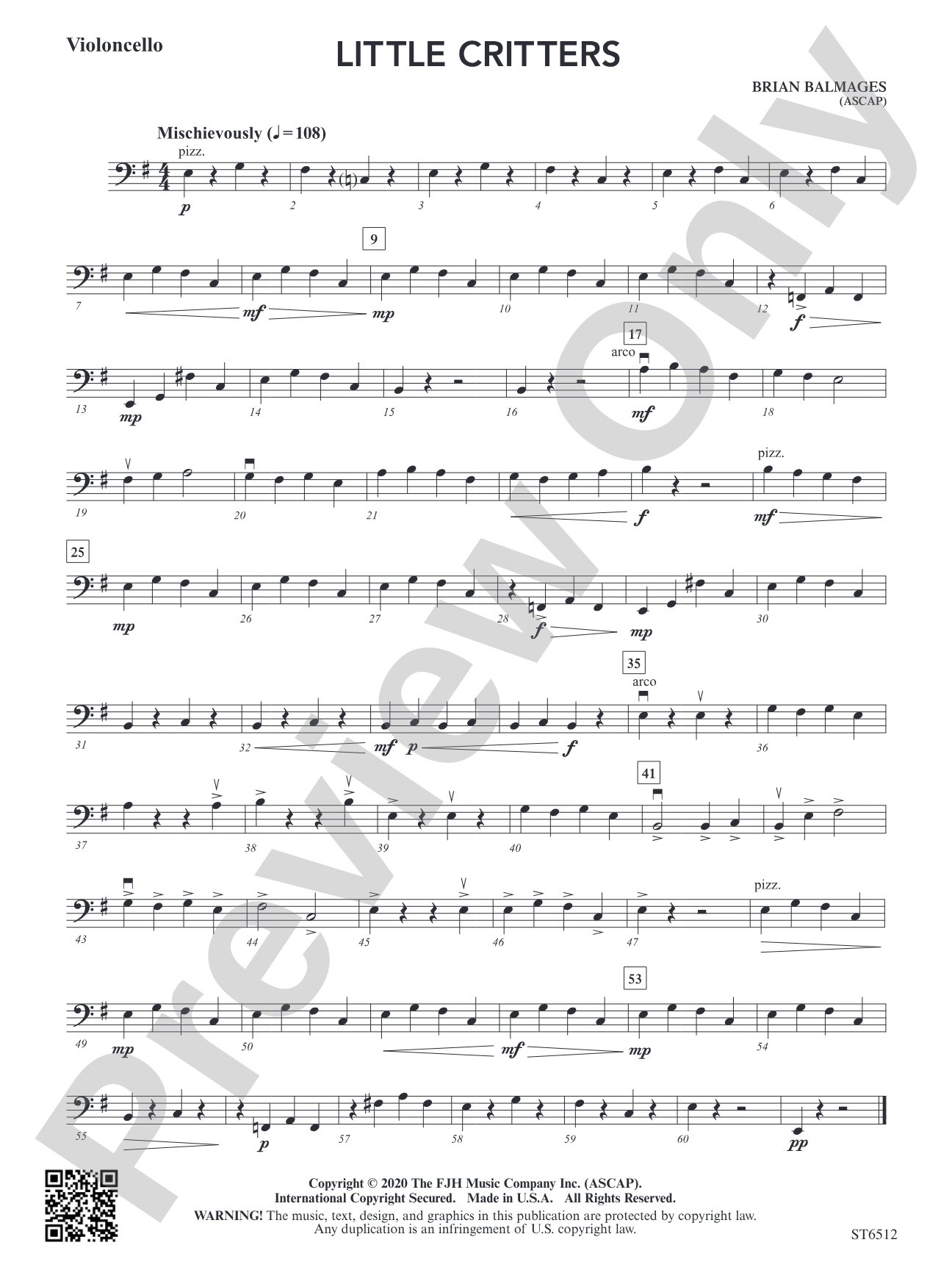

Little Critters: Violoncello
By Brian Balmages
Grade: 1
Item: 98-PC-DST6512_VC1
$7.00
Pickup currently not available
Description
The vivid imagery of "little critters" scurrying about at night inspires the melodic lines and creative harmonies used throughout this programmatic work. Beginning soft and mischievous, the music builds as new critters join the fun in a playful dialogue. The harmonic language moves between moments of pleasant consonance and slight dissonance (because as we all know, some people love little critters and some people are terrified of them!). A highly imaginative, playable work!


Don't just read it, hear it, play along with it, and watch your students grow with it. In MakeMusic Cloud, Little Critters: Violoncello comes alive with professional accompaniment, adjustable tempo, and built-in practice tools that turn solo practice into real progress.
Open in the Player
Jump straight in and assign it today.
Start Your Free Trial
Open this title and explore the full library in minutes.
Sample Audio
1
Audio File
--:--
0:00
0:00
Sample Video
Additional Details
Series:
FJH Beginning Strings
Publisher:
The FJH Music Company, Inc.
SKU:
98-PC-DST6512_VC1
More about this title
About the Composer: Brian Balmages

Brian Balmages has built an international reputation as a composer whose works span orchestral, band, and chamber settings. His compositions have been performed by ensembles ranging from professional symphony orchestras to school groups in prestigious venues including Carnegie Hall, the Kennedy Center, and the Sydney Opera House. He is a recipient of the A. Austin Harding Award from the American School Band Directors Association and an elected member of the American Bandmasters Association.
Balmages serves as Director of MakeMusic Publications and Digital Education for Alfred and MakeMusic. He has been commissioned by major institutions, including the University of Miami for the inauguration of its 6th president, and his work has been performed at the Presidential Inaugural Prayer Service. As a guest conductor, he regularly works with all-state ensembles, university groups, and professional orchestras worldwide.
Why we love this
Grade 1 string orchestras rarely get genuinely entertaining repertoire that respects young players' developing musicianship, but this piece delivers both charm and musical substance. The programmatic approach gives students a clear dramatic arc to follow, transforming technical exercises into storytelling; they're not just playing notes, they're conjuring the nighttime world of scurrying creatures. Balmages' harmonic palette keeps the ear engaged without demanding advanced technique, making this a standout choice for early-year concerts.
What to expect
The music invites listeners into a miniature nocturne where tiny creatures move with sneaky purpose through the darkness. As more instruments join the action, the piece gains energy and playfulness, shifting between moments of pure consonance and gentle harmonic roughness that capture the joy and slight unease surrounding these small visitors. The overall effect is imaginative and witty, never condescending to young players or audiences.
Who it's for
Beginning string orchestras at the elementary and early middle school levels will find this piece accessible and immediately rewarding. The Grade 1 difficulty level means students with modest instrumental experience can contribute meaningfully to the sound while developing their ensemble awareness and dynamic control.
How to get the most out of it
- Shape the opening phrases with careful attention to the dynamic landscape. The initial softness matters as much as the gradual buildup, so establish a clear pianissimo baseline in early rehearsals and let the critters genuinely sneak in.
- Balance the melody across your first violins and other voices as new instrumental lines enter. Each "critter" should be heard without any one section overwhelming the texture.
- Experiment with slightly exaggerated articulation during the playful sections. Light staccatos and quick bow releases help convey the scurrying, mischievous character without sounding rushed.
- Pay close attention to the moments where harmony shifts between consonance and dissonance. These transitions can feel abrupt if not voiced carefully; rehearse them deliberately so the harmonic color changes land with intention, not accident.
How to use it
This works beautifully as a concert opener or closer, establishing a light, engaging tone that appeals to family audiences without requiring elaborate staging or props. It pairs well with other Grade 1 programmatic works when building a thematic concert around animal, nature, or seasonal imagery. The piece also fits nicely as a mid-year performance opportunity, giving newer ensemble members a fun vehicle to demonstrate their growing skills.
Skills your students will build
- Dynamic control and subtle gradation from soft to moderately loud
- Ensemble listening and balance across independent melodic lines
- Articulation variety (connecting legato phrases with lighter, separated passages)
- Harmonic awareness through listening to consonant and dissonant sonorities
- Rhythmic precision in playful, staccato sections