
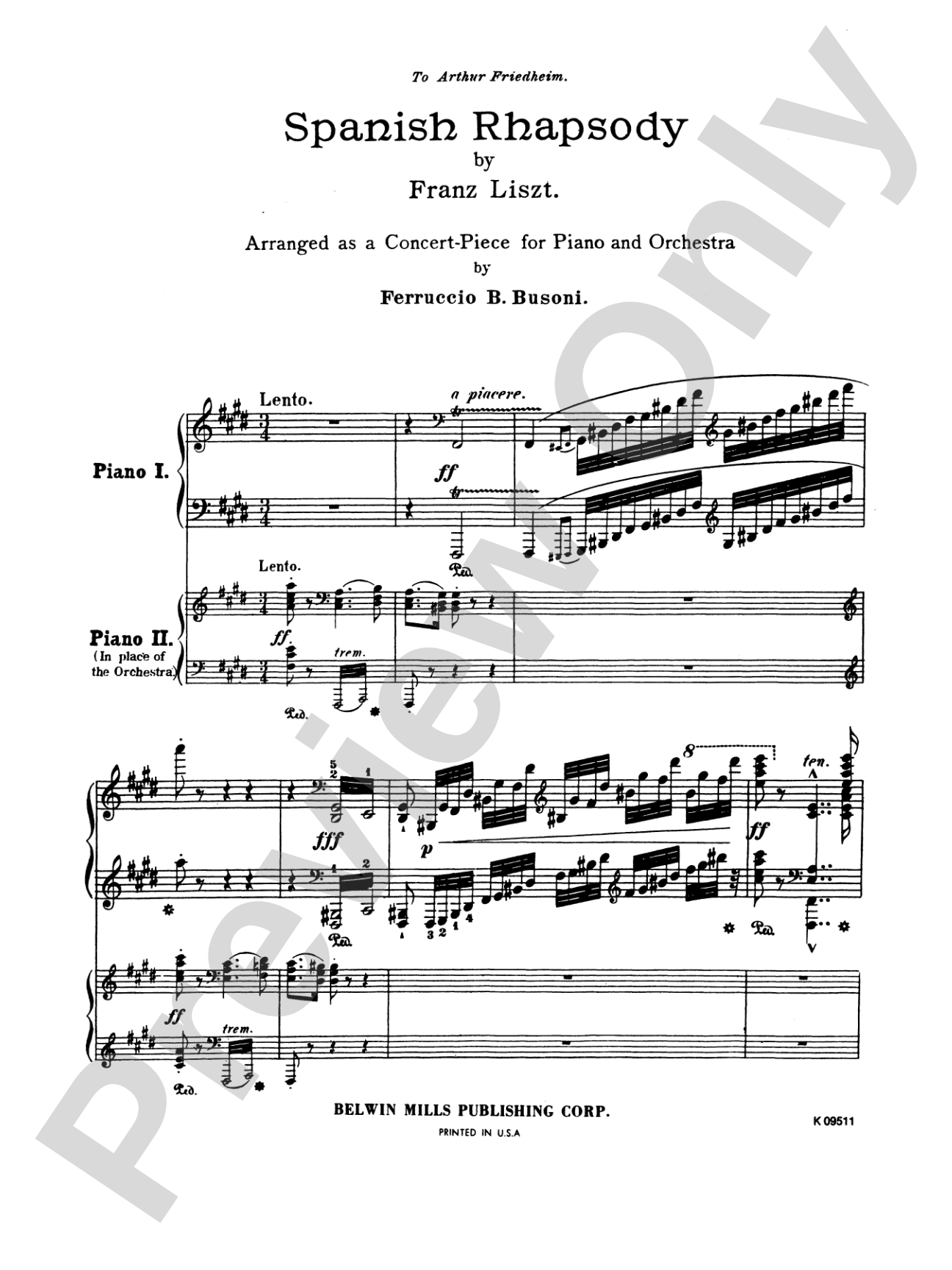
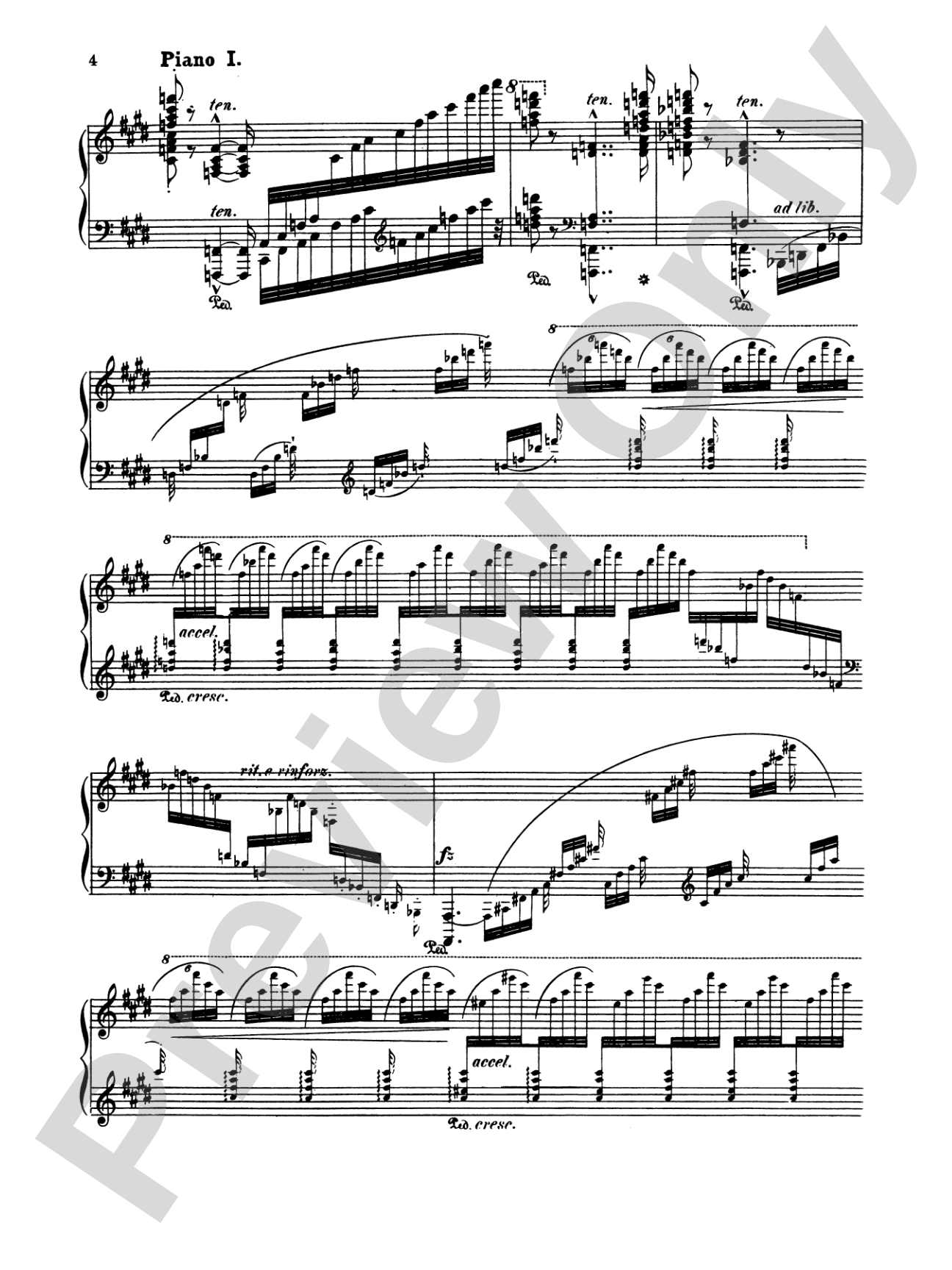
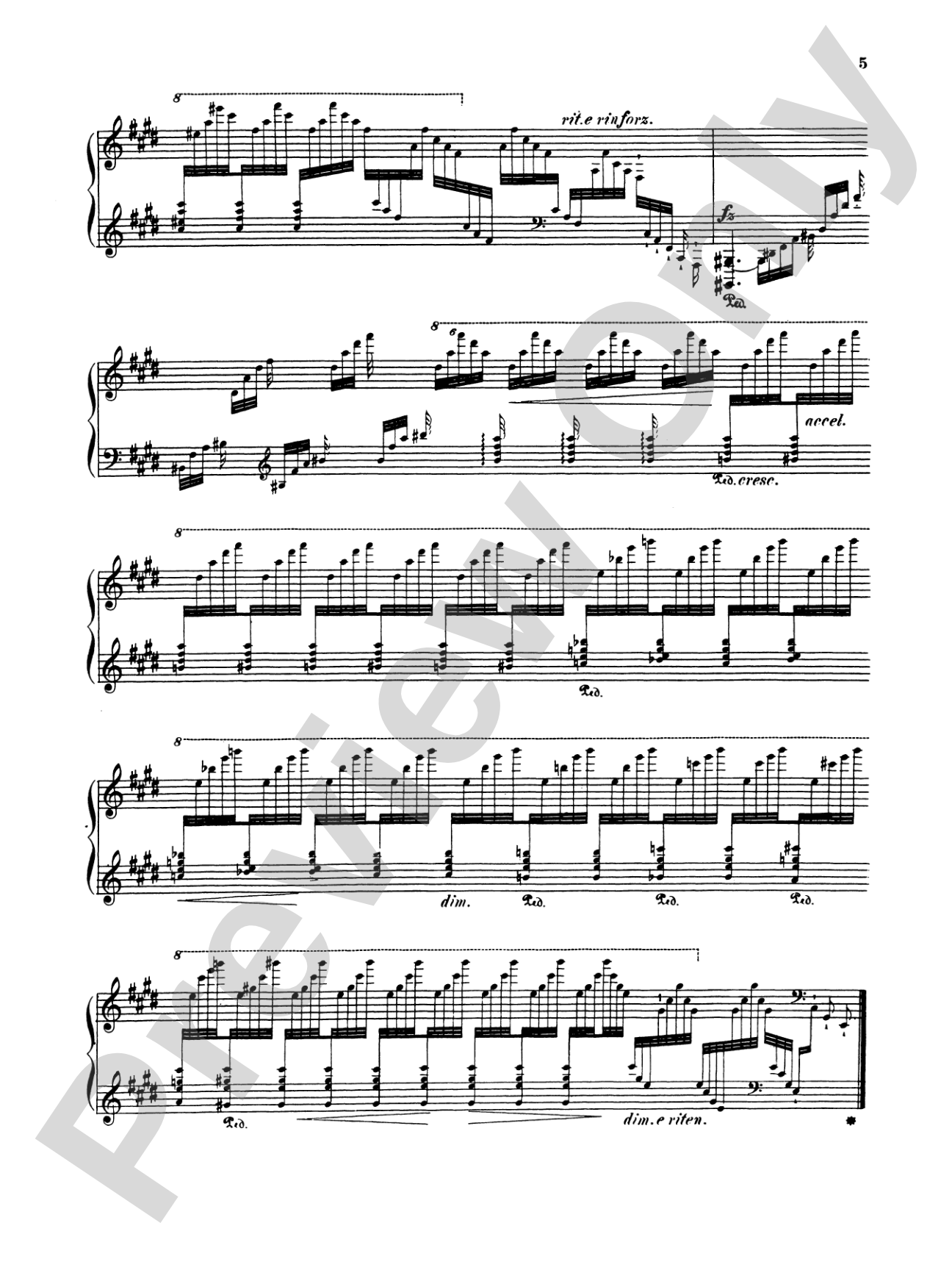

Liszt: Spanish Rhapsody (Arr. Feruccio Busoni): Piano Duo (2 Pianos, 4 Hands) Book (2 copies required)
By Franz Liszt / arr. Ferruccio Busoni
Level: Advanced
Item: 00-PK-0003774

$12.99
Pickup currently not available
Buy Extra Parts (Digital PDF Download)
| Product | Price | Quantity |
|---|---|---|
| Liszt: Spanish Rhapsody (Arr. Feruccio Busoni) | $2.99 | |
| Liszt: Spanish Rhapsody (Arr. Feruccio Busoni) | $2.99 | |
| Liszt: Spanish Rhapsody (Arr. Feruccio Busoni) | $2.99 | |
| Liszt: Spanish Rhapsody (Arr. Feruccio Busoni) | $2.95 |
Parts Added to Cart!
Related Items
Spanish Rhapsody: Piano Duo (2 Pianos, 4 Hands) Book (2 copies required) |
$12.95
|
View |
Description
An Advanced Piano Duet for 2 Pianos, 4 hands, composed by Franz Liszt and arranged by Ferruccio Busoni. Two copies are required for performance.


Don't just read it, hear it, play along with it, and watch your students grow with it. In MakeMusic Cloud, Liszt: Spanish Rhapsody (Arr. Feruccio Busoni): Piano Duo (2 Pianos, 4 Hands) Book (2 copies required) comes alive with professional accompaniment, adjustable tempo, and built-in practice tools that turn solo practice into real progress.
Open in the Player
Jump straight in and assign it today.
Start Your Free Trial
Open this title and explore the full library in minutes.
Sample Audio
No sample audio found.
Sample Video
No sample videos found.
Additional Details
Series:
Kalmus Edition
Publisher:
Alfred Music
Page Count:
52
SKU:
00-PK-0003774
More about this title
About the Composer: Franz Liszt
Franz Liszt (1811-1886) was a Hungarian composer and virtuoso pianist whose technical innovations and expressive range fundamentally transformed nineteenth-century piano literature. His works demand not only formidable technical facility but also deep musical intelligence, making them enduring touchstones in advanced piano study and performance.
Why we love this
Busoni's arrangement captures the pyrotechnic energy and coloristic ambition of Liszt's original while opening the work to collaborative performance at the piano duo level. The writing exploits the dual-piano texture to create dialogue, textural layers, and dramatic moments that feel fresh even within this familiar masterwork, making it an intelligent choice for advanced pianists seeking repertoire that showcases both partnership and individual artistry.
What to expect
Brilliant and urgent. The Spanish Rhapsody pulses with Romantic fervor, layering lyrical warmth against passages of dazzling technical display. The dual-piano texture creates theatrical drama, with moments of intimate dialogue giving way to full-voiced climaxes that demand both players commit entirely to the music's emotional arc.
Who it's for
Advanced piano duet partnerships ready to tackle Romantic-era virtuosity in a collaborative format. This arrangement serves pianists who have mastered significant solo repertoire and seek the particular interpretive challenges and rewards that come with two-piano performance.
How to get the most out of it
- Balance the pianistic textures between the two instruments carefully; one piano often carries thematic material while the other provides harmonic foundation or rhythmic drive. Listen actively to understand your partner's voice before asserting your own.
- Attend closely to the Spanish character embedded in the melody and harmonic language. The Romantic exuberance here benefits from committed phrasing that honors both the lyrical passages and the brilliant, virtuosic sections.
- Establish a firm metrical foundation during rehearsal, particularly across the sections where one pianist shifts between accompanimental and melodic roles. The arrangement's success depends on rhythmic precision and unified tempo.
- Practice the work in sections rather than end-to-end runs. Identify passages where ensemble coordination is tightest and work backward from those moments to build cohesion throughout.
How to use it
Position this as a concert centerpiece or the culminating work on a recital featuring piano duo repertoire. Its accessibility as a known masterwork combined with the sophistication of Busoni's orchestration makes it an excellent closer for an all-Romantic program or a strong anchor for an evening highlighting collaborative piano performance.
Skills your students will build
- Coordinating ensemble balance and texture across two instruments
- Executing Romantic-era virtuosic passage work with musical intention
- Maintaining rhythmic precision and tempo synchronization with a partner
- Interpreting lyrical material while sustaining the broader harmonic and dramatic architecture
- Reading and executing advanced two-piano arrangement notation