
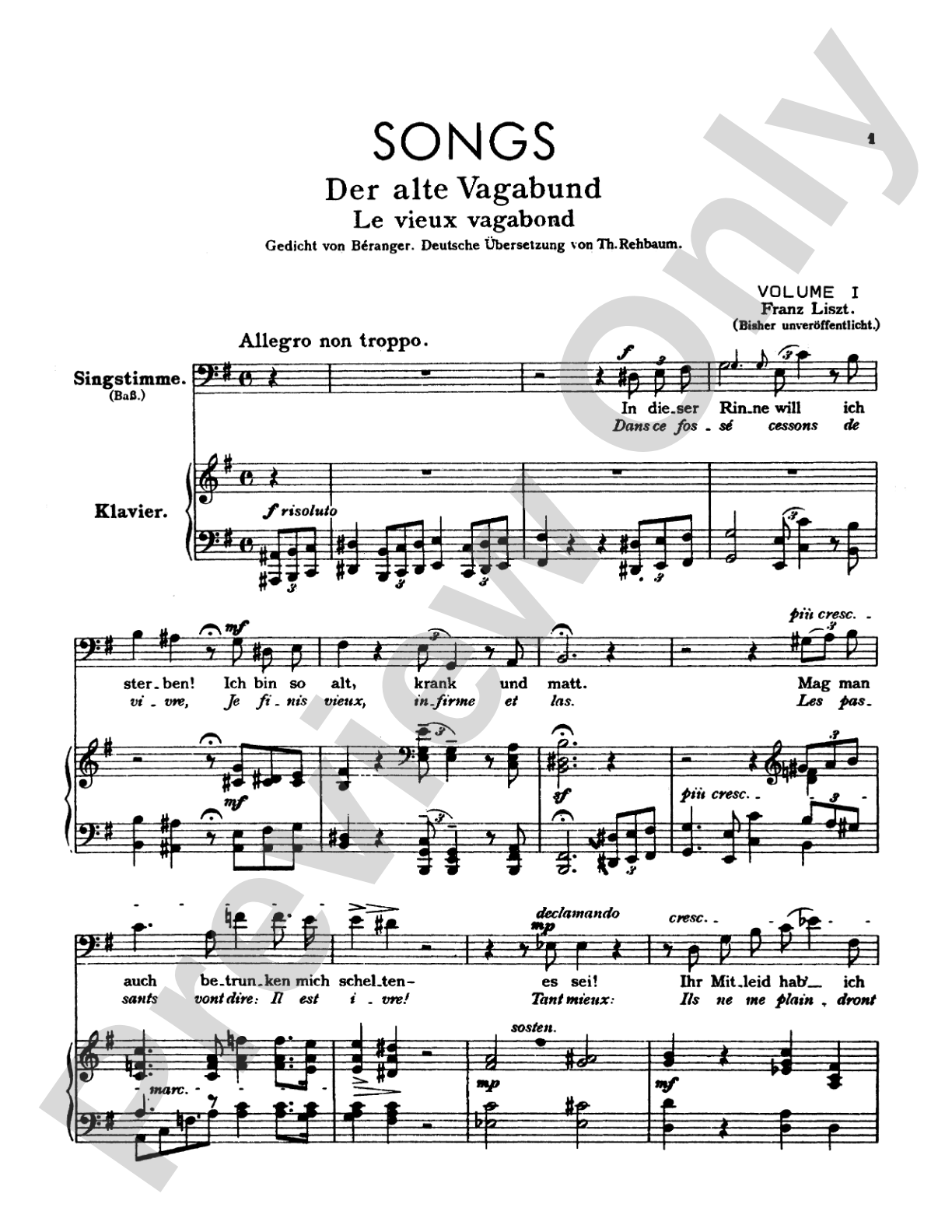
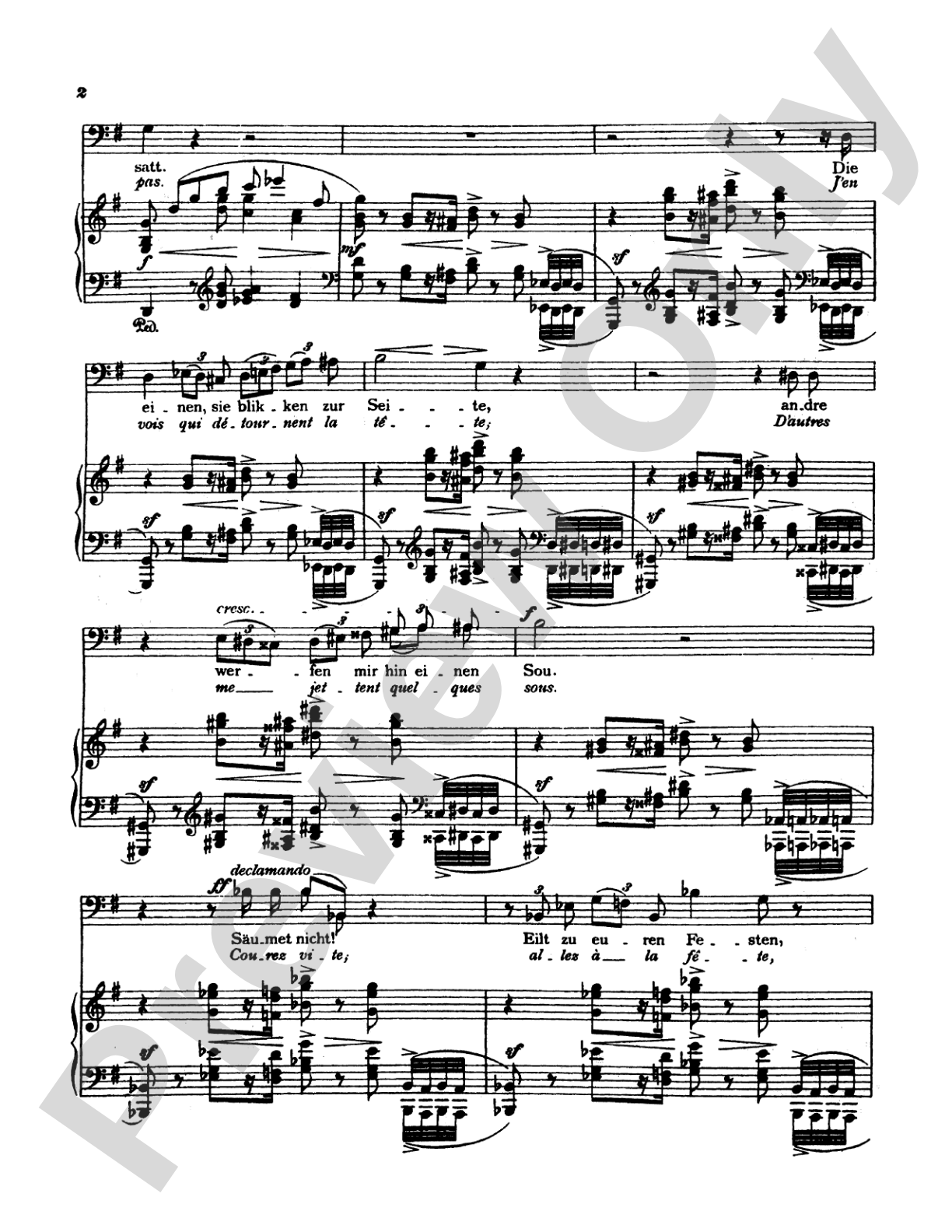
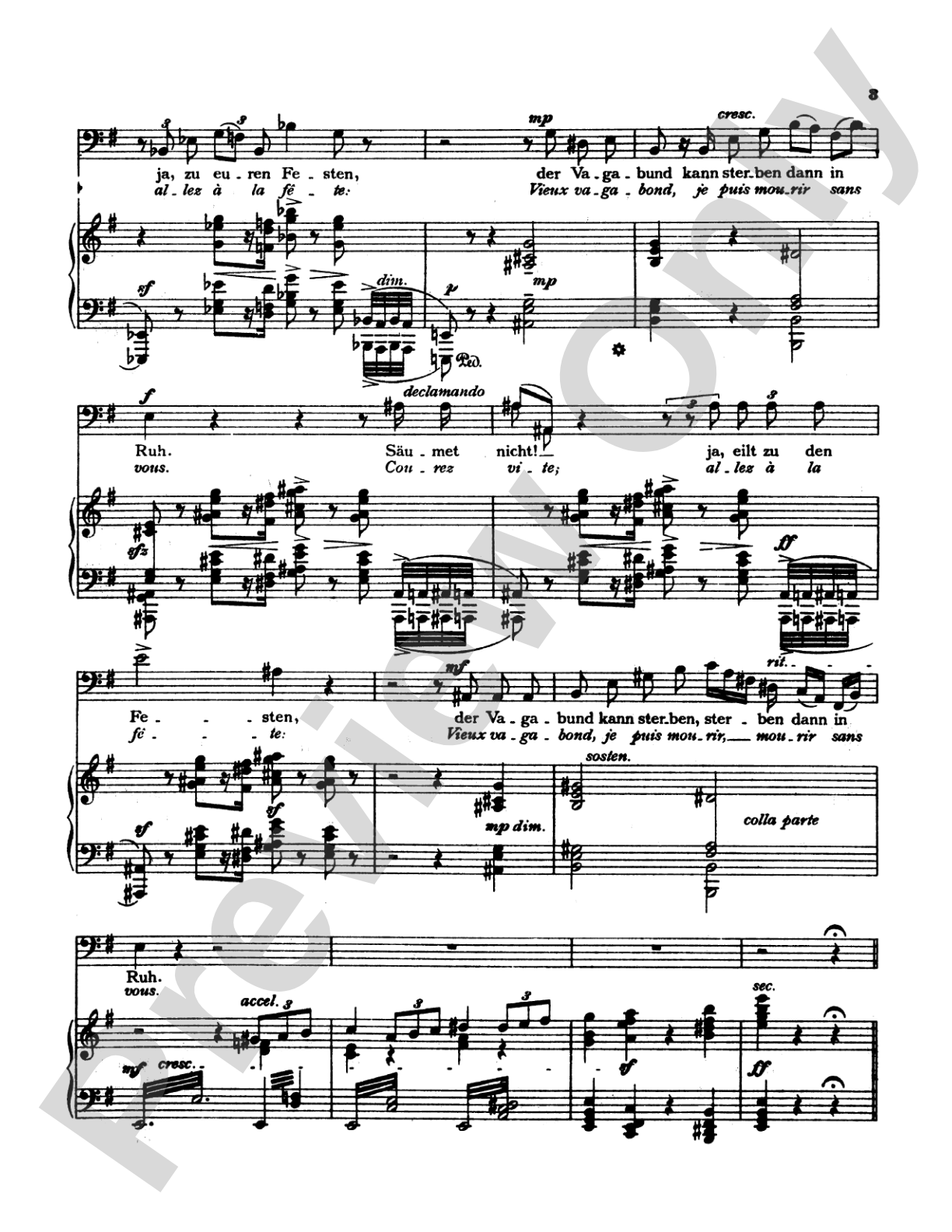
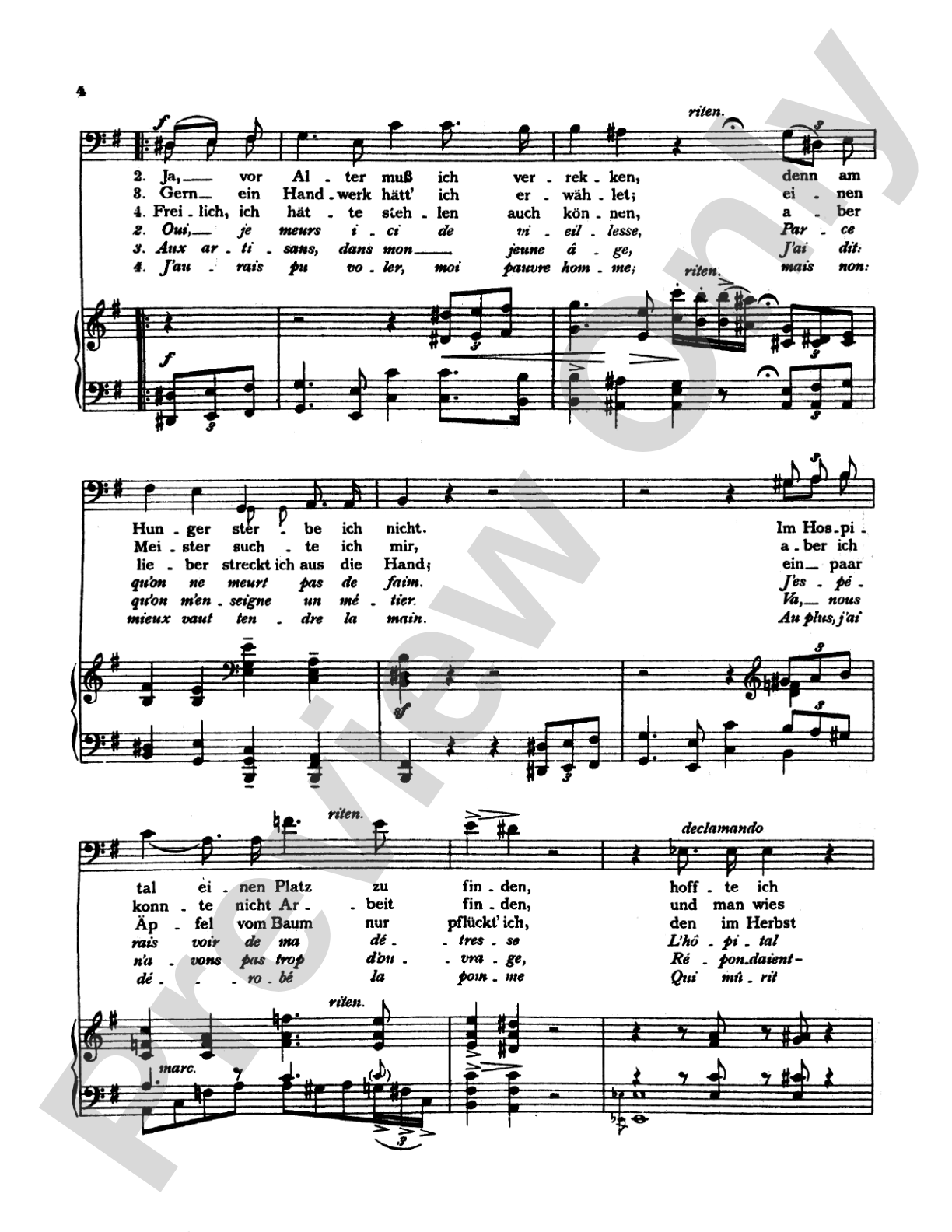
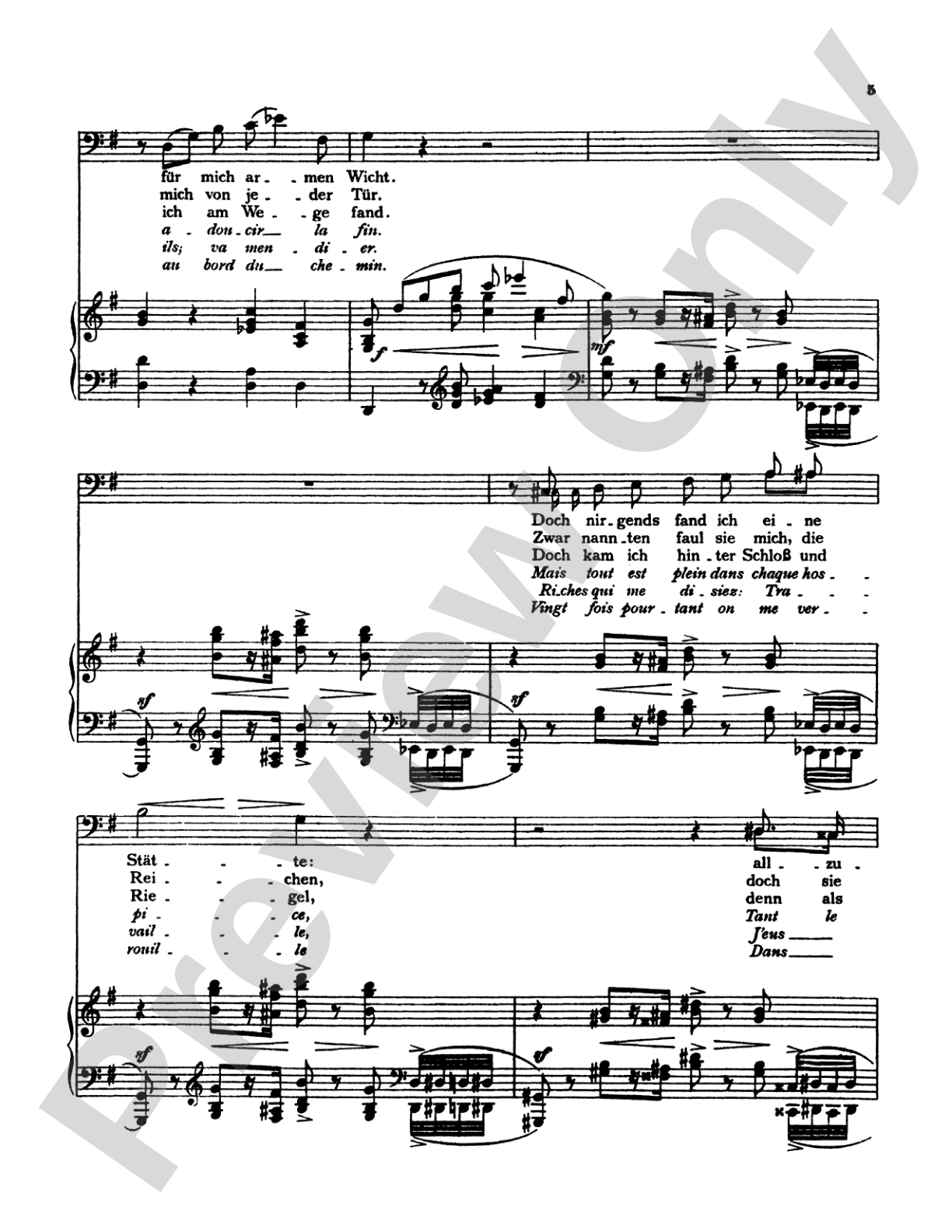
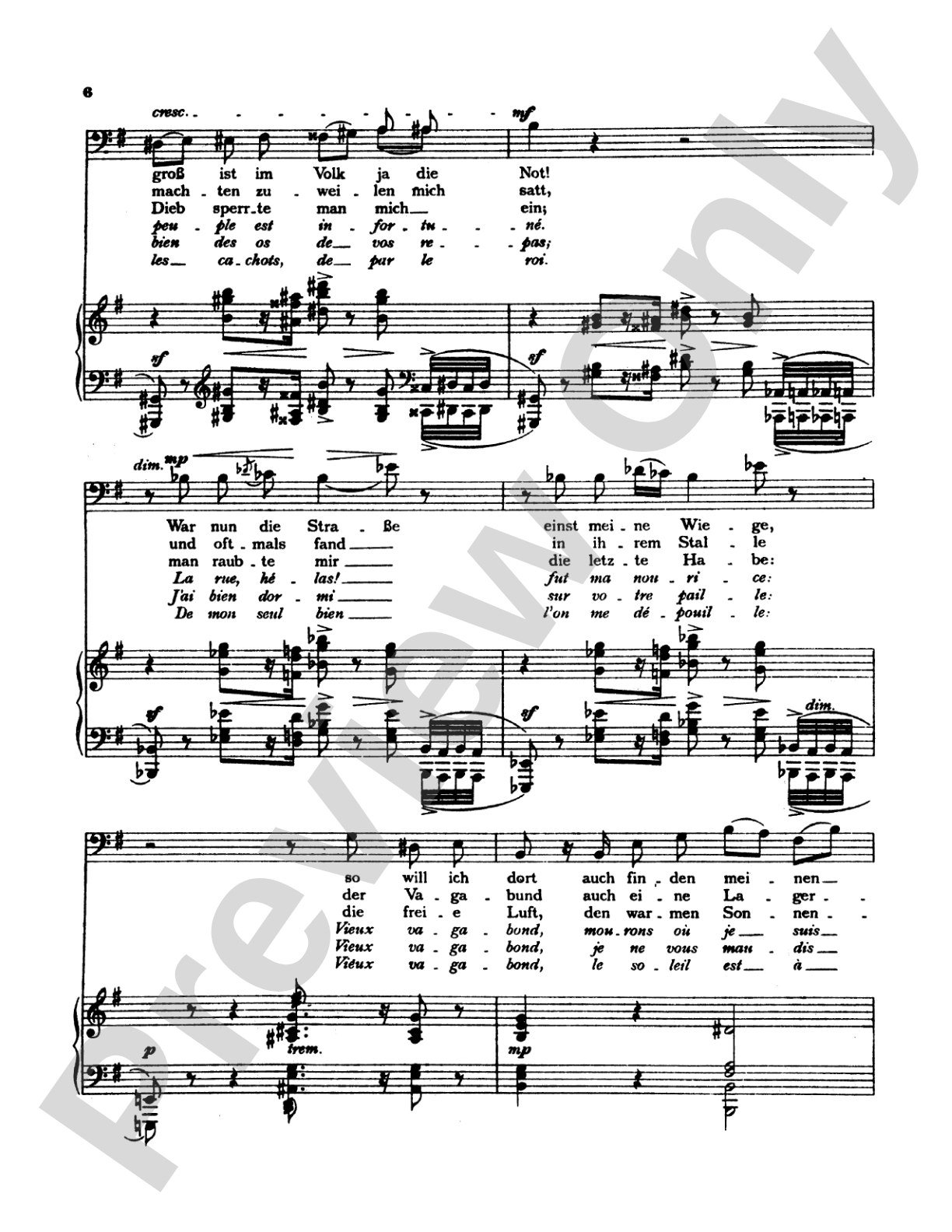
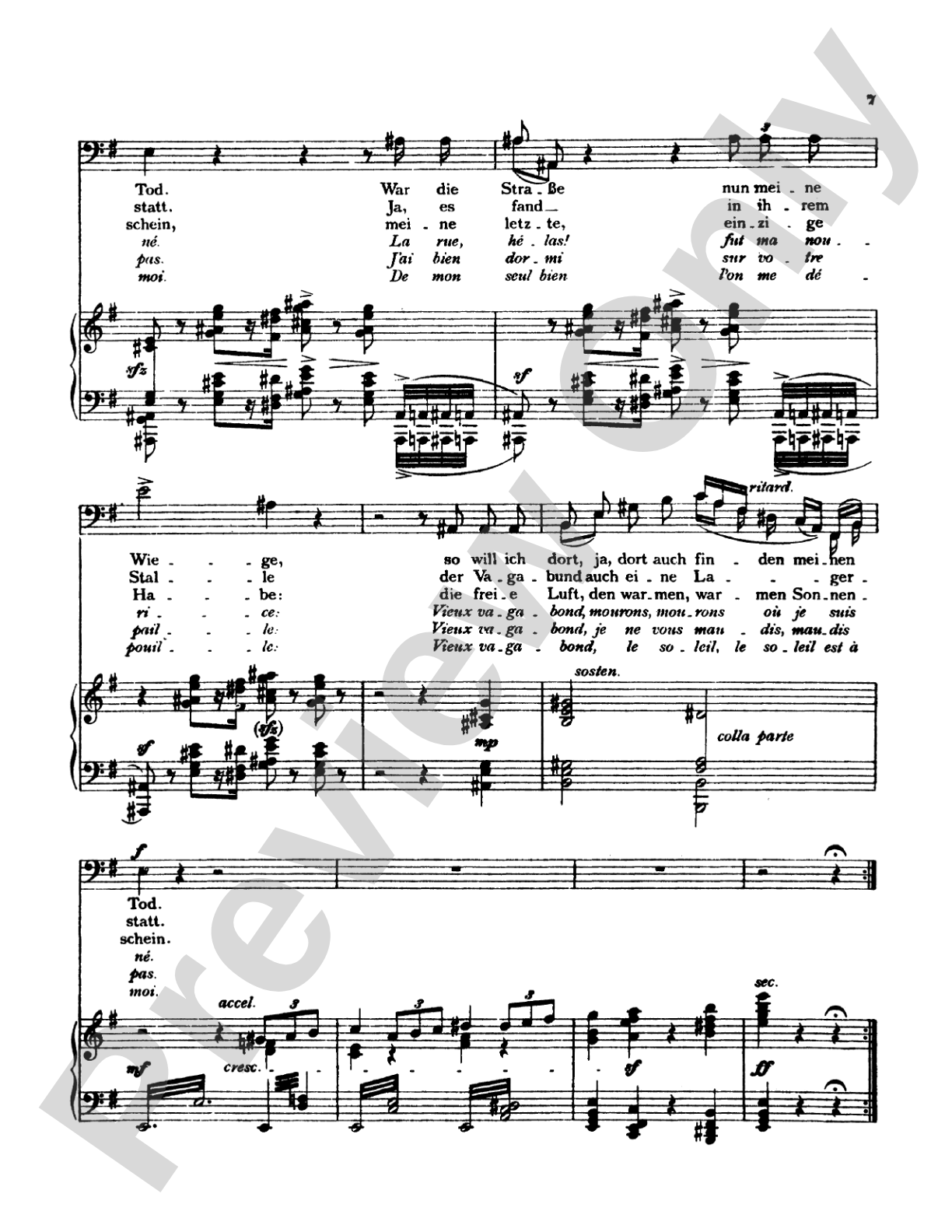
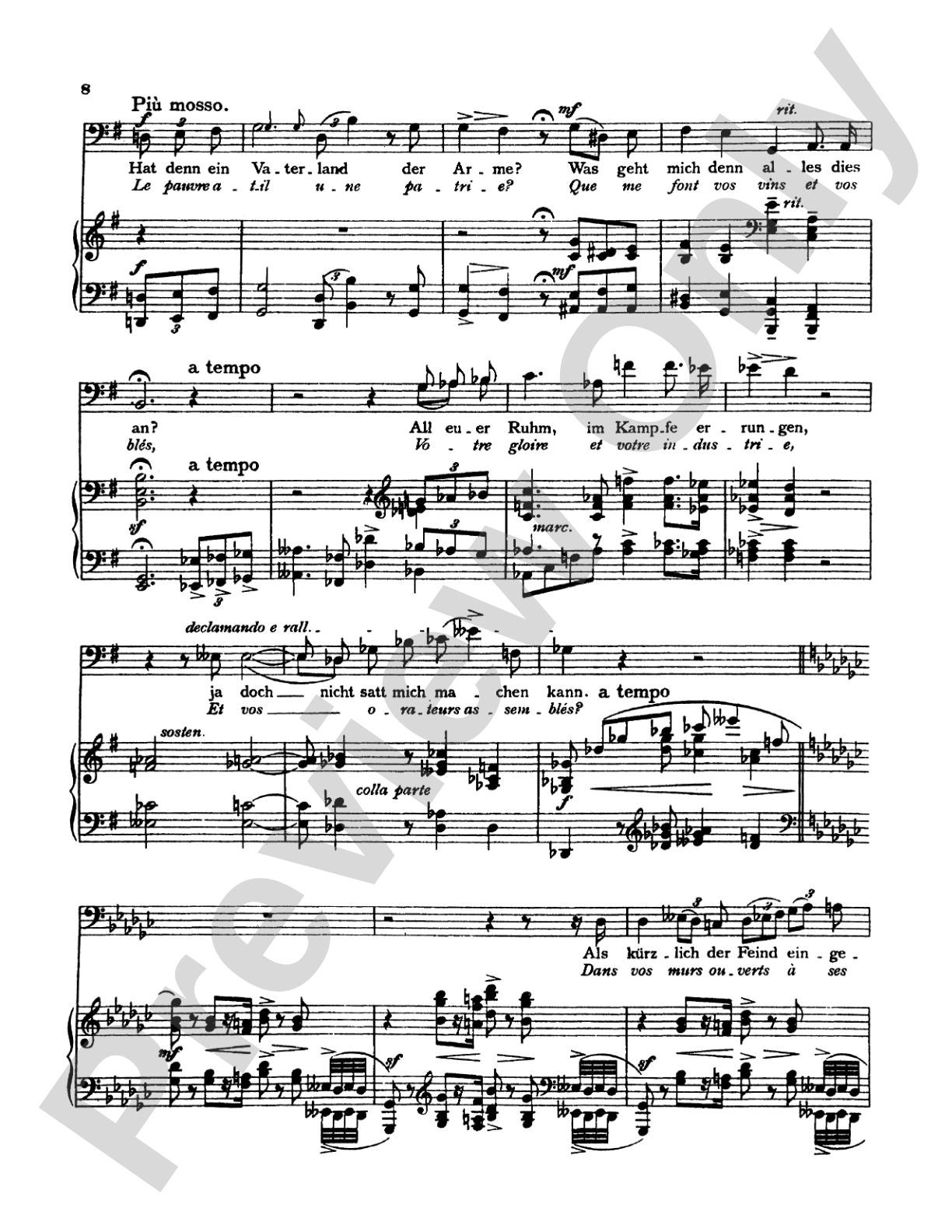
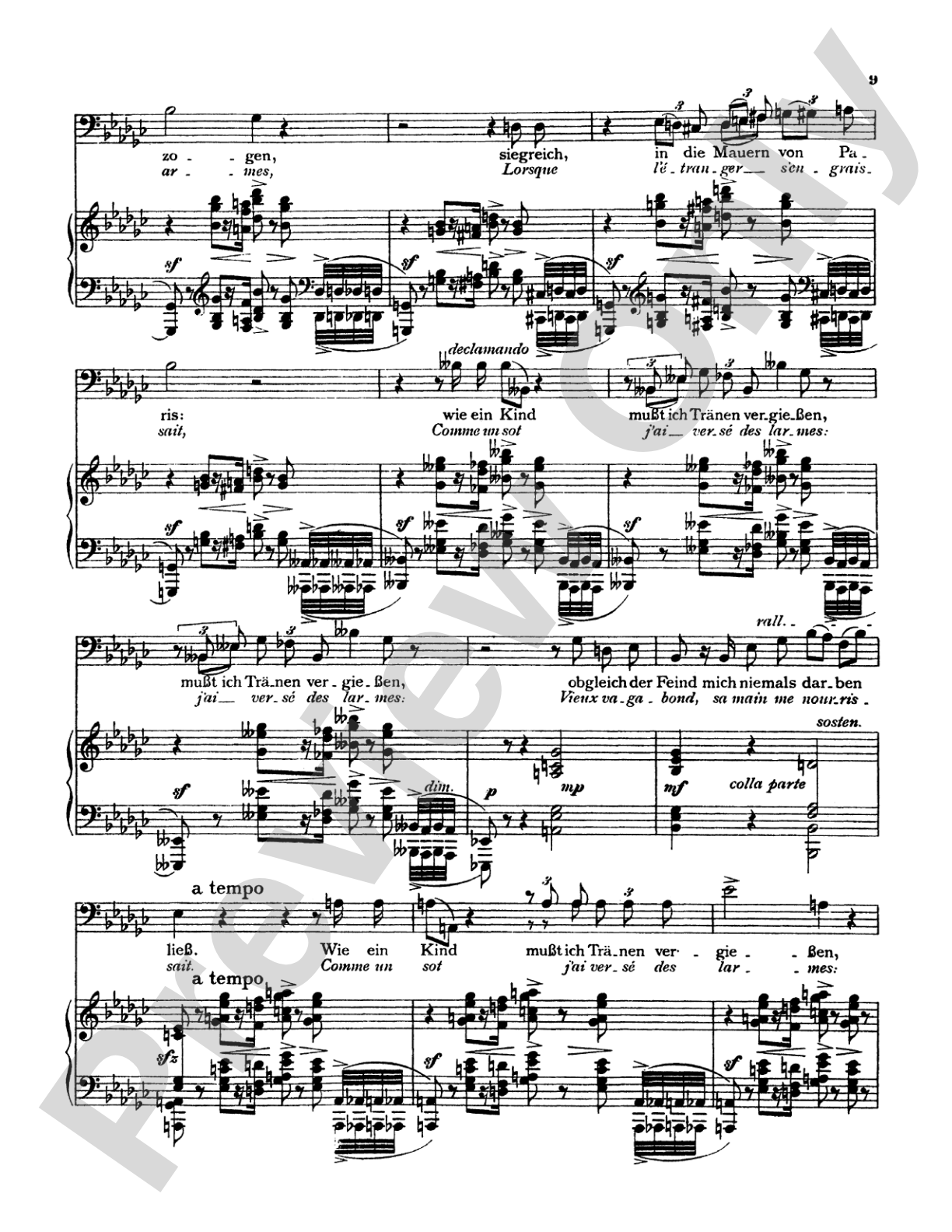
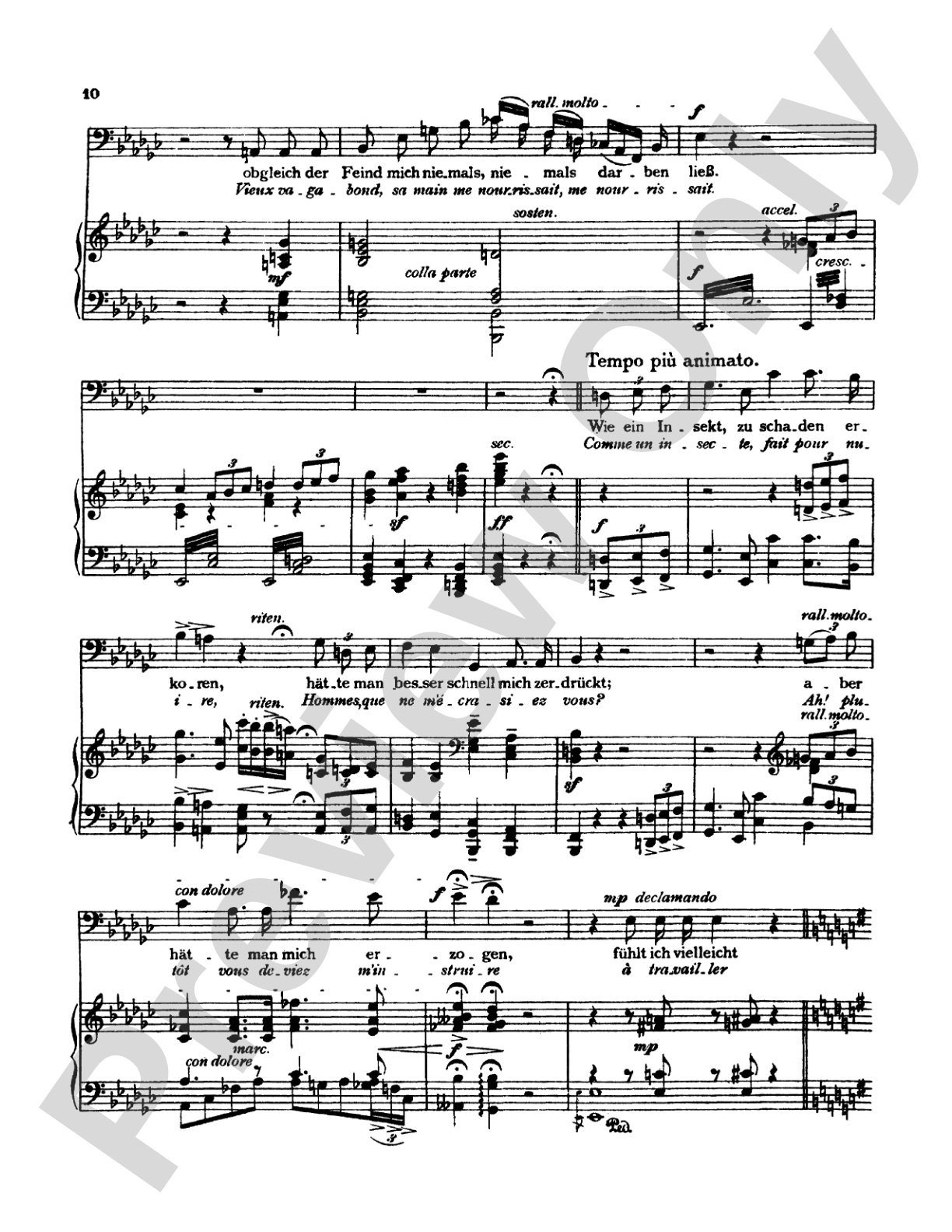
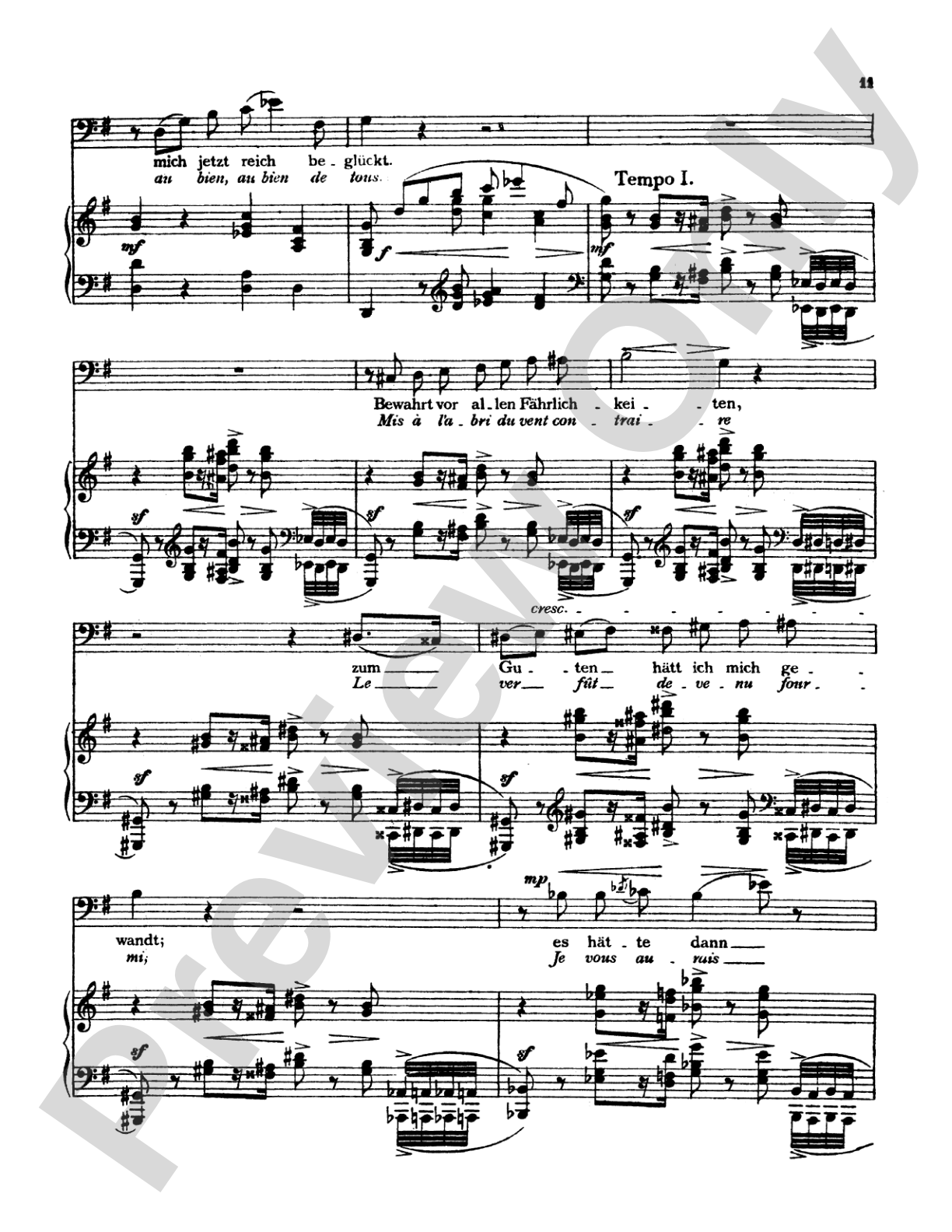
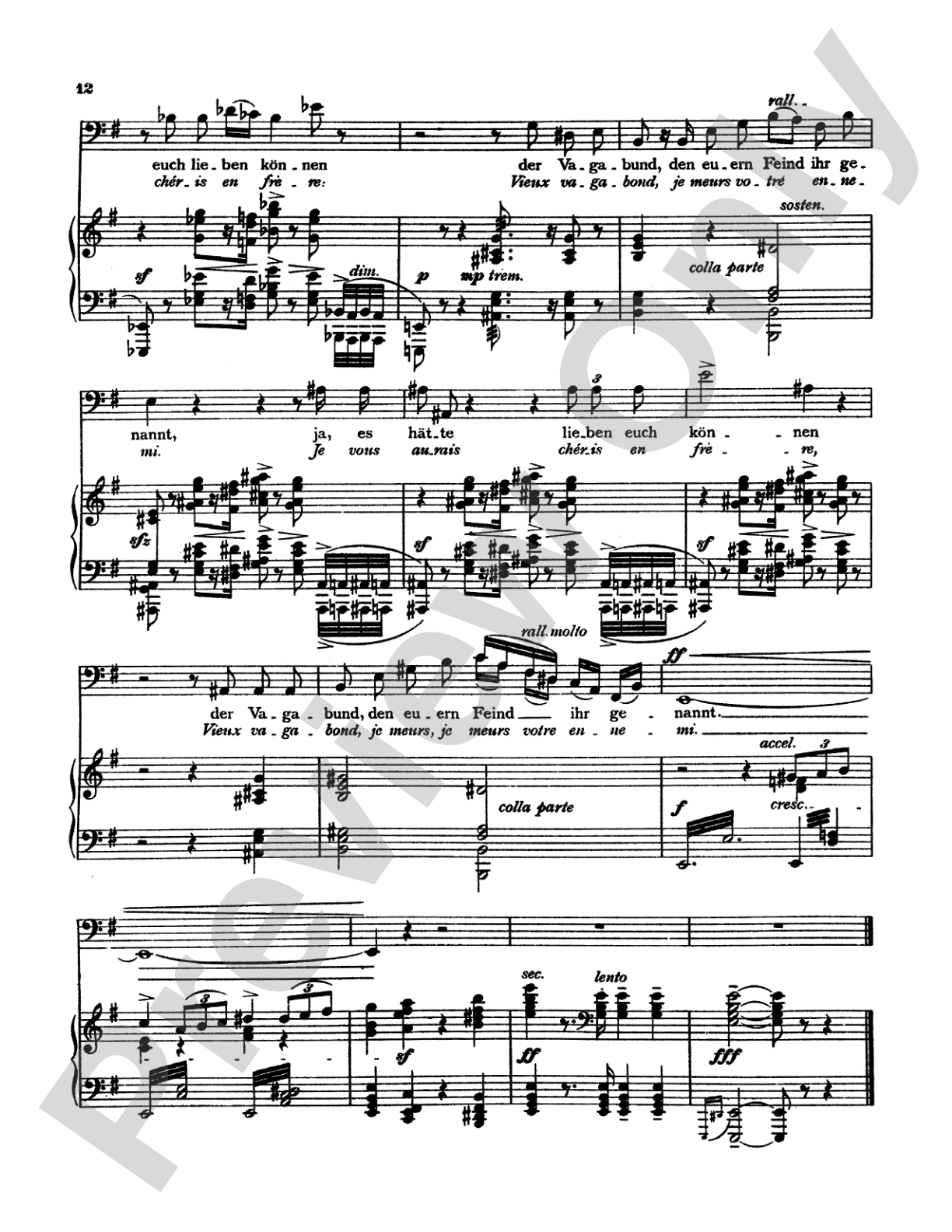

Liszt: Songs, Volume I, Nos. 1-13 (German/French): Vocal Comb Bound Book
By Franz Liszt
Item: 00-PK-0003731

$17.99
Pickup currently not available
Buy Extra Parts (Digital PDF Download)
Parts Added to Cart!
Related Items
Songs, Volume I: Vocal Comb Bound Book |
$17.95
|
View |
Description
Songs of 1843 and 1844, including first setting of Oh! quand je dors. The comb binding creates a lay-flat book that is perfect for study and performance.


Don't just read it, hear it, play along with it, and watch your students grow with it. In MakeMusic Cloud, Liszt: Songs, Volume I, Nos. 1-13 (German/French): Vocal Comb Bound Book comes alive with professional accompaniment, adjustable tempo, and built-in practice tools that turn solo practice into real progress.
Open in the Player
Jump straight in and assign it today.
Start Your Free Trial
Open this title and explore the full library in minutes.
Sample Audio
No sample audio found.
Sample Video
No sample videos found.
Additional Details
Series:
Kalmus Edition
Publisher:
Alfred Music
Page Count:
92
SKU:
00-PK-0003731
More about this title
About the Composer: Franz Liszt
Franz Liszt (1811-1886) stands as one of the Romantic era's most innovative and virtuosic musicians. A Hungarian pianist and composer, he fundamentally transformed what the instrument could express and pioneered the symphonic poem as a form. Beyond his keyboard mastery, Liszt was a prolific songwriter whose vocal writing reveals his gift for lyrical melody and harmonic invention, demonstrating that his genius extended far beyond the virtuosic display that made him famous throughout Europe.
Liszt's approach to songwriting draws on German Lied tradition while pushing it toward greater harmonic sophistication and emotional depth. His settings of French and German texts show sensitivity to language and poetic meaning, characteristics that make his vocal music enduringly rewarding for singers and accompanists seeking repertoire that combines accessibility with artistic substance.
Why we love this
These songs offer singers direct access to Liszt's lyrical voice without requiring the virtuosic keyboard fireworks of his larger works. The comb binding makes it genuinely practical to perform from in a recital or studio setting, and the collection spans both German and French texts, giving you flexibility in planning diverse vocal programs that explore Romantic song beyond the German Lied masters.
What to expect
Liszt's songs breathe the sweep and emotional generosity of the Romantic era while maintaining an intimate scale. You encounter lyrical melodies that feel both singable and artistically substantial, paired with piano writing that ranges from transparent accompaniment to fully realized musical conversation between voice and instrument.
Who it's for
Singers exploring Romantic repertoire beyond the standard German Lied canon will find these works rewarding for both performance and interpretation. Accompianists and vocal coaches benefit from having access to complete settings with texts in both French and German, making this volume essential for recital preparation and studio teaching.
How to get the most out of it
- Honor the harmonic language by allowing time for the accompanist to shape phrase endings; Liszt's piano writing often carries the emotional weight alongside the voice.
- Pay attention to text underlay and phrasing marks; they guide you through the romantic and often dramatic arcs of these settings.
- The lay-flat binding means you can perform these songs confidently without fumbling page turns, which allows you to focus entirely on connection with your accompanist and audience.
How to use it
Build a recital segment around these songs to showcase Liszt's sophisticated approach to vocal writing, or select individual numbers to pair with larger Liszt works (a symphonic poem or solo piano piece) for a portrait program. The inclusion of both French and German settings makes these natural choices for bilingual song cycles or for directors planning seasons that expand beyond the expected Schubert and Schumann.
Skills your students will build
- Reading and interpreting Romantic-era harmonic language
- Lyrical phrasing across extended melodic lines
- Collaboration between singer and pianist in texturally complex accompaniments
- Artistic interpretation of texts in both German and French
- Understanding Liszt's innovations within the 19th-century song tradition