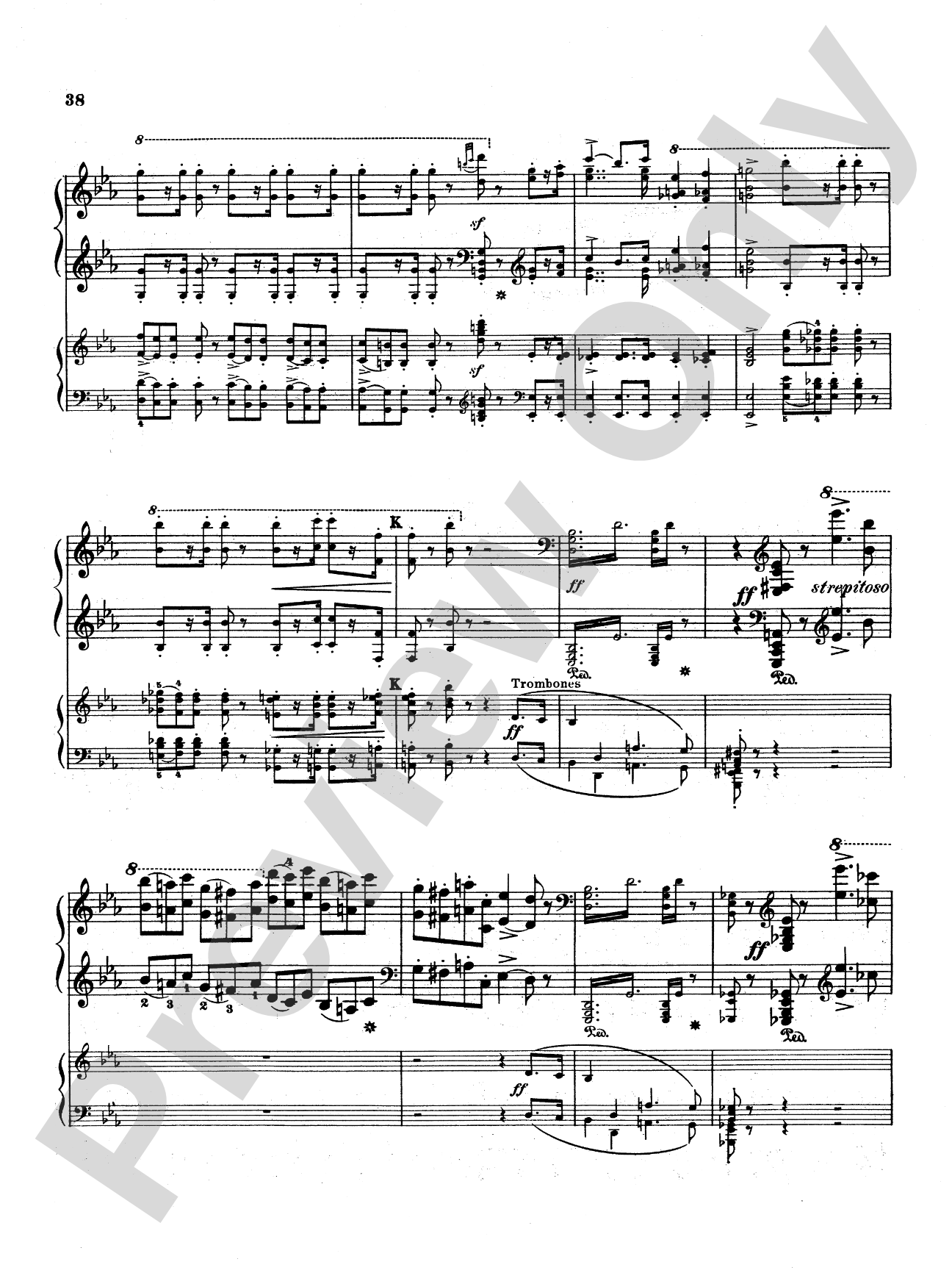
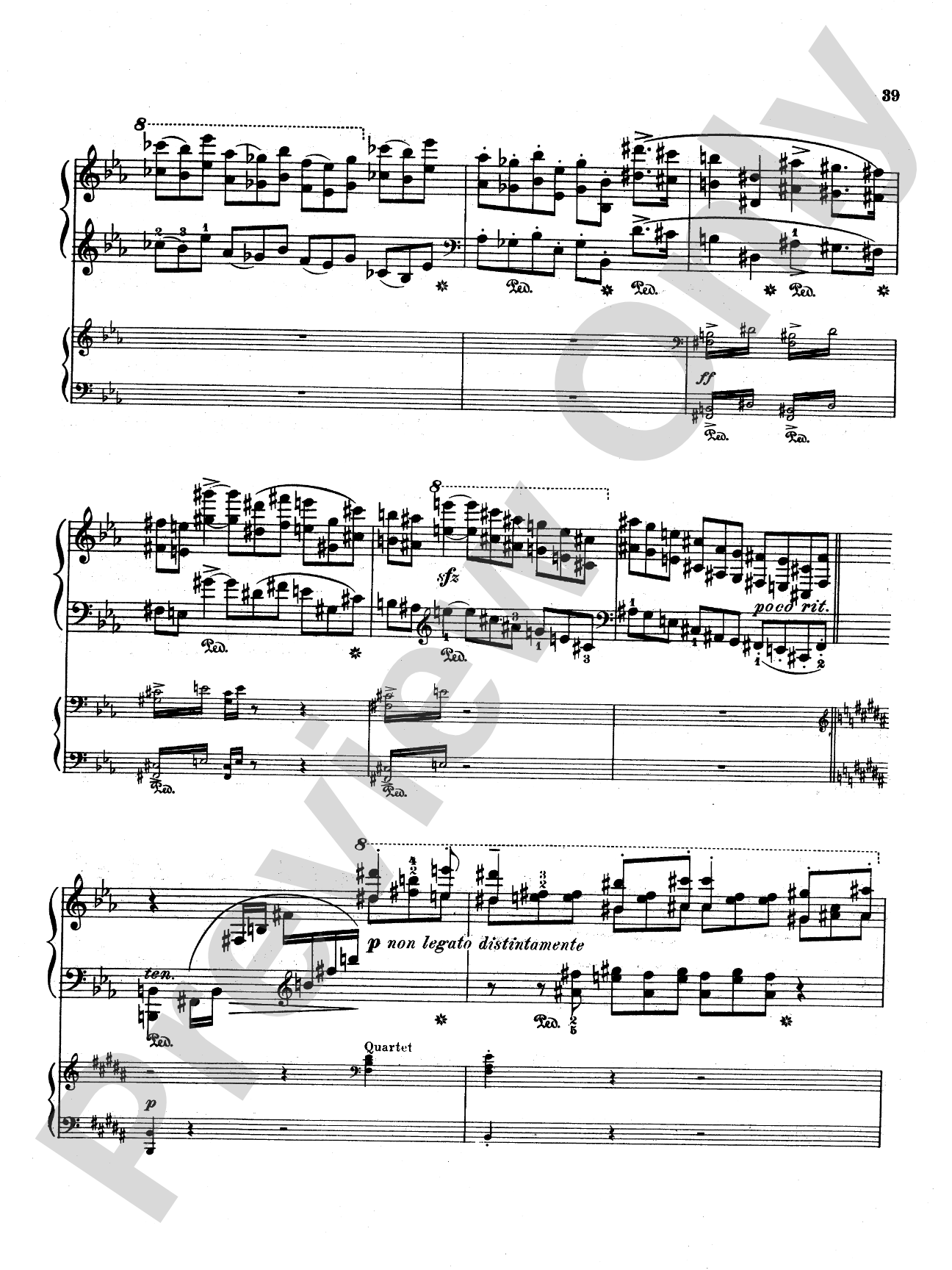
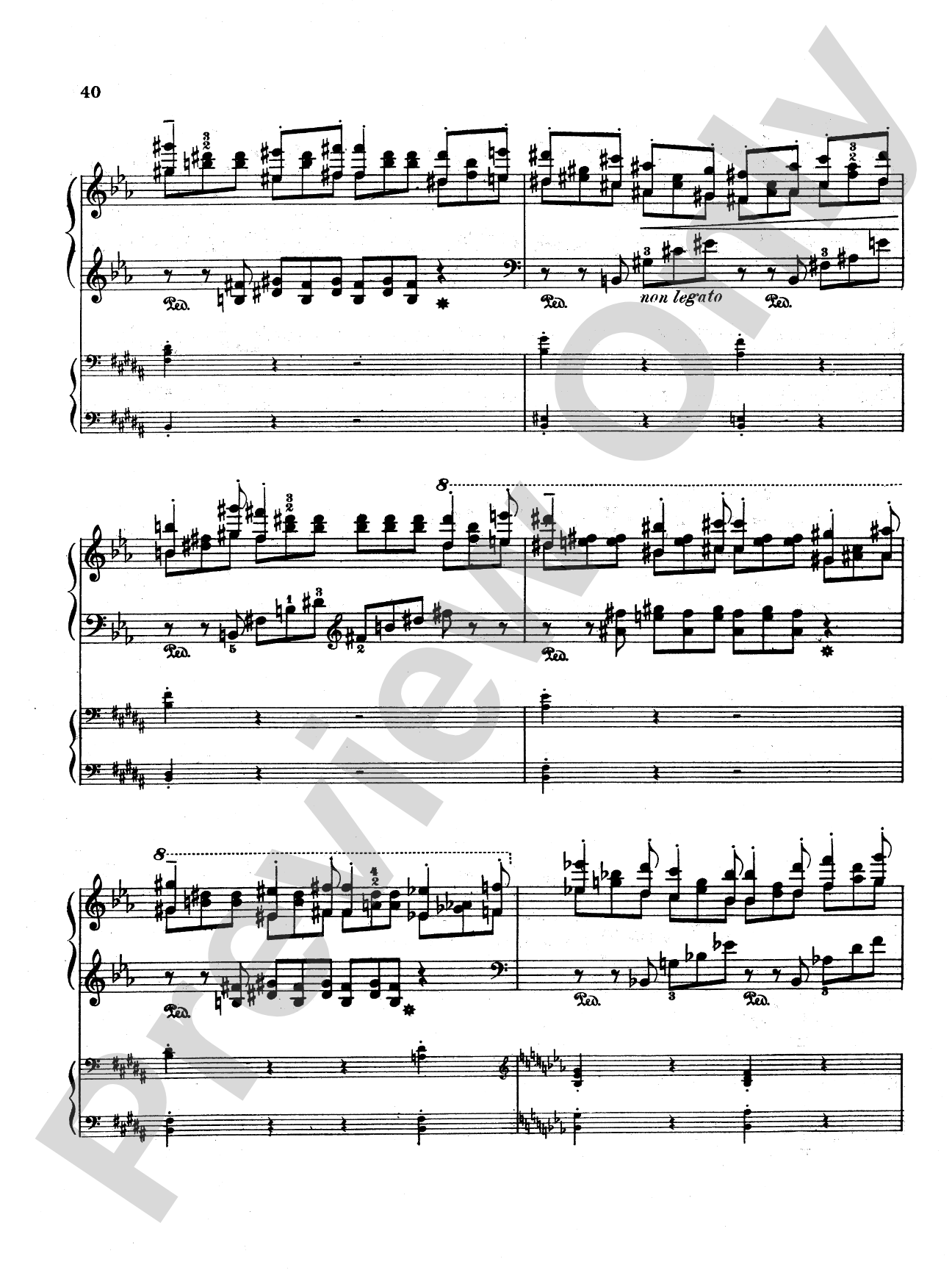
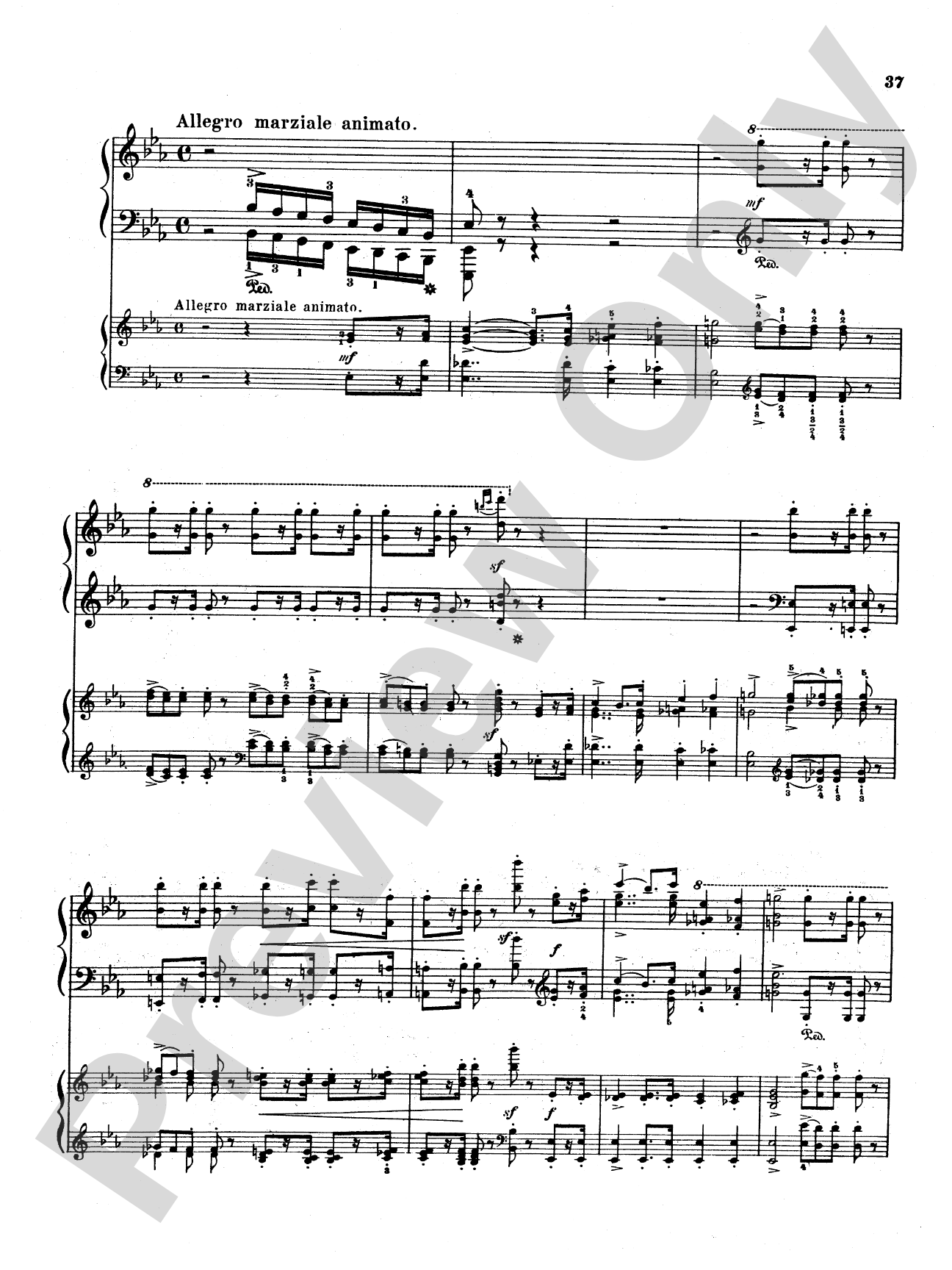
Liszt: Piano Concerto No. 1 in E flat Major Sheet Music Preview

Liszt: Piano Concerto No. 1 in E flat Major

By Franz Liszt

Item: 00-PC-0008199

Digital Download
$2.99
Description
A Piano Duet for 2 pianos, 4 hands, composed by Franz Liszt.

Don't just read it, hear it, play along with it, and watch your students grow with it. In MakeMusic Cloud, Liszt: Piano Concerto No. 1 in E flat Major comes alive with professional accompaniment, adjustable tempo, and built-in practice tools that turn solo practice into real progress.

Sample Audio
No sample audio found.
Sample Video
Additional Details
Series: Kalmus Edition
Publisher: Alfred Music
Page Count: 56
SKU: 00-PC-0008199

More about this title

About the Composer: Franz Liszt

Franz Liszt (1811-1886) was a Hungarian composer and pianist whose virtuosic writing and harmonic innovation shaped the Romantic era. His concertos demand technical brilliance and interpretive depth, and his arrangements for piano duo made his orchestral works accessible to chamber musicians and students without sacrificing their grandeur.

Why we love this

This duo arrangement gives advanced pianists genuine access to one of Liszt's most brilliant works without needing a full orchestra. The dialogue between the two pianos captures the orchestral color and drama of the original, and the writing challenges both players equally, making it ideal for advanced duos seeking substantial Romantic repertoire with real musical stakes.

What to expect

The concerto sweeps across the keyboard with Romantic grandeur and virtuosic exuberance, combining lyrical melodies with brilliant passage work and dramatic orchestral textures. The energy is propulsive and celebratory, filled with the theatrical flair that defined Liszt's approach to the piano.

Who it's for

This arrangement suits advanced high school pianists or college students working toward collaborative performance experience, as well as accomplished adult amateurs seeking challenging duet literature. It works equally well as a recital centerpiece or as a way to explore Liszt's orchestral sound in an intimate chamber setting.

How to get the most out of it

  • Balance the parts carefully during passages where one pianist carries thematic material while the other provides accompaniment; the supporting role must remain transparent rather than receding entirely.
  • Establish clear communication about tempo and phrasing before rehearsal, since the two pianos must move as a single interpretive unit despite sitting at separate instruments.
  • Prepare the virtuosic figurations by isolating hands independently, then gradually building coordination at tempo; rushing technical passages will blur the clarity Liszt's writing demands.
  • Consider the acoustics of your performance space when deciding how close the two pianos should be positioned; you'll need to hear each other without the sound becoming muddy.

How to use it

Feature this as the centerpiece of a duo recital, or pair it with a smaller twentieth-century work for contrast. It also serves as an excellent culminating performance opportunity for advanced students in a studio or community program, offering substantial musical and technical repertoire that audiences find genuinely exciting.

Skills your students will build

  • Listening and coordination between two independent keyboard parts
  • Navigating extended virtuosic figurations and passage work with clarity
  • Interpreting Romantic-era harmony and phrasing across two instruments
  • Balancing accompaniment roles while maintaining ensemble unity
  • Performance stamina across a substantial multi-movement work

You May Also Like