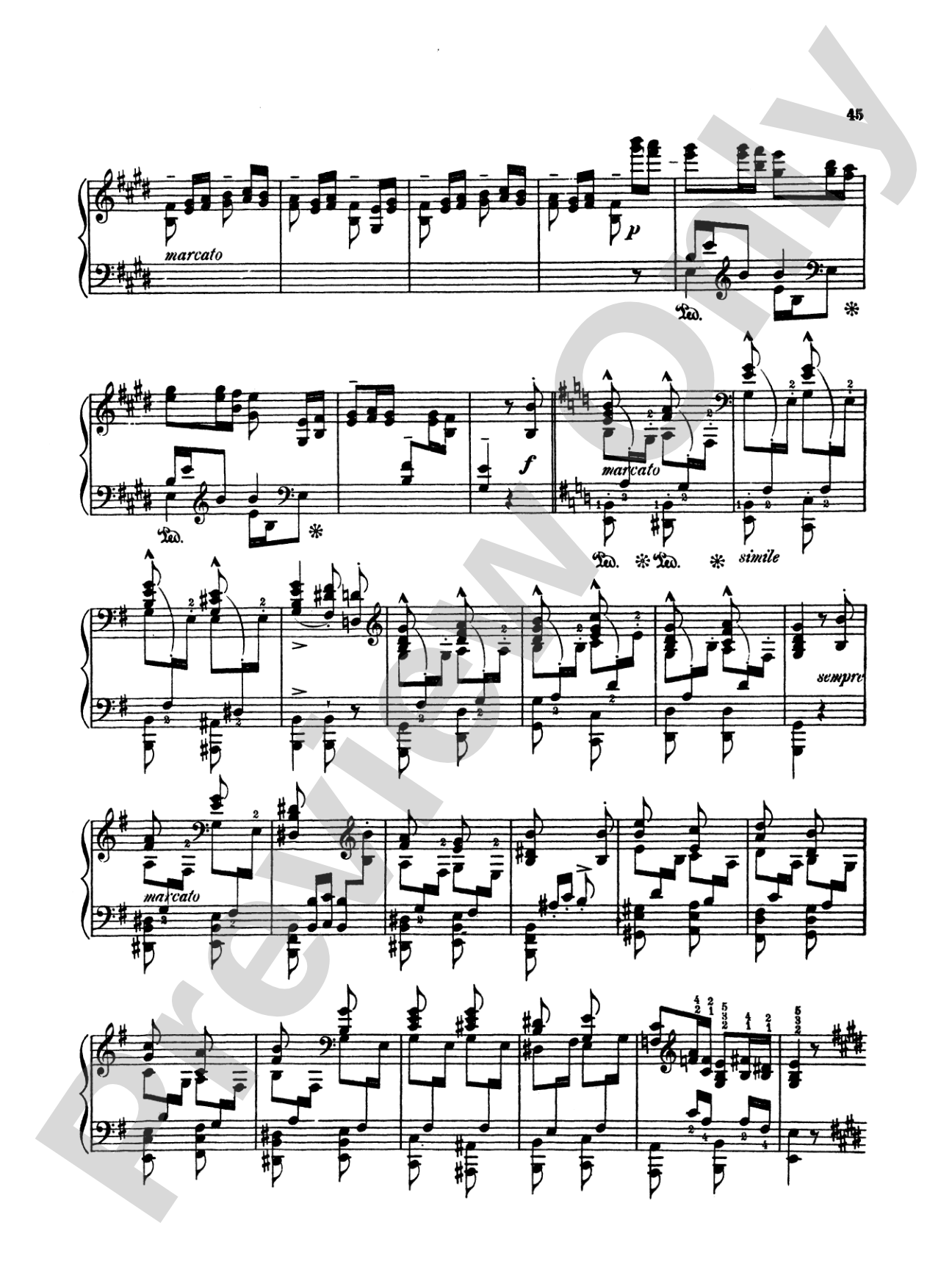
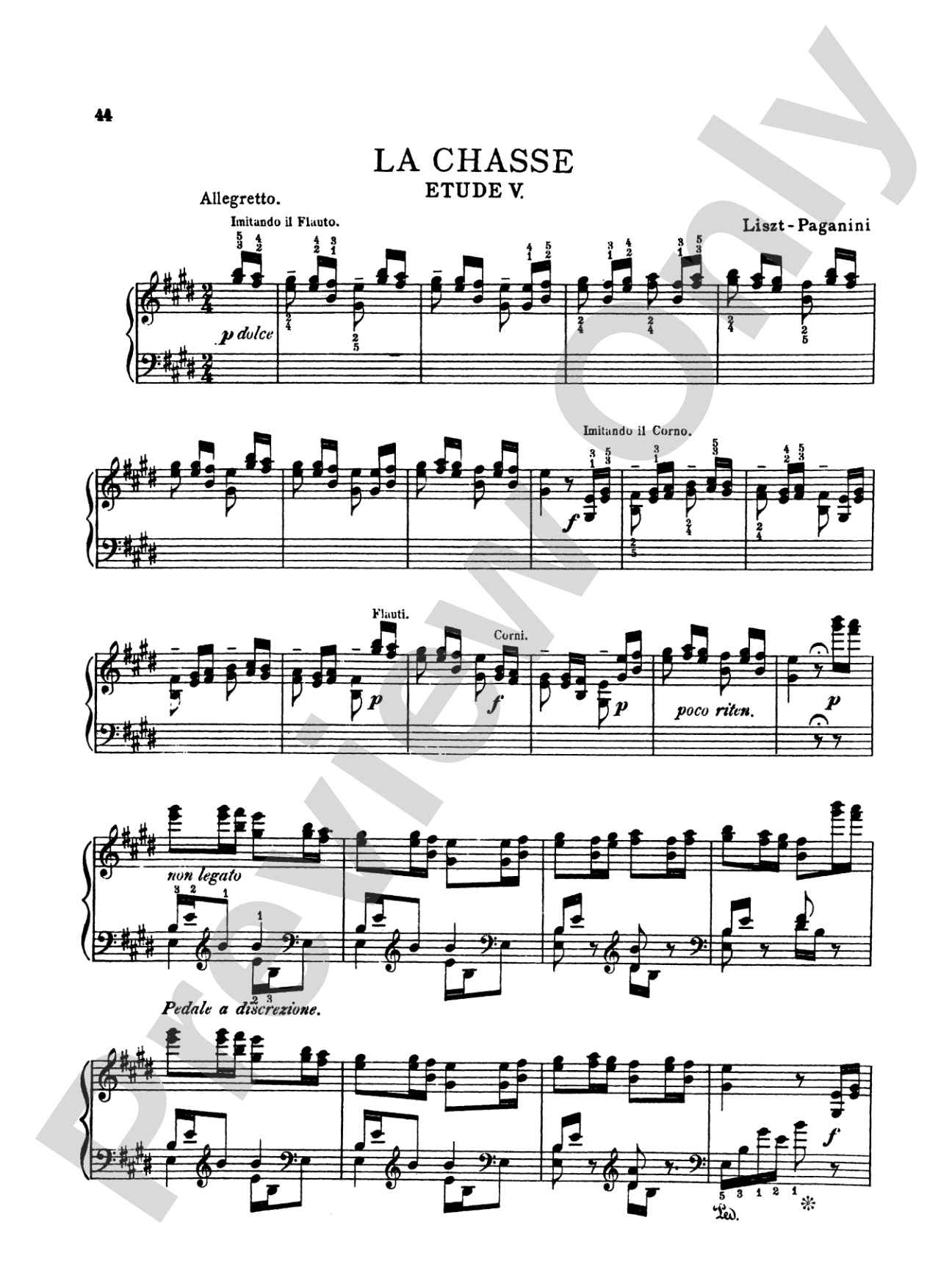
Liszt: Paganini Etudes Sheet Music Preview

Liszt: Paganini Etudes

By Franz Liszt

Item: 00-PC-0008283

Digital Download
$0.99
Description
(1--6)

Don't just read it, hear it, play along with it, and watch your students grow with it. In MakeMusic Cloud, Liszt: Paganini Etudes comes alive with professional accompaniment, adjustable tempo, and built-in practice tools that turn solo practice into real progress.

Sample Audio
No sample audio found.
Sample Video
Additional Details
Series: Kalmus Edition
Publisher: Alfred Music
Page Count: 68
SKU: 00-PC-0008283

More about this title

About the Composer: Franz Liszt

Franz Liszt (1811-1886) was a Hungarian virtuoso pianist and composer whose technical innovations transformed what the instrument could do. His Paganini Etudes, composed in the 1830s, were Liszt's response to the legendary violinist Nicolò Paganini; rather than merely transcribing Paganini's violin works, Liszt reimagined them as keyboard challenges that rival the original's technical demands.

Listz's arrangements remain central to piano pedagogy and performance because they demand mastery of velocity, control, and musicality simultaneously. Teachers and pianists study these works to understand how a great composer solves the problem of translating instrumental idiom across genres while expanding the technical vocabulary of the piano itself.

Why we love this

These six etudes sit at the intersection of transcription and original composition. They expose the seams between what violins and pianos can do while rewarding performers who approach them as pure piano music rather than arrangements. Advanced students encounter real virtuosity here, not showmanship divorced from substance.

What to expect

These pieces crackle with restless energy and technical ambition. Liszt captures Paganini's demonic flair while translating it into keyboard terms: brilliant passagework spins across octaves, voices interchange between hands, and harmonic surprises emerge from passages that initially sound purely mechanical. The result feels like eavesdropping on a conversation between two giants about what instruments can express.

Who it's for

Advanced pianists preparing for conservatory auditions, competitions, or solo recitals will find essential material here. Teachers of upper-level students use these etudes to build virtuosic technique grounded in Romantic-era compositional thinking. Pianists approaching the Liszt canon for the first time should begin with these works as an entry point to his keyboard writing.

How to get the most out of it

  • Separate the technical demands from the harmonic architecture. Map the underlying Paganini melodies first, then layer in the pianistic figuration so runs serve the phrasing rather than obscure it.
  • Treat hand independence as a priority across all six. These etudes ask one hand to carry a singing line while the other executes rapid scalar or arpeggiated work; clean separation prevents muddy textures.
  • Use the digital score to mark structural landmarks and transpositions between sections. Liszt frequently shifts key relationships to exploit different keyboard registers; knowing these moments prevents aimless accumulation of notes.
  • Approach tempo with restraint in early stages. Liszt wrote these for accomplished pianists, but rushing sacrifices the dialogue between soloist and underlying voice parts.

How to use it

Feature a single etude as a standalone recital opening or closer, allowing audiences to experience Liszt's technical command without overloading a program. Alternatively, pair one or two etudes with later Liszt works (such as Les Préludes arranged for solo piano or Liebestraum No. 3) to show the composer's range from virtuosic display to lyrical depth. Chamber musicians might also extract Liszt's original Paganini Caprice alongside its keyboard adaptation to illuminate the transcription process itself.

Skills your students will build

  • Rapid scalar passage work across multiple octaves
  • Hand independence and voice leading in technically demanding contexts
  • Executing wide intervallic jumps with accuracy and control
  • Interpreting Romantic-era articulation and phrasing markers
  • Understanding transcription as a compositional act, not merely a reduction

You May Also Like