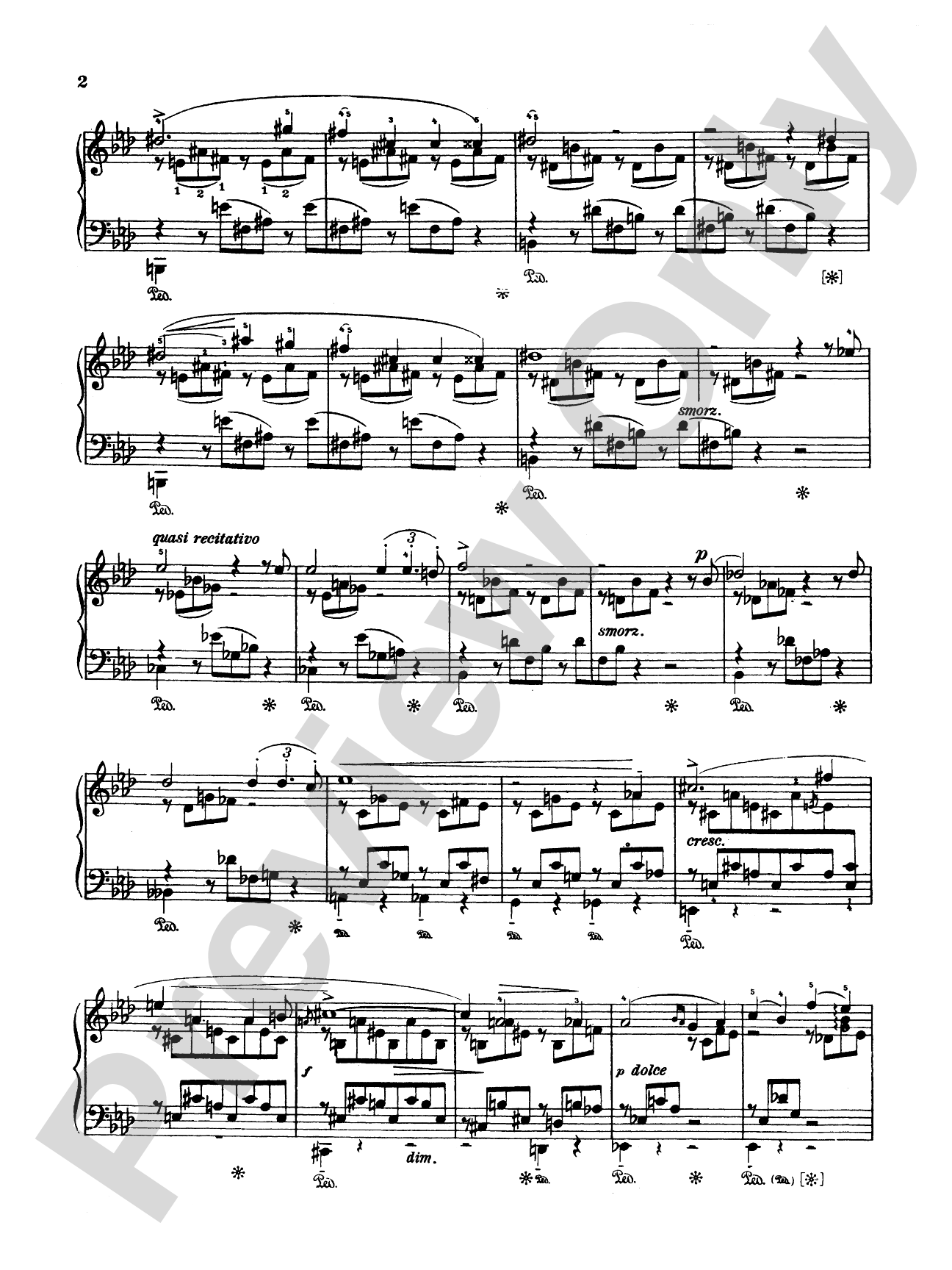
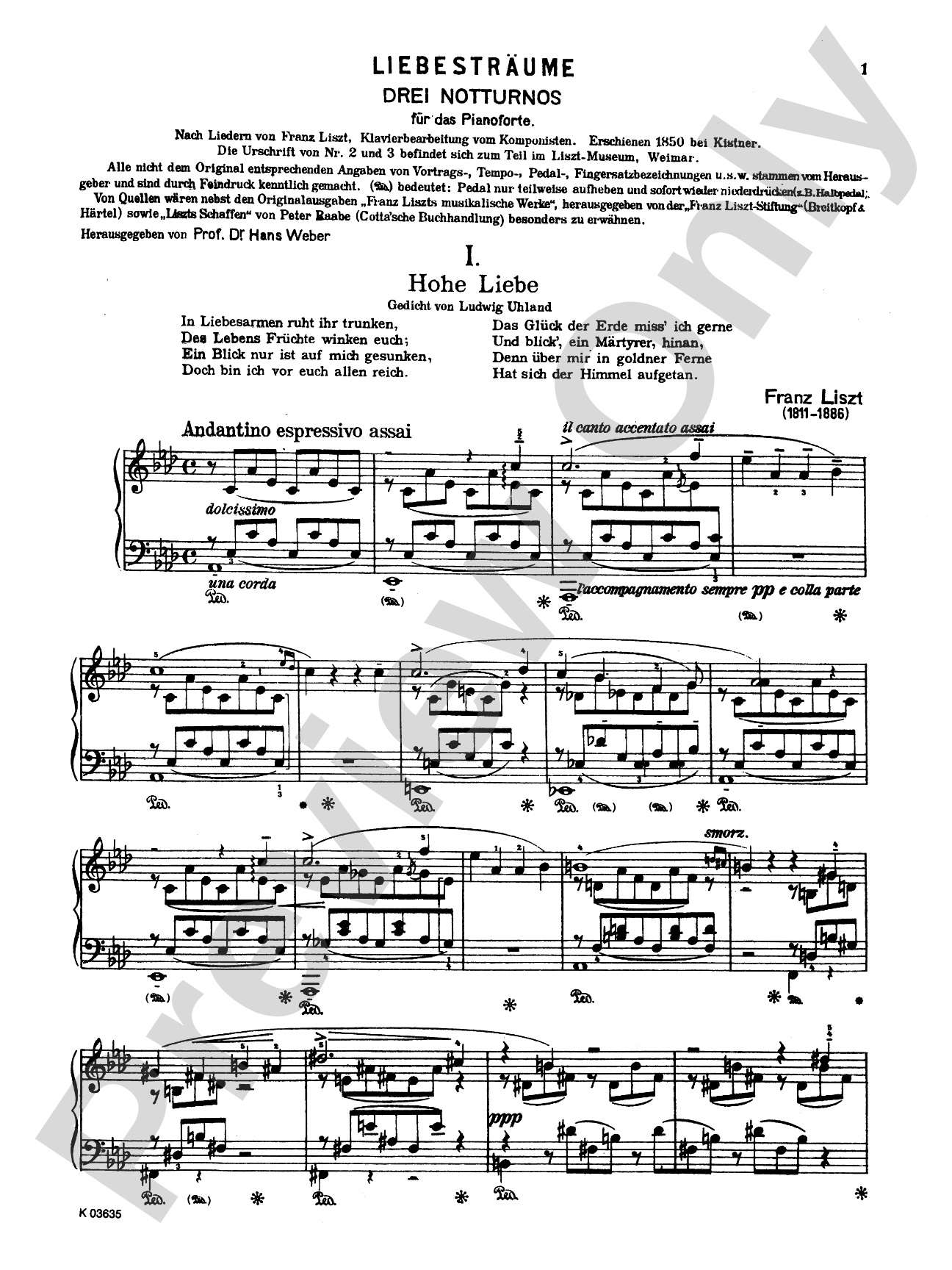
Liszt: Liebestraeume Sheet Music Preview

Liszt: Liebestraeume

By Franz Liszt

Level: Advanced

Item: 00-PC-0008275

Digital Download
$1.99
Description
Expertly arranged piano solo from our Kalmus Edition.

Don't just read it, hear it, play along with it, and watch your students grow with it. In MakeMusic Cloud, Liszt: Liebestraeume comes alive with professional accompaniment, adjustable tempo, and built-in practice tools that turn solo practice into real progress.

Sample Audio
No sample audio found.
Sample Video
Additional Details
Series: Kalmus Edition
Publisher: Alfred Music
Page Count: 20
SKU: 00-PC-0008275

More about this title

About the Composer: Franz Liszt

Franz Liszt (1811-1886) was a Hungarian virtuoso pianist and composer who fundamentally transformed what the instrument could do. His technical innovations, harmonic daring, and ability to extract orchestral colors from the piano made him a bridge between Romantic idealism and modern musical language. As a performer, he captivated audiences across Europe; as a composer, he created works that remain central to the advanced piano repertoire.

Beyond his own compositions, Liszt was a tireless advocate for music education and new music. He taught masterclasses, championed younger composers, and arranged works across genres, always with an eye toward expanding pianists' expressive range. His legacy extends far beyond the concert hall into the pedagogy of serious keyboard study.

Why we love this

Liebestraeume remains one of the most musically generous Romantic-era works for advanced pianists, offering genuine technical challenge without sacrificing lyricism or emotional depth. The writing sits perfectly on the keyboard, rewarding both precision and poetic interpretation. Students who master these pieces gain immediate confidence in their ability to handle Romantic repertoire with sophistication.

What to expect

Liebestraeume invites performers into Liszt's world of lyrical Romanticism, where melody floats above shimmering harmonic color and technical brilliance serves emotional expression. The writing is generous and pianistic, never gratuitously difficult, yet it demands real command of the instrument. There's a sense of intimate grandeur throughout, as if the composer is speaking directly to the listener across time.

Who it's for

Advanced pianists preparing for competitive recitals, college auditions, or the upper levels of solo study. Teachers seeking substantial Romantic-era repertoire that challenges technique while remaining accessible in scope and length.

How to get the most out of it

  • Balance the melody across multiple registers and hand positions; this score demands fluency in thumb-on-melody technique and the ability to sing through octaves and broken figures without losing the main line.
  • Pay close attention to Liszt's pedal markings and harmonic rhythm rather than relying solely on ear. The sonorities are carefully constructed, and precise pedaling reveals the compositional architecture.
  • Shape each phrase with a clear sense of direction and arrival, resisting the temptation to slow for passages that look difficult technically. Momentum and confidence serve the music far better than hesitation.
  • Experiment with rubato that honors both the vocal character of the melodic material and the structural integrity of the harmonic progression. Liszt expects interpretive maturity from performers.

How to use it

Position this as the centerpiece of a Romantic solo recital or as a substantial encore that showcases technical facility without exhaustion. The work also pairs well with other Liszt solo pieces or with contemporary Romantic composers, creating a cohesive programming theme around keyboard virtuosity and lyricism.

Skills your students will build

  • Advanced hand independence and multi-register voice leading
  • Pedal technique tied to harmonic function rather than instinct
  • Interpretive rubato within a clearly structured harmonic framework
  • Efficient technical execution of figurations without loss of tone quality
  • Sustaining lyrical phrasing across complex textures

You May Also Like